







Fans of Front Street Gold Mandheling must be familiar with the Sumatra region of Indonesia, where the coffee is known for its rich and complex roasted aroma, often with flavors of caramel, spices, herbs, roasted hazelnut, and dark chocolate. Starting from the overall landscape of Indonesian coffee, this article sorts out the history and current situation of Sumatra's two core producing regions—Lake Toba and Lake Tawar—focusing on why the Gayo Mountains of Aceh have become Sumatra's finest coffee-producing area today, and explaining the origin of the name "Mandheling." At the same time, the article recommends two Mandheling coffees on the Front Street Coffee bean list—Lintong Mandheling and PWN Gold Mandheling—as well as the Front Street Classic Espresso Blend suited to espresso machines and moka pots, helping enthusiasts choose according to their needs.
If you often drink Front Street Gold Mandheling, you should know that it comes from Sumatra, Indonesia, and after roasting it reveals a richly layered aroma, with flavors of caramel, spices, herbs, roasted hazelnut, and dark chocolate interwoven together.
Indonesia is located in Southeast Asia and is made up of more than ten thousand islands, which stretch along the equator from Malaysia to Papua New Guinea. Indonesia has long been a major coffee producer. According to data from the World Coffee Organization, Indonesia's green bean output reached 12.317 million bags in 2015, ranking second in Asia, behind only Vietnam; of that, seventy to eighty percent was Robusta. Robusta has strong disease resistance, and although its flavor is not as good as Arabica, it remains the backbone of Indonesian coffee, accounting for 90% of total coffee production and mainly distributed in low-altitude areas such as Java and Bali. Ninety percent of Indonesia's coffee comes from independent smallholders, and because coffee is highly valuable, farmers often plant it in their own backyards. Across the country, 11 million people depend on the coffee industry for their livelihood.
Sumatra coffee has been sold at Starbucks since 1972, and its rich earthy fragrance and heavy body form Sumatra's signature flavor, though because the roast is on the darker side, herbal notes and bitter, roasted flavors linger in the mouth for quite a while.
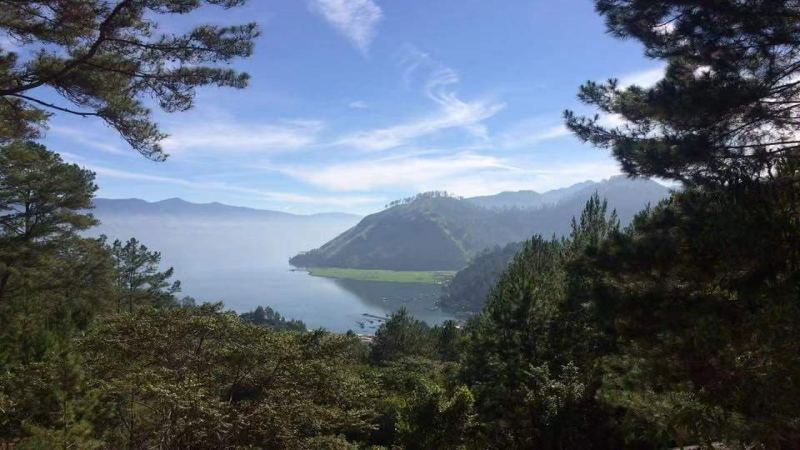
When talking about Mandheling, people usually mention the "two lakes, two Mandheling": the Lake Toba region in northern Sumatra (Lake Toba, Lintong) planted coffee earlier and is called "Old Mandheling"; the Lake Tawar region in Aceh Province (Lake Tawar, Gayo Mountain) planted later and is called "Little Mandheling."
At present, Sumatra's highest-quality coffee beans come from the GAYO mountain area, mostly grown from older tree varieties. The Gold Mandheling from FrontStreet Coffee's new season comes from the GAYO Mountains of Aceh in North Sumatra. The Gayo Mountains are located in the Aceh producing region of North Sumatra Province, at an altitude of 1,500 to 2,500 meters, and most coffee farmers are local Gayo people. The area has ideal conditions for coffee growing—high altitude, fertile soil, abundant rainfall, with Lake Tawar providing a rich water source, and organic methods are widely used locally, without chemical fertilizers, so it is regarded as a green coffee-producing region in the world. Therefore Gayo coffee is also often called green coffee, or Gayo organic coffee.
Unlike many coffee beans named after a producing region, estate, or processing station, the "Mandheling" in Front Street Mandheling coffee beans is not a place name, but the name of an ethnic group on the Indonesian island of Sumatra. Only Arabica varieties produced on the island of Sumatra can be called Mandheling coffee.
Lake Toba is located in the central part of North Sumatra Province. Dutch colonists moved "Java Mandheling" north to the Lake Toba area in 1888. The Lintong area of South Sumatra and the Lake Toba area can be called Mandheling; only the Lintong area is truly a Mandheling producing region, and Mandheling is produced in the mountainous areas around Lake Toba.
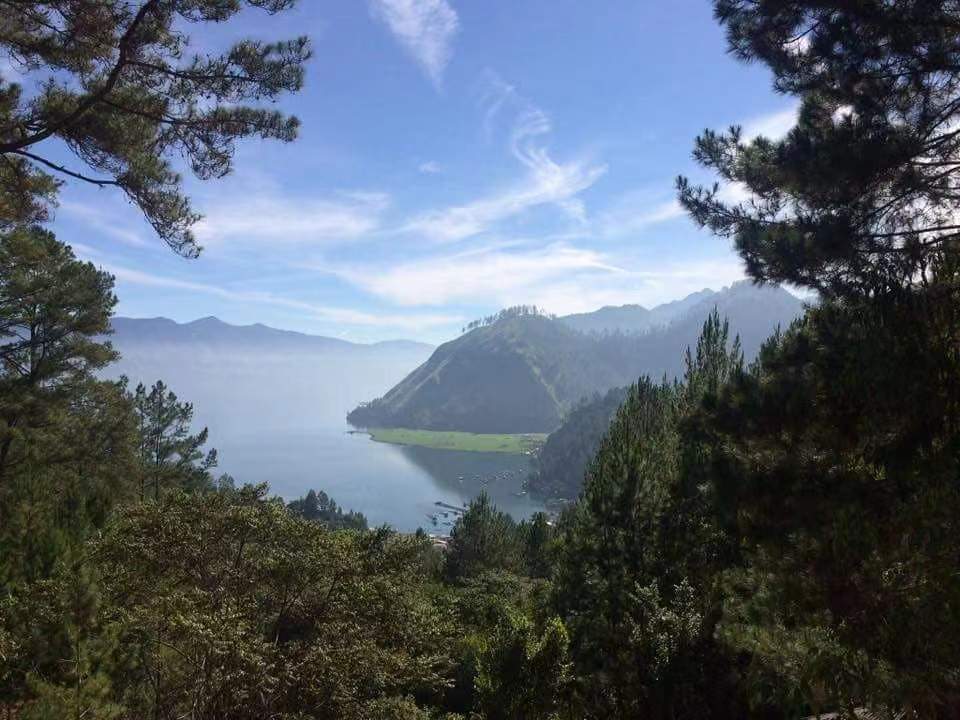
Lake Tawar is located in the central part of the Aceh Special Region, at the northern tip of Sumatra Island. Most coffee produced in North Sumatra is Gayo, mainly of the Ateng variety; coffee from Lake Tawar in the north can be called Aceh coffee or Lake Tawar coffee. Lake Tawar is less than one-tenth the size of Lake Toba, but in recent years its coffee quality and output have surpassed Lake Toba's.
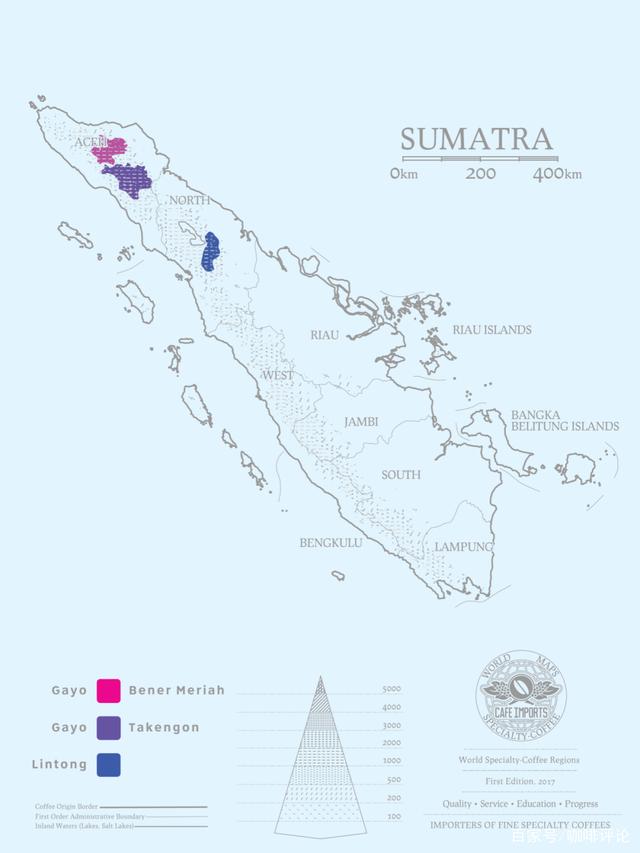
On FrontStreet Coffee's bean list there are two Front Street Mandheling coffees: one is Front Street Lintong Mandheling from the Front Street everyday bean series, from the Lintong producing region; the other is Front Street PWN Gold Mandheling, from the Gayo producing region.
For friends trying Mandheling coffee for the first time, Front Street Gold Mandheling is recommended. This is a premium Mandheling that has undergone multiple rounds of hand sorting, using a medium-dark roast, with rich chocolate, caramel, spice, and herbal flavors, a distinctive aroma, and an extremely full-bodied mouthfeel that leaves a deep impression after drinking. If you just want a light taste of Indonesian coffee, then it is recommended to buy Front Street Lintong Mandheling, to taste the classic flavor at an affordable price. Both can be purchased at the Front Street Taobao store or the Front Street Tmall flagship store.
In addition to single-origin coffee, Front Street has also launched an espresso blend bean specifically for extraction with coffee machines and moka pots—Front Street Classic Espresso Blend. This recipe is composed of three origins: Brazil, Indonesia, and Vietnam. It uses a dark roast, which maximizes the coffee's rich aroma and also makes it easy for everyone to extract rich and dense crema. Whether making an Americano diluted with water or a latte paired with milk, it is very suitable, and it can be purchased and ordered at the Front Street Taobao store or the Front Street Tmall flagship store.
The above content is compiled by CoffeeHunters, a coffee news website.


