








What Gives Yirgacheffe Coffee Its Brightness and Floral Notes
Yirgacheffe coffee flavors center on jasmine floral notes and citrus acidity, grown at 1,700 to 2,100 meters in Ethiopia. The highland microclimate creates layered flavors often described as coffee on the palate with a hundred flowers blooming. Washed and natural processing produce different results, and V60 parameters help brew a bright, sweet cup consistently at home.
The washed version is regarded as the first door through which the world came to know specialty coffee. On the palate, coffee brightness shows as clean lemon and lime acidity, with peach, almond, honey, and chocolate undertones and a faint tea charm. Researchers now study the microclimate and soil hydrology around Yirgacheffe to understand what is arabica bean quality in this terroir.
Yirgacheffe is one of Ethiopia's most representative specialty coffee regions, with jasmine floral notes and citrus acidity forming its signature flavor profile. This article will take you into this highland town at an altitude of 1,700 to 2,100 meters, to see how the unique microclimate and growing environment create the layered sensation of "coffee on the palate, a hundred flowers in bloom," sort out the flavor differences between the washed and natural processing methods, and provide Front Street Coffee's recommended bean selections along with complete V60 brewing parameters, helping everyone brew a bright and sweet cup of Yirgacheffe consistently at home.
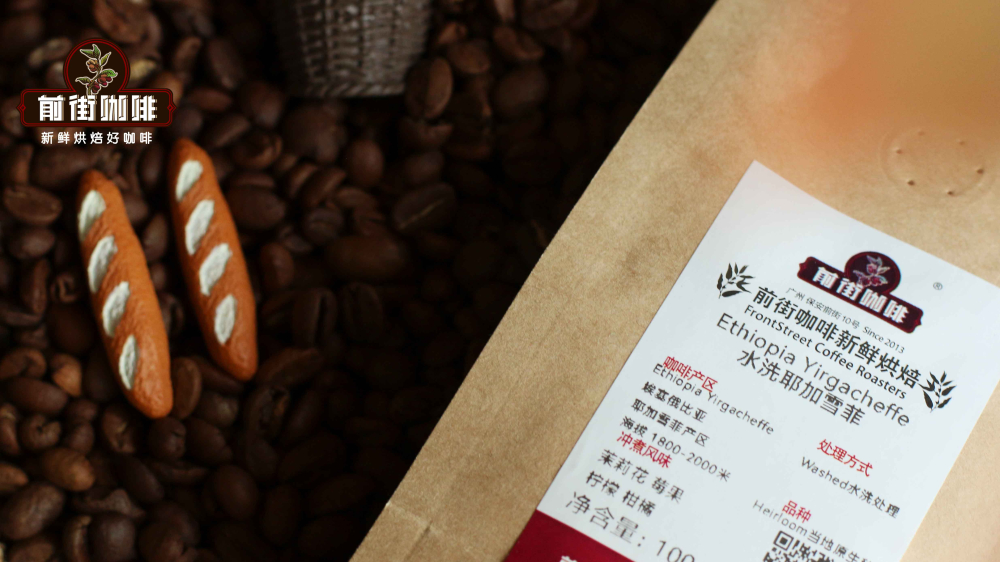
Front Street Yirgacheffe may be small in size, yet it is elegant, refined, sweet, and appealing. This bean has a complex and three-dimensional aroma, with an exceptionally outstanding mouthfeel that is even hard to describe accurately in words: striking jasmine floral notes, bright acidity like lemon and lime, and the sweet fragrance of peach and almond lingering throughout, accompanied by a faint tea charm. Beyond the floral notes, the delicate body glides over the tongue like silk, a truly wonderful tactile experience. The wet aroma is akin to sweet syrup, or thick apricot fruit jam, with a base note wrapped in honest honey or chocolate undertones. Understated on entry, medium-bodied, the acidity is not abrupt but clean, lively, bright, and transparent, with a certain charm reminiscent of fruity black tea.
The above is precisely the shared impression of many coffee lovers after tasting Front Street Yirgacheffe. Front Street believes that "coffee on the palate, a hundred flowers in bloom" is the most fitting summary of this bean—distinct layers of flavor, a lingering finish, and a cup that is unforgettable. Today, many coffee chemistry researchers are beginning to analyze the microclimate and soil hydrology around Yirgacheffe, attempting to distill the planting formula for specialty coffee.
Next, let us look at exactly what kind of terroir conditions nurture the captivating flavors of Front Street Yirgacheffe.
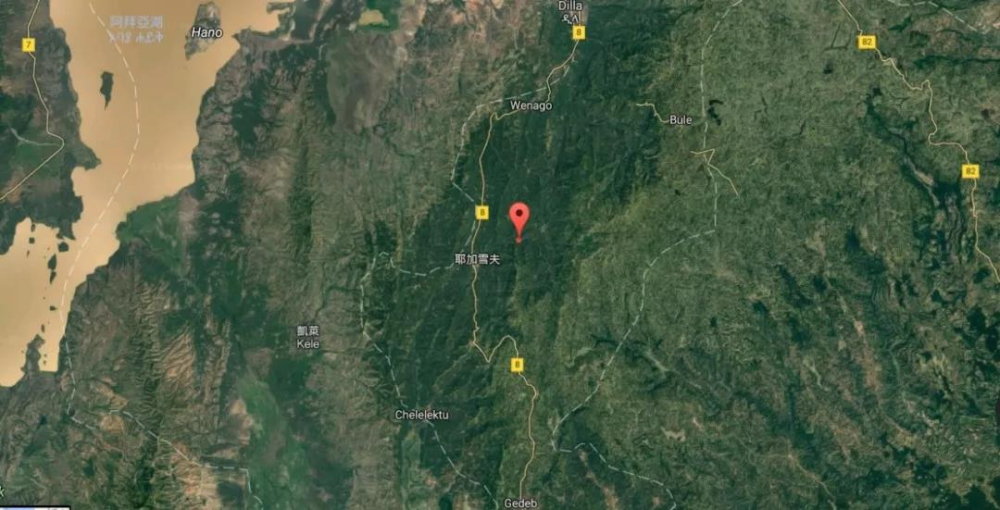
Yirgacheffe is located in Ethiopia and is a world-renowned specialty coffee region. The washed Yirgacheffe produced here is regarded as the first door through which the world came to know specialty coffee, a signature representative of Ethiopian coffee, and also one of the best-selling everyday beans at Front Street. Yirgacheffe was originally just a small town, at an altitude between 1,700 and 2,100 meters, and today it has become Ethiopia's specialty coffee calling card. "Yirga" means "to settle down" in the local ancient language, while "Cheffe" refers to "wetland," showing that this land has been a moist homeland since ancient times. With its uniquely prominent production methods and flavor expression, Ethiopian coffee farmers take pride in their beans possessing Yirgacheffe-like flavors, and it has thus grown into Africa's most renowned coffee region.
Coffee is essentially an agricultural crop, and its flavor presentation naturally changes with the environment and climate—of course, Panama's Geisha is an exception, where the harsher the environment, the better the flavor! The villages of the Yirgacheffe region, surrounded by mountain streams, are shrouded in mist year-round with a cool climate, where all four seasons feel like spring: in summer a gentle breeze arrives, cool but not dry, with abundant rainfall yet not humid, and winter brings no cold damage, making it an ideal place for growing Arabica. There are no large-scale plantations here; coffee farmers habitually interplant coffee trees with other crops, usually planting them beneath banana trees, creating a distinctive mountain landscape. Front Street believes that it is precisely such high altitude and climatic conditions that create the unforgettable flavor of Yirgacheffe coffee.
The Origin Story of Yirgacheffe Coffee
The coffee trees of Yirgacheffe were first planted by monastic monks from Europe (a scene akin to Belgian monks growing wheat to brew beer), and only later gradually handed over to local farmers and cooperatives. These coffee trees naturally scatter among the forests, beside the fields, and often appear in farmers' yards. Every harvest season, Ethiopian coffee trading companies come into town to purchase freshly picked coffee cherries from farmers, and finally auction and export them collectively under the name "Yirgacheffe."

In terms of regional classification, Yirgacheffe was once under the jurisdiction of the Sidamo region. Precisely because its production methods and flavor characteristics were so outstanding, Ethiopian coffee farmers took pride in their beans possessing Yirgacheffe's character, and it thus rose to become Africa's most famous coffee origin. Later, Yirgacheffe was officially separated from Sidamo and became a category of its own.
The Processing Methods of Front Street Yirgacheffe Beans
The choice of processing method is often closely related to the climate of the origin, as exemplified by the wet-hulled method used for Mandheling. Yirgacheffe initially commonly adopted the traditional natural method, but after the introduction of washed technology in 1972, through decades of development, the washed method is now used far more frequently than the natural method.
In Front Street's view, the washed method can effectively reduce the defect rate and make the flavor presentation cleaner and more transparent. If you prefer a clear and bright Yirgacheffe, Front Street. Washed Gutingding would be an ideal choice. By comparison, natural beans have slightly lower acidity, higher sweetness, and a clearer tactile feel, with slightly less cleanliness, but they develop richer berry notes and more complex layers. If you prefer a full and intense fruity expression, you might choose Front Street. Natural Red Cherry.
Washed Processing Method
The first step of the washed process is to remove the skin and pulp of the coffee cherries, then put the parchment beans with the mucilage layer retained into a water tank, washing them repeatedly through multiple rounds until the sticky mucilage is thoroughly cleaned, and then spread the parchment beans evenly on raised drying beds to dry. Through this entire refined process, with less excess sugar participating in subsequent reactions, the coffee's mouthfeel and flavor naturally lean toward refreshing brightness. Yirgacheffe's jasmine floral notes and citrus notes interweave, giving the beans here a fresh and refined character, making them top-tier specialty beans sought after by coffee fans worldwide. It is precisely thanks to such exquisite washed craftsmanship that Yirgacheffe has earned its place as Ethiopia's most popular washed bean region.
Natural Processing Method
Compared with the washed method, the natural process is much simpler. It is one of the oldest traditional processing methods: after the coffee cherries are picked, they are spread directly on drying beds and left to dry naturally in the sun. This method is mostly seen in areas with abundant sunlight or scarce water resources. In Ethiopia, about seventy percent of the coffee cherries from various regions are processed by the natural method.
Front Street believes that whether washed or natural, both processing methods have distinct flavor personalities, each with its own character, and both are quite outstanding flavor expressions.
Front Street's Brewing Recommendations
To brew a delicious cup of coffee, Front Street believes that bean freshness is one of the key factors—only sufficiently fresh coffee beans can allow one to appreciate their rich flavors to the fullest. Every batch of beans shipped by Front Street Coffee is roasted within 5 days, because Front Street is well aware of how greatly freshness affects flavor. Front Street's roasting philosophy is "freshly roasted good coffee," ensuring that every customer who places an order receives it in the freshest state. Coffee's resting period is usually 4-7 days, so when the package arrives, it is exactly at its flavor peak.
Of course, some customers hope Front Street will grind the coffee for them, which is perfectly fine, but Front Street would like to remind you: if the beans have already been pre-ground into powder, there is no need to rest them—during transport, the pressure formed by accumulated carbon dioxide inside the packaging will gradually round out the flavor, so once you receive the ground coffee, you can brew and enjoy it immediately. However, ground coffee must be finished as soon as possible, because once the powder contacts air, the oxidation rate noticeably accelerates, flavor loss speeds up accordingly, and the taste suffers greatly. Therefore, Front Street recommends buying whole beans and grinding fresh for each brew, so you can fully savor the coffee's best flavor.
Reference Brewing Parameters for Front Street Yirgacheffe
Front Street. Yirgacheffe is a light roast, and the parameters Front Street pairs with it are: V60 dripper, 90°C hot water, 1:15 coffee-to-water ratio, 15 grams of coffee, with a grind size measured by a No. 20 Chinese standard sieve at an 80% pass rate.
The brew uses staged extraction: first bloom with twice the coffee dose in water, that is, pour 30 grams of hot water and wait 30 seconds. The bloom stage is set to help the coffee grounds release stored carbon dioxide, making the subsequent extraction more stable. Then pour in a thin stream in a circular motion, pausing at 125 grams, then continue pouring until 225 grams; once all the water in the dripper has dripped through, remove the dripper. Start timing from the moment the first drop of water is poured, and the total extraction time is 2'00″. Finally, pick up the entire cup of coffee and gently swirl to even it out, then pour into a cup and savor it carefully.
[Front Street. Washed Gutingding] Citrus aroma and white floral notes are very prominent; as the temperature drops, cream and caramel flavors gradually emerge, with a tea-like sensation similar to green tea.
[Front Street. Natural Red Cherry] The dry fragrance exudes intense fermented fruit aromas and clear jasmine floral notes; on the palate you can feel the sweet-tartness of berries such as strawberry, with a long-lasting creamy finish.
Front Street Coffee offers quite a few Ethiopian single-origin beans; in the Yirgacheffe region alone there are five or six to choose from, such as Front Street. Yirgacheffe Gutingding Coffee, Front Street. Natural Red Cherry Coffee, Front Street. Washed Yirgacheffe Coffee, and more. Among them, Washed Yirgacheffe is Front Street's most popular everyday bean and also the priority choice for beginners, with excellent value for money!
The above content is compiled by CoffeeHunters, a coffee news website.


