








How Did Gesha Coffee Return to Its Ethiopian Birthplace
Gesha coffee originated in Ethiopia's Kafa forest, not Panama. Geisha Village estate now grows the variety in its birthplace, dividing plots and grading lots into Red Label and Gold Label. Red Label offers a more accessible expression of the variety, while Gold Label comes from selected plots with distinct flavor profiles. A store pour-over demonstration covers dripper choice, water temperature, dose, grind, and a three-stage pour for reference.
In the 1930s, British authorities in Kenya ordered a survey of Ethiopia's wild coffee varieties, sending Colonel Richard Whalle into the Kafa forest. Those seeds eventually reached Panama, where Hacienda La Esmeralda made panamanian geisha famous. Geisha Village estate later established itself back in Ethiopia, comparing variety, producing region, and flavor differences between its Gold and Red Label products.
Geisha coffee is now a star variety in the specialty coffee world, but many people are unaware that its true birthplace is actually Ethiopia. This article begins with Geisha's tumultuous origins, tracing its legendary journey from the Kafa forest to Panama and back to the Geisha Village estate. It provides a detailed introduction to the establishment of the Geisha Village estate, its plot divisions, and grading system, with a focus on comparing the variety, producing region, and flavor differences between the Gold Label and Red Label products. Finally, Front Street Coffee uses a store offering as an example to fully demonstrate the pour-over brewing steps for Geisha Village Red Label, offering recommendations for the dripper, water temperature, coffee dose, grind size, and three-stage pouring, for coffee enthusiasts to reference and compare with their own brewing approaches.
At Front Street, there are quite a few options under the single variety "Geisha" alone. Many people who walk in first notice the Emerald Red Label Geisha, for the simple reason that it carries the highest price tag; right after that, the Ethiopian Geisha Village Red Label Geisha catches the eye. So everyone can't help but wonder: both bear the name "Red Label," so what exactly is the difference between these two beans? The story of Hacienda La Esmeralda and Geisha's rise to fame has been discussed repeatedly in many articles by Front Street—those interested can look through the old articles— Geisha History —today we turn our attention to Geisha's true birthplace, carefully tracing its lineage, and then examining what makes the Geisha coffee produced by Geisha Village estate so unique.
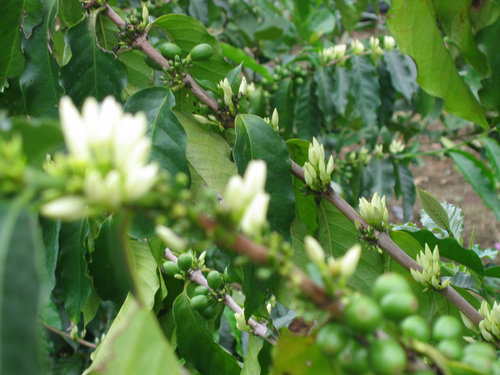
Geisha's Tumultuous Origins
In the 1930s, after World War I ended, the East African nations had long been carved into colonies by European powers, reduced to tools for the powers to extract economic benefits. Ethiopia was one of only two countries at the time that had not been colonized, but its surroundings were almost entirely enveloped by British influence, with troops stationed along the border areas year-round. In order to find coffee varieties that could be commercially planted on a large scale, the British Director of Agriculture stationed in Kenya issued orders to conduct a survey of Ethiopia's wild coffee varieties, and sent border garrison Colonel Richard Whalle to lead troops deep into the Kafa forest in southwestern Ethiopia to collect coffee tree specimens and bring them back for study.
At the time, near the Kafa forest there was a wild forest called Gesha, where the coffee produced was exceptionally delicious and renowned far and wide, and the European colonial powers therefore also set their sights on this homeland of Arabica coffee. The Colonel handed the various coffee seeds he had collected to the British consul stationed in the Maji region, who then transported them to coffee research institutes in Kenya and Tanzania for classification and cultivation. A surviving letter states that they collected about 10 pounds of coffee seeds from a place called Geisha. The letter also mentioned that the Geisha primordial forest belonged to a rainforest zone, where coffee trees grew under dense, tall shade—a typical shaded environment, relatively similar to the growing conditions of coffee in the Sudan region. Because the collection site Gesha was misspelled as Geisha in the report, Geisha has been called by this "wrong name" by the world for over a hundred years.
According to the report documents of the time, this collection work was carried out three times in total: once in 1931 and twice in 1936. The first batch of coffee was sent to Kitale in Kenya for trial planting; the second batch selected seedlings numbered Geisha1, 9, 11, 123, etc., and sent them to the Lyamungu Coffee Research Station in Tanzania for trial planting. Subsequently, the Lyamungu Research Station further characterized these Geisha through artificial selection, selecting a group of seedlings numbered VC496 to VC500.
By 1953, CATIE, the Tropical Agricultural Research and Higher Education Center in Costa Rica, obtained this batch of Geisha seedlings from Ethiopia via the Lyamungu Coffee Research Station in Tanzania. It was not until the 1960s that CATIE sent this batch of Geisha (including the T2722 variety from Hacienda La Esmeralda) to the town of Boquete in Panama, handing it to local farmers to plant in order to combat leaf rust. Another forty years passed before it was discovered by the Peterson family and shone brightly on the BOP stage.
The Story of Geisha Village
Documentary director Adam Overton and his wife Rachel Samuel first encountered the coffee forest where Geisha was discovered in 2007 while filming a coffee documentary for the Ethiopian government. The couple was moved by the charm of Ethiopian coffee and conceived the idea of establishing their own estate. After consulting with numerous judges and advisors in the coffee world, in 2011 they traveled to Geisha's birthplace—the Bench Maji region—hoping to explore the most original Geisha coffee.
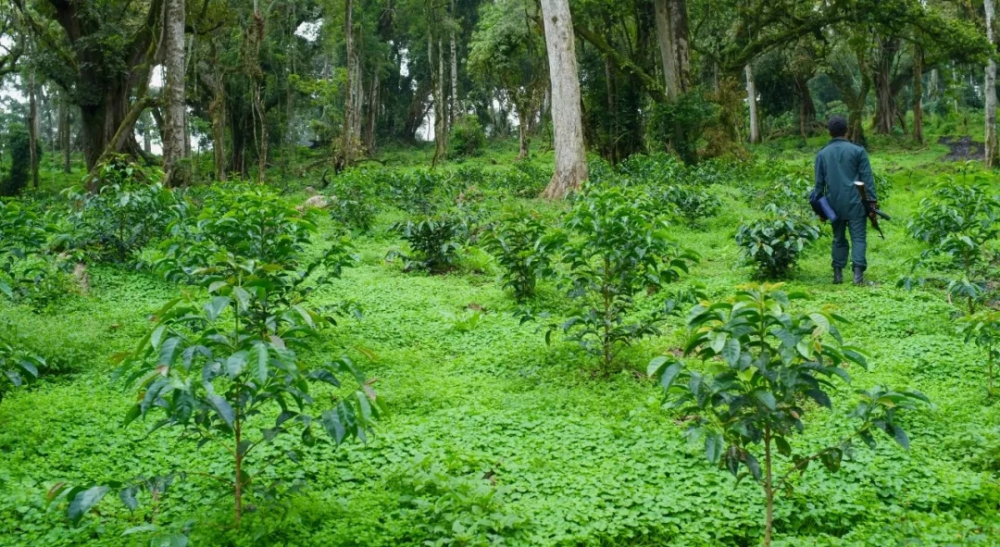
Willem Boot
Geisha Village is located in southwestern Ethiopia near South Sudan, situated in the jungle-dense Bench Maji, where standing in the village one can see the beautiful scenery of the ancient forest. This is a typical Ethiopian highland terrain, and even the lowest-altitude plots exceed 1900 meters. The benefit of high altitude is that it allows coffee cherries to mature slowly in low-temperature conditions, thereby accumulating richer flavor compounds. Adam, together with BOP judge Willem Boot, searched for native Geisha trees in the Gori Gesha forest, discovered wild Geisha coffee trees among a patch of wild coffee trees, collected seeds, and returned to Geisha Village to select and begin cultivating and planting. The couple established a nearly five-hundred-hectare Geisha Village Coffee Estate near the Gori Gesha forest.
Front Street has mentioned in multiple articles that in Ethiopia, coffee is mostly grown by smallholders, and both coffee production and processing plant scale are relatively small, whereas Geisha Village estate is one of the few large farms. To build a professional management system, Adam and his wife established their own washed processing plant and laboratory on the farm. After referencing the standardized planting models of some Panamanian estates that grow Geisha, they likewise numbered and kept detailed records of different planting plots, for later organization and flavor traceability.
From the estate owner's plot divisions, the western part of Geisha Village estate is planted at higher altitudes, especially the three plots OMA, SURMA, and SHEWA-JIBABU, which range from 1900 to 2069 meters, with SHEWA-JIBABU having the highest average altitude. The southern part of the estate has a relatively higher shade ratio, while the northern part receives longer sunlight. Among the estate's eight plots, Adam selected the most suitable variety for each plot based on differences in microclimate such as altitude, soil conditions, and shade conditions, ensuring that each plot could develop distinct flavor characteristics.
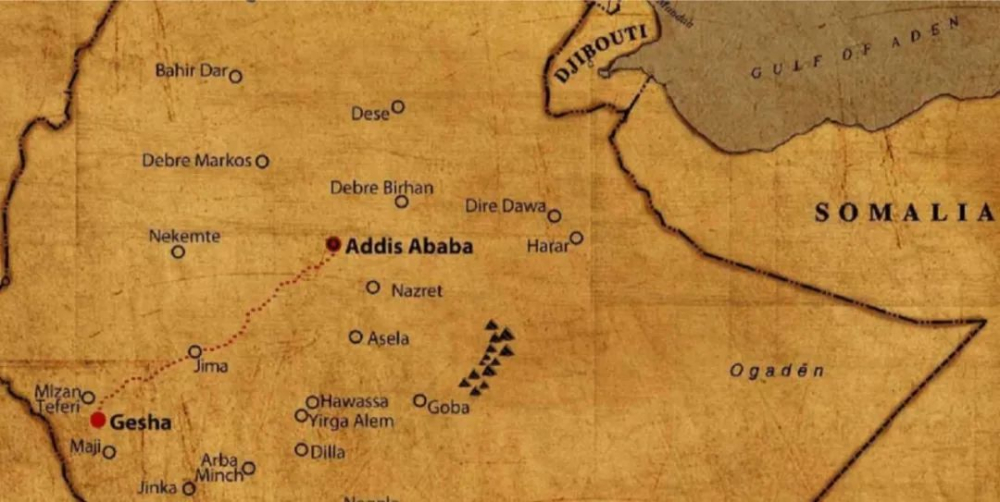
The Different "Labels" of Geisha Village Estate
Ethiopia's most representative Geisha coffee comes from Geisha Village estate. The Geisha varieties here differ from those in Panama; Geisha Village has a total of 3 Geisha varieties: Gori Gesha, Geisha 1931, and Illubabor Forest. Gori Gesha and Geisha 1931 share the same lineage as Panamanian Geisha but are not the same variety. Among them, Geisha 1931 exhibits characteristics very similar to Panamanian Geisha, while Illubabor is a disease-resistant variety provided by the Ethiopian research institute. To ensure the quality of the Geisha coffee produced by the estate, owner Adam established a strict grading system, dividing Geisha into different grades such as Auction, Gold Label, Red Label, Green Label, and CHAKA.
The Geisha Village auction lot is the most顶级 lot among them, obtainable only through buyer bidding. The second-ranked Gold Label Geisha is the flagship product of Geisha Village estate, with the English name "Rarities," which translates to "rare treasures"—in simple terms, it is the highest-grade Geisha launched by Geisha Village (non-auction lots), and the "Gold" in Gold Label comes from the background color of the product trademark. According to the Geisha Village official website, this grade of Geisha coffee accounts for only 10% of the estate's total production. Like Hacienda La Esmeralda Red Label, each lot carries plot information for buyers' reference.
Front Street Coffee: Geisha Village Estate · Gold Label Geisha Coffee Beans
Producing Region: Ethiopia, Bench Maji
Estate: Geisha Village Estate, Oma Plot
Altitude: 1900-2040 meters
Variety: Geisha 1931
Processing Method: Natural
Flavor: Citrus, Berries, Cream, Caramel, Melon, Honey
Unlike the Gold Label grade, Geisha Village Red Label accounts for 15% of total annual production and is high-quality Geisha coffee that scores 88 points or above according to SCA standard cupping, also with complete traceability information. The official name of Red Label is "Growers Reserve." The naturally processed Red Label on Front Street's bean list belongs to the Gori Gesha variety, found by owner Adam in the nearby Gori forest. At the time, he thought it looked very similar to Geisha plants, so he brought it back to the estate to plant and named it Gori Gesha. Therefore, compared to Hacienda La Esmeralda's T2722, it is closer to the native Ethiopian Geisha variety.
Geisha Village's main harvest season is from December to March of the following year. This coincides with the dry season, when there is very little rainfall, so the estate can use raised drying beds for natural drying. Compared to the relatively high-temperature and humid processing seasons in Central and South America, Geisha Village's natural processing more easily highlights a clean and natural natural-process flavor. The naturally processed Geisha Village Red Label not only has the complex fruit, honey, and floral notes characteristic of classic Geisha, but also adds the bright, uplifting acidity of African coffee. Front Street considers this a very cost-effective Geisha lot, worth purchasing for Geisha enthusiasts.

Front Street Coffee: Geisha Village Estate · Red Label Geisha Coffee Beans
Producing Region: Ethiopia, Bench Maji
Estate: Geisha Village Estate, Shewa-Jibabu Plot
Altitude: 1973-2069 meters
Variety: Gori Gesha
Processing Method: Natural
Flavor: Lemon, Plum, Citrus, Tropical Fruit, Floral Tea
Next, Front Street will demonstrate the brewing steps for the store's Geisha Village Red Label. You can use it as a reference and compare it with your own brewing approach.
Pour-over recommendations for Geisha Village Red Label coffee:
Dripper: V60
Water Temperature: 91-92°C
Coffee Dose: 15g
Coffee-to-Water Ratio: 1:15
Grind Size: Fine sugar size (20号筛碗筛粉到80%)
Three-Stage Extraction: First, pour 15 grams of coffee powder into the dripper and tare the weight. For the first stage, pour 30g of water for blooming for 30 seconds, and start the timer at the same time. Use a slow, small stream throughout, starting from the center point and spiraling outward, making sure to wet the entire coffee bed.
For the second stage, use a slightly larger stream to pour 120g of water, with the aim of lifting the entire coffee bed. The water column should be poured vertically and evenly. At this point the scale reads 150g, and the pour should be completed in about 55 seconds.
When the liquid level drops to about halfway, begin the third stage using a small stream in a tight spiral, pouring 90 grams. Try to control the stream so it doesn't spiral too wide, as that can easily disturb the coffee bed and cause under-extraction. The total water poured is 240 grams, and the drip completion time is about 2 minutes 10 seconds. Remove the dripper, swirl the coffee in the server to mix evenly, and it's ready to taste.
The above content is compiled by CoffeeHunters, a coffee news website.


