







How Does a Moka Pot Handle Golden Mandheling?
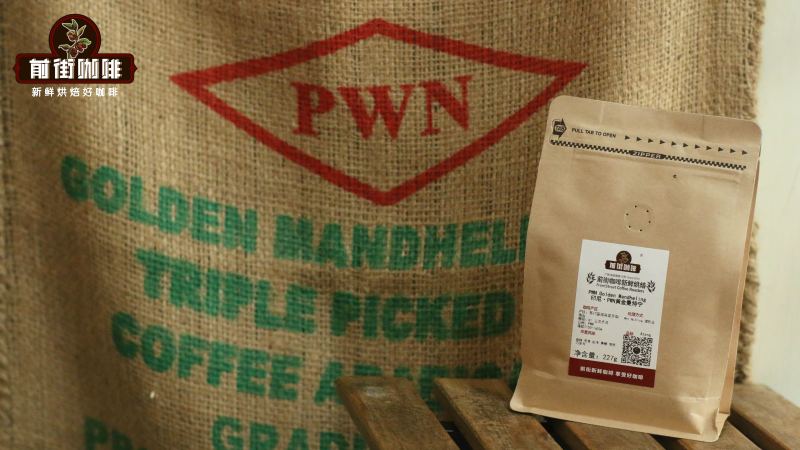
Golden Mandheling is a registered trademark held by PWN, the Indonesian exporter founded in 1957, not a coffee grade in itself. The beans come from North Sumatra, are sorted by hand at least three times, hold a screen size of 18 and above, and keep defects under 3 beans per 300 grams of green coffee, which places them in the G1 category.
Because the green beans carry relatively high moisture, the roast needs a longer dehydration phase before first crack, and caramelization and pyrolysis shape the final flavor. The same bean also works well in a moka pot iced latte, where concentrated brewed coffee is poured over ice and milk for a sweet, low-acid drink.
Golden Mandheling is not a coffee grade, but a registered trademark held by the Indonesian company PWN—founded in 1957, it was the first company in Indonesia to export coffee from North Sumatra, and a key force behind making Mandheling famous in Japan. Front Street Golden Mandheling comes from PWN, belongs to the highest grade G1, undergoes more than three rounds of hand sorting, with a screen size of 18 and above, and defects controlled at no more than 3 beans per 300 grams of green coffee. This bean has a relatively high moisture content, so extra care is needed during the dehydration stage when roasting. This article will fully outline the roasting curve from bean loading, dehydration, first crack, to discharge, explain in detail how caramelization and pyrolysis reactions shape the flavor, and finally include the full process for making an iced latte with a moka pot.
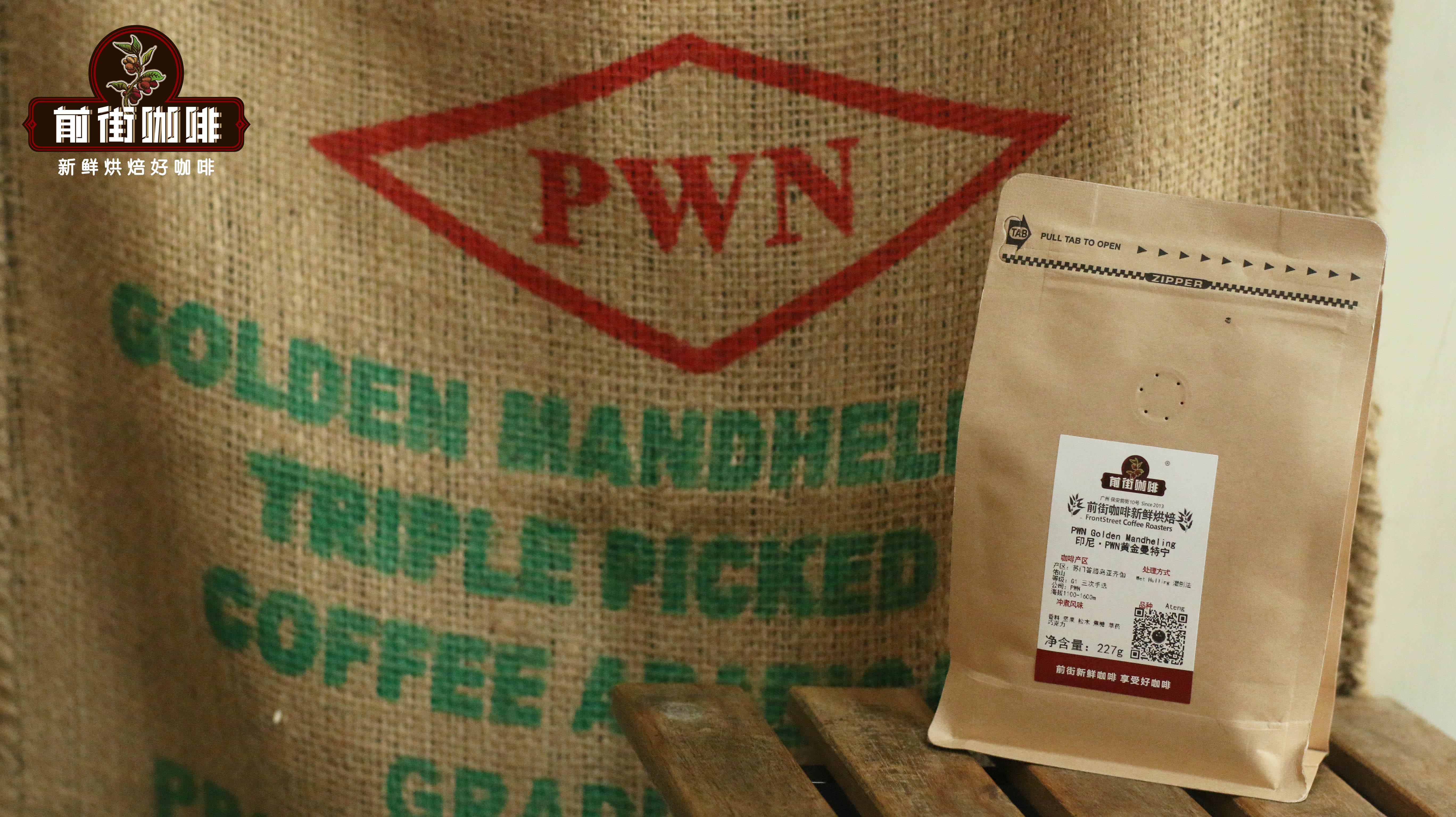
First, one point must be clarified: Golden Mandheling represents a trademark, not a coffee classification. This trademark is registered and held by the Indonesian company N.V. Pawani Medan, commonly known in the industry as PWN. PWN was founded in 1957, and its business covers the export trade of Indonesian specialty products such as coffee, rubber, cinnamon, cloves, and patchouli oil. It was not only the first enterprise in North Sumatra to engage in coffee export, but also the earliest company to promote "Mandheling coffee" to the Japanese market. Starting in 1977, PWN focused on the export of high-quality coffee beans, mainly Sumatra Arabica Mandheling Grade 1 and Robusta AP-I Grade 2, with products sold mainly to Japan, Taiwan, China, and the United States. Among these, Japan and Taiwan, China together account for more than 95% of its export volume. In these two markets, the three letters "PWN" are almost synonymous with "quality guarantee."
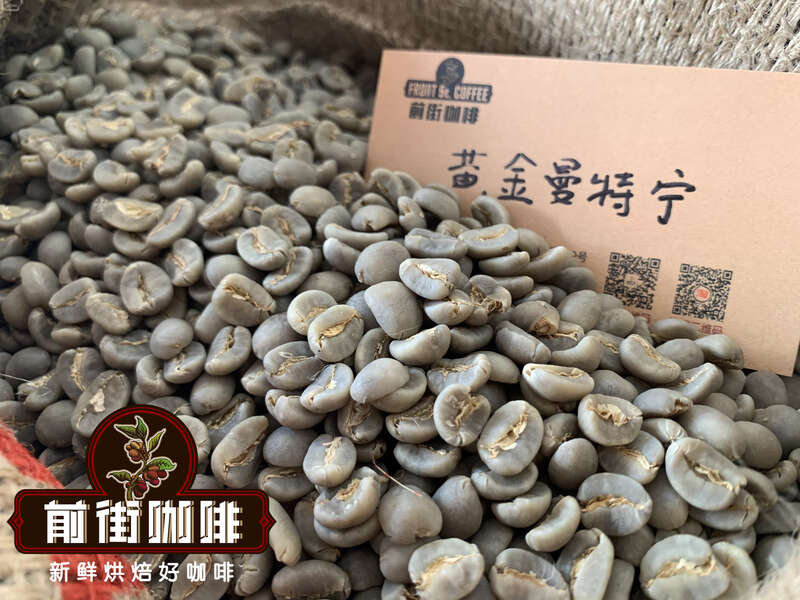
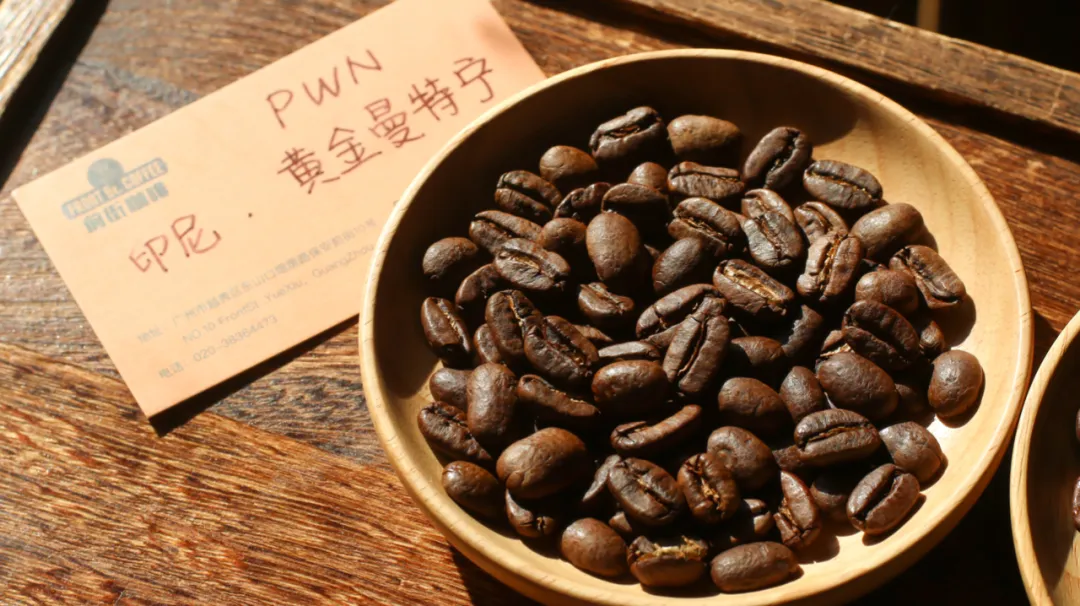
Front Street Golden Mandheling coffee beans are sourced precisely from PWN's Golden Mandheling. After harvesting and drying are completed, this batch of beans still undergoes at least three rounds of purely manual sorting to ensure a screen size of 18 and above, with defects controlled at no more than 3 beans per 300 grams of green coffee sample, belonging to the highest grade G1. The green beans of PWN Golden Mandheling are darker green in color, and the bean shape is neat flat beans.
In actual practice, Front Street has found that Mandheling belongs to the type of green coffee with relatively high moisture content. Compared with natural-process beans, it differs considerably in moisture indicators, so the dehydration stage requires particular attention. For high-moisture green coffee, you can try closing the damper immediately after loading the beans, letting them steam for 30 seconds, and then setting the damper to 3; when the green beans turn light green or white, open the damper to 4; after entering first crack, open it to 5 (the maximum setting).
In summary, the goal is to roast Golden Mandheling thoroughly from the inside out. On the premise of ensuring it is fully roasted, use appropriate roasting techniques to fully release the flavor of this bean. Among the many stages that affect coffee flavor, the caramelization reaction plays the most critical role. After six to seven minutes of roasting, the green beans have absorbed a large amount of heat energy, the pyrolysis reaction then begins, the first cracking sound appears, some sugars are converted into carbon dioxide, moisture continues to evaporate, new aromatic components are gradually generated, coffee oils are thus formed, and combine with hundreds of aromatic substances such as nicotinic acid, citric acid, quinic acid, malic acid, acetic acid, and caffeine.
The pyrolysis reaction can continue all the way to second crack. Although caramelization is an important process for awakening aromatic substances, if the roasting time is dragged out too long, some components will also be carbonized, producing unpleasant astringent and bitter substances. The key is how to achieve the highest degree of caramelization while keeping carbonization to a minimum, avoiding the appearance of defective flavors such as burnt flavor and tire-like flavor.
When the roaster temperature rises to 200°C, load the beans, with the damper set to 3; after 1 minute, adjust the heat to 160°C, keeping the damper unchanged; roast until 5 minutes 40 seconds, when the temperature reaches 148°C, the bean surface turns yellow, the grassy smell completely disappears, and dehydration is complete. At this point, lower the heat to 140°C and set the damper to 4;
At 9 minutes 40 seconds, unattractive wrinkles and dark streaks appear on the bean surface, and the toast-like smell clearly changes into coffee aroma. This can be regarded as the prelude to first crack, and at this time you must carefully distinguish the sound of the first crack point; first crack begins at 9 minutes 54 seconds, lower the heat to 60°C, open the damper fully (when adjusting the heat you must be very careful, and it must not be so low that the cracking sound cannot be heard), and discharge at 204.5°C.
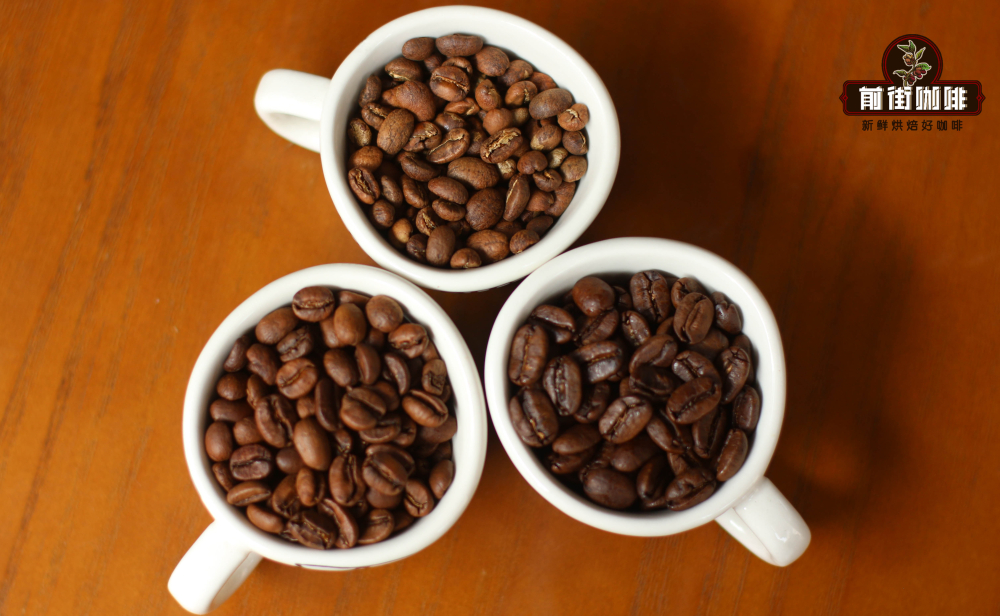
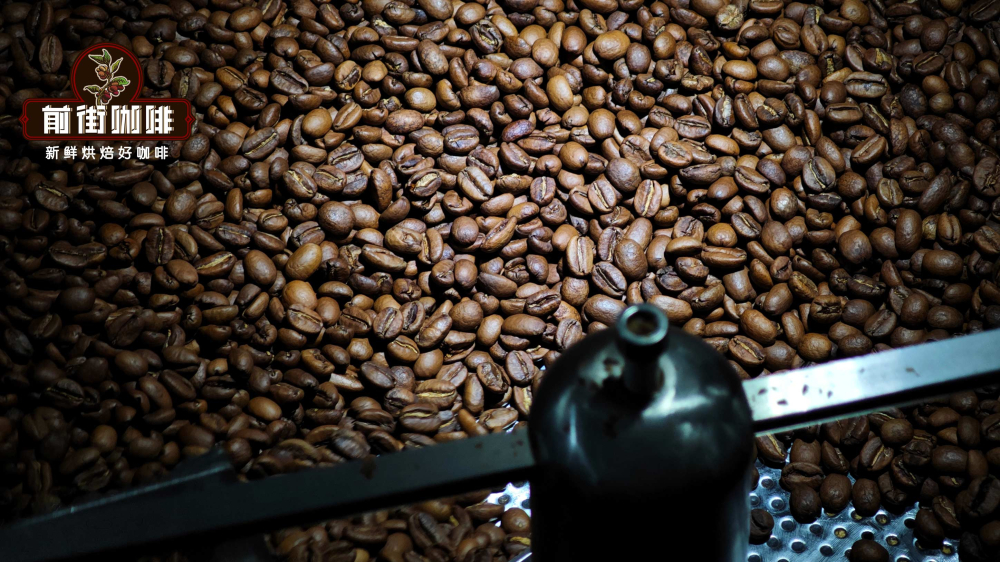
Front Street PWN Golden Mandheling is a medium-dark roast and naturally carries rich caramelized aroma. When freshly roasted, it releases beautiful coffee oils, and it is suitable for pour-over, French press, AeroPress, siphon, and moka pot, and can even be easily handled by a home coffee machine.
First prepare all the materials needed to make coffee: freshly roasted Front Street PWN Golden Mandheling coffee beans, water, a moka pot, and a heat source for heating.
1. Add water: first pour in an appropriate amount of hot water. The advantage of using hot water is that it shortens the time needed to bring the water to a boil, letting us get a cup of moka pot coffee faster!
(Front Street uses a double-portion single-valve moka pot, filled with 130ml)
2. Fill with coffee grounds: put an appropriate amount of freshly ground Front Street PWN Golden Mandheling coffee grounds into the filter basket, then place the filter basket into the lower chamber.
(18g grounds)
It should be noted that after pouring the coffee grounds into the filter basket, it is best to tap the filter basket gently, in order to let the coffee grounds settle downward naturally and fill the gaps, reducing the probability of channeling. After filling, simply level the surface of the grounds with your finger. Note that if the coffee grounds used are ground too finely, it is best not to tamp them, because doing so will increase the resistance of the filter basket and make it harder for hot water to pass through.
3. Tightly screw the upper chamber and lower chamber together: at this step, note that if hot water has been added, it is best to use a wet cloth for insulation to avoid burns.
4. Place on the heat source and start brewing: there is nothing particularly special to say about this step—just place the moka pot on a heat source capable of conducting heat and heat it.
5. Turn to low heat and wait for the coffee liquid to seep out: after brewing until the moka pot makes an obvious sound, it means the hot water, driven by steam, is about to rush out with the coffee substances, and at this point the heat needs to be lowered.
Otherwise, high heat will continuously produce steam and increase pressure, and the hot water will flow faster because the pressure is too strong, making it impossible to extract enough coffee substances, and ultimately the taste of the whole cup of coffee will become weak. So when the coffee liquid is about to overflow, it is best to lower the heat.
6. Stop heating and wait for extraction to finish: when half of the coffee liquid has already flowed out, turn off the heat source, because the residual heat inside the moka pot is already enough to "push" out the remaining hot water.
7. Taste the coffee: after the moka pot stops dispensing liquid, pour out the coffee liquid, add 150ml milk and 100g ice cubes, and the moka pot iced latte is done.
The above content is compiled by CoffeeHunters, a coffee news website.


