







What do arabica beans mean for Yirgacheffe flavor?
Yirgacheffe is a coffee-producing region in southern Ethiopia, grown at roughly 2,000 meters, where mist and mild year-round temperatures shape a flavor of citrus acidity and delicate white floral notes. Its heirloom variety, known as HEIRLOOM, is part of what arabica beans mean for this origin: a distinctive regional profile rather than a single uniform taste.
Yirgacheffe was once classified under the Sidamo region and became independent partly because growers outside the area labeled their coffee as Yirgacheffe. Natural and washed processing produce different flavor results, and lightly roasted beans are often used to keep the lemon and floral notes intact. Front Street's Yirgacheffe offerings follow that same citrus-and-floral direction.
Yirgacheffe is where many coffee lovers take their first step into the world of specialty coffee. Its bright citrus-like acidity and delicate white floral notes are enough to overturn people's preconceptions about coffee. This article will give you a comprehensive understanding of Yirgacheffe's origin story, varietal characteristics, and flavor code: from how it became independent from the Sidamo region, to the origin of the local heirloom variety HEIRLOOM, and then to the flavor differences brought by the two processing methods, natural and washed. At the same time, combined with examples from the Front Street Coffee bean list, it includes brewing parameter suggestions for medium-light roasted Yirgacheffe to help you understand this classic African coffee more systematically.
Many people's first impression of coffee is not a good one, often carrying the prejudice that it is "like dishwashing water." Until one day, a friend who has long been immersed in the world of specialty coffee pulls you into an inconspicuous little shop and serves you a cup of coffee. At the moment it touches your lips, intertwined sweetness and acidity and faintly floating floral aromas rush over you, and the stereotype you have held for years instantly crumbles. You cannot help asking: What coffee is this? The answer is Yirgacheffe. From then on, you too become a loyal fan of specialty coffee.
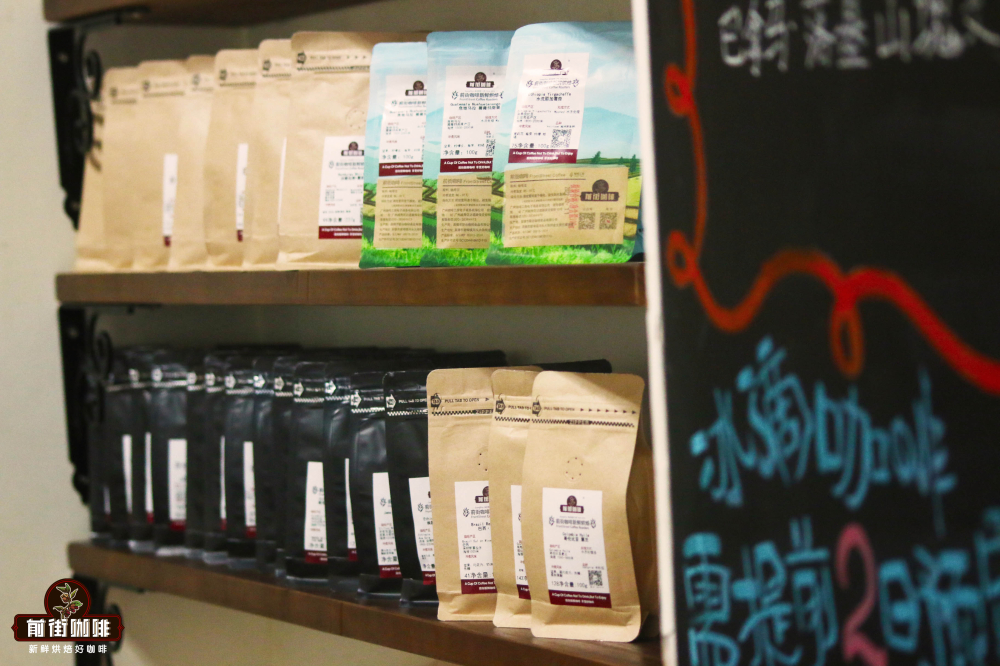
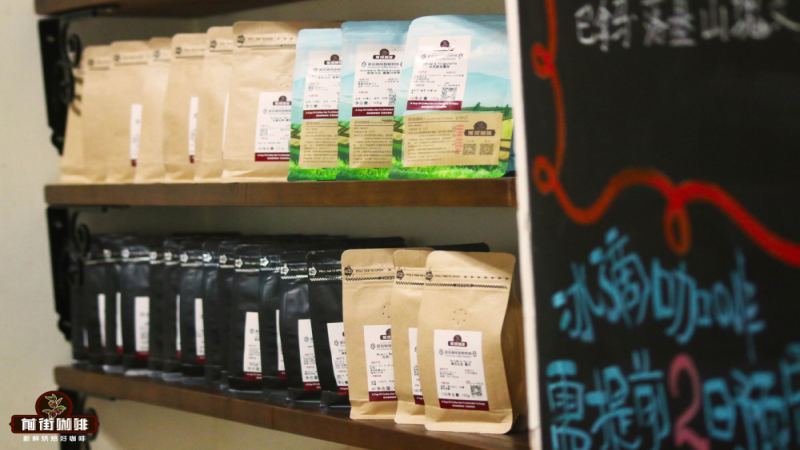
If you ask coffee lovers which bean led them through the door into specialty coffee, most will mention Yirgacheffe. Its highly recognizable flavor means that the many Yirgacheffe products launched by Front Street all revolve around lemon notes and delicate white floral aromas.
The Yirgacheffe producing region occupies a pivotal position in Ethiopia. Coffee is grown at an altitude of about 2,000 meters, making it one of the highest coffee-producing regions in the world. It is shrouded in mist year-round, cool in summer, warm in winter and cool in summer, with a spring-like climate throughout the four seasons, nurturing Yirgacheffe's unique regional flavor of interwoven citrus and floral notes.
Yirgacheffe was originally classified under the Sidamo producing region. Because the coffee it produces has a delicate white floral aroma rarely seen elsewhere, many growers whose coffee was not actually produced in Yirgacheffe also labeled their products as "Yirgacheffe." For this reason, Yirgacheffe eventually separated from Sidamo and became an independent coffee-producing region.
Yirgacheffe itself is a highland town in the Gedeo Zone and was historically a wetland. In the local ancient language, "Yirga" means "to settle down," while "Cheffe" refers to "wetland." Together they form the name of this town.
In the early days, Yirgacheffe coffee beans were almost all processed using the most traditional natural method. By the 1970s, in order to improve green bean quality, the local government introduced the more advanced washed processing method from Central and South America. After harvesting, the coffee cherries are first deprived of their skin and pulp, then the mucilage layer is repeatedly rinsed with clean water, and finally the beans are spread on raised drying beds for drying.
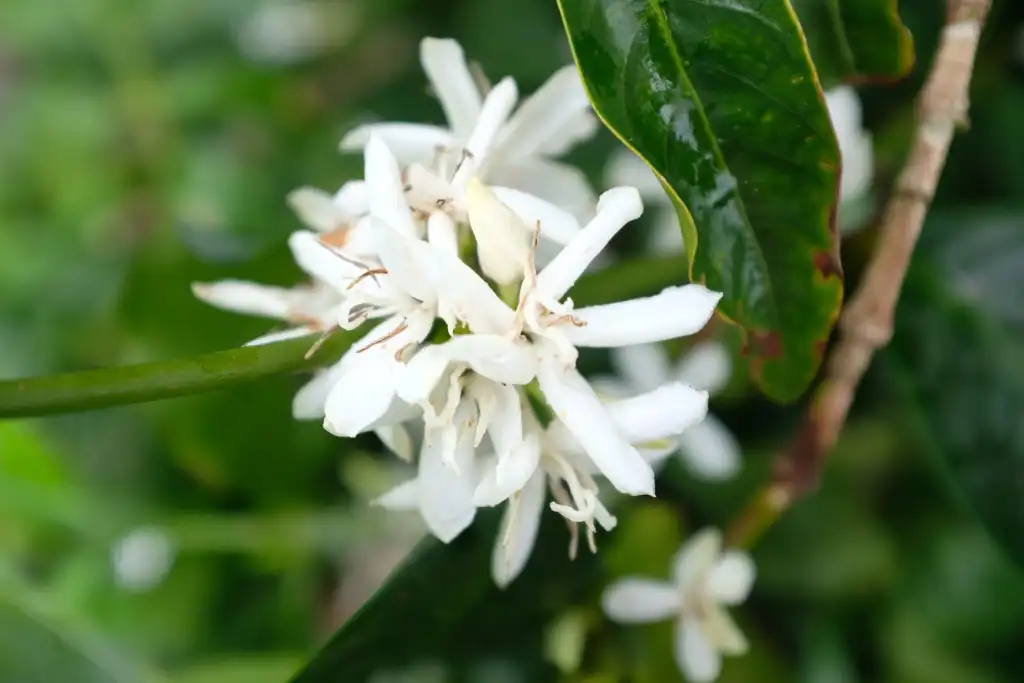
Washed Yirgacheffe coffee beans have a clean, fresh, soft, and smooth mouthfeel, with especially prominent floral aromas, allowing more people to recognize for the first time the uniqueness of Yirgacheffe's regional flavor. Even Han Huaizong, a master of specialty coffee in Taiwan, China, described it as "a hundred flowers in full bloom," which shows just how great its charm is and how it has captivated countless coffee connoisseurs.
Of course, Yirgacheffe is a vast producing region, and within it there are also estates and cooperatives of different sizes. Coffee beans from different plots also show subtle differences in flavor. On the Front Street Coffee bean list, there are several coffees from the Yirgacheffe producing region, including the Red Cherry Project, Gotiti Cooperative, Worka Cooperative, Kochere, and Konga Cooperative, among others. These Yirgacheffe beans include both washed and natural processing methods, offering coffee lovers a rich and varied experience.
So what exactly is the difference between natural Yirgacheffe and washed Yirgacheffe?
The natural processing method spreads whole ripe coffee cherries on raised beds to dry in the sun, turning the fruit regularly during this period to ensure even drying and avoid unpleasant fermented flavors. Because the pulp and mucilage layer are rich in sugars, when the whole fruit is retained during drying, more sugars can fully penetrate into the green coffee beans over the long period. Therefore, naturally processed Yirgacheffe has a more intense aroma, more prominent sweetness, and at the same time a hint of fermentation.
On the Front Street Coffee bean list, the natural Yirgacheffe coffees include Konga and the Red Cherry Project. Natural Konga has lemon acidity on the palate, with faint white floral notes emerging and an appealing honey-like sweetness; natural Red Cherry presents dark berry notes, accompanied by fermented fruity aromas, with very obvious sweetness.
The washed processing method removes the skin and pulp, then places the beans in a washing tank to ferment and remove mucilage. During fermentation, some of the acid produced penetrates into the interior of the coffee beans. By the drying stage, the skin, pulp, and mucilage outside the parchment of the beans with husk have long been cleaned away, so washed Yirgacheffe lacks the rich fruity aroma characteristic of natural processing, but its mouthfeel is cleaner and brighter, and its acidity is more vivid.
Front Street Coffee's bean list has quite a few washed Yirgacheffe beans, such as Gotiti, Worka, and Kochere. Among them, in Front Street Coffee's daily ration bean series, there is a washed coffee bean produced in the Yirgacheffe producing region. The purpose of the daily ration bean series is to allow coffee lovers who have just started out to become familiar with the regional flavors of major producing areas in less time and at lower cost.
If you have noticed the variety information on the packaging of Front Street Coffee's Yirgacheffe coffee beans, you may be puzzled by the line "local heirloom": coffee bean varieties from other producing countries are written as Yellow Bourbon, Geisha, Caturra, Catuai, and so on, but what exactly is local heirloom?
The English original of local heirloom is HEIRLOOM, whose basic meaning is "a precious item passed down from generation to generation." In the coffee field, this word is used to refer to ancient varieties of Arabica coffee. It is translated into Chinese as "local heirloom" and is now specifically used to refer to coffee varieties from Ethiopia.
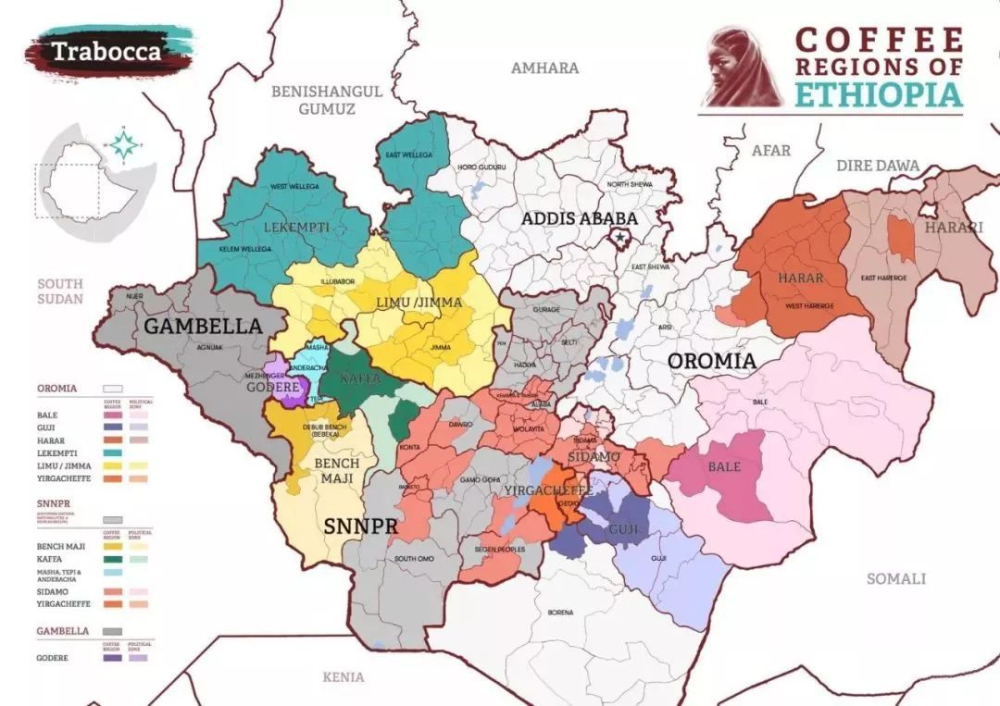
Ethiopia is widely recognized as the birthplace of coffee, and the country's coffee gene pool is extremely rich. It is estimated that Ethiopia has tens of thousands of local heirloom varieties, most of which have not yet undergone formal genetic identification. With such a huge number of varieties, identification is naturally not easy. On the other hand, out of consideration for keeping species genetic information confidential, the Ethiopian government uniformly calls them local heirlooms.
When brewing Yirgacheffe coffee beans, Front Street Coffee mostly uses medium-light roasting to highlight the flavor profile everyone associates with Yirgacheffe, mainly lemon acidity and floral aromas.
Because Yirgacheffe coffee beans are relatively lightly roasted, flavor compounds dissolve more slowly during brewing than in dark-roasted beans. Therefore, Front Street recommends using hotter water and a finer grind. On the one hand, high temperature can accelerate the exchange of flavor compounds; on the other hand, it increases the surface area of contact between coffee grounds and hot water. Pairing this with a faster-flow dripper, such as the Hario V60, can prevent prolonged contact between hot water and coffee grounds that would lead to over-extraction.
Dripper: Hario V60
Water temperature: 90 degrees Celsius
Coffee dose: 15 grams
Coffee-to-water ratio: 1:15
Grind size: 80% passing a Chinese standard No. 20 sieve
Even if Front Street Coffee ships coffee beans freshly roasted within 5 days, by the time they arrive they have already gone through a 4 to 7 day resting period. Front Street still recommends pre-infusion during brewing to promote the release of carbon dioxide from the coffee grounds and make the later stages of extraction more stable.
Specific operation: first pour 30 grams of hot water for a 30-second pre-infusion, then slowly pour in a thin stream from the center in circles up to 125 grams. When the water level in the dripper drops to the point where the coffee bed is about to be exposed, continue pouring in circles up to 225 grams. Total extraction time is about 2 minutes.
For more coffee bean information, please follow Coffee Workshop (WeChat public account cafe_style) For professional coffee knowledge exchange, please add WeChat ID kaixinguoguo0925
The above content is compiled by CoffeeHunters, a coffee news website.


