







How does the wet-hulled process shape Mandheling flavor?
PWN Golden Mandheling G1 is a premium grade of Sumatra Mandheling, and its flavor comes largely from the wet-hulling process used on the island. That method, combined with Sumatra's volcanic soil and tropical rainforest climate, produces the herbal, woody and spice notes the coffee is known for.
Coffee cultivation in Indonesia began on Java and later spread to Sumatra, Bali and Sulawesi, with most output grown around Lake Toba and Lake Tawar in Aceh and North Sumatra. Roughly ninety percent of Indonesian coffee is Robusta; northern Sumatra's Arabica is sold as Lintong and Mandheling.
Mandheling coffee is one of Sumatra's most iconic coffees, and PWN Golden Mandheling G1 is a premium grade among them. Starting from the origins and distribution of Indonesian coffee, this article reviews the geographical and climatic conditions of Sumatra coffee, explains how the wet-hulling process shapes Mandheling's unique flavor, and shares Front Street Coffee's practical roasting notes for this Golden Mandheling G1. The article also records genuine customer feedback on this bean from a cupping session, dissecting its layers of taste from spice and herbs to caramel and chocolate—ideal reading for coffee lovers who want to understand Mandheling in depth.
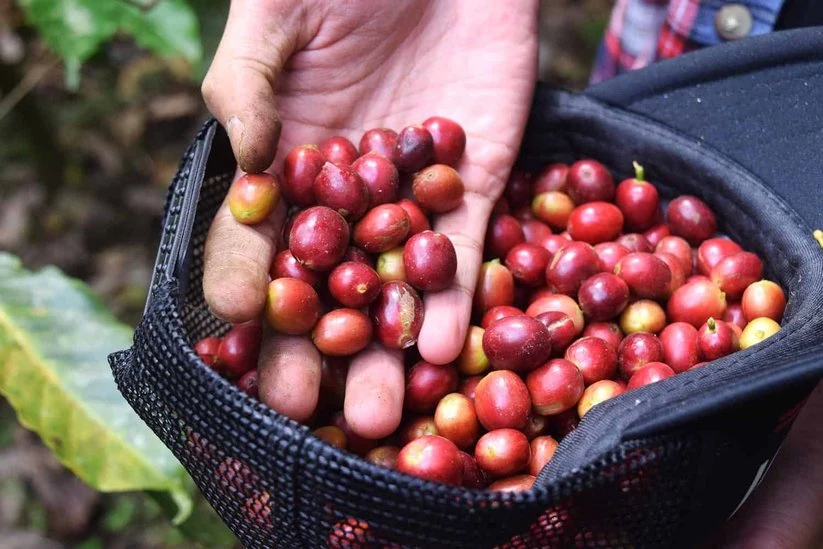
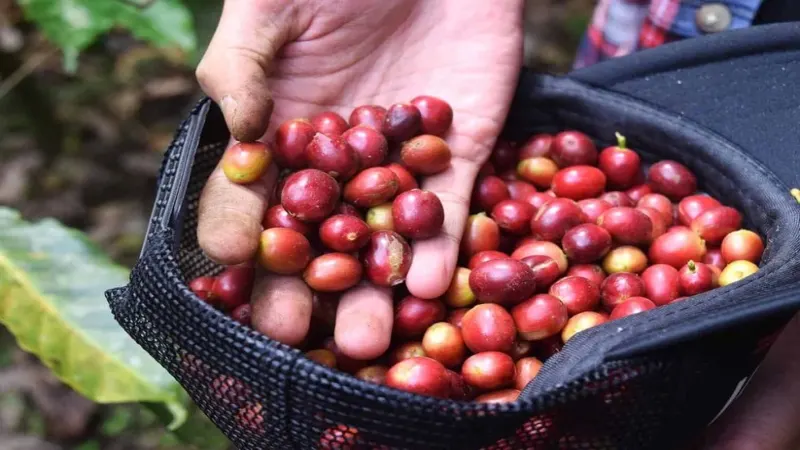
Coffee cultivation in Indonesia can be traced back to the island of Java, and today the main growing regions have spread to other islands; Sumatra, Bali, and Sulawesi are all significant coffee origins there. Sumatra coffee is nothing short of a legend in the coffee world—this is one of the earliest regions in the world to cultivate coffee on a large scale, with the vast majority of coffee coming from Aceh Province in the north and North Sumatra Province (known as "North Sumatra") to the south of Aceh.
These two main origins are located around well-known local volcanic lakes, namely Lake Toba and Lake Tawar, traditionally corresponding to the Lintong and Aceh growing regions respectively. Volcanic eruptions gave Sumatra fertile soil, and the coffee produced there often carries notes of herbs, wood, and spices—a characteristic that the Japanese discovered and appreciated years ago.
Mandheling coffee comes from Sumatra, Indonesia, in Asia, and is also known as "Sumatra coffee." The main origins include Java, Sulawesi, and Sumatra, of which about ninety percent is Robusta. The "Mandheling" produced on Sumatra is the most famous. Among the fine traditional Arabica coffees produced in northern Sumatra, the best quality ones are sold on the market under the names Lintong and Mandheling. Strictly speaking, Lintong refers to coffee grown in a small area southwest of Lake Toba in the Lintong administrative region.
The processing method used for each coffee bean depends on the local climate and environment, and it also better reflects the local coffee flavor. Sumatra is the largest island in Indonesia, located on the equator with a tropical rainforest climate—hot and humid with abundant rainfall—and smallholder coffee farmers usually grow coffee in virgin mountain forests.
Sumatra is rich in water resources and warm year-round, but it has one obvious shortcoming: the local weather is mostly cloudy and rainy with frequent typhoons, making it hard to meet the good weather that sun-drying requires. Combined with limited local economic conditions that cannot afford the higher-cost washed method, this gave rise to the highly distinctive wet-hulling process. It is precisely this seemingly accidental processing method that creates Mandheling's one-of-a-kind flavor.
The wet-hulling process is characterized by: after the coffee cherries are picked, the skin and pulp are first removed with a wooden pulper, followed by 3 hours of fermentation, then drying until the moisture content drops to 30% to 50%, which is semi-dry and semi-wet. Next, the mucilage and parchment layer are removed, and the later stage of drying continues. The entire drying process takes 2 to 4 days, with the moisture content finally dropping to 12% to 13%.
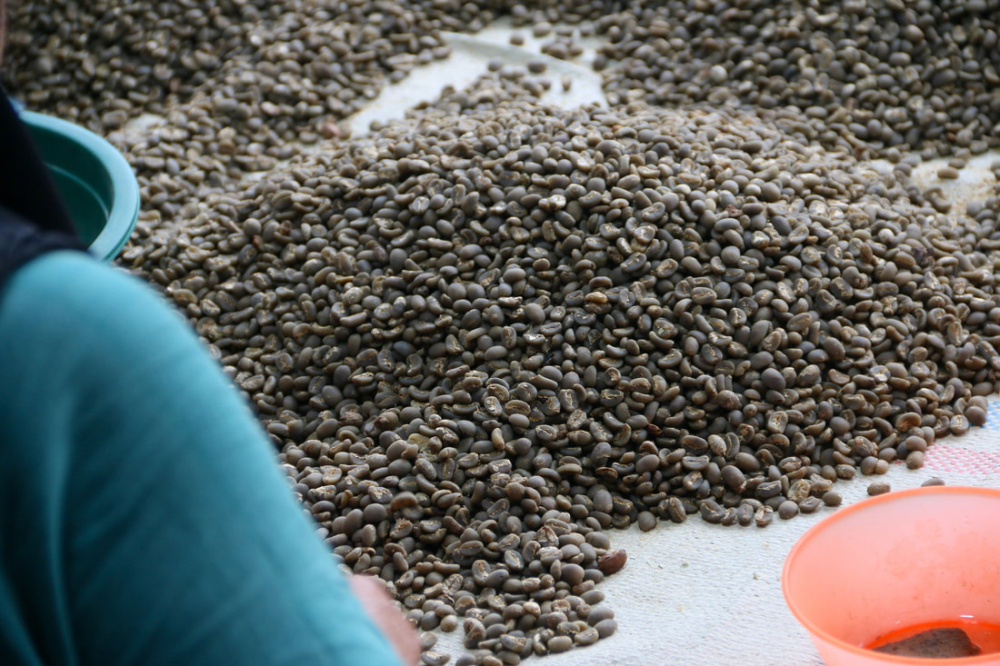
Front Street believes that although the wet-hulling process greatly speeds up overall processing, removing the parchment layer while semi-dry requires considerable friction, and the green beans are easily crushed and damaged, especially with small notches forming at both ends. As a result, Indonesian coffee beans processed by wet hulling generally have a relatively high defect rate, and green bean traders arrange manual sorting before export sales to remove incomplete beans with defects.
Front Street Golden Mandheling Roasting Notes
When roasting Front Street Golden Mandheling coffee beans, a medium-dark roast level is used, with the aim of erasing Mandheling's excessive acidity and enhancing its body and balance. Front Street Golden Mandheling is a green bean with relatively high moisture, showing a large moisture deviation from sun-dried beans, so the dehydration stage requires extra attention. Front Street recommends closing the damper immediately after charging the green beans, steaming for 30 seconds, then opening the damper to 3; once the green bean color turns light green or white, open the damper to 4, and after first crack open it to maximum.
Machine: Yangjia 800N, 550g green beans charged Charge temperature: 200°C Turning point: 5'40", 148°C First crack: 9'54", 191.2°C Development after first crack for 3 minutes 30 seconds, dropped at 204.5°C
Front Street PWN Golden Mandheling coffee drinks with an intense spicy, herbal flavor, showing an overall mellow, sweet-bitter mouthfeel, accompanied by a caramel note and aromas of chocolate, cedarwood, and roasted nuts, with a finish like ripe Pu'er—remarkably layered.
The above content is compiled by CoffeeHunters, a coffee news website.


