







Which brewing method brings out Panama Geisha best?
Panama Geisha can be brewed by pour-over, siphon or French press, and each method shows a different side of the coffee. Pour-over highlights its jasmine, berry and citrus aromatics, siphon gives a fuller body with layered sweetness, and French press pushes texture and fruit depth forward.
Geisha was first found in 1931 in Ethiopia's Geisha forest, reached Kenya, then Uganda and Tanzania in 1936, Costa Rica in 1953, and Panama in the 1970s via seeds from CATIE. Hacienda La Esmeralda's early plantings made the variety famous in auctions and competitions.
For a long time, domestic perceptions of top-tier coffee were largely influenced by Japan, with Jamaican Blue Mountain and Hawaiian Kona occupying the pantheon. However, as the specialty coffee wave swept the globe, Panama Geisha rose abruptly, becoming the new generation of coffee royalty with its astonishing aromatic expression and auction prices. This article systematically traces the variety's origins and spread, reviews its glorious record in international competitions and auctions, and introduces in detail the product positioning of Front Street Emerald Red Label, Green Label, and Boquete Geisha. The article focuses on three extraction methods: pour-over, siphon, and French press, providing specific parameters and operational steps for each, taking you through different dimensions to experience Geisha's signature jasmine, berry, and citrus notes.
For a long period in the past, the Chinese standard for judging top-tier coffee largely followed Japan's cognitive framework, with Jamaican Blue Mountain and Hawaiian Kona respectively occupying the "King and Queen" on the coffee throne. However, as growing standards in producing countries continued to improve and information exchange became increasingly convenient, more and more specialty coffees entered the public eye, and Panama Geisha is precisely the new generation of coffee royalty that has risen in recent years.
Geisha Variety Origins:
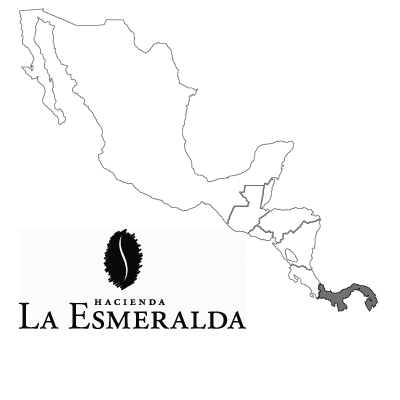
The Geisha variety was first discovered in 1931 in the Geisha forest of Ethiopia, then sent to a coffee research institution in Kenya; in 1936 it was introduced to Uganda and Tanzania, in 1953 Costa Rica began cultivation, while Panama received its first seeds in the 1970s, when Mr. Francisco Serracin of Hacienda La Esmeralda obtained seeds from CATIE in Costa Rica, thus beginning Geisha's cultivation history in Panama.
Geisha swept through the coffee world like a hurricane, and this wave of change was so rapid that the long-reigning King and Queen of the coffee kingdom—Jamaican Blue Mountain and Hawaiian Kona—had to yield somewhat. This wild variety native to Ethiopia, after weathering countless competitions, is now widely cultivated across major coffee-producing regions, and its most famous ambassador is undoubtedly Panama's Hacienda La Esmeralda. The most well-known Geisha currently on the market is Front Street Emerald Estate Red Label, which is one of Panama's highest-grade products, possessing Geisha's most iconic classic flavors. It is suitable for beginners and advanced enthusiasts looking to improve their tasting skills, or as a gift for family and friends.
Geisha is pronounced the same as the Japanese word for "geisha," hence it also acquired the nickname "geisha coffee." Because the tree is taller than ordinary coffee trees, it was initially planted only in a small section of the estate as a windbreak. Later, the estate owner's son, in order to participate in the annual Best of Panama competition, tested every coffee variety on the estate one by one, which gave Geisha its chance to shine; thereafter it went on to compete in various world coffee competitions, accumulating eleven championships.
- Champion: Best of Panama (2004, 2005, 2006, 2007)
- Champion: SCAA Roasters Guild Cupping Pavilion (2005, 2006, 2007)
- Champion: Rainforest Alliance Cupping for Quality (2004, 2006, 2007, 2008)
Such a dazzling record makes Geisha shine brilliantly like a green diamond, and it is also highly sought after in the international coffee auction market, repeatedly setting new high-price records.
- Best of Panama 2004 Auction: $21/pound
- Best of Panama 2005 Auction: $20/pound
- Best of Panama 2006 Auction: $50/pound
- Best of Panama 2007 Auction: $130/pound
In the following years of 2008 and 2009, Esmeralda held its first single-estate auction, categorizing estate products by harvest region or time and opening bidding directly to global buyers. The highest auction prices in 08/09 once again broke the hundred-dollar mark!
- Esmeralda Special 2008 Auction: $105/pound
- Esmeralda Special 2009 Auction: $117/pound
Pour-Over Extraction of Geisha Coffee:
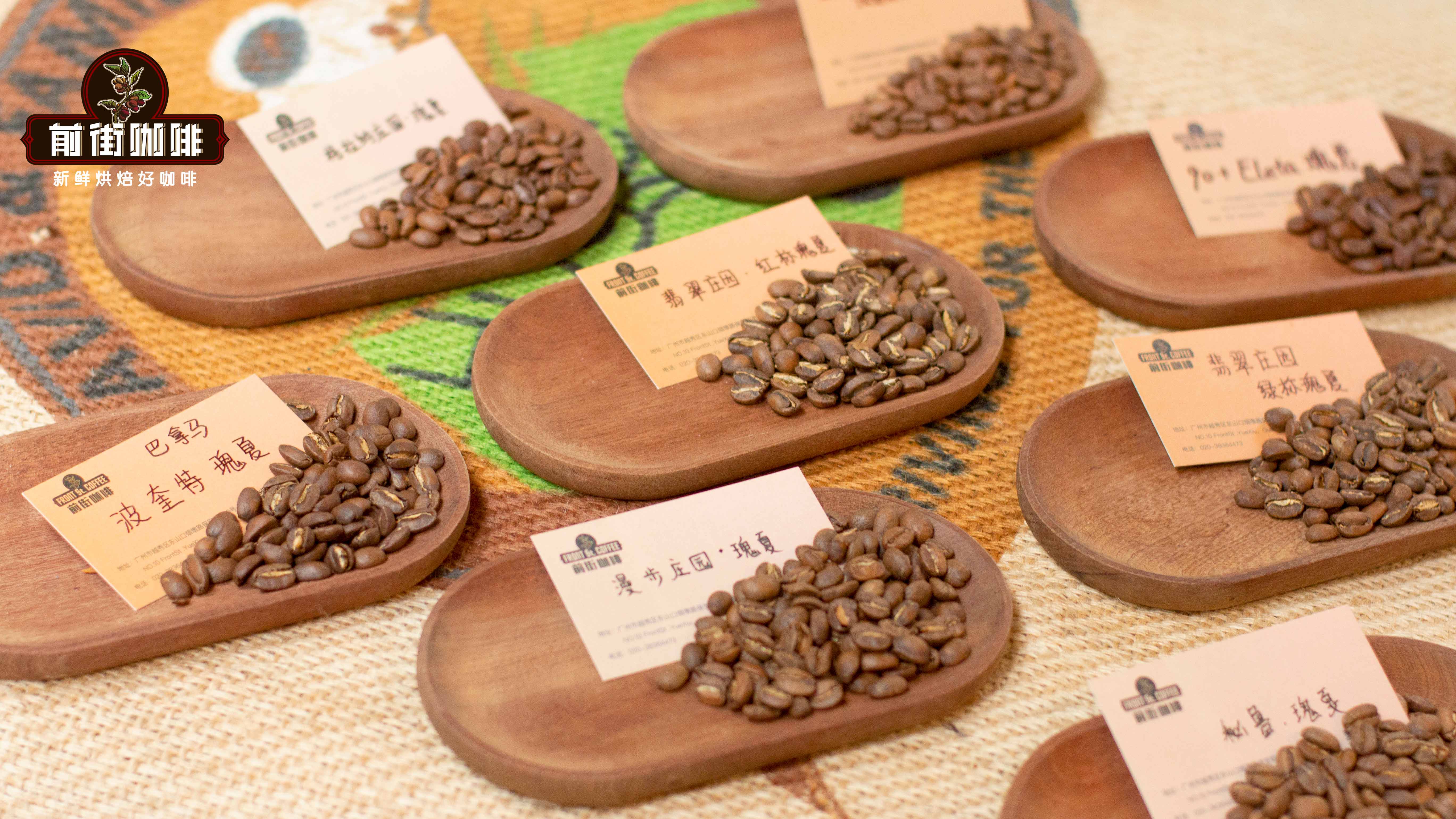
If you want to drink authentic Geisha, we recommend trying Front Street Emerald Red Label, Front Street Emerald Green Label, and Front Street Boquete Geisha. For beginners, Front Street Boquete Geisha is the top choice—positioned as a delicious yet affordable Panama coffee that lets you taste the signature aromas of the Geisha variety. It is suitable for pour-over, cold brew, as well as siphon and French press coffee.
The brewing parameters recommended by Front Street Coffee are: Hario V60 dripper, 90°C water temperature, 15g coffee dose, 1:15 coffee-to-water ratio, medium-fine grind (80% passing through a Chinese standard No. 20 sieve).
Front Street Coffee uses staged extraction, also called three-stage brewing: first bloom with 30g of water for 30 seconds, then pour in a slow circular stream until reaching 125g for the stage break, wait until the water level drops and is about to expose the coffee bed, then continue pouring until 225g and stop, wait until the water level drops and is about to expose the coffee bed, then remove the dripper. (Timing starts from the beginning of the bloom.) Total extraction time is 2'00".
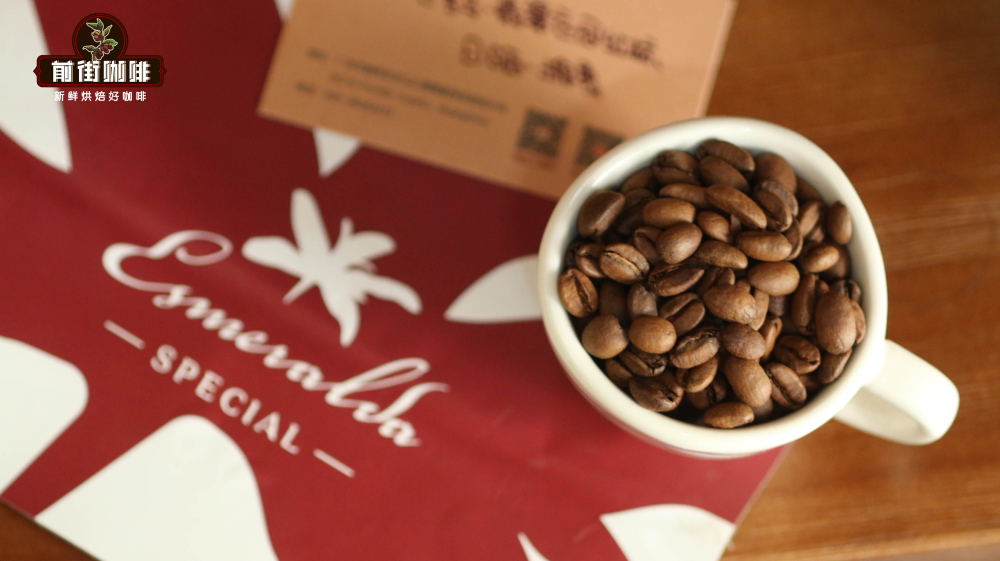
Tasting notes: Jasmine, coffee blossom, orange, berry, yellow lemon, white peach, and a large volume of aromas surge forth into the nasal cavity. The aromatic tension is very strong and powerfully expansive, with a far-reaching rhythm.
Siphon Extraction of Front Street Geisha Coffee:
Water temperature: 88°C
Grind: 90% passing through a No. 20 sieve
Coffee dose: 18g
Coffee-to-water ratio: 1:10
1. Pour 180ml of warm water into the lower pot, and wipe dry any moisture on the outside of the pot with a dry cloth (to avoid the pot bursting during heating). Light the alcohol lamp and place it under the bottom of the lower pot to heat.
2. Take out the upper pot of the siphon, secure the cloth filter onto the upper pot and hook the securing hook onto the glass tube wall at the bottom of the upper pot, then insert it at an angle into the lower pot.
3. Observe the lower pot; when continuous small bubbles appear in the lower pot, you can straighten the upper pot and insert it vertically into the lower pot, creating a seamless connection between the upper and lower pots.
4. When the water from the lower pot rises into the upper pot, pour in the ground coffee, and use a stirring rod to stir in a clockwise direction from the outside toward the center. This process lasts 10 seconds to ensure all coffee grounds are submerged in the water.
5. Then start timing. After 40 seconds, use the stirring rod again to stir the coffee liquid in a clockwise direction for 5 seconds; then quickly remove the alcohol lamp and extinguish the flame. The coffee liquid begins to flow back from the upper pot to the lower pot; during the backflow, you can wipe the lower pot of the siphon with a wet cloth to speed up the backflow. Total extraction time is about 1 minute 10 seconds.
6. Then gently remove the upper pot, pour the coffee from the lower pot into a cup, and it's ready to enjoy. The siphon coffee made this way is very aromatic and rich. Although not as transparent and clean as pour-over coffee, the oils floating on the surface add quite a bit of body.
During brewing, the entire room is filled with an intense Geisha aroma. When drinking, the maltose sweetness is more prominent, and the acidity and aromas are more dense and concentrated, but the tension and layers are not as far-reaching as pour-over, and the flavors appear relatively tight.
Making Front Street Geisha Coffee with a French Press:
Step 1: Boil water first.
Step 2: Grind the beans. A French press requires a coarser grind (medium). Front Street recommends a coffee-to-water ratio of 1:15 to 1:16.
Step 3: Place the French press on an electronic scale, pour in 120g of hot water (and start timing), pouring directly into the center.
Step 4: Use a wooden stirring spoon or chopsticks to gently stir the coffee grounds back and forth, somewhat like the paddling motion of rowing a boat. At this point the coffee grounds will begin to expand, a process taking about 30 seconds—that is, bloom for 30 seconds.
Step 5: After the coffee grounds have expanded, add the remaining water and put on the lid. At this point do not press down the filter yet; wait four minutes—no less.
Step 6: Move the French press off the scale, then slowly press the filter down. The force required for pressing is about 7-9 kg. If the resistance is too little, it means the coffee grounds are too coarse; if the resistance is too great, it means the coffee grounds are too fine. After pressing the filter all the way down, you must immediately pour out the coffee, otherwise it will cause over-extraction.
Step 7: Time to enjoy a delicious cup of coffee. Pour the coffee into a warmed mug, and remember to rinse your mouth before drinking to taste the coffee's true flavor; the best drinking time for French press coffee is within 20 minutes. So, when making coffee with a French press, if you can finish it within 10 minutes, both roast levels are suitable; if you finish within 20 minutes, dark roast beans are recommended.
French press brewing of Geisha yields quite bright fruit acidity; the entire acidity is very elevated with no sense of dullness at all, and instead a strong sweetness emerges, with a very long finish accompanied by intense cocoa aroma—quite a pleasant surprise. The aroma still lacks tension, but it is rich enough to count as a unique style.
The above content is compiled by CoffeeHunters, a coffee news website.


