







Why Have Espresso Extraction Parameters Moved Past the Coffee Association Standard?
The SCAA once defined espresso as 9-10 atmospheres of pressure, a 7-9 gram dose, 88-92°C water and 45 ml extracted in 22-28 seconds. Specialty shops today rarely hit those numbers. In practice, doses are matched to the portafilter basket and the brew ratio sits near 1:2, so yield and liquid weight come out well above the old definition.
About seventy percent of a coffee bean will not dissolve in water, and only part of the soluble remainder holds desirable flavor, so espresso concentrates defects as well as highlights. Five variables drive the result: dose, water temperature, time, pressure and grind size. Roast level, equipment and consumer taste have all shifted, pulling shop practice away from the earlier coffee association of america figures.
The extraction standards for espresso have always been a core topic of interest for coffee enthusiasts. The SCAA once defined it as 9-10 atmospheres of pressure, 7-9 grams of grounds, water temperature of 88-92°C, and extracting 45ml in 22-28 seconds. But today, the actual operating parameters of specialty coffee shops have clearly diverged from this. This article starts from Front Street Coffee's hands-on experience, tracing the evolution of espresso extraction parameters alongside roasting trends and equipment technology, analyzing the influence of the five major variables—dose, water temperature, time, pressure, and grind size—and introducing the flavor performance of Front Street's Sunflower Warm Sun blend beans as well as the proper way to taste espresso.
For more specialty coffee knowledge, please follow the WeChat public account: Front Street Coffee (FrontStreet Coffee)
When discussing coffee brewing, people often ask how many grams of grounds to use and what the coffee-to-water ratio should be. Ultimately, what everyone really cares about is the metric of extraction yield. You should know that about seventy percent of the components in coffee beans cannot dissolve in water, and of the remaining thirty percent, only a small portion consists of desirable flavor compounds worth extracting.
Compared with pour-over, espresso's flavor is more concentrated, which also means that the defective flavors in the beans are amplified exponentially—this is a major characteristic of espresso. Therefore, to get an excellent latte or cappuccino, besides choosing the right milk, a properly extracted espresso as the base is equally indispensable.
The Specialty Coffee Association of America (SCAA) once defined espresso as follows: at 9-10 atmospheres of pressure, a dose of 7-9 grams, water temperature of 88-92°C, extracting 45ml of single espresso within 22-28 seconds. However, if you ask a barista at a specialty coffee shop about their actual extraction parameters, you'll find that both the dose and the liquid weight differ considerably from the above definition.
Taking Front Street's espresso preparation method as an example, the dose used will match the portafilter basket capacity as closely as possible, and the coffee-to-water ratio is close to 1:2. Of course, these values are for reference only.
The roast levels of coffee beans in the past, as well as consumers' flavor preferences, are vastly different from today. In earlier years, people preferred dark-roasted espresso beans, enjoyed espresso with nutty and cocoa notes, and even praised the burnt bitter taste.
With the rise of the third wave of specialty coffee, people increasingly expect to capture floral and fruity notes in coffee, and the roast level of beans has become correspondingly lighter. If the same water temperature were used, the taste would deviate. Today, espresso extraction parameters are closer to: 18 grams of grounds, extracting about 30 grams of liquid weight, water temperature of 92-94°C, and extraction time of 25-27 seconds. It's worth noting that the basis for judgment has shifted from the volume of the coffee liquid to the more precise liquid weight, because many factors such as brewing pressure, roast level, and freshness all affect the thickness of the crema, and judging by volume is not reliable.
In recent years, coffee machine technology has developed rapidly, with variable pressure and pressure profiling machines constantly emerging. Brewing pressure no longer sticks to 9 atmospheres—whether it's the introduction of pre-infusion pressure or a gentle ramp out of pressure in the middle and later stages, various pressure curves that break old rules have been repeatedly experimented with and tested. Even for the same beans, the flavor spectrum presented under different pressure curves varies.
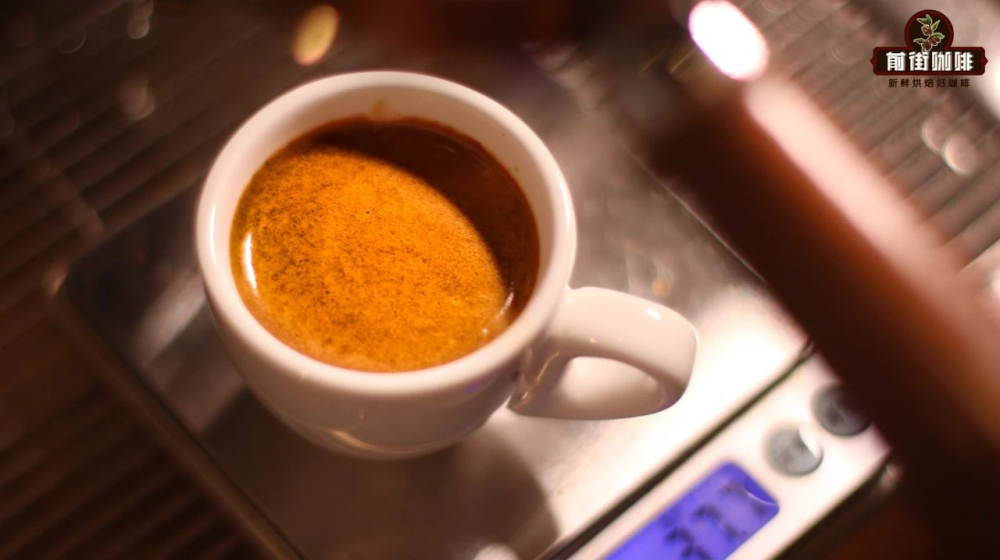
When making espresso, Front Street needs to comprehensively consider variables such as grind size, extraction pressure, water temperature, dose, time, and extraction yield.
[Dose] The dose is usually determined by the portafilter basket capacity. For example, the basket Front Street uses has a capacity of 20 grams, so adjustments are made slightly within this range but never exceeding the capacity. Too little coffee easily leads to under-extraction; too much coffee makes it impossible to lock onto the group head.
[Water Temperature] The higher the water temperature, the more and faster substances are extracted from the coffee; conversely, the slower. The extraction water temperature for espresso is generally water that is about to boil.
[Time] Sour and bitter substances are the most prominent in coffee, and sour substances are extracted faster than bitter substances.
[Extraction Pressure] In early espresso preparation, the extraction pressure was extremely close to atmospheric pressure, resulting in a weak-tasting espresso with no crema at all. With the technological innovation of coffee machines, it was only after the introduction of the Faema E61 that 9-bar pressure and rich crema began to appear.
[Grind Size] Grind size is every barista's pain point. As time passes, air humidity also changes. If the coffee grounds are too fine, the contact area between hot water and grounds increases, more substances are extracted, and over-extraction easily occurs.
When producing espresso, Front Street adjusts extraction parameters based on the day's temperature, humidity, and the roast date of the espresso beans, in order to extract a near-perfect espresso. The extraction parameters are as follows:
Front Street Espresso Extraction Parameters:
Grinder: Galileo Q18
Grind Size: 2.1
Espresso Machine: Faema E98
Pressure: 9 bar±2
Temperature: 90.5~96°C
Time: 20~30 sec
Dose: 19.7g (double espresso)
Extraction Yield: 35ml
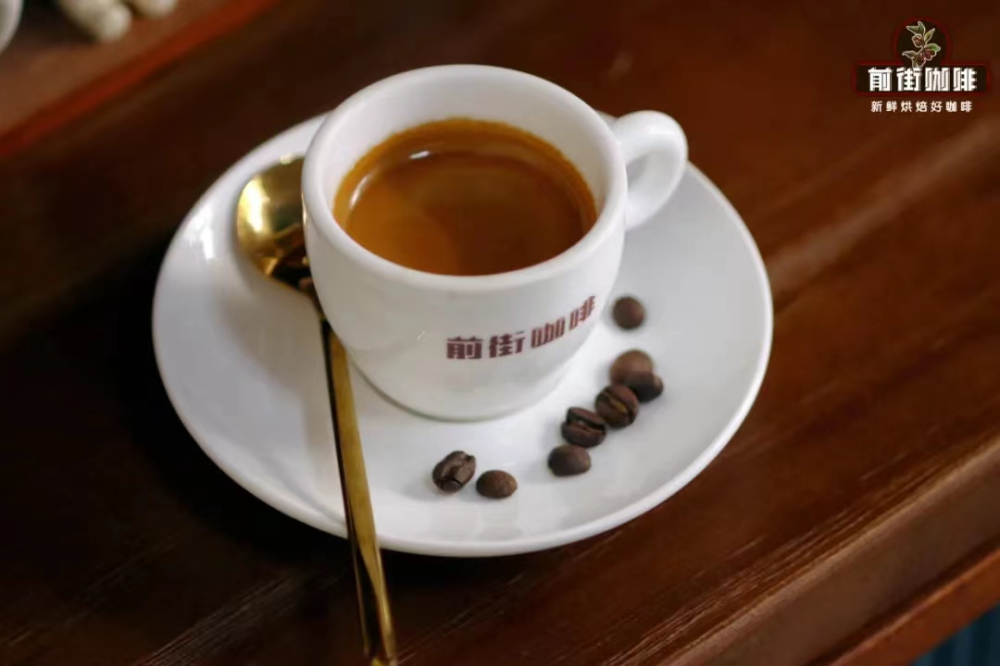
The espresso extracted by Front Street Coffee (FrontStreet Coffee) after parameter adjustment exhibits a rich whiskey aroma, accompanied by thick vanilla and cream-like flavors, with berry acidity on the entry and a long-lasting dark chocolate finish, with a viscous and smooth mouthfeel.
The reason for such a rich whiskey aroma is that the espresso beans used at Front Street Coffee (FrontStreet Coffee) locations are the carefully blended Sunflower Warm Sun blend, composed of 70% Honduras Sherry and 30% Ethiopian natural Red Cherry.
Front Street Sunflower Warm Sun Blend Coffee Beans
Region: Honduras & Ethiopia
Variety: Caturra, Catuai, Pacas, local heirloom varieties
Processing Method: Washed & Natural
Seventy percent Honduras Sherry undergoes refined washing and is then placed into sherry whiskey barrels for low-temperature fermentation for dozens of days, allowing the whiskey aroma substances in the barrels to penetrate into the green coffee beans. The thirty percent Ethiopian natural Red Cherry brings the distinctive Ethiopian berry acidity to the blend. The overall flavor of this blend is highly appealing.
Some friends who have tasted Front Street Coffee's (FrontStreet Coffee) latte discover a rich whiskey aroma in the espresso and can't help but want to drink the espresso straight to find out more. When Front Street serves espresso, it comes with a small spoon and a glass of ice water. Friends might ask, why serve ice water, and how should espresso be drunk properly?
Front Street will now explain the proper way to drink espresso . The purpose of the ice water is to let friends clean their palate before tasting the espresso, so as to better experience the flavor and mouthfeel. Before the coffee liquid enters the mouth, you can use the small spoon to check the state of the crema, or stir the entire cup of espresso to fully integrate the upper and lower layers, making the texture more balanced.
For more coffee bean information, please follow Coffee Workshop (WeChat public account: cafe_style) For professional coffee knowledge exchange, please add WeChat: kaixinguoguo0925
The above content is compiled by CoffeeHunters, a coffee news website.


