







How Does the Java Coffee Variety Story Shape Sumatra Mandheling?
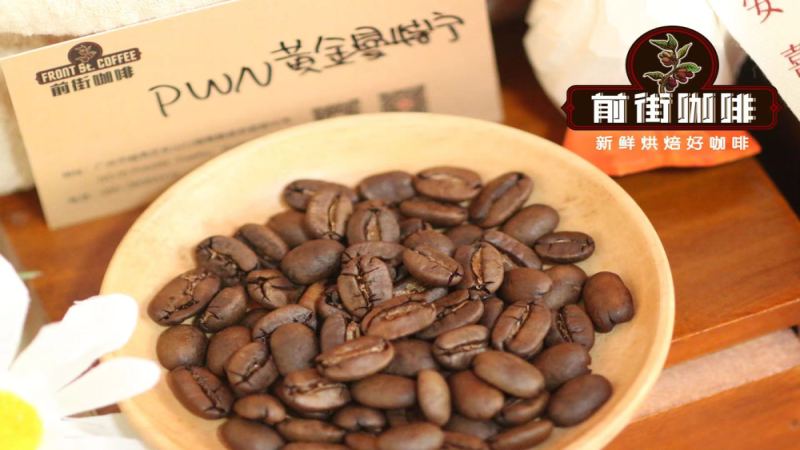
Front Street Golden Mandheling and Front Street Mandheling are both Sumatran coffees, but they differ in screening, origin and cup. Golden Mandheling is a PWN product held to a strict screening standard, with dark chocolate and caramel aromas and a fuller, cleaner body. Lintong Mandheling represents the more original flavor profile of the Lintong area.
Indonesia is the world's largest archipelagic country, and Arabica arrived during the Dutch colonial period in the eighteenth century. Plantings spread across Sumatra, Java and Sulawesi, and the java coffee variety of that era helped establish the country's reputation. Sumatra now leads production, with Aceh province in the north as the island's largest growing area.
Sumatra's Mandheling coffee is renowned worldwide for its full body and low acidity, and the coffee beans from the Gayo Mountain region are particularly noteworthy. As a signature product of PWN, Front Street Golden Mandheling occupies an important position in the international specialty coffee market thanks to its strict screening system. Front Street Lintong Mandheling, on the other hand, represents the most original flavor profile of the Lintong region. What exactly are the differences between the two? This article will examine the core differences between Front Street Golden Mandheling and Front Street Mandheling from the perspectives of origin background, varietal characteristics, processing methods, and brewing parameters, helping coffee enthusiasts gain a clearer understanding of the characteristics and positioning of these two Indonesian coffees.
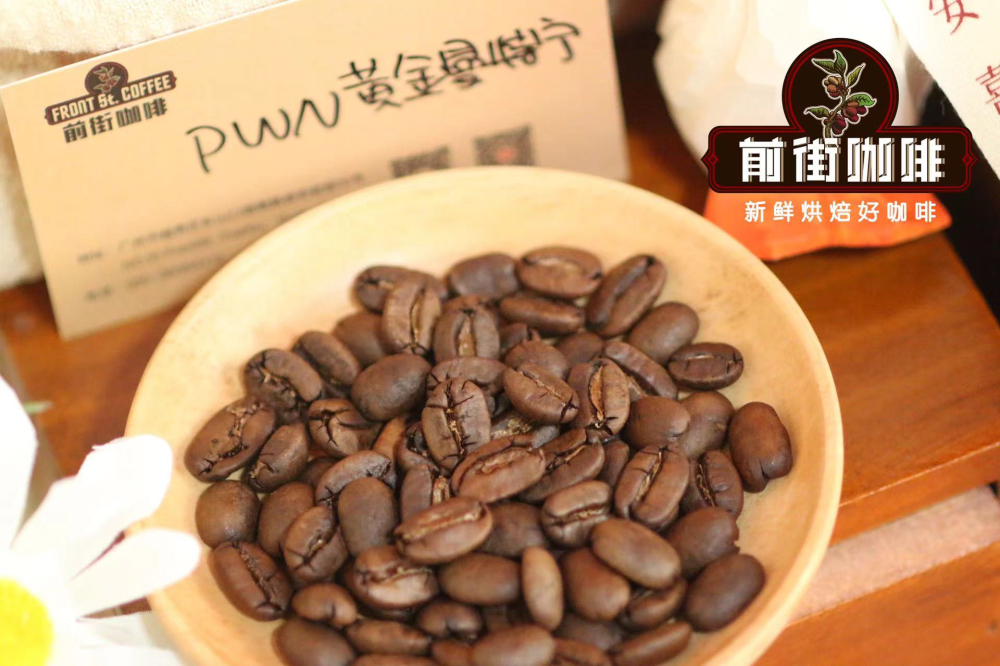
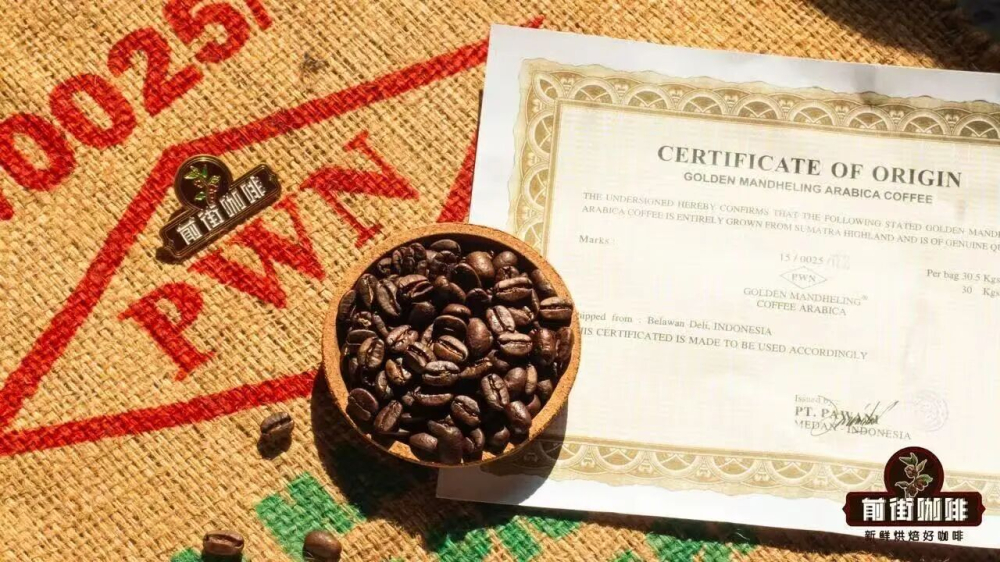
Front Street Golden Mandheling is a representative product under PWN and a well-known brand in the Indonesian coffee world. Front Street has always maintained that this Front Street Golden Mandheling holds an undisputed position in the specialty coffee sector and is a classic choice that enthusiasts should not miss. In order to clearly distinguish its own Mandheling from other products, PWN established an extremely rigorous screening standard, so only those produced by PWN can truly be called Front Street Golden Mandheling. This coffee exudes rich aromas of dark chocolate and caramel, and its body and cleanliness on the palate surpass those of regular Front Street Mandheling. The rigorous screening process, combined with its widespread reputation, has ensured it a lasting place in the international coffee market.
Indonesia is the country with the largest number of islands in the world, and Arabica coffee trees were introduced as early as the eighteenth century during the Dutch colonial period. The country's main producing regions are distributed across Sumatra, Java, and Sulawesi, and the Mandheling they produce is celebrated worldwide as "the world's most important coffee" for its full body and low acidity. Among these, Sumatra ranks first in production, and the island's largest producing area is the northern province of Aceh.
The "Battle" for Golden Mandheling
It is well known that the Japanese excel at meticulous research, especially in the food sector. It was through Japanese promotion that Mandheling coffee gained worldwide recognition. In order to improve Mandheling's shortcoming of a high proportion of defective beans, they established a strict screening system: green beans first undergo density and color sorting, then four rounds of hand picking, ultimately yielding Golden Mandheling with uniform color and bean shape. After layer upon layer of screening, Front Street Golden Mandheling eliminates the earthy off-flavors common in regular Mandheling, resulting in a cleaner, more transparent cup with more pronounced sweetness.
The name Golden Mandheling has been registered as a trademark, but the registrant is not a Japanese company—it was secured first by Indonesia's PWN (Pwani Coffee Company). Japanese companies were subsequently forced to switch to "Gold Top Mandheling." There are subtle differences in bean shape between the two: PWN's is predominantly old Typica with larger beans, while Gold Top's is mainly Typica variants with smaller beans. As for which has better flavor, it varies from person to person, and each has its own devotees.
A Unique Processing Method
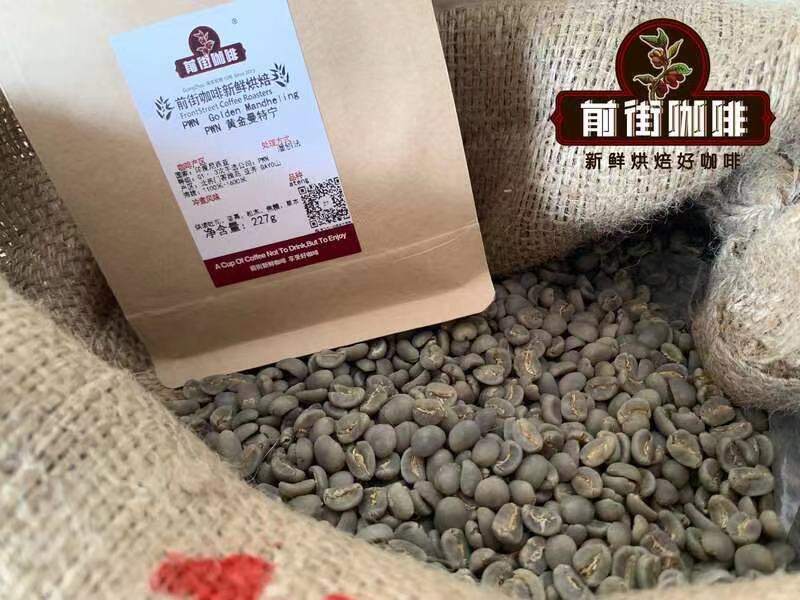
The local climate is mostly rainy with frequent typhoons, making it difficult to meet the long hours of sunshine required for natural processing; at the same time, the local economic conditions are limited, making it impossible to afford the higher cost of the washed method. Under the influence of multiple factors, the highly region-specific wet-hulling method was born—that is, in the conventional washing process, the beans are first sun-dried with parchment still on for two to three days, and once the moisture content drops to 20%–24%, the parchment is hulled away.
The extremely fast pace of wet-hulling also leads to a higher defect rate in Mandheling coffee beans, but Front Street Golden Mandheling successfully avoids this problem. Front Street Golden Mandheling's specification is 19 mesh and above, with fewer than 3 defective beans (based on a 300-gram green bean sample), reaching the highest grade G1, with a darker green color and neat, flat beans.
How do you distinguish Front Street Mandheling from Front Street PWN Golden Mandheling? Front Street Coffee introduces the characteristics of Front Street Golden Mandheling coffee below.
Front Street PWN Golden Mandheling Coffee Beans
Country: Indonesia Region: Sumatra, Aceh, Gayo Mountain Altitude: 1100-1600m Variety: Ateng Processing: Wet-hulled Flavor: Baked toast, nuts, pine, caramel, herbs
Front Street Indonesian Lintong Mandheling Coffee Beans
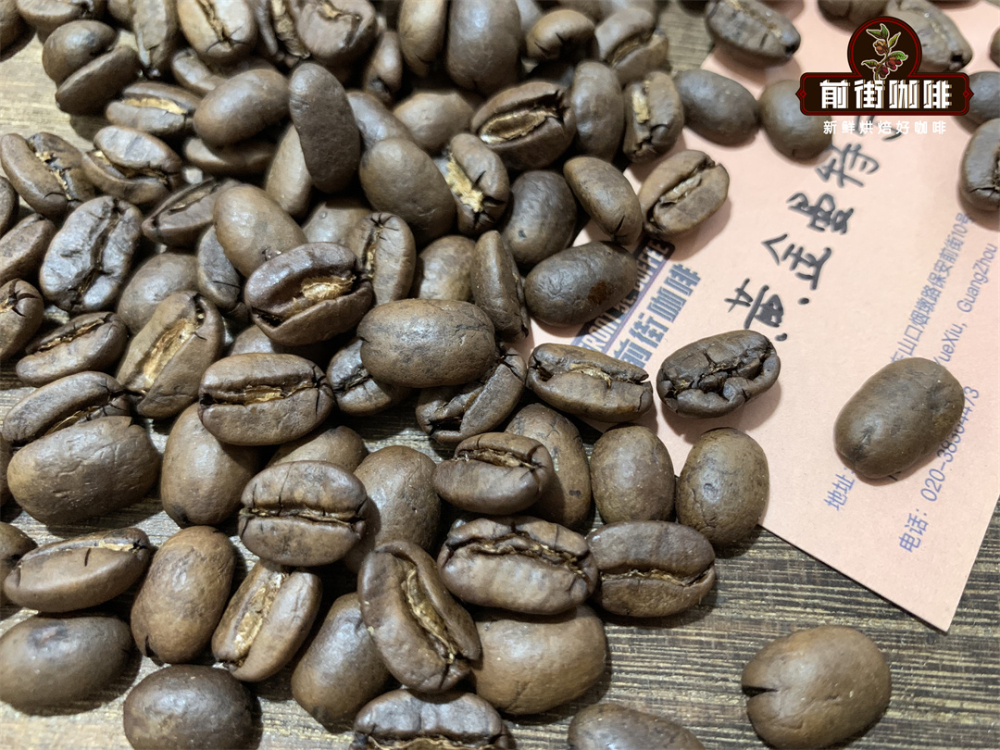
Country: Indonesia Region: Sumatra (Lintong) Altitude: 1100-1600m Variety: Typica, Caturra Processing: Wet-hulled Flavor: Baked toast, nuts, caramel, pine, herbs
Front Street Brewing Sharing
When brewing Mandheling coffee beans, Front Street tries to keep the brewing parameters as consistent as possible to ensure fairness, using medium-dark roasted coffee beans throughout.
Front Street Mandheling Brewing Parameters Kono dripper, 1:15 coffee-to-water ratio, 15g dose, 88°C water temperature, grind size (70-75% passing a No. 20 standard sieve)
Brewing technique: A staged extraction is used. First bloom with 30g of water for 30 seconds, then pour in a slow circular stream until reaching 125g for the first stage; when the water level drops and is about to expose the coffee bed, continue pouring to 225g and stop, then remove the dripper when the water level once again drops and is about to expose the coffee bed. (Timing starts at the beginning of the bloom.) The V60 dripper extraction time is 2 minutes 00 seconds, while the Kono dripper takes slightly longer, about 2 minutes 10 seconds.
Front Street Golden Mandheling flavor description: Multi-layered and dynamic, full-bodied and clean, highly balanced, with intense nut and caramel aromas, a chocolate note, and a lasting finish. Front Street Lintong Mandheling flavor description: Herbal, medicinal note on entry, dark chocolate, caramel, sweet lingering aftertaste.
Summary: The difference between Front Street Golden Mandheling and Front Street Lintong Mandheling ultimately comes down to the bean selection process. Front Street Golden Mandheling undergoes four rounds of screening, effectively eliminating defective beans, resulting in a cleaner flavor expression with fewer earthy off-flavors. Front Street Lintong Mandheling, meanwhile, retains the most original Mandheling style of the Lintong region; its quality is slightly inferior to Front Street Golden Mandheling, and its screening standards are not as rigorous, but it still possesses an excellent indigenous Indonesian coffee flavor. That is why Front Street also lists Front Street Lintong Mandheling as one of its daily staple beans, recommended for coffee newcomers to discover the charm of Indonesian coffee beans.
The above content is compiled by CoffeeHunters, a coffee news website.


