








Arabica, Robusta, and Liberica constitute the three major native species of coffee worldwide, among which Arabica has the smallest beans and is often referred to as the small-bean species. However, within the Arabica branch, there exists a mutant variety whose beans can reach three times the size of ordinary Arabica — the Elephant Bean, scientifically known as Maragogype. It was first discovered in 1870 in the Maragogipe region of Bahia, Brazil, and was identified as a natural mutation of Typica. The Elephant Bean plant is tall with lush branches and leaves, requiring far more space and nutrients than conventional varieties. Combined with the difficulty of harvesting and high time costs, very few farmers are willing to cultivate it. Currently, it is only scattered across Latin American countries such as Brazil, Nicaragua, Mexico, and Guatemala. During its bean-sourcing process, Front Street Coffee purchased several Elephant Bean varieties for cupping and found that those from Nicaraguan growing regions performed the best, with the sun-dried Elephant Bean from the Mierisch family's Mama Mina estate standing out in particular. This article will systematically walk coffee enthusiasts through the complete picture of the Elephant Bean and its hybrid offspring Pacamara — from variety origins, cultivation status, and flavor expression to brewing parameters.
For more specialty coffee knowledge, please follow: Front Street Coffee ( Frontsteet Coffee )
Coffee lovers all know that there are currently three major coffee varieties in the world: Arabica, Robusta, and Liberica. Among them, Arabica is called the small-bean coffee because its beans are the smallest of the three, Robusta is the medium-bean coffee, and Liberica is the large-bean coffee. But within the varieties derived from Arabica, a coffee bean three times the size of ordinary Arabica beans has been discovered, named the "Elephant Bean." So what makes it special in terms of flavor? Front Street Coffee (FrontStreet Coffee) is here to enlighten all you coffee lovers.
What Is the Elephant Bean?
The Elephant Bean, scientifically known as Maragogype. According to research gathered by Front Street, the Elephant Bean was first discovered in 1870 in the Maragogipe region of Bahia, Brazil, which is why coffee agronomists used Maragogipe as the name for this abnormally large coffee variety. Through biological morphology comparison and genetic testing, it was determined that the Elephant Bean is a natural mutation of the Typica variety of coffee trees derived from the Arabica species. Its coffee beans are three times the size of ordinary Arabica beans.
Typica on the left, Elephant Bean on the right
In the green bean grading systems of many coffee-producing countries that use bean size as the standard, 17-18 screen size is typically defined as the highest realistic grade, with beans above 19 screen being rare. For example, the Front Street Indonesian Mandheling coffee currently sold at Front Street Coffee (FrontStreet Coffee) is quite large, with the Front Street Indonesian Golden Mandheling already reaching above 18 screen; while Elephant Beans can mostly reach 20 screen and above.
Furthermore, according to relevant information gathered by Front Street Coffee (FrontStreet Coffee), the Elephant Bean coffee plant — in addition to its large beans — also has a larger trunk, branches, and leaves than ordinary coffee varieties, so the space, nutrients, and resources required for cultivation are greater than those for ordinary coffee varieties. Combined with the difficulty of care and harvesting, as well as the high time costs, very few farmers cultivate it. Currently, it is distributed in small numbers across Latin American countries such as Brazil, Nicaragua, Mexico, and Guatemala.
Elephant Bean from Nicaraguan Coffee Growing Regions
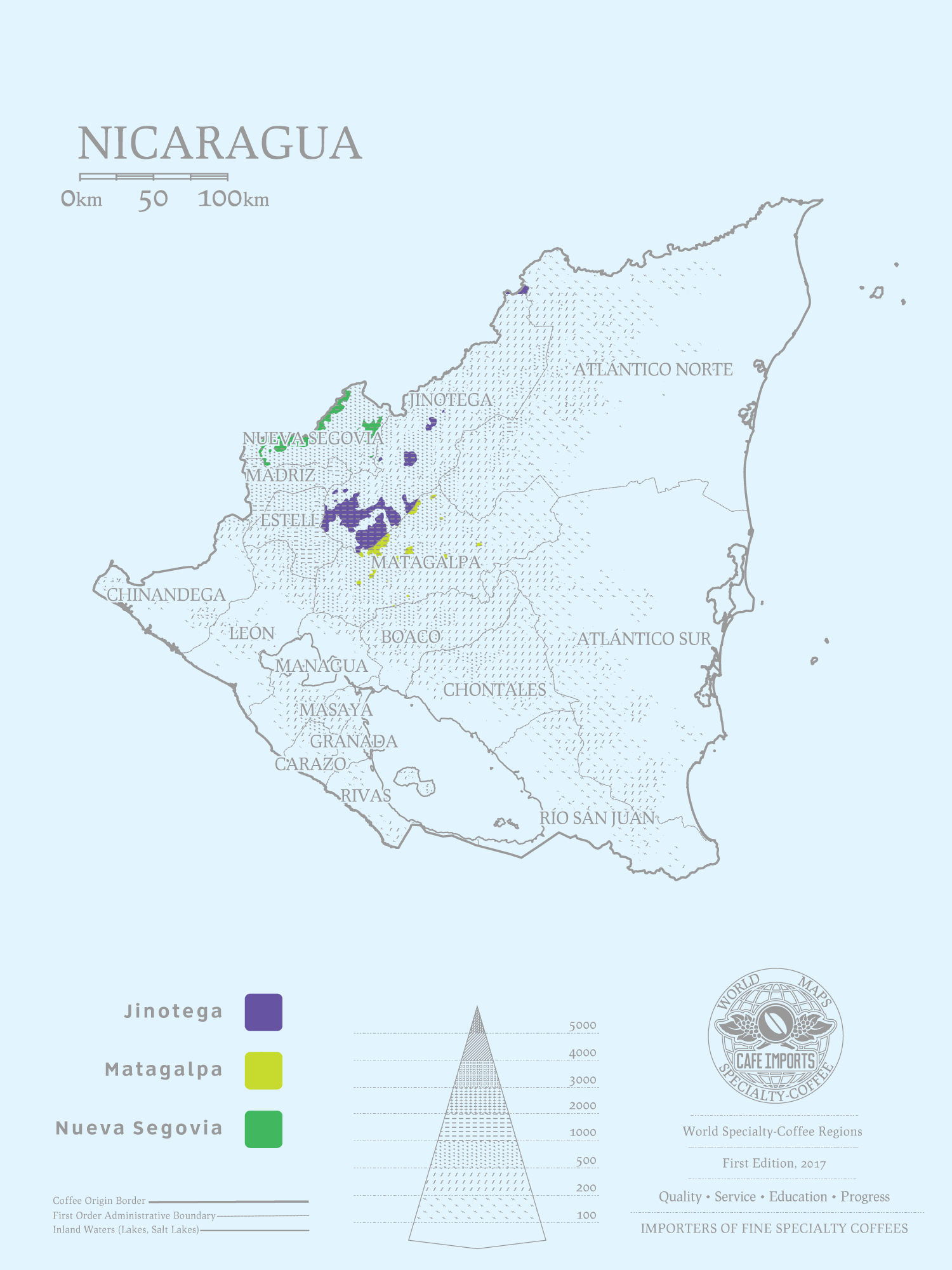
Because we wanted to learn more about the flavor of Elephant Beans, Front Street Coffee (FrontStreet Coffee) also purchased some Elephant Beans to taste. Among them, Front Street Coffee (FrontStreet Coffee) believes that the Elephant Beans from Front Street's Nicaraguan coffee growing regions have the best flavor. However, depending on the soil conditions in Nicaragua, the taste of Elephant Bean coffee can vary, because poor soil weakens the coffee's flavor. This is why it is often called a "not very flavorful" coffee. In the coffee world, Nicaraguan Elephant Beans are a relatively uncommon variety due to low yields, so they are also quite expensive.
After tasting so many Nicaraguan Elephant Beans, Front Street Coffee (FrontStreet Coffee) believes that the Elephant Bean coffee grown at Front Street's Nicaraguan Mierisch family's Mama Mina estate has the best flavor. So next, Front Street Coffee (FrontStreet Coffee) will introduce this bean.
Front Street Coffee (FrontStreet Coffee) Nicaraguan Mama Mina Estate Coffee Beans
Region: Nicaragua Grade: SHB Altitude: 1,450-1,600 meters Processing Method: Sun-Dried Variety: Elephant Bean 18 screen
Mierisch Family — Mama Mina Estate
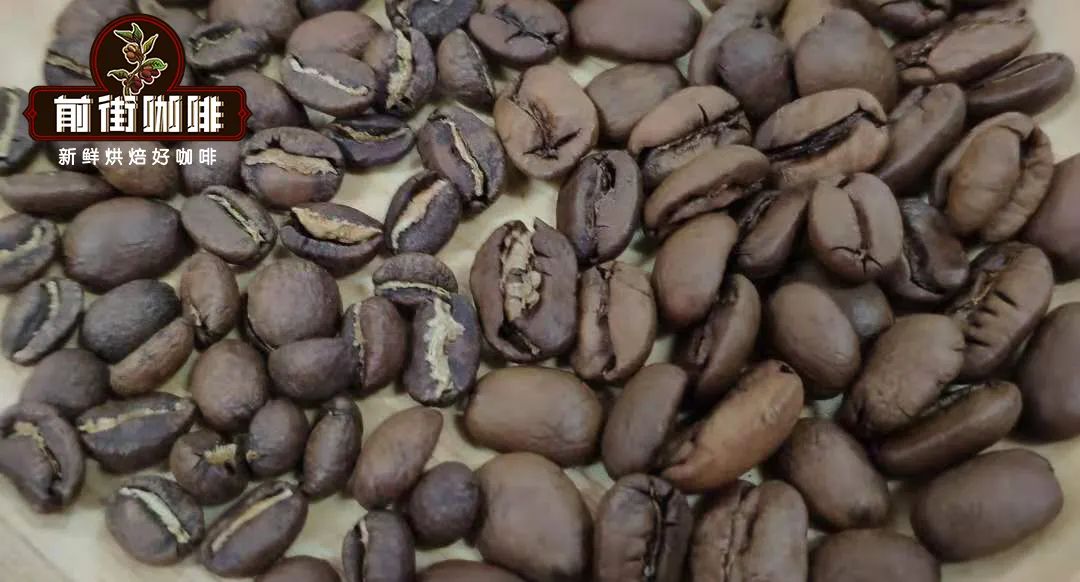
According to Front Street's research, the Mierisch family owns nine estates in total. They began growing coffee in 1908, and their coffee cultivation now spans over 100 years. Additionally, Mama Mina Estate produces high-quality Nicaraguan coffee and has been recognized by OCIA (Organic Crop Improvement Association) as high-altitude premium organic coffee. After roasting and brewing, Front Street Coffee (FrontStreet Coffee) finds its flavor to be rich and layered — the aroma of black berries can be felt immediately upon sipping, with blackberry and smoked plum accompanied by the aroma of citrus peel. The overall flavor is solid, with a silky, clean, and sweet mouthfeel.
Elephant Bean and Pacamara
According to Front Street Coffee (FrontStreet Coffee), although the Elephant Bean has high cultivation costs and few people grow it, its hybrid offspring Pacamara inherited its excellent genes and continues to carry them forward. The Pacamara variety is an artificial hybrid of Pacas and the Elephant Bean, inheriting Pacas' high productivity and adaptability along with the Elephant Bean's large bean size and excellent acidity. Its beans are 70-80% the size of Elephant Beans, and it frequently wins top honors at the Cup of Excellence in El Salvador. Therefore, Front Street Coffee (FrontStreet Coffee) also purchased Pacamara variety coffee beans to taste. Next, Front Street will share a brief introduction to this Front Street Guatemala El Borsal Estate coffee bean.
Front Street Coffee (FrontStreet Coffee): Guatemala El Borsal Estate Coffee Beans
Region: Huehuetenango, El Borsal Estate Altitude: 1,500 meters Variety: Pacamara Processing Method: Washed
The above is the information compiled by Front Street Coffee (FrontStreet Coffee) regarding the Elephant Bean and Elephant Bean coffee. We hope this article can help coffee lovers who want to learn about related knowledge. Next, Front Street will share the brewing data for these two beans.
Brewing Parameters:
Dripper: V60 Water Temperature: 90-92°C Coffee Dose: 15g Coffee-to-Water Ratio: 1:15 Grind Size:
Medium grind Brewing Method: Split-pour extraction. Bloom with 30g of water for about 30 seconds, then pour 95g of water in a slow, small stream in circles from the center — that is, a split at 125g of water. When the water level drops and is about to expose the coffee bed, continue pouring water until reaching 225g to finish. When the water level drops and is about to expose the coffee bed, remove the dripper. (Start timing from the beginning of the bloom.) Total extraction time: 2'00".
Front Street Guatemala El Borsal Coffee Bean Brewed Flavor: Noticeable yet gentle sweet-and-sour taste, with acidity of lemon, passion fruit, plum, and Japanese plum, along with a brown sugar finish.
Front Street Nicaragua Mama Mina Estate Coffee Bean Brewed Flavor: Berries, citrus, caramel, nuts, spices
The above content is compiled by CoffeeHunters, a coffee news website.


