







Yirgacheffe is one of Ethiopia's most recognizable coffee regions, and thanks to its unique terroir and meticulous washed processing, it presents a classic flavor profile interweaving citrus, jasmine, and berries. This article starts from Ethiopia's coffee-growing system, tracing how Yirgacheffe moved from a sub-region of Sidamo to independent trademark protection, explaining the practical differences between the G1 and G2 grading systems, analyzing the variety logic behind Heirloom native species, and fully presenting the brewing parameters and flavor performance of washed Yirgacheffe, giving you a comprehensive understanding of this benchmark African coffee.
Where is the origin of coffee? Front Street Coffee can state clearly to everyone that Ethiopia, on the African continent, is the birthplace of coffee. This land has an extremely superior coffee-growing environment, and the coffee it produces often carries rich floral and fruity aromas that linger in the memory. Front Street Coffee has always believed that the flavor presented by Yirgacheffe is a unique regional imprint of Ethiopian coffee; terroir and climate give it a distinctive aromatic character, so Front Street Coffee has included washed Yirgacheffe in its everyday drinking bean series, allowing more people to easily savor the charm of this classic region.
How is coffee grown in Ethiopia?
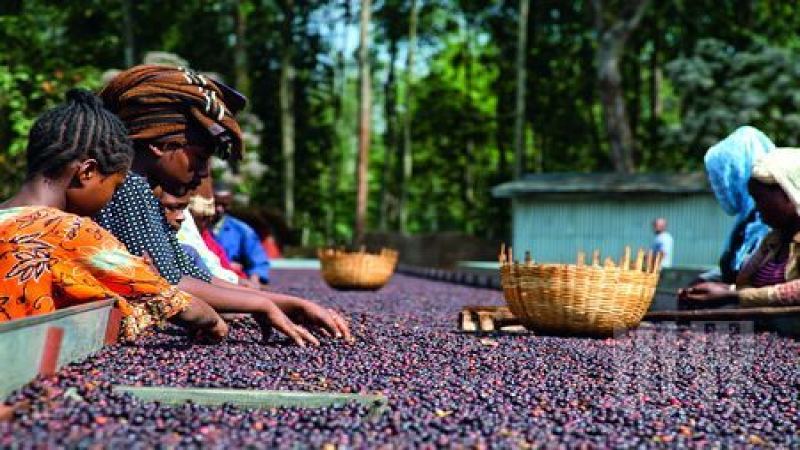
The country's coffee cultivation is mainly concentrated in the western and southern regions. Smallholder family operations account for 90% of the total planted area, with nearly 1.2 million smallholder households relying on coffee cultivation as their source of livelihood. The local coffee production system can be divided into four types: forest coffee, semi-forest coffee, garden coffee, and large plantations, among which garden coffee is the most common. Because smallholder plots are limited in scale and output is small, local coffee cooperatives and processing stations of varying sizes have formed, specifically responsible for the centralized processing of green coffee beans in the region. Farmers send the coffee cherries they harvest to processing stations near water sources for unified processing, and the coffee is then sold externally under the name of the processing station. The Yirgacheffe region operates under this model.
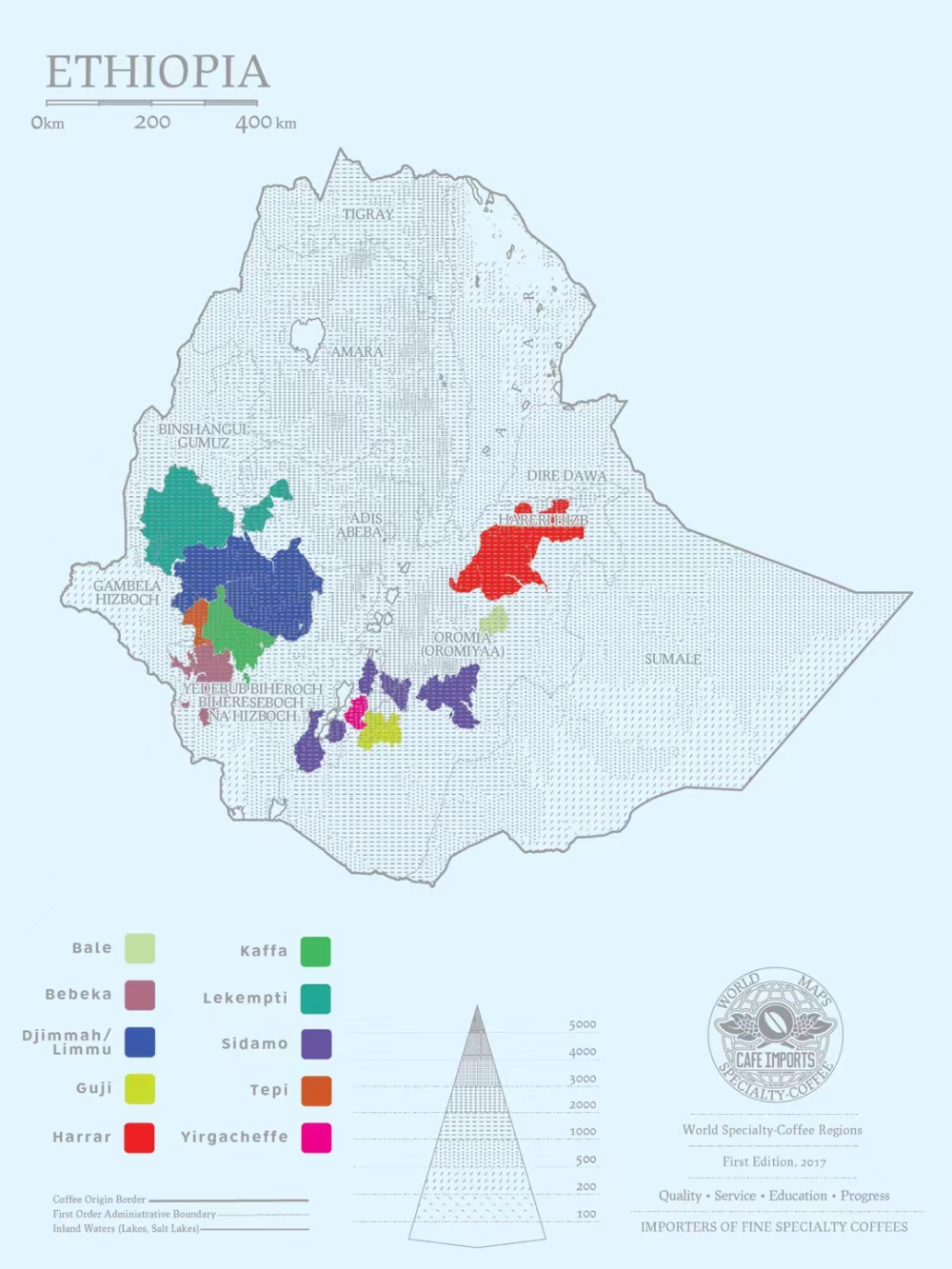
The name Yirgacheffe comes from the town of Yirgacheffe, which sits at an altitude of between 1,700 and 2,100 meters, where mist often lingers during the day and the climate is spring-like all year round. Coffee farmers usually plant coffee trees together with other crops in their own backyards or in fields in front of their houses. Strictly speaking, Yirgacheffe was originally a sub-region under Ethiopia's Sidamo Province, located to the northwest of Sidamo. Later, because its coffee showed a unique flavor and became internationally renowned, it eventually became independent from Sidamo and formed a region of its own.
To promote the development of the coffee industry, the Ethiopian government registered three domestic coffee region flavors as commercial trademarks in 2004 (including Yirgacheffe®), and in 2008 established the Ethiopia Commodity Exchange (ECX), with coffee becoming one of the exchange's auction items. The government implements quality grading and flavor classification for exported coffee to ensure that buyers can obtain coffee with trademark-certified flavor. Producing areas with Yirgacheffe flavor include Yirgacheffe, Wenago, Gelena Abaya, and Kochere.
However, not all coffee from these four administrative areas can be sold under the name of "Yirgacheffe flavor." The coffee must first pass the Ethiopian government's flavor certification confirming that it genuinely has Yirgacheffe flavor before it is allowed to use this trademark. Front Street Coffee's Yirgacheffe everyday drinking beans are precisely washed-processed, G2-grade Yirgacheffe coffee beans.
What grade does G2 represent?
Ethiopian green coffee beans are first divided into two major categories according to sun-dried and washed processing methods, and then graded according to the number of defective beans and cupping performance. In Ethiopia's grading system, there are five levels beginning with G, and the smaller the number, the higher the grade. The standard for G1 grade is no more than 3 defective beans per 300 grams of green beans, while G2 grade allows 4 to 12 defective beans per 300 grams of green beans. Because manual sorting is carried out both before and after roasting, the gap in defective beans between G1 and G2 in the roasted state narrows further, so G2-grade Yirgacheffe offers very high value for money.
What is Heirloom?
If you frequently encounter Ethiopian coffee, you will certainly not be unfamiliar with the variety name Heirloom. In Ethiopia, Heirloom is a collective term referring to the country's many wild or genetically not yet clearly defined native varieties. In dictionaries, Heirloom means "a precious possession passed down from generation to generation," which also means that coffee is an irreplaceable treasure for Ethiopians.
As the birthplace of Arabica coffee, Ethiopia preserves tens of thousands of native Arabica varieties. Local coffee cultivation is mainly divided into three systems: smallholder cultivation, semi-forest cultivation, and forest cultivation. Among them, coffee trees in semi-forest cultivation are mostly wild native varieties, and farmers manage the areas where the coffee trees grow while also cultivating other cash crops. Heirloom varieties are usually identified and confirmed by growers based on years of accumulated experience, because the number of varieties is so enormous that it is nearly impossible to conduct genetic testing and verification on a larger scale. At the same time, the local government hopes to protect these not yet fully understood varieties and prevent practitioners from various countries from racing to obtain them, so it decided to name them collectively as "Heirloom."
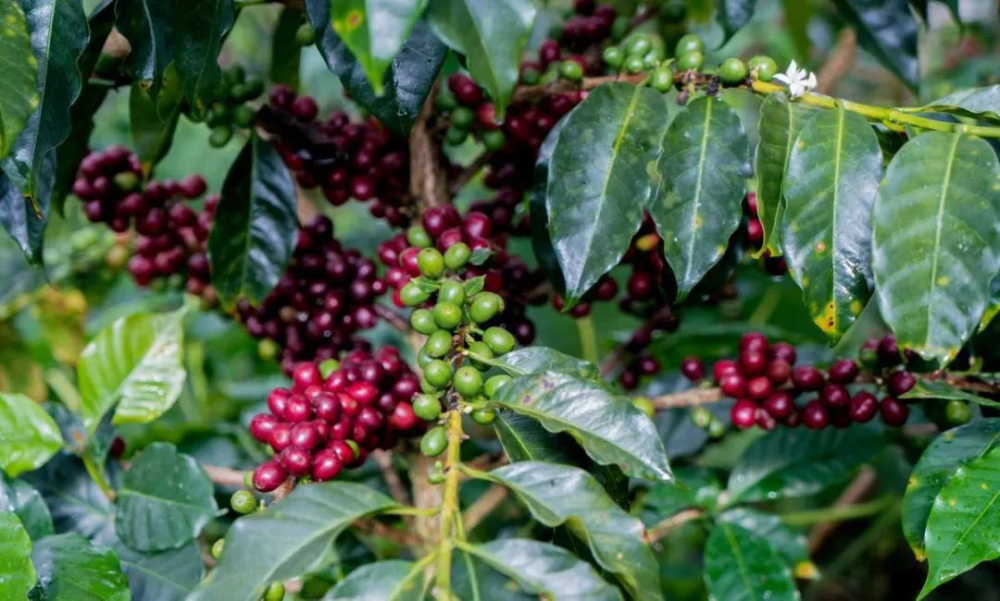
Ethiopia is the birthplace of Arabica coffee and possesses thousands of Heirloom varieties, making it a globally unique producing region. Heirloom native varieties are usually small in bean size, relatively round in shape, and not very uniform, mostly falling between screen sizes 14 and 15. In cupping, they often display elegant floral and fruity notes and are highly favored by coffee lovers.
Why choose washed Yirgacheffe?
The reason Yirgacheffe can form such a distinctive style is, apart from its innate terroir, largely due to the washed processing technology that the Ethiopian government introduced from Central and South America in 1972.
Farms using the washed method must build washing channels and be able to continuously introduce fresh water, making production costs relatively higher. During processing, the fermented coffee beans are placed into the channels and pushed back and forth, using friction between the beans and the impact of the water flow to wash the coffee beans until they are smooth and clean. Every step removes impurities and defective beans, so the quality of the green beans is more uniform, and the final transaction price is also higher than that of naturally dried coffee. Washed processing not only significantly reduces the defect rate of the coffee, but also gives Yirgacheffe a fresh citrus note and elegant white floral aroma, with an overall flavor that is bright, delicate, and clean.
The Yirgacheffe everyday drinking beans launched by Front Street Coffee use washed processing and medium-light roasting, presenting the classic Yirgacheffe flavor profile and suitable for pour-over, cold brew, French press, and many other brewing methods. Front Street Coffee's everyday drinking bean series allows friends who are just getting into coffee to taste the region's basic flavor at an affordable price, and the small-package design also avoids waste from being unable to finish the beans. If you want to experience the classic aroma of Yirgacheffe, Front Street Coffee believes that pour-over black coffee is the most suitable choice.
Brewing recommendations
Dripper: V60 Water temperature: 92-93°C Dose: 15g Coffee-to-water ratio: 1:15 Grind size: fine granulated sugar size (No. 20 sieve, 78% passing)
Three-stage pouring: first wet the coffee bed with twice the weight of the coffee grounds in water, allow it to form a dome and bloom for 30 seconds, then pour in a slow stream in circles from the inside outward until reaching 125g, then pause. Wait for the coffee bed to drop to half the height of the dripper, continue pouring the third stage with the same slow stream until reaching 225g, and wait until all the coffee liquid has finished filtering. Remove the dripper. Total time is about 2 minutes.
After the washed Yirgacheffe everyday drinking beans are ground, you can smell the fresh fragrance of honey and jasmine. When Front Street Coffee pours in hot water, hints of berry aroma gradually emerge. The pour-over black coffee enters the mouth with bright lemon, citrus, and green tea flavors, and as the temperature changes, sweetness of berries, cream, and sugarcane appears in the finish, with obvious sweet aftertaste and a clean, sweet mouthfeel.
For professional coffee knowledge exchange and more coffee bean information, please follow Coffee Workshop (WeChat public account cafe_style)
For more specialty coffee beans, please add the private WeChat of Front Street Coffee (FrontStreet Coffee), WeChat ID: qjcoffeex
The above content is compiled by CoffeeHunters, a coffee news website.


