








Driven by the third wave of coffee, barrel fermentation has become a much-watched innovative process in recent years. Front Street Coffee's two barrel-fermented beans from Honduras, Sherry and Litchi Orchid, use whisky barrels and brandy barrels respectively to give the coffee a unique vinous aroma and layered complexity. This article begins with the geography and varieties of Honduras's six major producing regions, traces the development of its coffee industry and grading system, focuses on analyzing the principles of barrel fermentation and the flavor differences, and records in detail the roasting curve comparison of Front Street's two beans, their cupping performance, and the flavor presentation under three brewing methods—V60, KONO, and Japanese-style iced pour-over—providing coffee lovers with objective data reference.
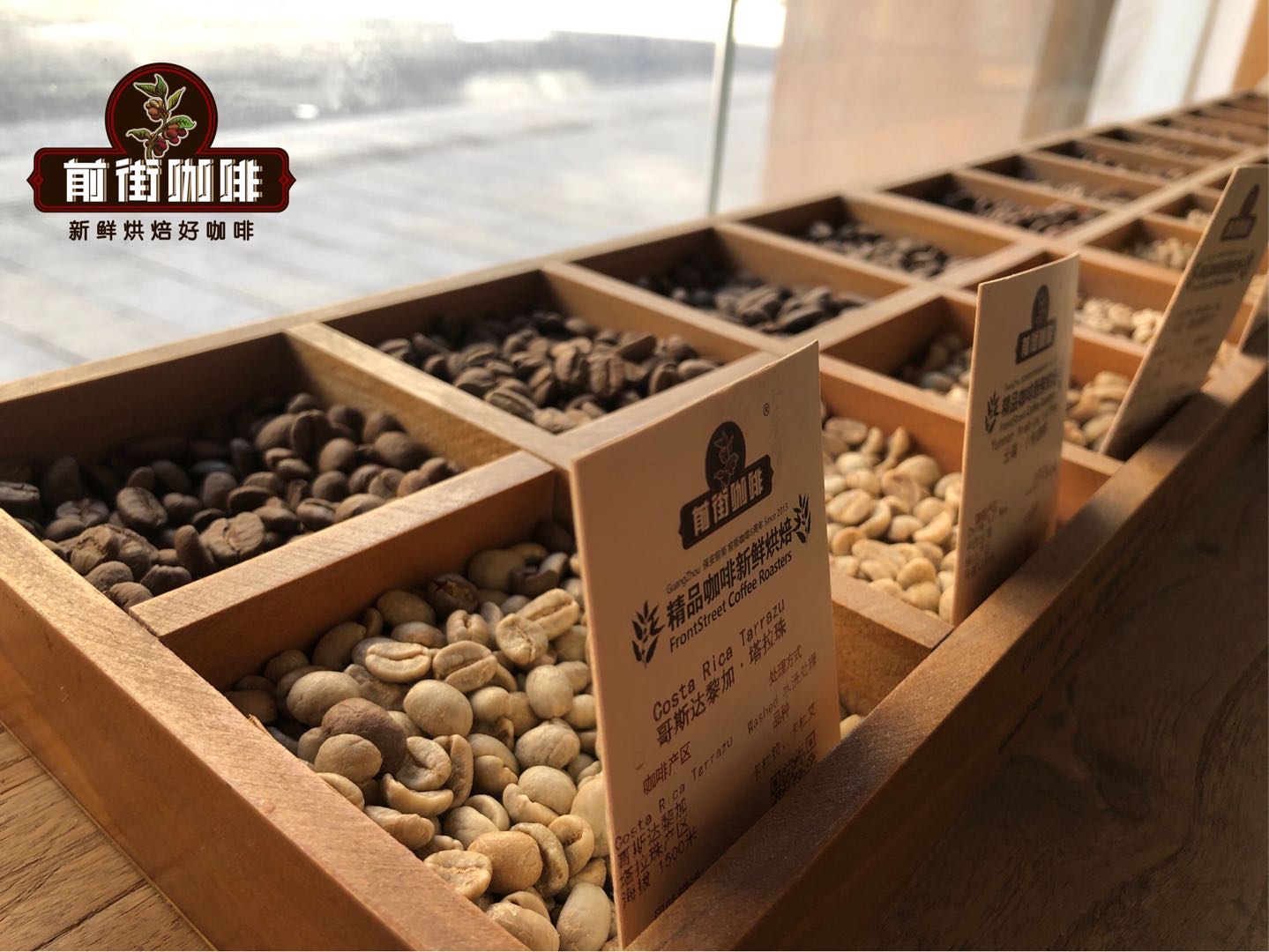
As the third wave of coffee sweeps in, various novel processing methods emerge one after another, among which anaerobic fermentation and barrel fermentation are undoubtedly the two most watched processes this year. Several anaerobic and barrel-processed coffee beans currently offered by Front Street have won the favor of many customers in the store. The barrel fermentation method has not been around for long, yet it can bring coffee beans unprecedented flavor and mouthfeel experiences. The innovation direction of the current coffee market is gradually shifting to the processing level, and barrel processing happens to follow this trend. In the future, Front Street Coffee will also continue to look for distinctive coffee beans for evaluation, providing everyone with objective data reference.
The Principle of Barrel Fermentation
The barrel fermentation method for Front Street Honduras coffee beans is inspired by the fermentation process of wine. During coffee fermentation, the barrel allows a very small amount of air to seep through the barrel wall into the interior, causing the coffee beans to undergo a moderate oxidation reaction; the entry of an appropriate amount of oxygen also speeds up fermentation, softens the tannic acid, and allows the originally fresh fruit aromas to gradually develop into rich, layered mature vinous aromas. The barrel has moderate hardness, ensuring good waterproofness as well as safe storage. In addition, the tannic acid contained in the barrel itself seeps into the interior of the beans during green coffee storage, giving the coffee both layering and a rich vinous aroma. Previously, Front Street Coffee obtained a batch of Front Street Honduras Sherry whisky barrel-processed beans, and the moment the green bean bag was opened, vanilla cream and vinous aromas rushed forth.
Front Street Coffee: Honduras Moca Estate Sherry
Region: Intibucá Department
City: Masaguara
Estate: Moca Estate
Altitude: 1500-1700m
Varieties: Caturra, Catuai, Pacas
Processing Method: Fine washed whisky Sherry barrel fermentation
Front Street Honduras Coffee
Honduras is located in northern Central America, bordering the Caribbean Sea to the north, the Gulf of Fonseca and the Pacific Ocean to the south, Nicaragua and El Salvador to the southeast, and Guatemala to the west, with terrain dominated by mountains and plateaus. Honduras has a national coffee planting area of 280,000 hectares, mainly composed of small coffee farms, most of which are less than 3.5 hectares, and these small plantations contribute 60 percent of the country's total coffee production.
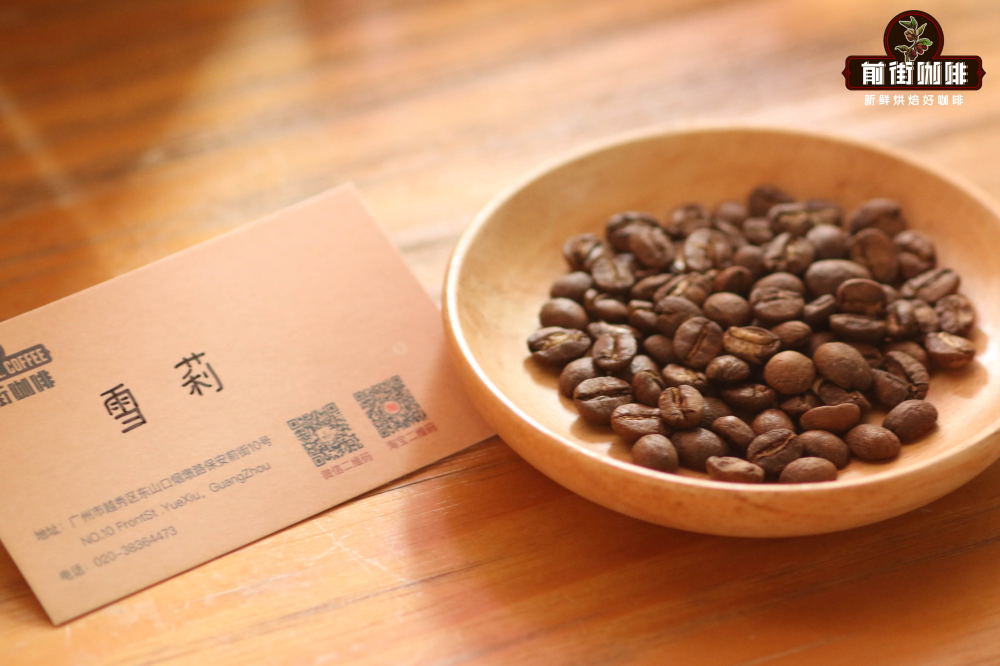
Honduras has six major coffee-producing regions: Copan, El Paraiso, Comayagua, Opalaca, Montecillos, and Agalta. The average planting altitude is between 1000-1600m, and the main varieties include Bourbon, Caturra, Typica, Catuai, and Pacas. However, Moca Estate is not located within these six major regions, but in Masaguara—a municipality in the Intibuca Department of Honduras, situated in the southern part of the Jessde Otoro valley and surrounded by mountains and hills. The main driver of the local economy is coffee cultivation, while the flatter areas corresponding to the valley are used for growing basic grains and raising livestock. As for the origin of the place name, according to "Indigenous Place Names" by Mr. Alberto Membre, Masaguara means "place with deer."
On the Development of Honduras Coffee
In fact, the start of Honduras's coffee industry was far from smooth. Compared with neighboring Central American countries such as Costa Rica, Guatemala, and Nicaragua, its coffee development history can be described as quite lagging.
The fundamental reason is that Honduras long lacked transportation infrastructure connecting producing areas with ports, preventing the coffee industry from making progress for a long time. It was not until after 1970 that the government specifically established an official coffee institution, the Instituto Hondureño del Cafe (IHCAFE), dedicated to improving coffee quality; in addition, because coffee trees can be grown throughout Honduras, production in 2011 surpassed that of Costa Rica and Guatemala in one stroke.
However, leaf rust and global warming have also increasingly become major challenges facing Honduras's coffee industry.
Flavors of Honduras Coffee Producing Regions
Honduras's six major coffee-producing regions are mainly distributed in the west and south, including Copan, Opalaca, Montecillos, Comayagua, Agalta Tropical, and El Paraiso. Three of them are major producing regions:
Montecillos: Home to the highest-altitude estate in Honduras, its coffee has a bright and richly layered taste, with intense fruit and sweet aromas interwoven, carrying citrus notes.
Copan: The coffee beans present chocolate flavors, with a full body and fairly high sweetness.
Agalta Tropical: The coffee beans of this region combine honey-like sweetness with balanced acidity, accompanied by chocolate notes.
Overall, Front Street Honduras coffee has quite prominent body and sweetness, mostly with fruit notes, and sometimes also reveals nutty, toffee-like aromas, with rather rich layering.
Honduras Coffee Grading
Honduras coffee grading uses a system combining altitude and defect rate, among which defect rate grading is further divided into American and European standards, which will not be elaborated here. The altitude grading standards are as follows:
Strictly High Grown (SHG): above 1200 meters.
High Grown (HG): above 1000 meters.
Central Standard (CS): grown at an altitude above 600 meters.
Usually a coffee bean's information will indicate both altitude grade and defect rate grade to reflect its comprehensive grade. In addition to this grading system, the specialty coffee competitions held in Honduras in recent years have also injected momentum into producing higher-quality specialty coffee.
Coffee Varieties (Caturra, Catuai, Pacas)
Caturra is a natural mutation of Bourbon, discovered in Brazil in 1937. Its tree is shorter than Bourbon, and because it inherits Bourbon lineage, its disease resistance is relatively weak, but its yield is higher than Bourbon's. Although discovered in Brazil, Caturra is not suited to Brazil's growing environment, so it was not planted on a large scale in Brazil, but instead became widely popular in Central and South America, such as in Colombia, Costa Rica, and Nicaragua.
Catuai is a variety artificially hybridized from Caturra and Mondu Novo, with relatively good resistance to natural disasters, especially wind and rain. The Catuai tree is relatively short, and its fruit grows more firmly on the tree than ordinary coffee trees and is not easy to pick; the fruit color can be red or yellow.
Pacas is a natural mutation of Bourbon. Like other widely planted Bourbon-lineage varieties, Pacas is a single-gene mutation. Its main advantage lies in its small tree size and relatively high yield potential, and it can be interplanted with other fruit trees and plants, thereby increasing total coffee cherry production. This variety was discovered in 1949 on a farm of the Pacas family in the Santa Ana region of El Salvador. In 1960, the Salvadoran Coffee Research Institute (ISIC) launched a genealogical selection project for Pacas (that is, selecting individual plants through successive generations, also called single-plant selection). Pacas is quite popular in Central America, and is widely planted in El Salvador, accounting for about 25% of its total production. In 1974, the Honduran Coffee Institute introduced this variety for planting in the country.
Processing Method
This Front Street Honduras Sherry coffee bean obtained by Front Street uses fine washed whisky Sherry barrel fermentation. Freshly picked coffee cherries are first finely washed, then placed into barrels that previously aged Sherry wine, fermented for 30-40 days at a low temperature of 15-20°C, and then dried in the shade.
Sherry barrels are containers used in the whisky industry for aging Sherry wine. The production of Sherry wine requires the Solera System maturation process, that is, mixing and aging fortified Sherry wines from different vintages, which is precisely the key to forming Sherry flavor.
Coffee beans fermented in Sherry barrels naturally take on the flavor of Sherry wine, forming an intoxicating and unique taste that has been highly sought after in recent years.
Coffee Bean Roasting
When Front Street receives barrel-fermented coffee beans, they are still green beans on arrival and need to be roasted by Front Street. During roasting, note that coffee from Honduras has always been known for rich sweetness and moderate body, but lacks an impressive entry aroma, which is why the processing plant developed barrel fermentation to enhance aroma. To better showcase the characteristics of this bean, Front Street took light roasting as the direction, and at the same time, in order to obtain a more ideal flavor performance, Front Street roasted two curves for comparison—this is a necessary process every time Front Street gets a new bean. Roasting not only tests the roaster's understanding of the bean's producing region, but also requires cupping, pour-over, and other tasting steps to confirm whether the roasting curve is appropriate. Therefore, this situation often occurs at Front Street: behind one cup of coffee there are multiple items requiring evaluation, and although time-consuming, Front Street believes this is necessary—without repeated trial process steps, Front Street will not easily put a coffee bean on the shelf.
Roasting Curves
[Curve One]
Bean charging temperature: 190°C, turning point: 5'45, 151.8°C, first crack: 9'07, 184.2°C, development after first crack 2'10, discharged at 195°C.
Cupping flavor: vanilla, honey, citrus, cream, vinous finish, smooth mouthfeel, rich flavor, overall balanced.
[Curve Two]
Bean charging temperature: 190°C, turning point: 5'30, 150.8°C, first crack: 8'38, 184.3°C, development after first crack 1'40, discharged at 196°C.
Cupping flavor: vanilla, cream, syrup, chocolate, fermented vinous aroma, intense aroma, thick mouthfeel, obvious sweetness, but astringency appears after the temperature drops.
After the cupping session ends, Front Street Coffee will also taste the flavors of the two curves through pour-over. Front Street Coffee's pour-over parameters are: Hario V60 dripper, 90°C water temperature, 1:15 coffee-to-water ratio, EK43s setting 10 grind size (80% passing through Chinese standard No. 20 sieve). The grind size varies by bean; factors such as variety, altitude, processing method, and roasting all have an impact. Therefore, when Front Street Coffee receives a newly roasted bean, it will first sift it once to determine the suitable pour-over grind.
Front Street Coffee adopts a segmented extraction pour-over method, that is, a three-stage pouring method: pour 30 grams of water for a 30-second bloom, the second stage pours 125 grams in a circular motion, and when the water level drops to the point where the coffee bed is about to be exposed, continue pouring to 225 grams, with a total time of 2 minutes (including the bloom).
Front Street Honduras coffee bean barrel-processed flavor:
[Curve One]
On entry there are aromas of vanilla and cream, acidity of citrus and berries, almond and dark chocolate flavors in the middle, maple syrup sweetness in the finish, and a vanilla aroma in the aftertaste; the flavors are distinct and the mouthfeel is smooth.
[Curve Two]
On entry, an intense vanilla cream aroma, with soft citrus acidity in the middle, white pomelo flavor in the finish, syrup sweetness, and a slightly bitter aftertaste. The mouthfeel is thick, but there is a slight astringency and the cleanliness is somewhat poorer.
After comparing the two curves, Front Street Coffee found that although [Curve Two] performed better in aroma, mouthfeel, and sweetness, with a syrup-like sensation on entry, its cleanliness was somewhat poorer and it had astringency, with a rather bitter aftertaste; in addition, its flavor was relatively one-dimensional, making it inevitably feel a bit dull when drunk. [Curve One], although slightly weaker than [Curve Two] in aroma and sweetness, had distinct flavors and a smooth mouthfeel, with pleasant vanilla and cream aromas from entry to aftertaste, and its flavor remained relatively stable from hot to cold, with no other off-flavors appearing. In the end, Front Street Coffee determined Curve Two as the roasting curve for this batch of Front Street Sherry coffee beans—note that this is for this batch. Front Street Coffee will conduct more than one round of evaluation for each new batch, considering that differences exist between batches, and the parameters used for the previous batch may no longer be applicable to the next batch.
In addition to brewing with the V60 dripper, Front Street Coffee also tried using the KONO dripper and Japanese-style iced pour-over for flavor comparison.
KONO
Because Front Street Sherry as a bean is overall relatively balanced with obvious sweetness, Front Street Coffee decided to brew it with the KONO dripper. The KONO dripper's ribs are shorter, and after the filter paper absorbs water it can cling tightly to the dripper wall, limiting exhaust space and thereby restricting airflow, which prolongs the water absorption time of the coffee grounds and slows the flow rate. The coffee grounds are thus able to steep in it, and the extracted coffee is more balanced.
Parameters: water temperature 90°C, coffee-to-water ratio 1:15, BG#5F grind size (80% passing through Chinese standard No. 20 sieve), use twice the coffee weight in water (30 grams) to wet the coffee bed for the bloom, and when the coffee bed is seen changing from wet to dry, end the bloom; the time is 30 seconds, pour with a small stream at the center to 125 grams as the first pour, and when the water level drops to the point where the coffee bed is about to be exposed, continue pouring to 225 grams to finish, and when the water level drops to the point where the coffee bed is about to be exposed, remove the dripper. (Timing starts at the beginning of the bloom.) Extraction time is 2’00”
Flavor: On entry there are soft citrus acidity and purple fruit flavors, toffee and vanilla sweetness in the middle, and vinous aroma and chocolate flavors in the aftertaste.
Japanese-Style Iced Pour-Over
The so-called Japanese-style iced pour-over simply means adding ice cubes to the server and brewing with hot water, so that the coffee liquid drips onto the ice and cools rapidly, achieving an iced effect. Front Street Coffee uses a V60 for brewing.
Parameters: water temperature 90°C, coffee-to-water ratio 1:10 (ratio of hot water to coffee), EK43s setting 10 grind size (80% passing through Chinese standard No. 20 sieve), add 100 grams of ice cubes to the server. Coffee dose 15 grams, use twice the coffee weight in water (30 grams) to wet the coffee bed for the bloom, and when the coffee bed is seen changing from wet to dry, end the bloom; the time is about 30 seconds, pour with a small stream at the center to 100 grams as the first pour, and when the water level drops to the point where the coffee bed is about to be exposed, continue pouring to 150 grams to finish, and when the water in the dripper has completely drained, remove the dripper. (Timing starts at the beginning of the bloom.) Extraction time is 1'40''.
Flavor: It smells of fermentation aroma and tropical fruit aromas; on entry there are citrus, vanilla, and nut flavors, with an oolong tea aftertaste.
The barrel-fermented coffee bean also from the same estate—Front Street Honduras Litchi Orchid—how does it differ in flavor from Sherry? After comparison, Front Street Coffee found that Front Street Litchi Orchid seems a bit more fresh and delicate, and likewise has chocolate and honey-like sweetness. But on entry there is a lychee-like fresh sweetness, sweet yet still clear, mixed with the vinous aroma of brandy, and the sweetness in the latter part is lasting. Beans processed through brandy barrel fermentation have the soft sweetness of lychee and honey, while also blending the vinous aroma of brandy and the aroma of oak barrels.
Front Street Coffee—Honduras Moca Estate Litchi Orchid
Country: Honduras
Origin: Masaguara
Estate: Moca Estate
Altitude: 1500-1700m
Varieties: Caturra, Catuai
Processing Method: Fine washed + brandy barrel fermentation
Comparison of Coffee Bean Processing Methods
Both of these Front Street Coffee beans undergo fine washing first, then barrel fermentation. The difference is that Front Street Sherry coffee beans are placed in whisky oak barrels that previously aged Sherry wine for low-temperature fermentation for 30-40 days (temperature about 15-20°C), while Front Street Litchi Orchid coffee beans are placed in brandy barrels for fermentation. Finally, they are dried in the shade until the moisture content reaches about 11%.
Brandy Oak Barrel Fermentation
Honduras barrel fermentation (brandy oak barrel): after the coffee cherries are picked, they are first finely washed, then placed in brandy oak barrels for low-temperature fermentation for 30-40 days at a temperature of about 15-20°C, and then dried in the shade.
Roasting Recommendation
In order to better highlight the flavor of this Front Street Litchi Orchid bean and also to make the overall performance balanced, our roaster chose light roasting. Bean charging temperature: 220°C, turning point: 5'50", 152.6°C, first crack: 9'15", 183°C, development after first crack 2'10", discharged at 195°C.

Pour-Over Coffee Flavor:
On entry there are lychee, brandy, dark chocolate, and cream; as the temperature changes, the vinous note and dark chocolate become obvious, the mouthfeel is full, and the sweetness in the aftertaste is obvious.
The above content is compiled by CoffeeHunters, a coffee news website.


