







How Brazilian Estates Shape Distinctive Coffee Flavors
Brazil grows roughly a third of the world's coffee, and its farms range from small family plots in Minas Gerais to large estates in Cerrado. The growing conditions for coffee here vary widely, from high-altitude, cool-climate hillsides to flat, warm plateaus. Those differences change how an arabica bean develops sugars and acids, which is why one region can produce nutty, sweet cups while another leans toward bright citrus and floral notes.
Famous estates such as Fazenda Santa Ines and Daterra have built reputations on careful lot separation and consistent processing. When buying a single-origin Brazilian bean, look for the region, farm name, and harvest year on the label. Front Street and similar roasters often highlight these details so drinkers can compare a Cerrado natural with a Mogiana pulped natural and taste how soil, altitude, and handling shape the final cup.
As the world's number one coffee producer, Brazil is known for its excellent quality and affordable price. It can serve as the base for espresso blends and also be brewed as a single-origin pour-over to showcase its balanced flavor. This article will systematically review the history of Brazil's coffee variety improvement, major producing regions, differences in processing methods, and the export grading system. It will also introduce two representative products—Front Street Queen's Farm and Front Street Dark Cocoa Blend—while providing an in-depth analysis of the flavor characteristics of classic origins such as Santos and Cerrado, helping coffee enthusiasts gain a comprehensive understanding of this South American coffee giant.
Brazilian coffee's biggest selling point in the world is its outstanding value for money. It can be incorporated into espresso recipes, allowing the crema to deliver impressive performance, and it can also be brewed as a single-origin pour-over to experience the unique balanced taste of Brazilian coffee.
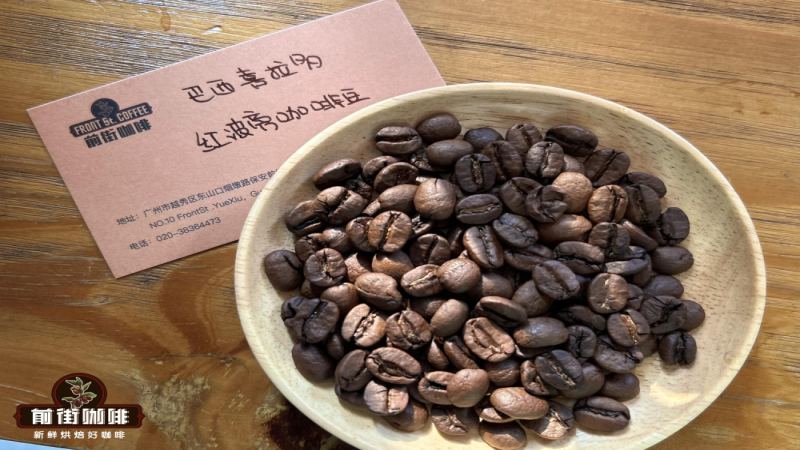
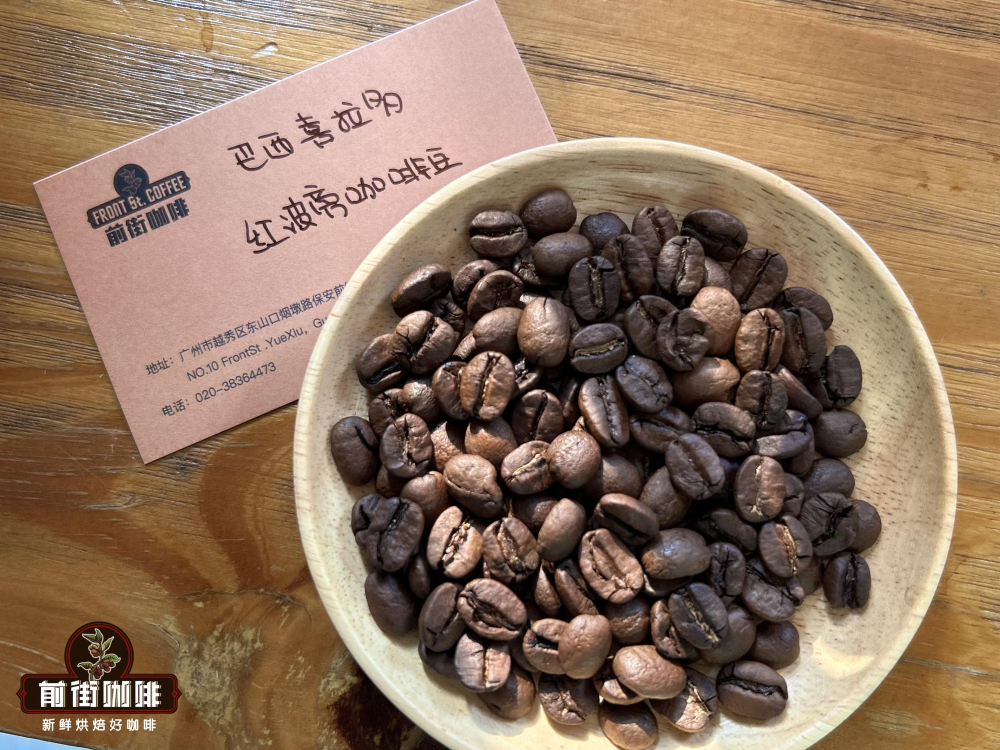
To experience the flavor of a single-origin Brazilian coffee, Front Street Queen's Farm Coffee and Front Street Dark Cocoa Blend Coffee are the top choices. Front Street Queen's Farm comes from Mogiana, a high-altitude region in Brazil, and belongs to the quite unique Yellow Bourbon variety. After medium-dark roasting, it presents rich aromas of cream, roasted peanuts, toasted bread, and nuts, with low acidity and a clean cup, and a long, lingering sweetness. It is suitable for pour-over, French press, Clever Cup, moka pot, American drip machine, and household coffee makers—truly an all-around single-origin coffee.
If you prefer Brazilian-style espresso, you can purchase Front Street Dark Cocoa Base Blend, in which Brazilian coffee beans account for a relatively high proportion, thus bringing a comfortable bittersweet taste and a very smooth entry. Front Street Dark Cocoa Base Blend also incorporates the ripe plum acidity of Yunnan small-bean coffee. When ground, it exudes the aroma of creamy chocolate, with a balanced taste and strong compatibility. In addition to lattes, it can also be used to make various espresso drinks.
Brazilian Single-Origin Coffee Bean Varieties, Brand Recommendations, and Estate Introductions
Variety Research That Began in the 1930s
Limited by inherent growing conditions, the Brazilian government has invested substantial resources in variety improvement and disease resistance enhancement since the 1930s. The achievements of variety research still profoundly influence the planting landscape of the entire Latin America. For example, in the 1930s they cultivated Yellow Bourbon, a natural mutation of Bourbon, from a one-in-a-million probability. In the 1940s they discovered Caturra (a Bourbon mutation). Subsequently, there appeared Mundo Novo (an artificial hybrid of Typica and Bourbon), Catuai (an artificial hybrid of Mundo Novo and Caturra), Icatu (with Robusta lineage) that emerged in the 1990s, and the relatively rare Acaiá (an offspring of Mundo Novo). Most Central American countries select suitable varieties for local planting from this list. When the author's friends encounter planting difficulties, they mostly consult their Brazilian counterparts. The Brazilian Ministry of Agriculture and its affiliated academic research institutes established Consórcio Pesquisa Café in 1997 to further promote the professionalization of coffee cultivation, disease resistance research, and harvest processing. Genoma Café, established in 2002, was a pioneer in coffee genome mapping research.
The Cup of Excellence (COE) competition, which represents the specialty coffee movement, had its predecessor in Best of Brazil. Since 1999, 12 countries have successively participated in hosting it. In the past, COE only accepted non-natural (washed) coffees in the competition, but considering that Brazilian coffee is predominantly natural-processed and that farmers' mastery of this technique has become increasingly mature, starting from 2012, the competition added a "Late Harvest" event specifically for natural coffees. In this year's competition, among the top ten in the non-natural (Early Harvest) group, there were 6 Yellow Bourbon and 3 Yellow Catuai; in the natural group, Catuai dominated, taking 8 spots, with the remaining places won by Acaiá. This shows that different varieties can fully realize their potential as long as they are processed properly.
The Brazilian Coffee Industry
Major Coffee Growing Regions in Brazil
Coffee Plantations in Minas Gerais, Brazil
Two Large Bags of Coffee Beans, Photographed in São Paulo State
Brazil's coffee production accounts for about one-third of the global total, making it currently the world's largest coffee producer. Brazil's nationwide coffee plantations occupy a total area of approximately 27,000 square kilometers, mainly concentrated in the southeastern states of Minas Gerais, São Paulo, and Paraná, where the environment and climate provide ideal growing conditions for coffee beans.
Over the past 150 years, Brazil has consistently remained the world's largest coffee producer[1], accounting for about one-third of world coffee production. In 2011, Brazil was still the world's number one coffee producer, followed by Vietnam, Indonesia, and Colombia[2]; that year Brazil's total coffee production reached 2.7 million tons, twice that of Vietnam[3]. Approximately 3.5 million people in Brazil are engaged in coffee cultivation, mainly living in rural areas[4].
Brazil has approximately 220,000 coffee plantations[5], with nationwide coffee plantations occupying a total area of about 27,000 square kilometers[4], mainly distributed in the southeastern states of Minas Gerais, São Paulo, and Paraná, because the environment and climate of these states provide ideal growing conditions for coffee beans; Minas Gerais accounts for about half of the national coffee production[6]. Most plantations harvest during the dry season from June to September[7]. In most countries, Coffea arabica beans are processed using the "washed coffee method," but in Brazil, almost all coffee is processed using the "dry coffee method"[8], with coffee beans placed in the sun to dry for 8 to 10 days[9], followed by sorting and packaging[10].
Exports and Sales
In the 1850s and 1860s, Brazilian coffee exports accounted for more than 50% of total merchandise export value[11], reaching 63.9% in 1950[12]. However, due to the continuous expansion of the export goods market, this ratio began to decline from the 1960s, dropping to 12.3% in 1980[12], and accounting for only 2.5% in 2006[4].
Brazil itself is the world's second-largest coffee consuming country and is expected to surpass the United States in the mid-2010s[13]. Brazil ranks 14th globally in per capita coffee consumption[14].
In Brazil, certain types of coffee bean imports are subject to taxes of 10% to 16%[15]; exporting unprocessed coffee to the United States, European Union, and Japan is tax-free[16], but exporting processed coffee to the EU carries a 7.5% tariff, to Japan 10%, and to the United States it is tax-free[16].
Characteristics of Brazilian Coffee
Brazilian coffee broadly refers to coffee produced in Brazil. There are many varieties of Brazilian coffee, and the vast majority are unwashed and sun-dried. They are classified according to the state of origin and the port of shipment. Brazil has 27 states, 17 of which produce coffee, but the 4 largest producing states together account for 98% of the national total output. Brazilian coffee has relatively low acidity, combined with a bittersweet taste, an extremely smooth entry, and a faint grassy aroma, with a slight bitterness amid the fresh fragrance, smooth and pleasant, with a comforting aftertaste.
The Producing Regions of Brazilian Coffee
The Producing Regions of Brazilian Coffee
Brazilian coffee broadly refers to coffee produced in Brazil. There are many varieties of Brazilian coffee. Just like other Arabica coffees, Brazilian coffee is called "Brazils" to distinguish it from "Milds" coffee. The vast majority of Brazilian coffee is unwashed and sun-dried. They are classified according to the state of origin and the port of shipment. Brazil has 27 states, 17 of which produce coffee, but 4 states have the largest production, together accounting for 98% of Brazil's national total output. They are: Paraná, São Paulo, Minas Gerais, and Espírito Santo. The southern state of Paraná has the most astonishing production, accounting for 50% of the total output.
The Taste of Brazilian Coffee
Brazilian coffee is a low-acidity, medium-roast coffee bean from the coffee center of the world. As a high-quality coffee variety, Brazilian coffee can be enjoyed as a single origin or as part of a blend.
● Premium beans: Santos NO.2, screen size NO.18
● Flavor characteristics: mild, moderate acidity and bitterness, soft aroma.
● Best roast level: medium roast
Brazilian coffee has relatively low acidity, combined with a bittersweet taste, an extremely smooth entry, and a faint grassy aroma, with a slight bitterness amid the fresh fragrance, smooth and pleasant, with a comforting aftertaste. For Brazilian coffee, there are no particularly outstanding merits, but also no obvious defects. This taste is mild and smooth, low in acidity, medium in body, with a faint sweetness. All these soft flavors blend together, and trying to distinguish them one by one is the ultimate test for the palate. This is also why many Santos fans love this coffee. Because it is so mild and ordinary, Santos is suitable for medium roasting and for brewing with the most popular methods, making it the best raw material for making espresso and various fancy coffee drinks.
Among them, the most famous is Santos coffee, which has a mellow, neutral taste. It can be brewed directly or blended with other types of coffee beans into a comprehensive coffee, which is also a great choice.
Other types of Brazilian coffee such as Rio and Paraná, because they do not require much care and can be mass-produced, have a relatively rough taste but are still a kind of coffee with excellent quality and affordable price. Since they are distributed throughout Brazil, quality varies, so independent standards have been established (classified by the amount of foreign matter from NO.2 to NO.8, by bean size from NO.13 to NO.19, and by taste into six grades). Almost all Arabica varieties are of good quality with stable prices. The most famous is "Brazil Santos," which has been an essential component of blended coffee since ancient times and is familiar to the general public. Recently, the "Tolma Cup" has also received high praise.
Varieties of Brazilian Coffee
Although coffee is diverse, Brazilian coffee suits the general public's taste. For example, coffee produced in the northern coastal areas has a typical iodine flavor, reminiscent of the ocean after drinking. This coffee is exported to North America, the Middle East, and Eastern Europe. Another interesting and worth-seeking coffee is washed Bahia coffee. This coffee is not easy to find because, after the United States, Brazil is the world's largest coffee consuming country, and many of the finest coffees can only be found in its domestic market.
In Brazil, the largest production is Robusta coffee. This coffee is sold in supermarkets. Brazilian Robusta coffee is sold under the name Conillon, accounting for 15% of total production.
In some estates in the Cerrado region of Minas Gerais in southeastern Brazil, old Bourbon coffee is grown. These estates, such as Capin Branco and Vista Allegre, also sell the old Bourbon varieties they grow on the market. Although from the same region, these coffees each have their own characteristics. Capin Branco coffee has a smoother mouthfeel than Vista Allegre coffee, while Vista Allegre coffee is rich and dark, with both having lower acidity. However, like all Brazilian coffees, they are best enjoyed when fresh, because the older they get, the stronger the acidity becomes. These coffee growers have organized themselves into the Specialty Coffee Association of Brazil.
Cultivation and Production of Brazilian Coffee
Harvesting of Brazilian Coffee
Harvesting of Brazilian Coffee
Brazil is vividly described as the "giant" and "monarch" of the coffee world. There are approximately 3.97 billion coffee trees there, and small farmers now grow 75% of Brazil's total national coffee production. Brazil has 2 or even 3 times the number of people engaged in coffee production compared to Colombia, which is the world's second-largest coffee producer.
From the perspective of natural conditions, Brazil is located in the tropical region, with a tropical rainforest climate in the north, hot and humid year-round, suitable for tropical crop growth. Coffee trees are sun-loving crops, and abundant sunlight provides their growing conditions. From a historical perspective, Brazil was long a Portuguese colony, and to meet Western European demand, it engaged in long-term single-crop planting and developed a tropical plantation economy, whereby Brazilian coffee was its pillar industry for a very long period. From a market perspective, coffee and its processed products, being rich in caffeine, have a stimulating effect and play an important role for work groups primarily composed of mental laborers, thus having enormous significance in modern society and a broad market. In summary, Brazil's coffee production ranks first in the world.
Unlike the past, Brazil's economy now relies less on coffee, with coffee accounting for only 8% to 10% of GDP. Before World War II, Brazil's total coffee production accounted for 50% or more of the world's total, and now it is close to 30%, but the country's influence on the world's coffee, especially on coffee prices, is pivotal. For example, two frost damage events in 1994 caused a sharp rise in global coffee prices.
Since the introduction of coffee trees from French Guiana in 1720, coffee production has gradually become a science. Before 1990, the Brazilian government strictly monitored the coffee industry, with both severe intervention and price protection measures, and the state consistently implemented minimum price protection measures for farmers, resulting in overproduction of coffee. For a period before World War II, surplus stocks reached as much as 78 million bags, which later had to be burned or dumped into water for destruction.
Since the opening of the free market in 1990, the former "Brazilian Coffee Institute" (IBC) was replaced by the National Economic Association, a non-investment administrative agency of the state, which pursues a non-intervention policy and allows producers to negotiate directly with exporters. The business activities of exporters are supervised by government legislation, and relevant departments register legitimate exporters.
This largest coffee producing region, with various grades and types of coffee accounting for one-third of global consumption, holds a place in the global coffee trading market. Although Brazil faces natural disasters several times more than other regions, its arable land area is sufficient to compensate.
There are many varieties of coffee here, but its industrial policy focuses on large quantity and low price, so there are not many top-quality coffees, but they are a good choice for blending with other coffees.
Brazilian Coffee Beans Cerrado
Generally speaking, Brazilian coffee beans are considered a flexible and versatile bean variety, so many blends or espresso coffees use Brazilian coffee beans as a base.
Cerrado is a producing region. Cerrado coffee beans are processed using Brazil's traditional pulped natural method; because the coffee beans are dried together with the pulp and mucilage, they retain higher levels of organic compounds, minerals, and soluble solids.
This coffee bean has a relatively strong aroma, with a slight sweetness accompanied by chocolate flavor, as well as a citric acidity that most people would not easily notice. The body is medium, and the aftertaste or finish is long.
Regarding coffee production, the main considerations are:
① Production volume ② Pests and diseases ③ Quality. As far as the stability pursued by agriculture is concerned, production volume is the top priority.
In addition, 80% of Brazilian coffee is dry-processed, with the remaining 20% being semi-dry processed and washed. Their coffee flavor characteristics differ, but high-quality coffees tend slightly toward the semi-dry processing method. However, the dry processing method still enjoys deeply entrenched popularity. Speaking of the differences between the dry processing method and the semi-dry processing method.
Dry Processing Method
The so-called dry processing method is a method in which harvested coffee cherries, after rough sorting, directly enter the drying process, and after hulling, the green beans are extracted. This is Brazil's traditional method, very familiar to the Japanese as well, and can be said to be the origin of Brazilian coffee.
The Drying Condition of Dry-Processed Coffee
Semi-Dry Processing Method
A processing method that has attracted much attention in recent years. Harvested coffee cherries, after rough sorting, are stirred with a pulper to remove the pulp, then enter the drying process, and after hulling, the green beans are extracted.
Stirring with a pulper can remove unripe coffee. Therefore, the semi-dry processing method can improve precision more than the dry processing method, reducing the degree of variation caused by coffee plants.
The Drying Condition of Semi-Dry Processed Coffee
In pursuit of delicious Brazilian coffee. Brazilian coffee export specifications are divided into
Brazilian coffee farms range from large mechanized farms on flat land to small farms in mountainous areas harvested by hand. Brazilian farms have no shade trees for protection. Coffee trees grow and bear fruit under full sun exposure, and in fact such conditions present some problems when making delicious coffee. Coffee cherries exposed to prolonged sunlight ripen instantly. Sweet, highly mature coffee requires temperature differences between day and night, which is greatly related to the limitation of sunlight hours.
Coffee cultivated on large flat-land coffee farms at altitudes of 850 to 1,200 m has a somewhat smooth taste and is mostly neutral coffee.
In contrast, Brazil also has coffee produced in mountainous areas at slightly higher altitudes than flat land, where sunlight hours are limited due to slope orientation. As a result, coffee cherries can ripen on the tree for a longer time, so a coffee with high maturity and both sweetness and acidity can be harvested. (For example, tomatoes are also sweeter, richer in flavor, and more delicious when ripened on the vine!)
Mechanized Large Flat-Land Farms
The gift coffee and commercial coffee that represent Brazilian coffee are both produced in this type. The resulting coffee has a smooth taste and is suitable for blended coffee and other easy-to-brew coffees.
Open farms on the plains, mechanically harvested, Minas Cerrado and São Paulo coffee farms
Coffee from CarumondeMinas
This is currently the most attention-grabbing region in Brazil, often imagined as farms in the mountainous areas of Guatemala in Central America, where many farms do not use machinery but harvest by hand and are committed to quality. Drinking coffee produced here, it has a strong acidity, sweetness, and body unlike Brazilian coffee, and a good sense of balance can be felt. There are many farms that frequently receive Cup of Excellence recognition, and the high-quality coffee they produce can reach a level that makes farms in other regions hesitate to participate in Cup of Excellence.
Farms extending along mountain slopes, Carumode Minas coffee farms in southern Minas
Fully ripe coffee cherries on the tree.
Traditional wind-based sorting tool
There are still many types of coffee that Brazil, as an advanced coffee country, has not yet exported to Japan. Because domestic road traffic conditions make overland transport difficult, coffees like <CHAPADA DE MINAS> that can be produced excellently but cannot be distributed, and cat feces coffee (letting civets eat coffee cherries and collecting coffee beans from their feces), and 'bird feces coffee' where birds eat coffee cherries and coffee beans are collected from their feces, etc., will eventually become hot topics through various channels of introduction to Japan!
When it comes to Brazil Santos, besides the football team, many people will think of coffee. Santos is a port located in southeastern Brazil. In the past, coffee from different provinces (generic coffee) was stamped with the port name when exported, and unknowing importers promoted Santos as a coffee variety. In fact, a similar confusion also occurred with the Yemeni port Mocha.
Brazil is the largest country in Latin America and has been the world's largest coffee producer for the past 150 years. One-third of the world's coffee comes from Brazil, followed by Vietnam, Colombia, and Indonesia. The annual production of just the southeastern state of Minas Gerais (20 million bags) already surpasses the entire national output of neighboring Colombia (about 10 million bags). In addition, São Paulo, Espírito Santo, Bahia, and others are also specialty coffee producing regions. Among them, Sul de Minas (southern Minas Gerais) swept 90% of the national top 20 winning coffees in the Cup of Excellence (COE) over the past two years.
But behind the glorious record lies excessive development and deforestation. A tropical rainforest nurtured by the Amazon River had been sparsely populated for thousands of years. But under the economic incentive of coffee exports since the 18th century, Brazil's pristine ecology gradually became mechanized agricultural factories. This history is said to have begun when an army colonel seduced the French governor's wife in 1723 and obtained seeds. Having experienced Black slavery and later the European immigrant land allocation system, Brazil's coffee production capacity once reached half of world demand. However, with the subsequent collapse of the commodity market and excessive boosting of production capacity causing "soil fatigue" (as Brazilian farmers call it), coinciding with the rise of the specialty movement in recent years, farmers finally shifted their goal from quantity to quality.
Intense Cocoa Flavor Makes It a Darling of Espresso Blend Beans
In terms of growing environment, since Brazil rarely has highlands above 3,000 feet and lacks volcanic soil, it is actually not favorable for growing coffee. Its early spread relied on uncultivated Terra Roxa and the immediate nutrients provided by burned pristine forests. Therefore, Brazilian coffee does not have strong fruit acidity, but its intense cocoa and nutty flavors, combined with a full-bodied mouthfeel, make Brazilian coffee a darling of espresso blend beans. Whether in chains or specialty shops, Brazil is also a common base coffee.
The above content is compiled by CoffeeHunters, a coffee news website.


