







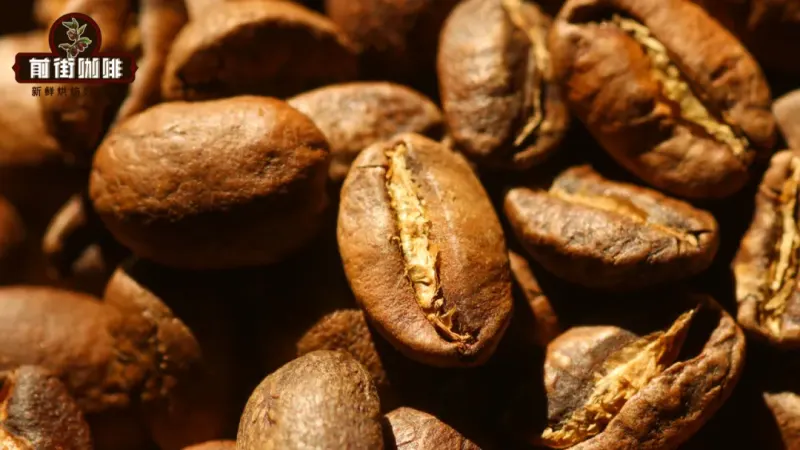
Variety Origins and Flavor Differences Between Two Famous Farms
The geisha coffee variety, sometimes spelled gesha, first came to global attention through Panama's Hacienda La Esmeralda, whose Green Label lots set auction records. The plant itself, however, traces back to the Gori Gesha forest in Ethiopia, where the coffee originated before traveling to Central America. That split explains the ongoing question of whether Geisha and Gesha are the same thing, since they are simply two spellings of one variety.
Gesha Village in Ethiopia grows the variety near its wild source, while Hacienda La Esmeralda cultivates it in Panama's Boquete highlands. Both produce floral, jasmine-like cups, but Panamanian lots often show a sharper bergamot and citrus character, while Ethiopian examples can lean toward stone fruit and tea. Comparing the two side by side is one of the clearest ways to understand how terroir interacts with a single variety.
When many coffee lovers hear "Geisha," the first thing that comes to mind is Panama's Hacienda La Esmeralda. But the Geisha variety actually originated in Ethiopia's Gesha Village. Front Street Coffee recently acquired both Hacienda La Esmeralda's natural-process Green Label and Gesha Village's Green Label Geisha, and conducted a detailed flavor comparison of these two Green Label coffees through cupping and pour-over brewing. This article will guide you through the differences between Gesha Village and Hacienda La Esmeralda in terms of grading systems, variety origins, processing methods, and roasting approaches, and present their specific performances in aroma, acidity, sweetness, and aftertaste, helping you more clearly understand the relationship and differences between Geisha and Gesha.
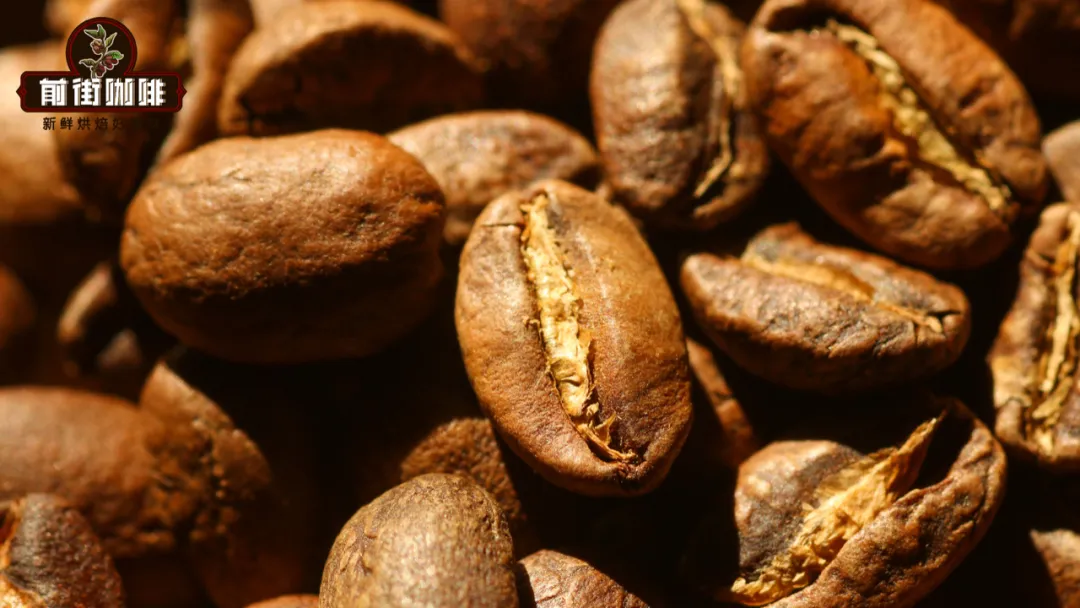
Front Street Coffee believes that when Geisha coffee is mentioned, what comes to mind is certainly Hacienda La Esmeralda's Geisha coffee from Panama, after all, Hacienda La Esmeralda's Geisha coffee has a very distinctive flavor. However, what Front Street Coffee wants to introduce today is not Panama Geisha coffee, but rather the origin of the Panama Geisha coffee variety — Gesha Village Geisha coffee .
Gesha Village is located in the Bench Maji region of Ethiopia, the homeland of coffee. The founders of Gesha Village are Adam Overton and his wife Rachel Samuel. Under the guidance of Willem Boot, the estate owner of Finca La Mula, they found wild Geisha in the Gori Gesha forest. They selected wild Geisha coffee seeds collected from the Gori Gesha forest and planted them at Gesha Village.
Gesha Village's Geisha coffee, like Panama Geisha coffee, has a very strict coffee grading system. Hacienda La Esmeralda's Geisha coffee in Panama is mainly divided into Red Label, Green Label, and Blue Label. Gesha Village's coffee grading system is even stricter than Hacienda La Esmeralda's. For example, Front Street Coffee has learned that Gesha Village's Geisha coffee is generally divided into Auction Lot, Gold Label RARITIES, Red Label GROWERS RESERVE, Green Label SINGLE-TERROIR, and Chaka CHAKA lots.
Front Street Coffee acquired Hacienda La Esmeralda's natural-process Green Label and Gesha Village's Green Label Geisha coffee within the past month or two. You might wonder: which Geisha coffee tastes better? Gesha Village Geisha or Hacienda La Esmeralda Geisha coffee? Front Street Coffee is just as curious as everyone else about the differences between these two Geisha coffees this year. So, Front Street Coffee will conduct a flavor comparison of these two Green Label Geisha coffees through cupping and pour-over brewing.
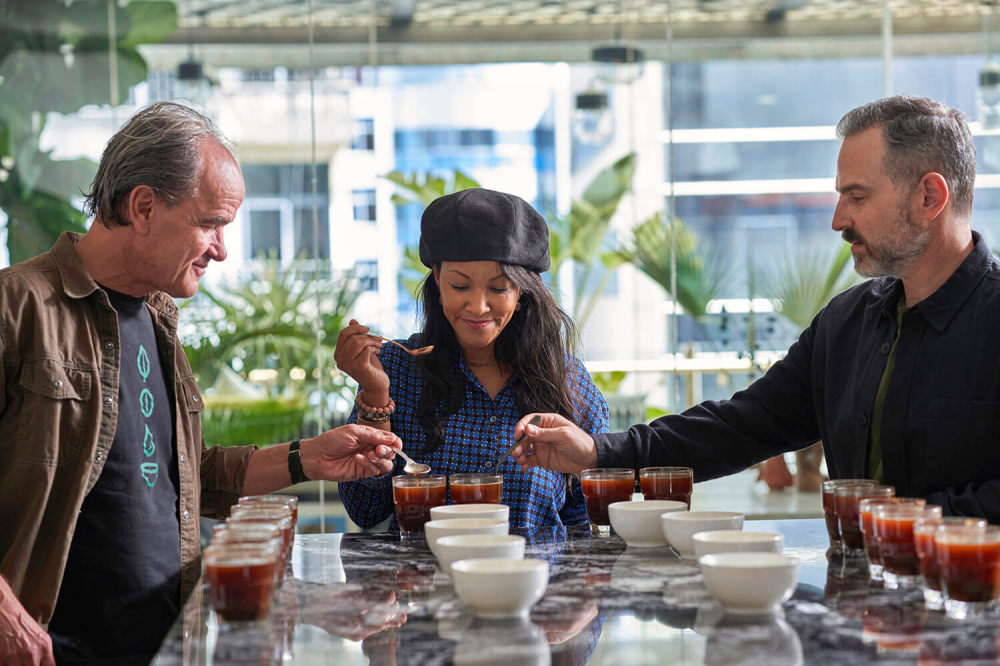
First, Front Street Coffee cupped the Green Label Geisha coffee from Gesha Village's Bangi block. This Green Label's variety is Gori Gesha, a Geisha variety planted within Gesha Village, and the processing method is natural.
Front Street Coffee's general cupping process is as follows: first grind Gesha Village's natural-process Green Label coffee beans into powder. For cupping, Front Street Coffee uses 11.3 grams of coffee, with a water temperature of approximately 94 degrees. When grinding, you can smell the aroma — the dry fragrance of the coffee grounds. Front Street Coffee (FrontStreet Coffee) found that this Green Label Gori Gesha's dry fragrance carries obvious berry notes. Then pour in hot water and start timing for four minutes. At this point, experience the wet aroma of the coffee; the wet aroma is that of ripe fruit. When four minutes are up, break the crust by moving the cupping spoon in circles three times in the same direction, gently pushing the floating grounds on the surface. Front Street Coffee noticed that the wet aroma became even more intense. Then use the cupping spoon to skim off the coffee grounds and enter the tasting stage.
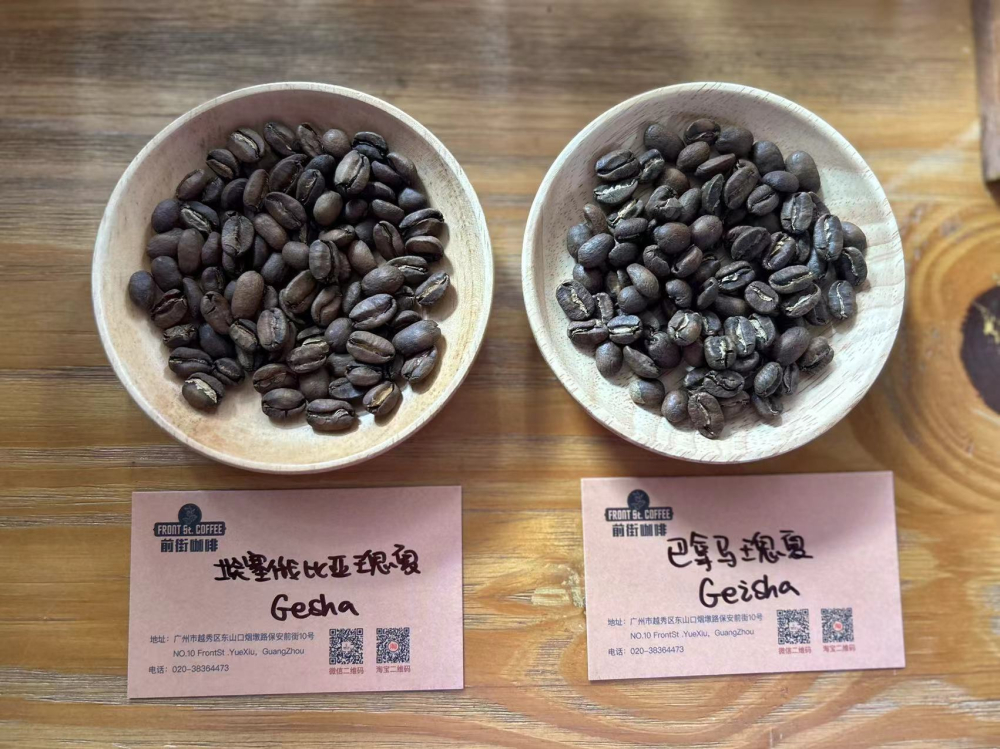
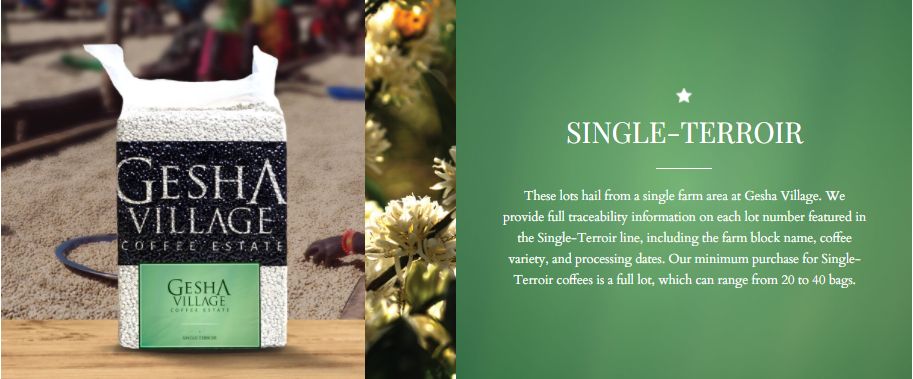
Although Gesha Village's Green Label Geisha coffee does not have cupping score requirements like the Red Label and Gold Label, this Green Label Geisha coffee comes from a single block of Gesha Village estate and is a single-variety lot. The Green Label lot provides complete traceability information for each lot number, including farm block name, coffee variety, and processing date. So the quality of this Green Label's flavor is also very guaranteed. As for the specific flavors, they will be compared with Hacienda La Esmeralda at the end.
Next, Front Street Coffee cupped Hacienda La Esmeralda's Green Label Geisha coffee. Following the same steps as mentioned earlier, Hacienda La Esmeralda's Geisha coffee carries a very rich floral fragrance in both wet and dry aromas, with the wet aroma being more intense when smelled. Next, Front Street Coffee used the three-stage method to brew these two Green Labels. But before brewing, we need to check the roast level of these two Green Label coffees.
Because the Gesha Village Green Label Geisha coffee that Front Street Coffee offers is processed using the natural method. Generally, floating impurities are first removed, then the coffee is spread in thin layers on African raised beds covered with plastic sheeting for sun drying. During drying on the sun beds, a second sorting is performed to pick out insect-damaged beans and greenish-colored beans. The total drying time is 18-30 days. Front Street Coffee believes that naturally processed coffee has pronounced sweetness, soft acidity, and complex fruit-toned flavors. Therefore, Front Street Coffee ultimately set the roast level of Gesha Village Geisha coffee to medium-light to highlight the floral fragrance and fruity sweetness unique to naturally processed Geisha coffee.
When roasting Panama Green Label Geisha coffee beans, Front Street Coffee generally uses a light roast to highlight Hacienda La Esmeralda's Geisha flavor. Front Street Coffee also pays close attention to brewing parameters when brewing this coffee. Generally, the water temperature is 90 degrees, the coffee dose is 15 grams for one serving, and the coffee-to-water ratio is 1:15. Front Street Coffee's commonly used brewing method is the staged pouring method: first use 30 grams of water for blooming, then pour with a slow stream in circles up to 125 grams for the first stage. When the water level drops to reveal the coffee bed, continue pouring until reaching 225 grams, then stop pouring and remove the dripper.
Now for the tasting stage. Front Street Coffee believes that Hacienda La Esmeralda's Green Label Geisha has very high cleanliness, a smooth mouthfeel, and a moderate aftertaste. The natural processing also gives this natural-process Green Label a rich jasmine fragrance, with a honey-like mouthfeel after cooling. As for Gesha Village's Green Label, it carries some acidity, somewhat like Kenyan berry acidity, with a very full and rich mouthfeel, an aftertaste with honey sweetness, and a hint of fermented wine aroma.
Therefore, Front Street Coffee believes that compared with Gesha Village Geisha coffee , Panama Geisha coffee is closer to people's impression of Geisha coffee. However, Gesha Village's Geisha coffee quality is also very good, leaning more toward stone fruit flavors and higher sweetness, while Panama's Geisha coffee has more of the delicate floral and tea-like qualities. Additionally, Gesha Village in Ethiopia is at a higher altitude than where Panama Geisha is grown, which is more favorable for the accumulation of coffee compounds.
For more specialty coffee beans, please add the private WeChat of Front Street Coffee (FrontStreet Coffee), WeChat ID: kaixinguoguo0925
The above content is compiled by CoffeeHunters, a coffee news website.


