







How Does Panama Geisha Compare to Jamaica Blue Mountain?
Panama Geisha and Jamaica Blue Mountain are the two most discussed coffees in the specialty market, but they differ in nearly every measurable way. Geisha is a distinct variety, while Blue Mountain is a protected origin name tied to Typica grown at 910 to 1,700 meters in Jamaica's designated forest areas. Blue Mountain delivers dark chocolate and roasted hazelnut notes with a balanced body; Geisha is prized for layered floral and fruity aromatics.
The comparison runs through variety, terroir, grading, processing, and brewing. Jamaica's Coffee Industry Board restricts the Blue Mountain label to Typica from approved parishes, and its strict grading supports a sweet, rich cup. Geisha's renown grew from Panamanian farms such as Boquete, where high altitude and careful processing draw out jasmine and citrus notes. Since both are agricultural products, picking methods and post-harvest handling shape the final flavor as much as origin does.
On the global specialty coffee stage, Jamaica Blue Mountain and Panama Geisha are undoubtedly the two most watched stars. Blue Mountain coffee is known for its rich and balanced taste, while Geisha has conquered countless coffee lovers with its complex and varied floral and fruity aromas. This article will systematically compare these two top coffees from multiple dimensions, including variety characteristics, origin terroir, grading systems, processing methods, and brewing parameters. Front Street Coffee, as a self-roasting brand, also shares brewing insights and flavor performance of Blue Mountain No. 1 and Boquete Geisha, helping readers fully understand the unique charm and differences of both.
Once, when people talked about the world's finest coffee, Jamaica Blue Mountain often came to mind. But times have changed, and today, when discussing the ultimate in coffee quality, Geisha is almost impossible to avoid. So which is better, Blue Mountain or Geisha? Front Street has always believed that taste preferences are inherently a matter of individual difference—some people love Blue Mountain's sweet, rich, and balanced mouthfeel, while others are obsessed with Geisha's layered floral and fruity notes. In the end, finding the cup that suits your own taste is the best choice. If you want a deeper understanding of this, you might as well follow Front Street's perspective and listen to the detailed analysis below.
First, let's clarify what Blue Mountain coffee actually is.
Blue Mountain coffee was once dubbed the luxury good of the coffee world. Authentic Blue Mountain coffee can present thick and lasting aromas of dark chocolate and roasted hazelnut, while achieving a delicate balance among acidity, sweetness, bitterness, aroma, and body. Front Street believes that Blue Mountain's ability to build such a remarkable reputation is inseparable from Jamaican growers' meticulous management and strict grading system. Jamaica's Blue Mountain range has extremely superior natural conditions, and the combination of multiple favorable factors makes this land an ideal region for coffee cultivation. However, coffee is ultimately an agricultural product, and variety, altitude, picking methods, and post-processing techniques will all affect the final aroma performance.
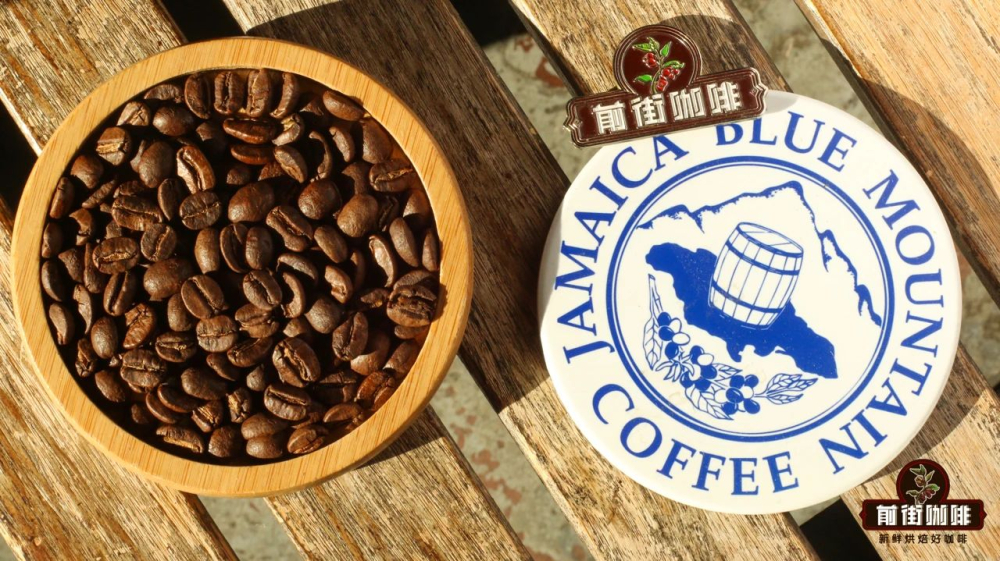
According to the official designation of the Jamaica Coffee Industry Board (CIB), only Typica coffee grown within designated forest areas at about 910 to 1,700 meters above sea level is eligible to be called true "Jamaica Blue Mountain coffee." The Typica variety needs to grow at high altitude to fully express its flavor potential. At the same time, Typica has weak disease resistance and is highly susceptible to infection, and its yield per tree is also low, so it requires a large amount of labor for meticulous care. In addition, the high-altitude areas of Blue Mountain have rugged terrain, making management and picking quite difficult and placing high demands on the skill of pickers, which further limits production. In recent years, less than 15% of coffee beans produced in Jamaica can carry the Blue Mountain label, totaling only about 900 tons.
I believe many people have heard the saying: "Authentic Blue Mountain coffee has long been monopolized by Japan." This claim is not entirely unfounded. UCC is a Japanese coffee company whose predecessor was Ueshima Coffee Co., Ltd. In 1981, it established a farm in Jamaica to operate a Blue Mountain coffee project. The Jamaican side promised to export 90% of the Blue Mountain coffee quota to Japan. Coupled with Japan's strong domestic promotion of Blue Mountain, the situation of Blue Mountain coffee being expensive and hard to obtain was thus formed. Today, coffee culture has long flourished, and drinking a cup of Blue Mountain coffee is no longer difficult. At Front Street, you can taste a cup of hand-brewed black coffee made with Blue Mountain No. 1 for just 60 yuan.
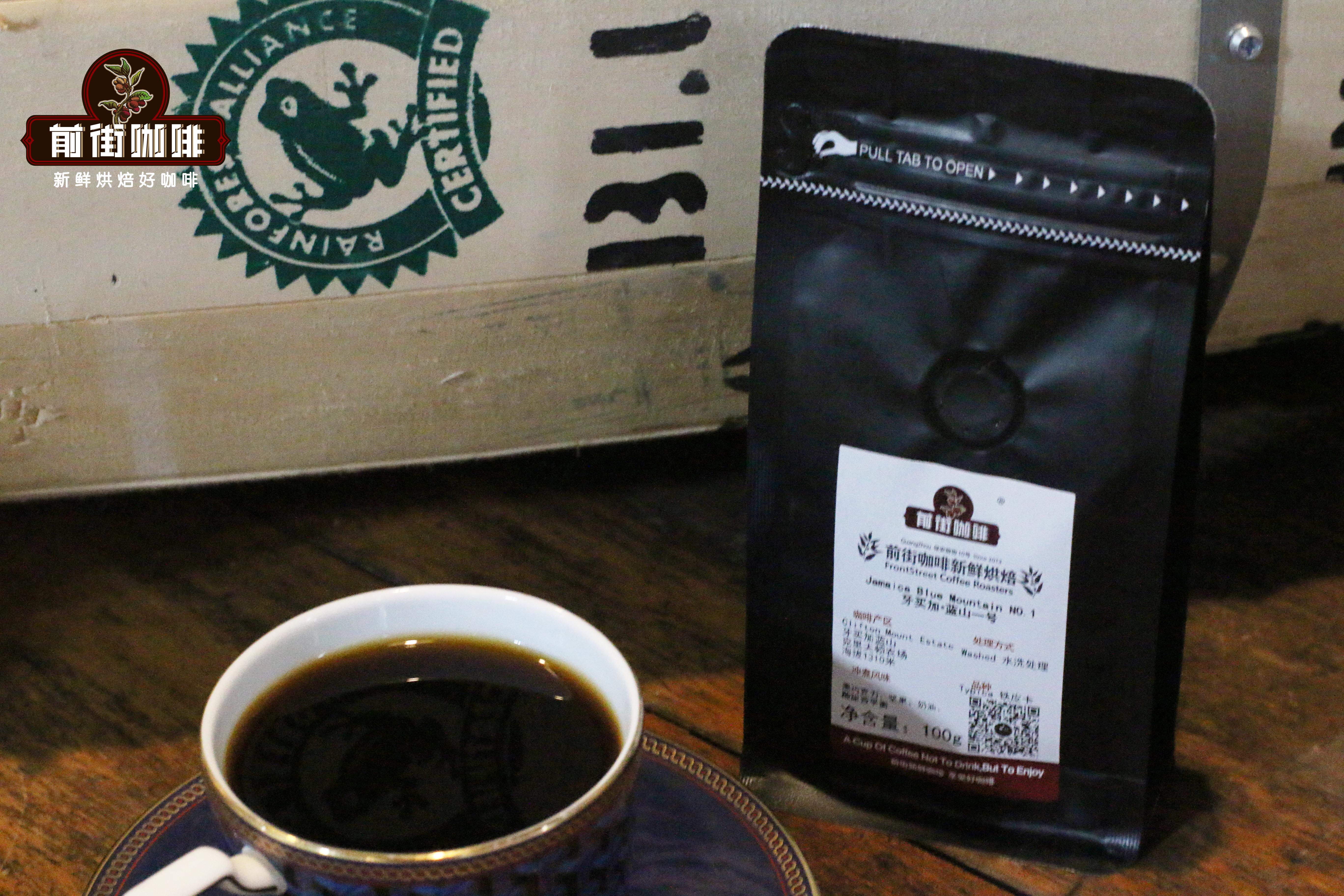
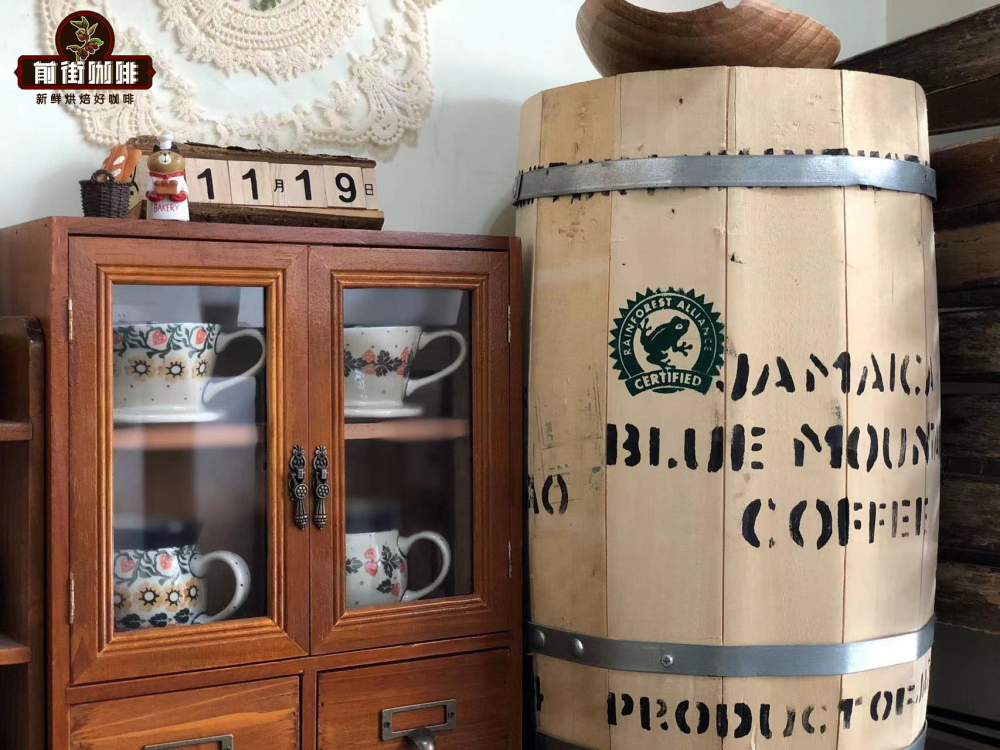
The so-called Blue Mountain No. 1 refers to the highest-grade batch of Jamaican Blue Mountain green beans. To obtain Blue Mountain No. 1 certification, green beans must meet a screen size standard of 17 mesh or above, have a defect rate controlled within 3%, a moisture content of about 13%, and show rich coffee aroma, a smooth and balanced mouthfeel, low acidity, and a lasting sweet aftertaste in cupping. Front Street's self-roasted Blue Mountain No. 1 coffee comes from Clifton Estate in Jamaica and uses the washed processing method. Front Street holds the quality certificate issued by the Jamaica Coffee Board, the authorized sales certificate granted by the Blue Mountain coffee producer, and the certificate of origin for Jamaica Blue Mountain coffee. The Dongshankou store also displays the oak barrels used to hold Blue Mountain green beans.
Next, let's look at what characteristics Geisha coffee possesses.
Geisha is the most well-known coffee variety since the rise of the specialty coffee era. With its unique orange-blossom and honey-like flavor, it has become a high-quality bean variety pursued by coffee professionals and enthusiasts worldwide.
Compared with other Arabica varieties, Geisha not only has lower yields, but the plant itself is also especially delicate, with almost harsh requirements for its growing environment. It is suitable for planting at high altitudes and needs fertile soil, as well as cloud cover or shade trees for protection, and cannot withstand direct sunlight. The leaf system of the Geisha coffee tree is very thin, its photosynthetic efficiency is low, and its root system is also fragile, absorbing water and nutrients slowly, resulting in extremely low fruit yields. In addition, the high-altitude environment delays fruit ripening, and a single Geisha coffee tree produces only about half the fruit of other Arabica varieties, which is also one of the important reasons for Geisha's high price.
Although producing regions around the world are racing to introduce Geisha in the hope of producing this "ceiling of the coffee world," Front Street believes that the Geisha flavor shown in the Panama producing region is the most representative. Thanks to the local excellent terroir, Geisha coffee can absorb abundant essence substances and transform them into elegant floral and fruity notes as well as layered acidity. Among Front Street's self-roasted Geisha coffee beans, the well-known Hacienda La Esmeralda and Elida Estate are both located in the Boquete producing region. Front Street believes that Panama, as the place where Geisha rose to fame, still sets the industry benchmark for Geisha coffee produced with mature cultivation techniques and processing methods. Therefore, Front Street has launched a Boquete region Geisha coffee using washed processing, hoping to let everyone experience the classic Geisha flavor.
As one of the most traditional green bean processing methods, washed processing not only makes coffee quality more stable, but also gives Geisha higher cleanliness and a fresher flavor direction. After roasting, Front Street perceived that this Geisha emits elegant white floral aromas, with uplifting citrus and lemon acidity, accompanied by a faint green tea note, as if drinking a gentle cup of Tieguanyin tea.
How should Blue Mountain No. 1 and Panama Geisha be brewed to show their best flavor?
Whether it is the richly aromatic Blue Mountain coffee or the fragrant Geisha coffee, Front Street's flavor descriptions for every bean are based on cupping results of freshly roasted coffee. If coffee beans are stored for more than a month, the aroma may already have partially dissipated, and no matter how skilled the brewing technique is, it is difficult to restore the original flavor. Front Street deeply understands the importance of freshness to coffee quality, so it insists on shipping only coffee beans within 5 days after roasting, ensuring that everyone can enjoy the most complete peak flavor period upon receipt.
The parameters for brewing Geisha coffee at Front Street's store are as follows—
Dripper: V60
Water temperature: 91 to 92 degrees Celsius
Dose: 15 grams
Coffee-to-water ratio: 1 to 15
Grind size: EK43s setting 10 (80% passing rate with a No. 20 sieve)
The parameters for brewing Blue Mountain No. 1 at Front Street's store are as follows—
Dripper: KONO dripper
Water temperature: 88 degrees Celsius
Coffee-to-water ratio: 1 to 15
Coffee grounds: 15 grams
Grind size: EK43s setting 10.5 (75% passing rate with a No. 20 standard sieve)
In the first stage, pour 30 grams of water with a gentle stream for blooming, with a blooming time of 30 seconds. In the second stage, pour water to about 125 grams, maintaining an even and steady outward circular pour. When the coffee liquid level drops to half, pour the final stage of water to 225 grams. After all the coffee liquid has finished dripping, the total extraction time is about 2 minutes.
Panama washed Boquete Geisha coffee flavor: It shows clear acidity reminiscent of citrus, lemon, and bergamot, with a creamy smooth mouthfeel when swallowed, and a finish of green tea and honey sweetness.
Jamaica Blue Mountain No. 1 coffee flavor: At high temperature, the entry is a deep dark chocolate aroma, the mouthfeel is very rich, and the almond sweetness returns clearly. As the temperature gradually drops, the sweet, silky feel of roasted hazelnut and cream emerges, mixed with a hint of soft acidity and caramel sweetness, and the aroma lingers in the mouth.
Professional coffee knowledge sharing
More coffee bean information
Please follow the WeChat public account: Front Street Coffee (FrontStreet Coffee)
The above content is compiled by CoffeeHunters, a coffee news website.


