







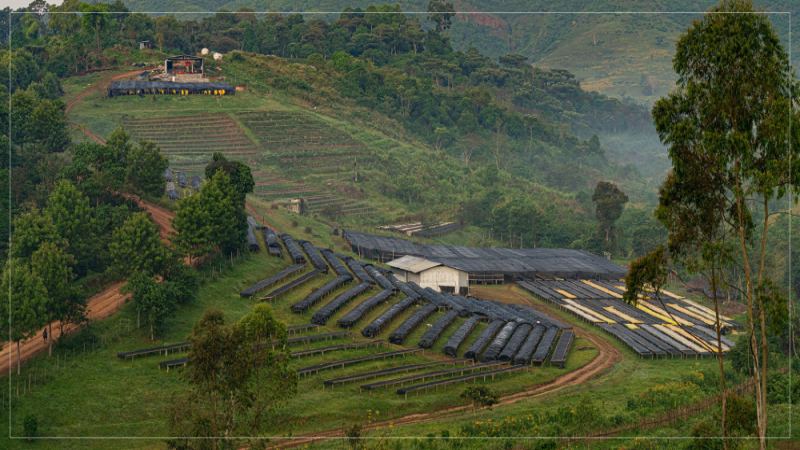
When people talk about Geisha, most first think of the cup from Panama's Hacienda La Esmeralda with its rose aroma and citrus notes, like a floral and fruity tea. However, in Ethiopia's Bench-Maji region, there is another estate famous for its native wild Geisha — Gesha Village Coffee Estate. It was founded in 2011 by documentary director Adam Overton and his photographer wife Rachel Samuel, and has a strict grading system and a complete flavor traceability system. This article will take you through the discovery history of Gesha Village, the grading standards of the Auction/Gold/Red/Green/Chaka lots, processing details and block divisions, and includes Front Street Coffee's brewing parameters and flavor descriptions for the Gold, Red, and Chaka lots, providing coffee lovers with a comprehensive guide to Gesha Village.
Usually, when we mention Geisha, we mostly refer to the type represented by Panama's Hacienda La Esmeralda (geisha, also known as Geisha). In 2003, it was identified separately for its unique flavor, and since then it has repeatedly won championships in green bean competitions such as BOP. In Front Street Coffee's daily brewing, Panama Geisha often shows rose aroma and citrus notes, tasting more like a cup of floral and fruity tea.
Hacienda La Esmeralda stands out for three reasons: first, it was the earliest to discover Geisha; second, Geisha won the BOP championship year after year; third, it established its own quality system, and several years later Gesha Village also launched its own grading system. Front Street Coffee detailed this history in the article on Hacienda La Esmeralda Geisha. Unlike Panama Geisha, although Gesha Village's Geisha has the same name, they are actually two unrelated varieties, and can be distinguished just by the appearance of the beans. Front Street will discuss it separately as an Ethiopian Geisha variety.
"What is Gesha Village Coffee Estate?"
In 2007, documentary director Adam Overton and his photographer wife Rachel Samuel were filming a coffee documentary for the Ethiopian government when they came into contact with the Gera coffee forest in the Bench-Maji region. This experience not only gave them a new understanding of the land, but also sparked the idea of establishing their own coffee estate and brand.
In 2009, they met Willem Boot, owner of Finca La Mula and BOP judge. Willem Boot's idea of "searching for the birthplace of Geisha" after returning to Ethiopia happened to provide an opportunity for the couple. In 2011, they returned to Bench-Maji, where several areas are called Gesha Village, and it is the most likely place to find native Geisha varieties.
Adam followed Willem Boot on an expedition in the surrounding forests, and in a jungle wrapped in dense forest (namely the Gori Gesha forest), they discovered multiple wild coffee tree species, among which the most surprising was the native Geisha. They collected seeds from the native Geisha trees, selected them, and planted them in Gesha Village, and decided to establish an estate here, named Gesha Village Coffee Estate.
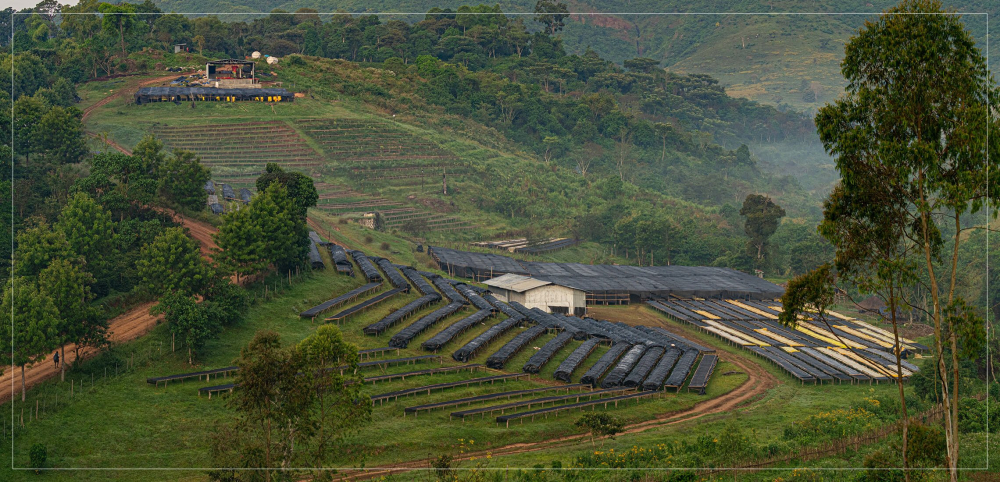
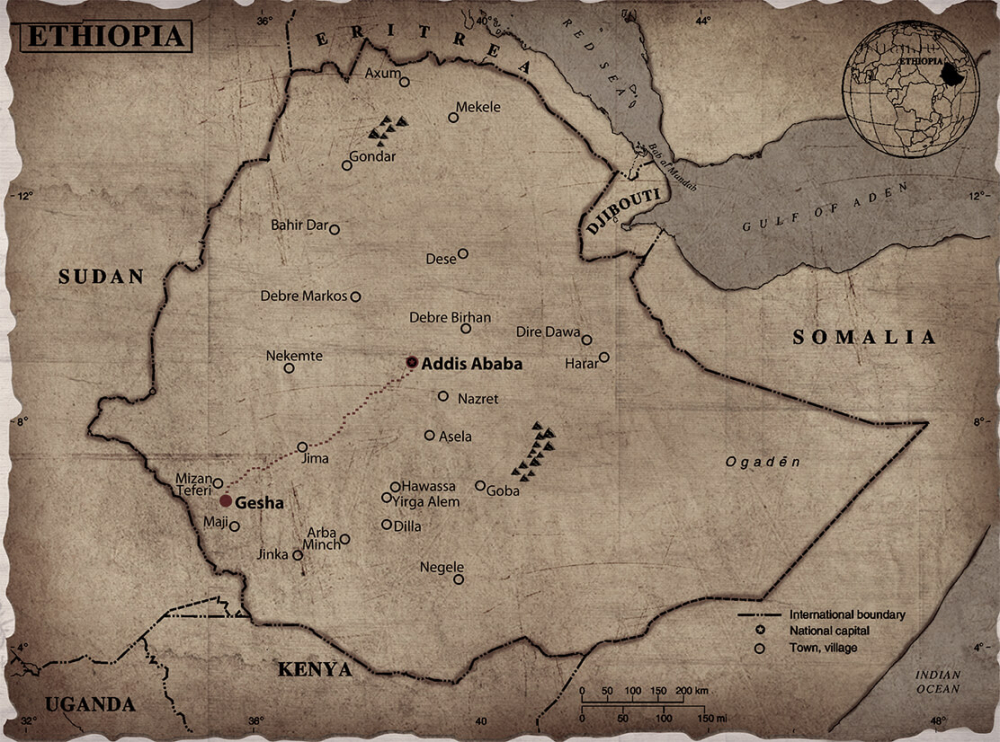
The estate is located in the Bench Maji region of western Ethiopia, surrounded by dense jungle. The scenery here is beautiful and the climate is pleasant, with views of the ancient and vast forest from higher ground. Estate owners Adam and Rachel spent three years looking for a suitable estate, and only came to Geisha's native homeland forest under the guidance of locals. It takes two days to drive there from the capital Addis Ababa.
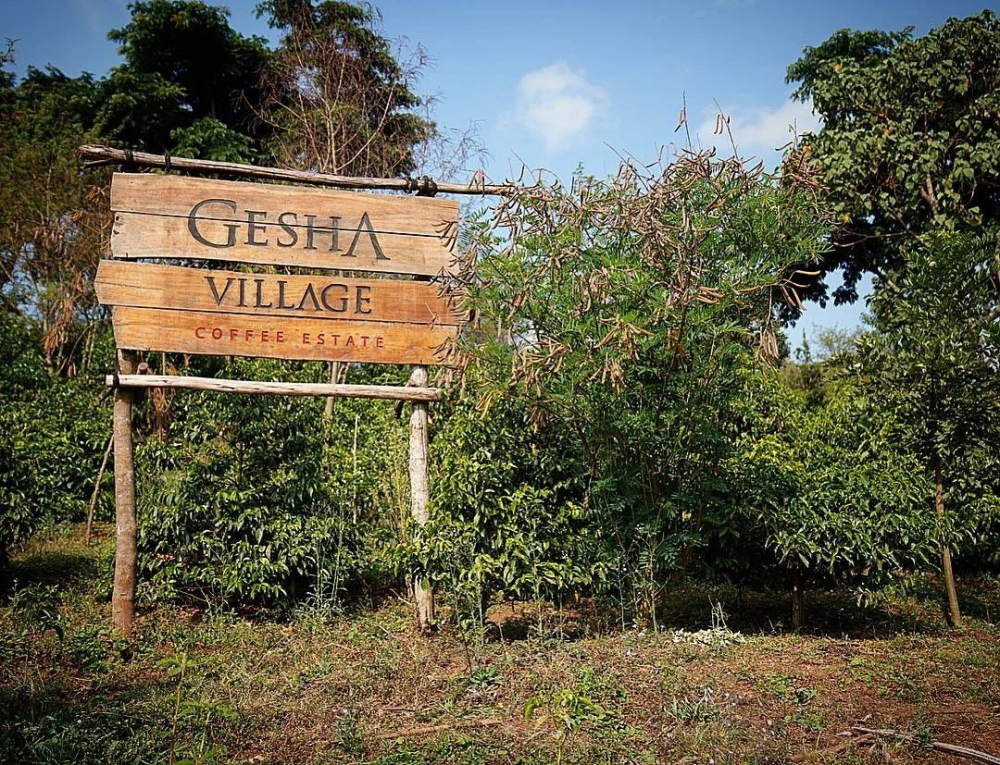
Gesha Village Coffee Estate covers about 471 hectares, with about 320 hectares of coffee planting area, and the soil is brown-red loamy soil. The planting density is maintained at 7,000 coffee trees per hectare. This block is named after the person "Oma" to commemorate a religious leader respected and loved by the people. Gesha Village's coffee beans have complex flavors and scarce yields, and are often selected by international baristas for competitions. While maintaining the local ecology, the estate has also established good cooperative relations with residents. To give back to the community, the Gesha Village Foundation was also established to promote educational development through two schools adjacent to the estate.
"Grading System"
Gesha Village Coffee Estate has a strict internal grading system, namely Auction, Gold, Red, Green, and Chaka lots.
[Auction Lot]
It accounts for only 3.7% of Gesha Village's annual production and is the estate's top lot after rigorous selection, available only through the 2018 Gesha Village Coffee Estate global auction. The cupping score of the 2018 auction lots was 88.15-92.67 points, and they are further divided into Champion's Reserve and Farm Reserve. For example, Gesha Village 2018 Auction Lot RSV.6 belongs to the auction lot.
[Front Street Gold Label Lot Geisha Coffee]
The Gold Label lot accounts for about 10% of Gesha Village Coffee Estate's annual production, with complex flavors and extreme rarity. This grade is the estate's top green bean besides the auction lot. Many baristas choose the Gold Label lot as competition beans, and roasters with high quality requirements also purchase it. It has complete traceability, and each lot has outstanding flavor and high complexity.
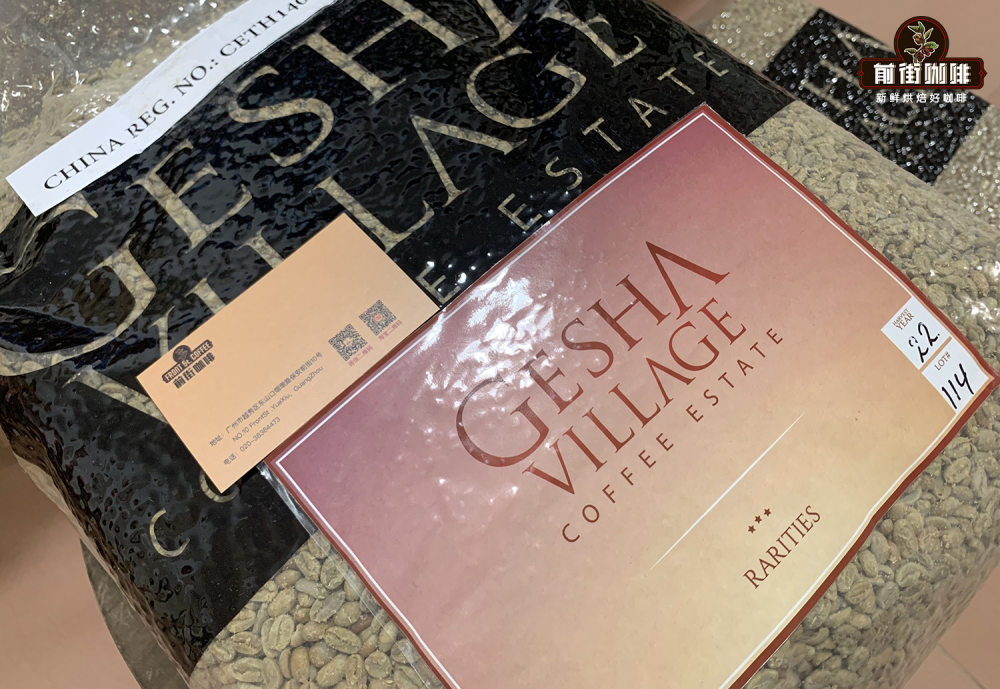
Gesha Village Oma 059 Gesha Village Oma 059 Lot
Grade: Rarities (Gold) label Gold Label
Processing method: Natural (32 days)
Variety: Gesha 1931
Country: Ethiopia
Region: Bench Maji
Altitude: 1,931-2,040 m
Water-to-coffee ratio: 1:15 Grind size: medium-coarse grind, 80% pass rate on No. 20 sieve Water temperature: 91°C Brewing device: v60
Method: 30ml water for blooming for 30s, pour in stages to 125ml in 1 minute, then pour to 225ml by 1 minute 50 seconds, and the time after coffee extraction is complete is 2 minutes 10 seconds.
Front Street Gold Label Geisha flavor description: Fermented wine aroma, citrus and kumquat acidity, full-bodied berry juice.
[Front Street Red Label Lot Geisha Coffee]
The Red Label lot accounts for about 15% of Gesha Village Coffee Estate's annual production, is a lot with complete traceability, and has a cupping score above 88 points (SCA standard). Front Street's Gesha Village Red Label has typical Gesha Village flavor, with slightly weaker flavor intensity and complexity than the Gold Label lot, and is a single-origin lot with very good value for money.
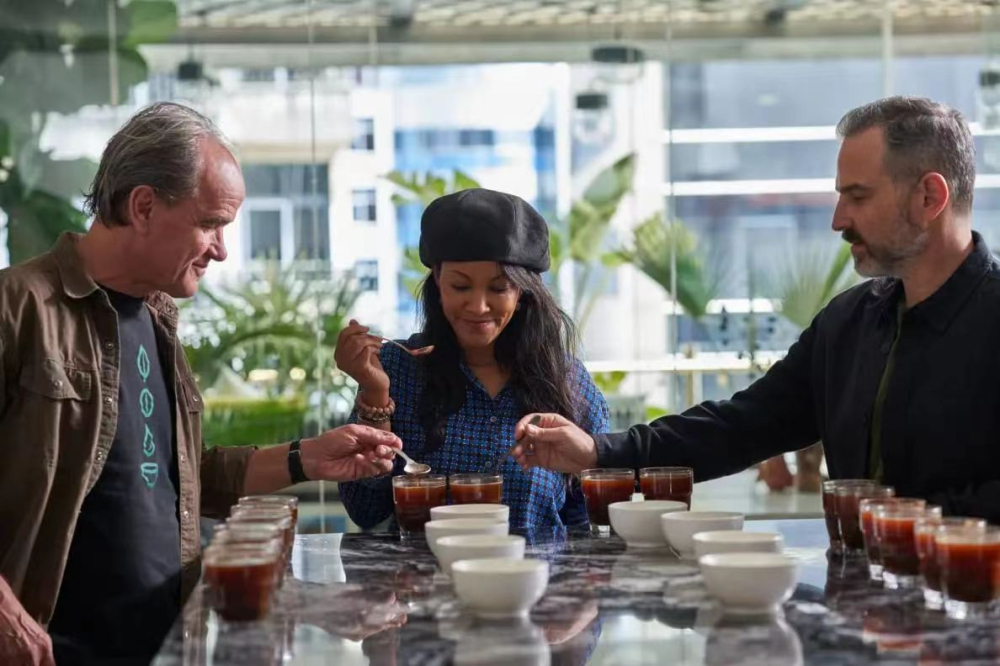
Gesha Village Coffee Estate Grower Reserve
Front Street Gesha Village Red Label Geisha Coffee Beans
Region: Bench Maji
Altitude: 1909-2069m
Variety: Gori Gesha
Processing method: Natural
Front Street barista brewing suggestions:
Water-to-coffee ratio: 1:15
Grind size: fine sugar grind (EK43s setting 10)
Water temperature: 91°C
Brewing device: v60
Method: 30ml water for blooming for 35s, pour in stages to 125ml in 1'00, then pour to 225ml by 1'50, and the time after coffee extraction is complete is 2'10.
Front Street Gesha Village Red Label Geisha flavor: coconut, licorice, cream, chocolate, toffee, citrus, almond, strawberry, with a fermented aroma on the nose. The overall flavor is relatively balanced, the mouthfeel is full-bodied, and the nutty flavor is quite prominent.
[Gesha Village Green Label Lot]
The Green Label lot comes from a single block of Gesha Village Coffee Estate and is a single-variety lot. The Green Label lot provides complete traceability information for each lot number, including farm block name, coffee variety, and processing date.
[Front Street Gesha Village CHAKA Lot Coffee]
Front Street's Chaka lot blends coffee from all blocks of the estate and the entire production season. The Chaka lot has two processing methods, natural and washed, and includes three coffee varieties from Gesha Village Coffee Estate: Gesha 1931, Gori Gesha, and Illubabor.
Gori Gesha (GG)
This variety replicates the genetic diversity found in the Gori Gesha coffee forest.
Gesha 1931 (G31)
It has a combination of varieties from various forests and is very similar to Panama Geisha, selected by observing plant morphology, bean appearance, screen size, and cupping flavor.
Illubabor Forest 1974 (IF)
It was discovered in a 1974 expedition to the Illubabor forest, and later the Ethiopian research center developed a variety with resistance.
Gesha Village CoffeeEstate CHAKA
Front Street Gesha Village Chaka Geisha Blend Coffee Beans
Region: Bench Maji
Altitude: 1900-2100m
Variety: Gori Gesha, Gesha 1931, Illubabor
Processing method: Natural
Front Street barista brewing suggestions:
Water-to-coffee ratio: 1:15
Grind size: fine sugar (EK43s setting 10)
Water temperature: 91°C
Brewing device: hario v60
Method: 30g water for blooming for 35s, pour in stages to 125g in 1 minute 00, then pour to 225ml by 1 minute 50 seconds, and the time after coffee extraction is complete is 2 minutes 10.
Front Street Gesha Village Chaka flavor: a faint fermented aroma on the nose, with citrus and grapefruit acidity on the palate, along with cream, chocolate, and caramel flavors, and a soft overall profile.
"Processing Methods"
Gold Label, Red Label, and CHAKA are all naturally processed.
First remove floating impurities, then dry on African raised beds in thin layers covered with plastic sheeting. During drying on the drying beds, another sorting is carried out to remove insect-damaged beans and greenish beans. The total drying time is 18-30 days.
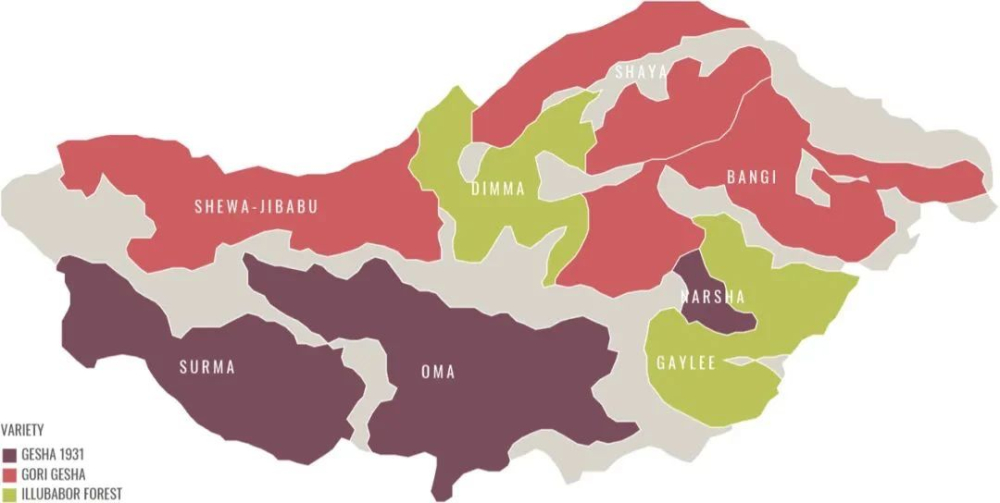
"Gesha Village Coffee Estate Block Divisions"
The estate owner numbers the blocks in great detail, which facilitates later management and flavor traceability.
"Areas and Planted Varieties of Different Blocks in Gesha Village"
The western side of the estate is relatively higher, so the three blocks OMA, SURMA, and SHEWA-JIBABU are at slightly higher altitudes, while the southern side has a relatively higher shade ratio, and the northern side has longer sunlight exposure. Among the eight blocks, the estate managers choose the most suitable variety for each block based on microclimate differences such as altitude, soil conditions, and shade conditions (as shown in the figure above), ensuring that each major block develops distinct characteristics.
"2018 Gesha Village Auction Lots"
Gesha Village auctions began in 2017. Due to the appearance on the market of auction lots and non-auction lots with the same lot numbers, Gesha Village made major reforms this year, and all 2018 auction lots were independent lots. The screening of auction lots lasted nearly 3 months, and after multiple rounds of repeated cupping, 31 auction lots were finally determined.
>Multiple rounds of rigorous selection for auction lots
The first round of screening began at the end of January, with estate owners Adam and Rachel in Ethiopia, together with their quality control team and Willem Boot's consulting team in the United States, simultaneously starting to cup each lot after harvest and resting for more than 6 weeks. During cupping, to prevent different orderings from leading to different cupping results, each batch of beans had to undergo at least two rounds of cupping with different arrangements to ensure accurate results;
>2018 Gesha Village auction lots added screen size indicators
In the end, the estate owners and team selected the best 31 lots from 117 lots, but to further improve the flavor of these 31 lots, the team conducted a new series of tests. By comparing different screen sizes, they found that beans with larger screen sizes performed better in cupping. Therefore, they decided that in the auction lots, Gesha 1931 would be 17 screen and above, and Gori Gesha and Illubabor would be 16 screen and above. However, because Ethiopia's existing screen-size sorting equipment can only screen beans of 14 screen and above, estate owner Adam also bought back dozens of drying nets used in coffee laboratories from the United States and hired a large number of workers to manually screen the auction lot beans by screen.
>After round after round of manual coffee bean sorting and cupping, the 2018 Gesha Village auction lots were finally determined, divided into Champion's Reserve (7 lots, each only 90kg) and Farm Reserve (24 lots, each only 120kg), totaling 31 lots; among them 26 natural lots, 4 washed lots, and 1 honey-process lot.
>Proportions of different blocks in auction lots
In the auction lots, the proportions of Gesha Village's existing three coffee varieties are Gesha 1931 at 69.1%, Gori Gesha at 27.5%, and Illubabor at 3.4%.
"2019 Gesha Village Auction Lots"
The 2019 Gesha Village global auction kicked off in June. According to Willem Boot, auction manager of Gesha Village Coffee Estate, in 2019 the Gesha Village quality control team evaluated more than 130 lots and selected high-quality lots scoring above 88 for auction. They were: Champion Reserve, with 7 lots having the highest cupping scores; Farm Reserve, with 13 outstanding-performing lots; Innovators Reserve, with only 6 experimental lots using special processing methods.
Champion Reserve (7 items / 14 lots)
The Champion Reserve brings together the best lots of the 2019 harvest at Gesha Village. Each Champion Reserve lot scored above 90 and showed extraordinary characteristics in cupping, from stunning jasmine aroma to captivating delicate and complex fruit flavors such as strawberry, peach, and papaya.
Farm Reserve (13 items / 13 lots)
Farm Reserve is the estate's high-end product with outstanding flavor, with cupping scores all at 88 or above. Rich fruit flavors and expressive aromas are the characteristics of this lot, bringing an unforgettable flavor experience.
Innovators Reserve (6 items / 6 lots)
The Innovators Reserve uses signature special processing methods, adopting innovative techniques in fermentation and drying, introducing extremely complex flavors to the coffee and providing coffee lovers with a profound sensory experience.
Front Street Gesha Village Gold Label Roast Curve
Apart from the auction lots, which are obtained by bidding (price uncertain), the best product of Gesha Village is the Gold Label series. Front Street also purchased Gesha Village's Gold Label lot. Front Street used a medium-light roast during roasting. The following is Front Street's roast curve:
Front Street Gesha Village Gold Label Cupping Flavor
Within 8-24 hours after roasting ends, Front Street conducts cupping to determine the flavor profile of the Gold Label Geisha. The following is Front Street's flavor description after cupping this Gold Label coffee bean: white floral, lemon, honey, citrus, juicy, apricot.
Front Street Gesha Village Gold Label Brewing Parameters
Coffee dose: 15g
Ratio: 1:15
Water temperature: 90°C
Grind size: 0.85mm, 80% pass rate on No. 20 sieve
Dripper: Hario v60 #01 dripper
Front Street recommends using freshly roasted coffee beans for brewing , as this allows you to best experience the coffee's rich flavors . The coffee beans shipped by Front Street Coffee are all within 5 days of the roasting date , because Front Street deeply understands that the freshness of coffee beans has a great impact on flavor . Front Street's roasting philosophy is " Freshly roasted good coffee ", so that every customer who places an order receives the freshest coffee . The resting period for coffee is about 4-7 days , so when customers receive it, it is at its best flavor .
Brewing process: first pour 30g water for blooming for 30 seconds, second pour 95g water (scale shows 125g), completed in about 1 minute, third pour 100g water (scale shows 225g), completed in about 1 minute 30 seconds
Extraction time: 2 minutes, remove the dripper to finish brewing
Flavor description: citrus, floral, berry, cream, smooth, medium acidity, medium sweetness, moderate aftertaste
The above content is compiled by CoffeeHunters, a coffee news website.


