







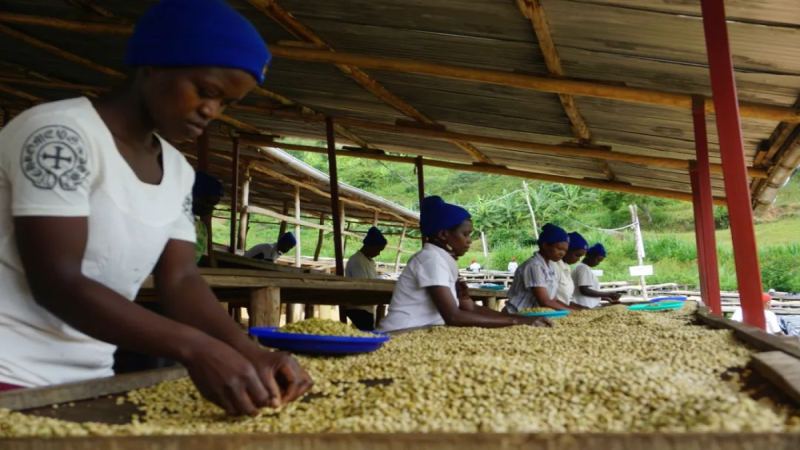
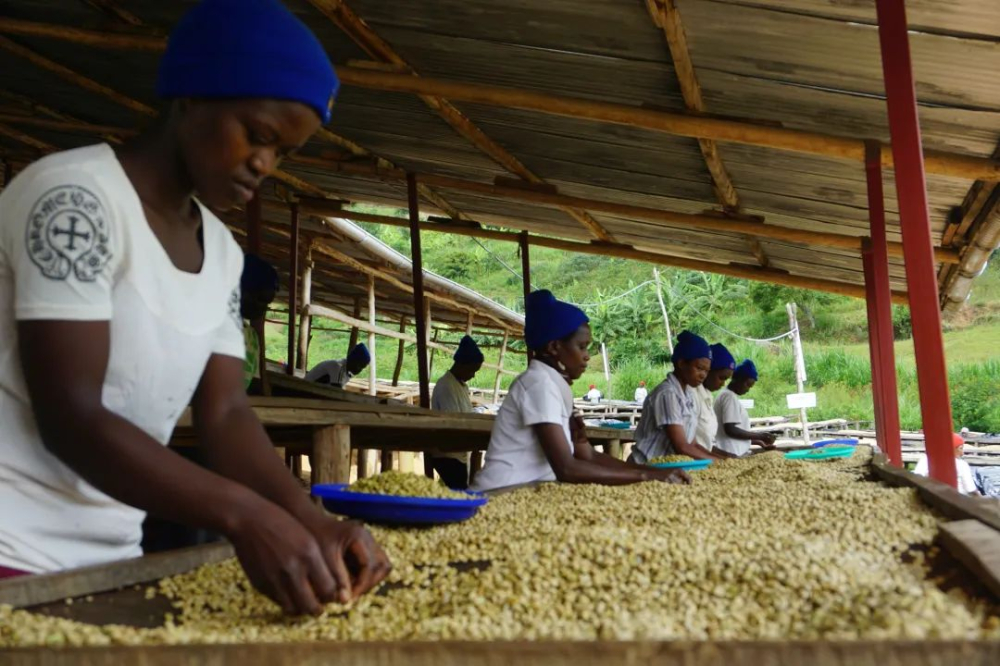
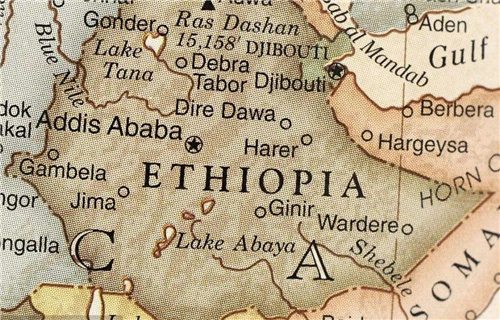
As the birthplace of coffee, Ethiopia is home to tens of thousands of heirloom varieties, and its coffee is world-renowned for its citrus and floral notes and complex flavors. This article provides a detailed analysis of Ethiopia's coffee grading system, from the classification of washed and unwashed coffees to the G1 to G9 evaluation standards, and introduces how the Red Cherry Project improves coffee quality. At the same time, Front Street Coffee shares cupping experience from the Yirgacheffe and Sidamo regions, comparing the flavor differences between washed and natural beans, offering coffee enthusiasts comprehensive knowledge about Ethiopian coffee.
For more specialty coffee knowledge, please follow the WeChat public account: FrontStreet Coffee
Ethiopian Coffee Varieties
The enormous genetic diversity, combined with diverse processing methods such as natural and washed, produces complex and ever-changing flavors, earning the affection of many coffee connoisseurs. Among the Ethiopian coffee beans offered by FrontStreet Coffee, they account for 30-40% of the listed beans, which shows just how popular Ethiopian beans are. Among them, the coffee beans from the Yirgacheffe region and the Sidamo region are what introduced many people to Ethiopian coffee beans , and when coffee novices come to Front Street not knowing what pour-over to drink, the baristas at FrontStreet Coffee recommend beans from these regions as an "appetizer" for coffee beginners.
When people mention Ethiopian coffee beans, they think of the unique flavor of Ethiopian coffee beans, and about 15% of the population of this East African country makes a living from the coffee industry. Ethiopians have a very strong coffee culture and love drinking coffee, consuming about half of what their country produces.
According to what Front Street has learned, Ethiopia has roughly 10,000 to 15,000 heirloom varieties. In addition, local technological conditions and economic constraints do not support corresponding coffee variety identification, and the government, out of a desire to protect wild coffee, is unwilling to disclose information about these varieties, so Ethiopian coffee bean varieties are collectively referred to as Ethiopian native species. At present, local native species in Ethiopia are generally divided into two categories: JARC varieties and regional landraces. JARC varieties are developed and studied by the Jimma Agricultural Research Center. However, regional landraces are coffee trees that grow entirely in the wild.
For example, the varieties planted by the coffee cooperative on one mountain are certainly different from those planted on another mountain, and even smallholders in the same region do not plant identical coffee varieties. Some estimate that Ethiopian coffee has at least 2,000 varieties, and there are even claims of more than 4,500.
Compared with the main variety SL28 of neighboring Kenya to the south, or the plump appearance of Typica in Central and South America and Asia, Ethiopian beans look a bit undernourished. But beans should not be judged by appearance. The citrus aroma of Ethiopian coffee is arguably the best in the world. Whether it is instant coffee or freshly ground coffee, when extracted you can smell a pungent orange or lemon freshness. The rich floral, fruity, and sweet-sour aromas on the palate are Ethiopian characteristics.

Among them, Front Street has cupped many coffee beans from the Yirgacheffe region and the Sidamo region. One of them was an Ethiopian TOH washed-group champion bean from the Guji region of Sidamo. First, it was ground to smell the dry aroma. The dry aroma of the Ethiopian TOH washed-group champion bean had a very rich floral fragrance. Then water was poured to the brim to confirm the wet aroma. Its wet aroma was the fresh scent of citrus, somewhat similar to the Gudingding coffee beans from the Yirgacheffe region.
After 4 minutes, the crust was broken and skimmed for flavor evaluation. The cupping result obtained by Front Street was that the overall flavor of this Ethiopian TOH washed-group champion bean was: jasmine, lemon, berry, pomelo, honey, and green tea. The overall flavor brewed by Front Street was: in the front section, citrus acidity and jasmine aroma; in the middle section, pomelo tea; and in the finish, honey. This bean uses a washed processing method that highlights the brightness of the acidity of coffee beans from the Uraga region, and the overall impression leans toward the floral aroma and citrus acidity characteristics of the Yirgacheffe region.
However, the uneven size of Ethiopian native species has one biggest drawback: it is prone to uneven roasting, especially natural beans. Even the best Grade 3 Harar natural beans often show uneven bean color. This is the biggest flaw of Ethiopian beans, but fortunately it does not affect their good flavor.
For coffee fans, there is no need to care about what the beans look like; tasting good is what matters most. The stability of Ethiopian washed beans is much better than that of natural beans, and the flavor of the latter fluctuates greatly from year to year. Generally, when Front Street lists them, it conducts a large number of cuppings to ensure that the quality of the Ethiopian coffee beans offered reaches the best level. With good natural beans, the depth of flavor far exceeds that of washed beans; but if you buy improperly processed natural beans, it will definitely leave you speechless. This is the sentiment of many coffee fans.
Therefore, Ethiopian coffee beans have a quality problem: some coffee beans are of higher quality, and some are of lower quality, so mixing them together leads to a decline in the price of the coffee beans. A Dutch green bean trader also discovered this problem with local native species, cooperated with local Ethiopian cooperatives, and launched a frontline campaign to improve coffee quality and prices, called the Red Cherry Project.
The Red Cherry Project is actually a commercial program to promote coffee quality. It solves the problem at the source by raising the purchase price of high-quality green coffee beans to encourage coffee farmers to more carefully complete every process, such as coffee bean picking and processing. During the picking stage, it uses fully manual picking and selects coffee cherries with high ripeness. The quality of coffee beans selected through the Red Cherry Project is somewhat higher, and Front Street's natural Red Cherry is obtained through this project, so the brewed coffee flavor is also somewhat better than the original flavor.
Ethiopian coffee bean grading is also very different from that of other countries. In Ethiopia's grading process, there is almost no strict classification by coffee size; instead, there are requirements for the moisture content of coffee beans. One is that the moisture content of coffee beans must not exceed 11.5% and at least 85% must not be smaller than 14 mesh. The second requirement is that washed coffee beans have a 10% appearance size score when physical characteristics are measured, while there is no size requirement for the unwashed group. Ethiopia's green coffee bean grading process is as follows:
1. First, classify according to the processing method of the coffee beans: washed processing and unwashed processing. 2. Divide washed coffee beans and unwashed coffee beans into 9 grades from G1 to G9 according to physical characteristics, cup profile characteristics, and basic cupping quality. As follows: physical characteristic score accounts for 40% (washed group: defects 20% + appearance size 10% + color 5% + odor 5%; unwashed group: defects 30% + odor 10%), and cupping quality score accounts for 60% (cleanliness 15% + acidity 15% + body 15% + flavor 15%).
Among them, G1 has the highest comprehensive score for green coffee beans. G1 has a comprehensive score of 91 to 100, G2 has a comprehensive score of 81 to 90, and G3 has a comprehensive score of 71 to 80. Therefore, this also explains that compared with Yirgacheffe G2, Yirgacheffe G1 has better green coffee bean quality and flavor. Coffee classification does not stop at this point. The coffee beans of the three grades G1 to G3 must be cupped again according to SCAA standards to evaluate their flavor attributes in more detail. Among them, G1 and G2 with no less than 85 points are rated as Q1; G1, G2, and G3 between 80 and 85 points are rated as Q2; and those below 80 points are downgraded to G3. This is how Ethiopia classifies coffee beans.
When many customers come to Front Street to buy beans, they are not very clear about the coffee flavor differences between washed beans and natural beans. In fact, washed beans better reflect the regional flavor of a coffee bean, while natural beans add more aroma and sweetness on the basis of washed processing. Front Street has cupped and brewed the washed Gudingding and the natural Red Cherry from the Yirgacheffe region.
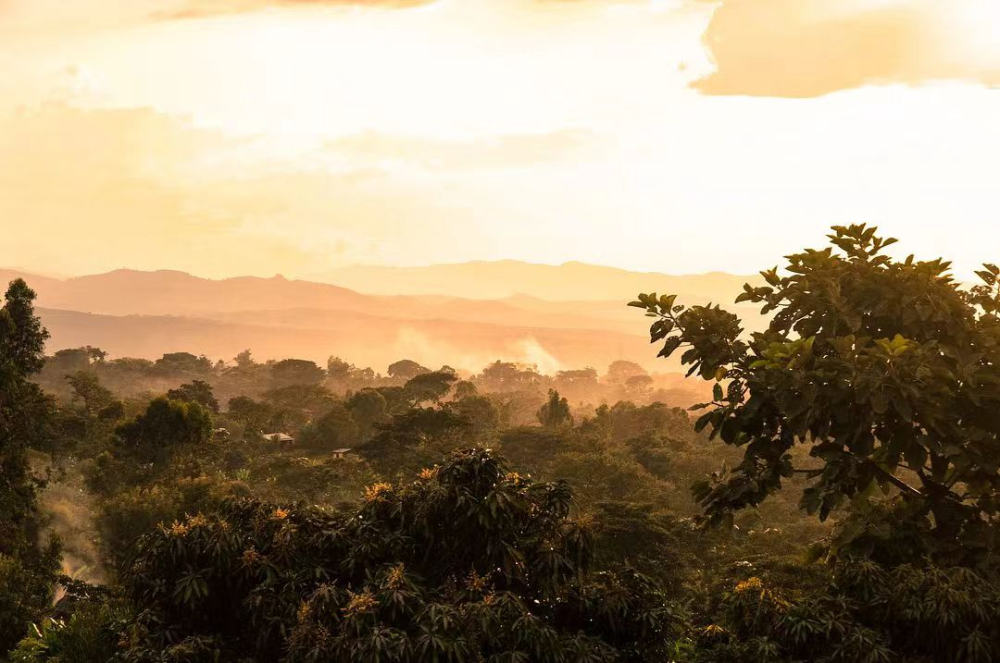
Front Street cupped this washed bean from the Yirgacheffe region. After grinding 11.3 grams of coffee beans into powder, the dry aroma emitted a fresh passion fruit acidity and citrus, berry-like sour aroma. The wet aroma was citrus and berry. On the palate, there was citrus acidity, berry sweetness, almond, and tea-like notes, with a honeyed sweetness in the finish. The body was low, the acidity was bright, and it was clean and refreshing. The brewing parameters used were:
Dripper: V60 #01 Water temperature: 90-91°C Dose: 15g Coffee-to-water ratio: 1:15 Grind size: EK43s-10/caster sugar size (80% of powder passing a No. 20 sieve)
Front Street generally pours 30 grams of water in the first brewing stage for a 30-second bloom, then pours 95 grams (about 125 grams on the electronic scale), finishing the pour in about 1 minute. When the water level drops to 2/3 of the coffee bed, pour the remaining 100 grams (about 225 grams on the electronic scale), finishing in about 1 minute 35 seconds. Dripping is completed at 2 minutes 10 seconds. Remove the dripper to complete extraction.
The brewed Gudingding coffee has citrus and black tea on the palate. As the temperature changes, there are creamy, caramel, and almond notes, with an obvious sweet aftertaste and a clean, refreshing, and sweet taste. Red Cherry, following the same process, has a more obvious berry flavor, with some oolong tea in the finish.
The above content is compiled by CoffeeHunters, a coffee news website.


