







How Has Rwanda's Coffee Industry Changed Over Time?
Rwanda's coffee industry moved from colonial-era planting focused on volume to a specialty model built on Bourbon trees, high altitude, and washed processing. More than 90 percent of the crop is Bourbon, grown mainly on hillsides between 1,700 and 2,000 meters, which gives the cup soft berry and citrus acidity with almond and chocolate sweetness.
Coffee development in Rwanda was reshaped after the 1994 genocide, when rebuilding the sector became a national priority. The National Agricultural Export Development Board set the goal of making Rwanda a specialty coffee producing country, and support from USAID and other foreign organizations helped fund washed stations and quality improvements that lifted the country's standing in the global market.
Landlocked in Africa, Rwanda, though coffee is an important economic pillar, its coffee industry was long unknown. From extensive planting during the colonial period, to reconstruction after the 1994 genocide, to establishing a specialty strategy with foreign aid from USAID and others, Rwandan coffee has walked a winding yet firm path of upgrading. Today, over 90% of the coffee here is Bourbon, and relying on high altitude and nationwide washed processing, it presents soft acidity of berries and citrus with the sweet fragrance of almond and chocolate. Front Street Coffee will take you back through the development of Rwandan coffee, analyze its producing regions, processing methods, and flavor characteristics, and share roasting and brewing suggestions, exploring together how this "Land of a Thousand Hills" differs from other African coffee beans.
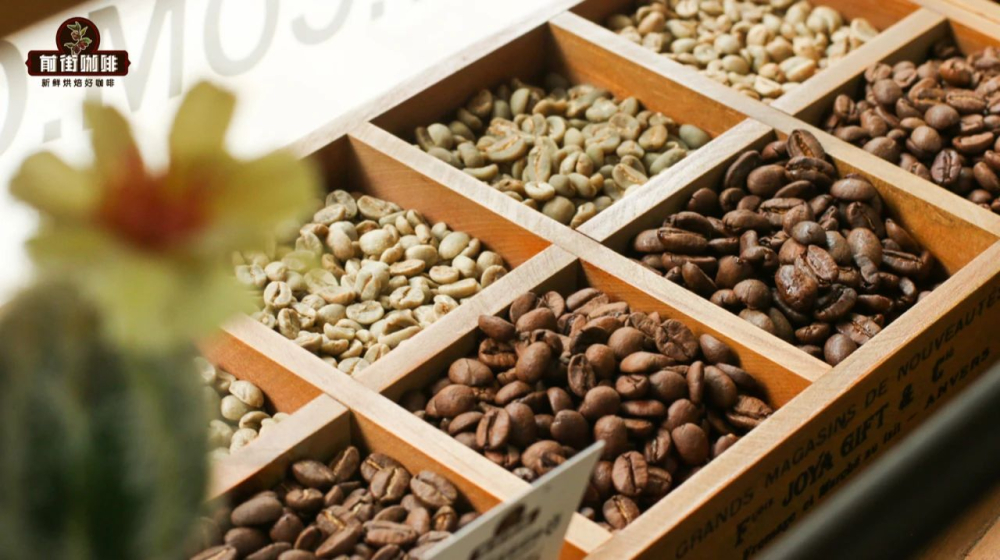
Rwanda is located inland in Africa, and perhaps some friends are not familiar with this country. Coffee cultivation is one of the important local economic sources, so what does Rwandan coffee taste like? Front Street Coffee will talk with everyone today about Rwandan coffee.
Development of Rwandan Coffee
As early as the colonial period, Rwanda had already begun cultivating coffee. However, although coffee was the main crop at the time, the output quality was not ideal, and its presence in the global coffee map was very low, with few people paying attention. Front Street Coffee notes that Brazil, which was also colonized, once pursued only yield while ignoring quality in its early years, and as a result was labeled as having poor coffee quality for a long time.
The coffee variety grown in Rwanda is mainly Bourbon. The country's terrain is mostly mountainous and plateau, and most coffee trees grow on hillsides between 1700 and 2000 meters above sea level, hence it is also called the "Land of a Thousand Hills."
The National Agricultural Export Development Board (NAEB) of Rwanda once stated that the core of the country's coffee strategy is "to build Rwanda into a specialty coffee producing country." In order to use the coffee industry to promote national development and prosperity, Rwanda hopes to boost the economy by expanding coffee exports. Rising coffee prices are seen as a sign of success, and the government will focus on improving production and processing.
Rwanda's ability to reach today's prosperous situation actually cannot be separated from the government's vigorous construction, as well as support from foreign non-governmental organizations and private groups. In 1994, a genocide occurred in Rwanda, the population sharply declined, and the coffee industry also stalled for a time.
It was not until 1995 that Rwanda gradually restored stability. In 2000, with funding from the United States Agency for International Development (USAID), the PEARL program and the SPREAD program were successively established, with the purpose of supporting Rwanda's agricultural reconstruction, promoting coffee quality improvement, and helping farmers obtain better incomes.
Front Street Coffee also observes that Rwandan coffee is now developing rapidly, and its quality is becoming more stable. If you want to understand African producing regions, Front Street believes you must try Rwandan single-origin coffee beans and feel how they differ from other African coffee beans.
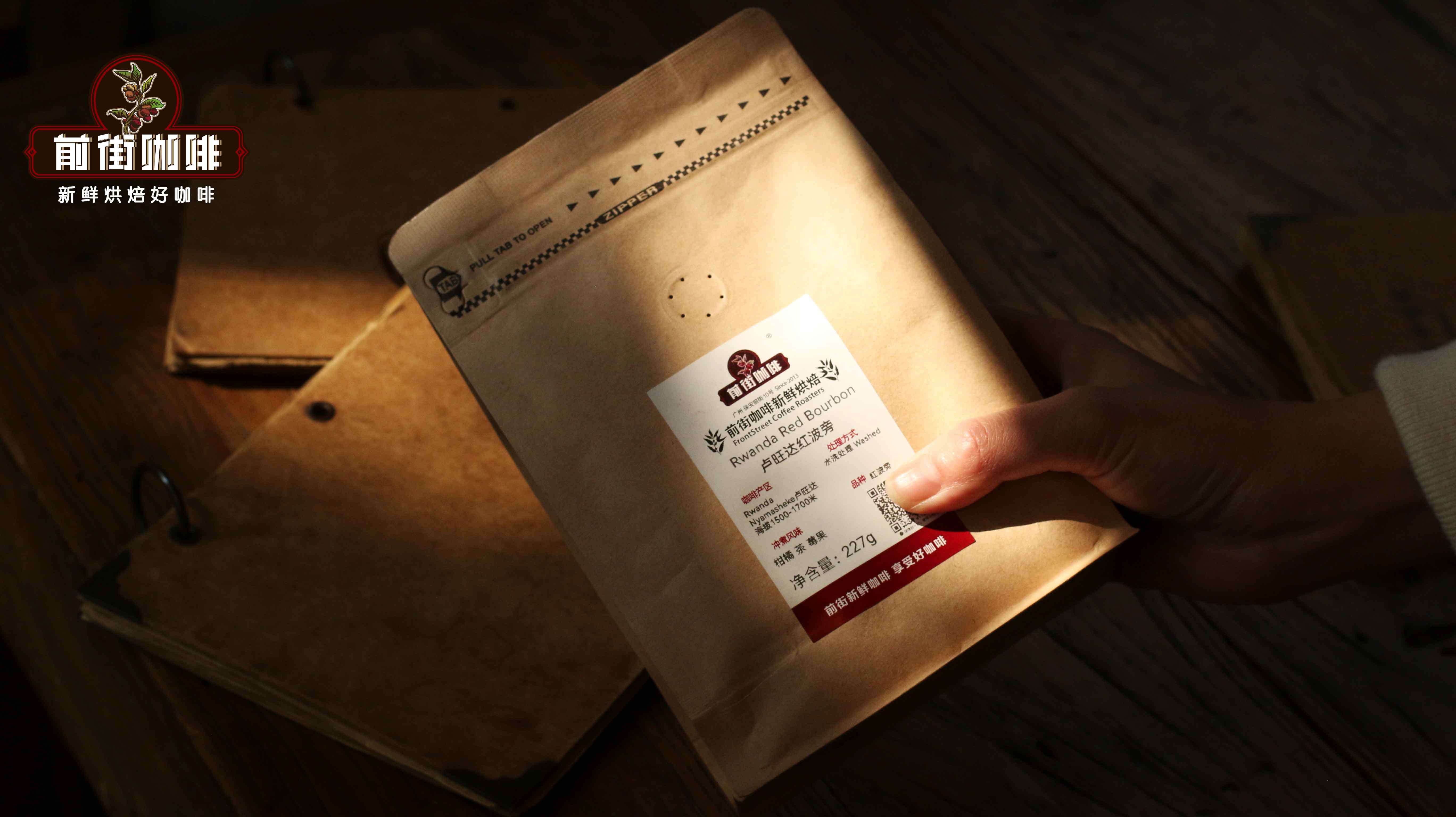
After comparison, Front Street Rwandan coffee has both the soft acidity of berries and citrus, and the sweet fragrance of almond and chocolate, with an overall balanced taste, suitable for friends who do not like prominent sourness. This Front Street Rwandan single-origin coffee uses washed processing, the variety is Red Bourbon, and it comes from the Nyamasheke region. It can be said to gather many characteristics of local specialty coffee and is worth trying.
Rwandan Coffee Producing Regions
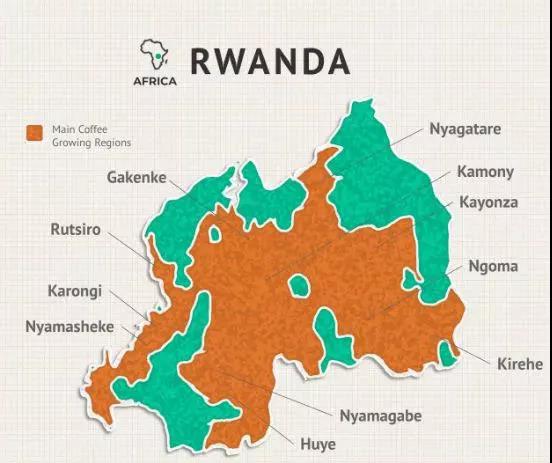
Rwanda's land area is only about four times that of Guangzhou, not large, and with similar coffee-growing altitudes, the flavor differences among coffee beans from different regions are not particularly obvious.
Rwandan Arabica coffee bean producing regions are mainly concentrated in the south and west. The southern Huye mountainous area and Nyamagabe region have higher altitudes, and the coffee beans carry floral and citrus flavors; the Nyamasheke region by Lake Kivu in the west is rich in high-quality coffee with a full body, rich aroma, and juicy character.
Although the flavor differences among producing regions are not great, careful tasting still reveals differences. People often ask Front Street Coffee how to distinguish them, always feeling that flavor is something very mysterious. In fact, Front Street Coffee also had to undergo extensive flavor cognition training to distinguish the coffee flavors of different producing regions, which requires time, energy, and persistence.
Front Street Rwanda Gaseke
Producing region: Nyamasheke region Altitude: 1500m Variety: Bourbon Processing method: Washed processing
Rwandan Bourbon Coffee Beans
More than 90% of Rwandan coffee varieties are the early-introduced Bourbon species, as well as mixed varieties of the Bourbon family, with a certain ability to resist natural disasters. Bourbon coffee initially swept across Latin America, but due to poor disease resistance, not many countries grow it. The several Latin American Bourbon coffee beans currently purchased by Front Street Coffee include Brazil Red Bourbon, Brazil Yellow Bourbon, and Colombia Pink Bourbon. By comparison, Rwandan Bourbon still has advantages, which is one of the reasons Front Street Coffee purchases Rwandan coffee beans.
Rwandan Coffee Processing Methods
In 2000, Rwanda, having just experienced internal political chaos, began reconstruction with support from the two major coffee development plans PEARL and SPREAD funded by USAID. After the plans were implemented, Rwanda successively built 46 coffee washing stations, and the strong export of coffee beans also led to obvious economic growth in the country.
Therefore, Rwandan coffee beans currently mainly use the washed processing method. Ripe coffee cherries are manually selected, the skin and pulp are removed, washed fermentation is carried out for 12 to 18 hours, the pectin is cleaned off, and finally they are dried until the moisture content is below 14%.
Front Street Coffee believes that Rwanda's decision to use washing as the main processing method in the early stage of development was a choice that can clearly highlight coffee flavor. Because washing best reflects the essential flavor of coffee, when Front Street Coffee recommends a coffee producing region, it also prioritizes recommending washed coffee beans to customers, so that the flavor characteristics of that region can be understood more clearly.
Front Street Coffee Roasting Suggestions
Rwandan coffee beans have fresh acidity. In order to highlight this flavor, Front Street Coffee suggests using a medium-light roast.
Bean charge temperature: 175℃ Turning point: 5'55", 152.1℃ First crack: 9'20", 183℃ Development after first crack: 2 minutes, out of the roaster at 194.4℃
When Front Street Coffee cupped this Rwandan washed coffee bean, the dry aroma showed obvious floral and berry aromas, the wet aroma carried honey sweetness and nutty aroma, and the overall flavor presented bright acidity, citrus, berries, nuts, with a caramel sweetness in the aftertaste.
Front Street Coffee Brewing Suggestions
Coffee powder: 15g Powder-to-water ratio: 1:15 Water temperature: 90℃ Grind size: fine grind (80% passing rate on No. 20 standard sieve)
Front Street Coffee uses staged extraction: first bloom with 30 grams of water for 30 seconds, then pour in a small stream in circles until 125 grams and pause for a stage, wait until the water level drops and is about to expose the coffee bed, continue pouring until 225 grams and stop, wait until the water level drops and is about to expose the coffee bed, then remove the dripper. (Timing starts at the beginning of blooming.) The extraction time is 2'00".
Flavor Description
Floral and berry aromas, with obvious citrus, berries, and plum on the palate, nuts in the middle, and a caramel sweetness in the aftertaste.
The above content is compiled by CoffeeHunters, a coffee news website.


