







How do Yirgacheffe and Sidamo coffee origins differ in flavor?
Ethiopia's Yirgacheffe and Sidamo regions produce two distinct cup profiles. Yirgacheffe, a small town at roughly 1,700 to 2,100 meters, is known for citrus, white flowers, and a tea-like body. Sidamo, the larger province that once contained Yirgacheffe, delivers full-bodied berries, red floral notes, and a semi-fermented tea sensation. Geography, altitude, native varieties, and processing methods explain most of the difference.
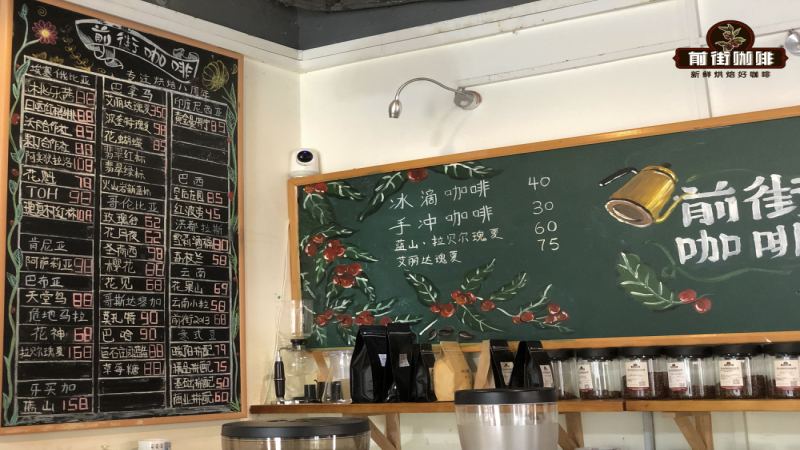
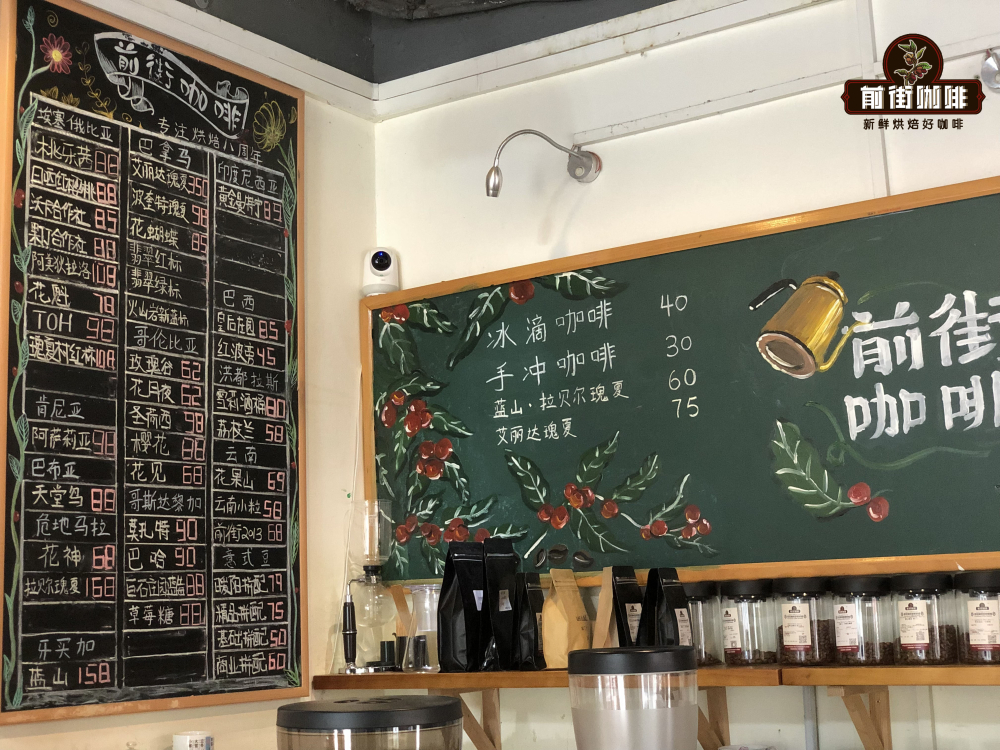
Washed Yirgacheffe beans, such as those from Front Street Coffee's everyday series, are a common entry point for new specialty drinkers because they show the region's bright, clean profile at a lower cost. The everyday bean line covers Ethiopia, Guatemala, Brazil, Colombia, Costa Rica, Indonesia, and Yunnan, letting buyers compare regional styles before spending more on refined single lots.
Ethiopia is a core producing region that cannot be overlooked on the specialty coffee map, and Yirgacheffe and Sidamo are two of its most representative names. The former is known for citrus, white flowers, and a tea-like quality, while the latter stands out for full-bodied berries, red floral notes, and a semi-fermented tea sensation. This article will sort out the flavor causes of these two regions from the perspectives of geography, altitude and climate, variety resources, and processing methods, and introduce related everyday beans and representative products under Front Street Coffee, helping readers who are new to specialty coffee build an understanding of regional flavors at a lower cost, while also providing brewing parameter suggestions for light-roasted Ethiopian beans.
When it comes to Ethiopian coffee, many people immediately think of orange, berries, floral aromas, and a tea-like mouthfeel, and these are exactly the flavor types that today's young consumers particularly favor. For this reason, Ethiopian beans often become an unavoidable introductory option for people just getting into specialty coffee.
Many beginners struggle when choosing coffee beans: they are not clear about which type of flavor they prefer, and they worry about wasting money if they choose wrong. In this situation, choosing the "Front Street Coffee series everyday coffee beans" is relatively safer.
In order to help newcomers build an understanding of the flavors of the seven major mainstream producing regions at the lowest possible cost, Front Street Coffee has specially selected coffee beans that can represent the typical style of each region. By starting with a few of the most classic producing regions, you can figure out your own taste preferences without spending too much "wasted money," and afterward further choose more refined lots from the same region.
Front Street Coffee's everyday bean series covers Ethiopia, Guatemala, Brazil, Colombia, Costa Rica, Indonesia, and Yunnan, all of which are producing regions currently favored by consumers. Among them, the washed beans from Ethiopia's Yirgacheffe region can be said to be a regular fixture firmly holding the C position.
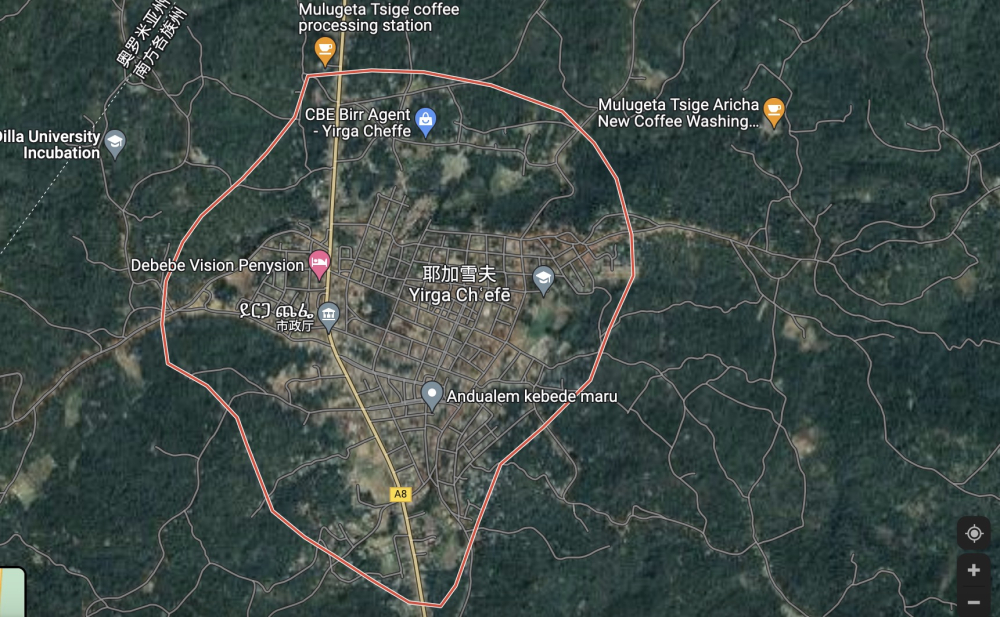
Yirgacheffe is a small town located in southern Ethiopia, and in the past it belonged administratively to another well-known producing region—Sidamo Province. The town sits at an altitude of between 1,700 and 2,100 meters, and coffee trees are generally planted in areas above 1,800 meters. For this reason, Yirgacheffe is regarded as one of the highest-altitude coffee producing regions in the world, and it is also a calling card of Ethiopian specialty coffee.
The high altitude brings significant temperature differences between day and night, and the ripening cycle of the coffee fruit is lengthened, allowing more ample time to accumulate delicate flavor substances. In addition, the town is shrouded in mist all year round, with a mild, spring-like climate and constant breezes, making the overall environment cool and humid. Coffee fruits grown under such natural conditions give birth to coffee beans full of floral and fruity charm, and have also captivated generation after generation of coffee professionals.
If a place can be identified through its flavor expression, it means that the local terroir, climate, and altitude have given the coffee a unique taste. This is exactly the "regional flavor" that Front Street Coffee often mentions, and it is also one of the indispensable elements of specialty coffee. The regional flavor of Yirgacheffe usually presents bright citrus and lemon acidity, rich white floral notes, a light and elegant mouthfeel, and a tea-like finish, drinking like a refreshing, clean glass of lemon tea.
In addition to Yirgacheffe, another important producing region in Ethiopia is Sidamo, which surrounds it. Reading this, you may wonder: Yirgacheffe is clearly located within Sidamo, so why can it have an independent flavor label? In fact, the two were not clearly distinguished in the early days. Later, as more and more coffee lovers reported that the washed beans produced in the town of Yirgacheffe had clearer acidity, the Ethiopia Commodity Exchange separated the Yirgacheffe producing region from Sidamo in 2010, and only then did the now widely known Yirgacheffe producing region take shape.
In addition to the representative everyday beans from the Ethiopian producing regions, Front Street Coffee's Yirgacheffe coffee beans for sale also include washed beans from the Gedeb合作社? Wait, proper noun should stay unchanged if estate name: 果丁丁合作社. Hmm, rule says keep estate names unchanged. So: 果丁丁合作社, 沃卡合作社, 科契尔合作社, Aletaland合作社, and the sun-dried Red Cherry coffee beans from Aletaland合作社.
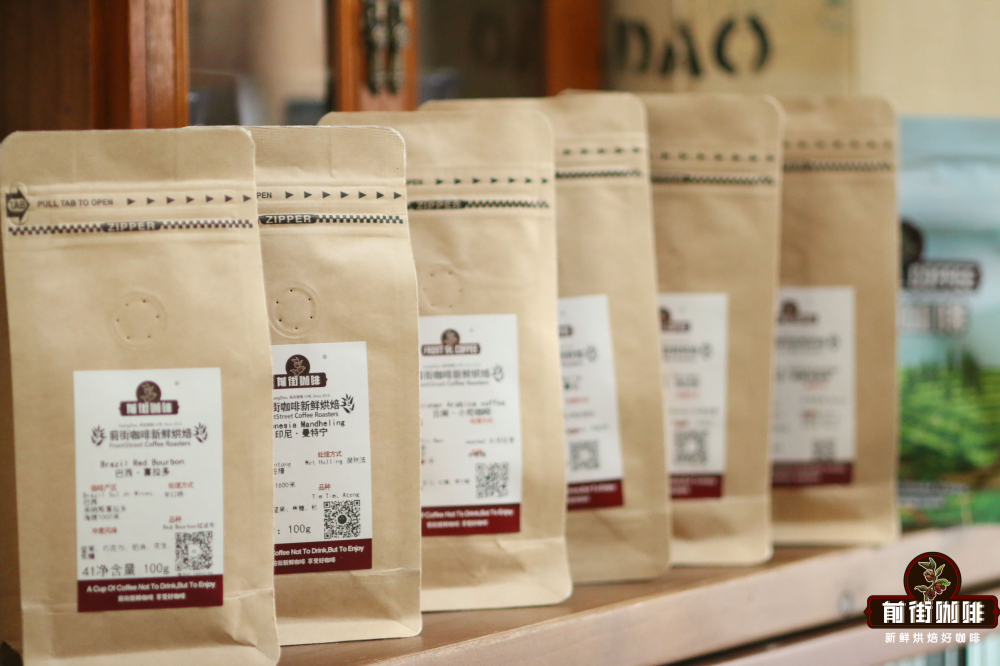
Front Street Coffee - Yirgacheffe Sun-Dried Red Cherry Coffee Beans
Producing region: Ethiopia, Yirgacheffe
Processing station: Aletaland Cooperative
Growing altitude: 2300m
Variety: Local heirloom varieties
Processing method: Sun-dried processing
Flavor: Berries, lemon, strawberry, fermented wine aroma
So how do the coffee flavors of the Sidamo producing region differ from those of Yirgacheffe? Compared with Yirgacheffe, Sidamo's flavors are more diverse. Different soil types, microclimatic conditions, and a huge number of heirloom varieties make the coffee produced in each town show obvious differences, but overall they are dominated by full-bodied berry sweet acidity, red floral notes, and a semi-fermented tea sensation. In order to present the regional flavor more delicately, most Sidamo coffee beans use sun-dried processing to enhance the coffee's body.
Among the Sidamo producing region coffee beans sold by Front Street Coffee, the most representative is the Huakui small-bean coffee from the Hambela buku processing station. In addition, there are the 2021 TOH washed group champion beans from Guji, and sun-dried coffee beans from Arsi.
Front Street Coffee - Sidamo Huakui Small-Bean Coffee
Producing region: Ethiopia, Sidamo Hambela
Processing station: buku processing station
Growing altitude: 2300m
Variety: Local heirloom varieties
Processing method: Sun-dried processing
Flavor: Passion fruit, strawberry, jackfruit, fermented wine aroma
Washed processing requires fermentation in water tanks, using an acidic environment to break down pectin, and some of the acidity is absorbed by the coffee beans, so washed beans often show more prominent acidity. Sun-dried processing, on the other hand, dries the whole fruit directly in the sun, and during the process the sugars in the pulp and pectin are absorbed by the coffee beans, so sun-dried beans have a more pronounced sweetness and carry a slight fermented note.
For the roasting of Ethiopian coffee beans, Front Street Coffee usually uses a light roast to preserve their acidic and aromatic characteristics. At the same time, in order to let consumers better experience the charm of freshly ground coffee, Front Street Coffee ships within 5 days after roasting is completed, ensuring that everyone receives freshly roasted beans.
When brewing light-roasted Ethiopian coffee beans, Front Street Coffee recommends using a grind size like fine granulated sugar (80% passing through China's No. 20 standard sieve) and extracting with a water temperature of 90 to 92 degrees Celsius.
The coffee-to-water ratio recommended by Front Street Coffee is 1:15, using a three-stage pour: after starting the timer, pour for the first time to 30 grams and let it bloom for 30 seconds; then perform the second stage with a small stream in circular pours to 125 grams, and after the water level in the coffee bed drops by half, continue pouring, then pour again in a small circular stream to 225 grams, and after all dripping is completed, control the total extraction time at around 2 minutes 00 seconds to 2 minutes 10 seconds.
For professional coffee knowledge exchange and more coffee bean information, please follow Coffee Workshop (WeChat public account cafe_style)
For more specialty coffee beans, please add the private WeChat Front Street Coffee, WeChat ID: qjcoffeex
The above content is compiled by CoffeeHunters, a coffee news website.


