








Asian coffee regions are renowned worldwide for their rich, full-bodied flavor profiles. Indonesia, India, and Vietnam, as the three core producing countries, have each cultivated distinctly different coffee styles. Indonesia's wet-hulling method and unique terroir have created Mandheling's intense herbal aroma; India, with its monsooned Malabar process, wrote a legend of the Age of Discovery; Vietnam developed a unique street culture with its drip coffee and condensed milk. Front Street Coffee guides you through the variety origins, processing methods, and flavor characteristics of these three countries one by one, with complete brewing parameter references included.

The global coffee belt is typically divided into three major regions: Africa, Asia, and the Americas. Between different regions, and even among individual origins within the same region, there are significant differences in coffee varieties, green bean processing methods, and the final flavors presented. Front Street Coffee has always been dedicated to tasting coffee beans from around the world, understanding one by one the flavor profile changes brought about by different varieties, different origins, and different processing methods, and building a searchable database through comparison, hoping to allow every coffee enthusiast to delve deeper into the world of coffee. This time, Front Street Coffee will focus on the Asian region. Overall, Asian coffee beans are primarily characterized by a rich, solid mouthfeel.
Indonesia
The Historical Thread of Indonesian Coffee
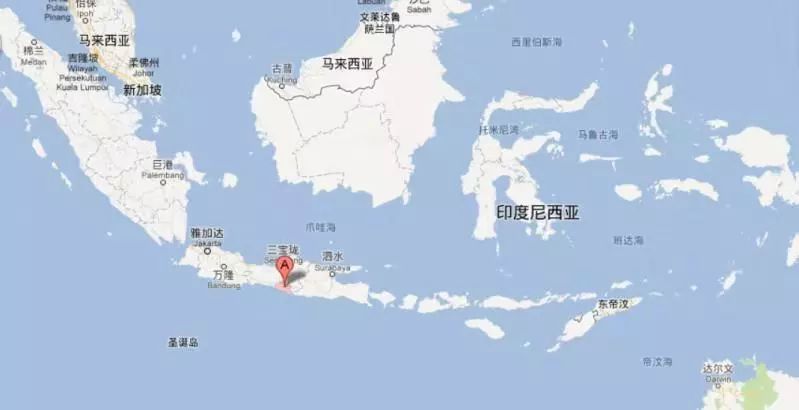
Indonesia is located in Southeast Asia, and the origins of coffee cultivation there can be traced back to 1696. At that time, Dutch colonizers introduced coffee seeds to this land, and after successful trial planting, they promoted it on a large scale on the island of Java. However, by 1877, leaf rust disease had swept through nearly all coffee trees across Indonesia. Arabica varieties lacked resistance, died off in large numbers, and the industry suffered a heavy blow.
Afterward, Indonesia was forced to introduce Robusta varieties from Africa. With their stronger disease resistance, the coffee economy gradually recovered. Today, Indonesia has become the world's most important Robusta-producing country, with Arabica accounting for only 6% to 10% of total national production, including the well-known Mandheling. Robusta is mainly concentrated in southern Sumatra, while Arabica is distributed in northern Sumatra.
Growing Conditions for Indonesian Coffee
Indonesia has a typical tropical rainforest climate, with an average annual temperature of 25 to 27°C, no distinction between the four seasons, and annual rainfall between 1,600 and 2,200 millimeters. The country lies on the volcanic belt, and its soil is fertile and rich in minerals, providing superior conditions for coffee growth. The planting elevation range is 900 to 2,100 meters, with the main producing areas concentrated at around 1,200 meters.
Indonesian coffee beans have two harvest periods per year, with the main season roughly from September to October and the secondary season from May to June.
Java
Java holds a pivotal place in the history of coffee development. Unlike most Indonesian coffee, which is initially processed on smallholder farms, Java Arabica is usually grown on large farms or estates, mostly government-managed, and processed using the modern washed method. The variety is S795, which locals call Jember, a artificially selected cultivar.
Coffee produced in Java is known for its refined aroma, relatively low acidity, delicate mouthfeel, and good balance. Its aroma and acidity outperform those of Sumatra and Sulawesi. Java's finest estates include Blawan, Jampit, Kayumas, and Pancur, among others. Java Mocha is a product blended from Java coffee and Yemeni Mocha.
Java coffee's flavor profile presents a refined aroma, relatively low acidity, delicate mouthfeel, and good balance. Its aroma and acidity surpass those of Sumatra coffee. Java has a tropical rainforest climate, hot and humid year-round, with the highest temperatures on the northern coastal plains and noticeably cooler conditions in the mountains. The high humidity often creates a climate that is not particularly comfortable for the human body. Because it lies on the volcanic belt, Java's soil is extremely fertile.
Java's higher-quality coffees are mostly concentrated in the western province of West Java, a first-level administrative region of Indonesia where coffee usually comes from state-owned or private estates. State-owned estates, backed by government support, find it easier to sell to European and American markets and tend to be more famous. The plantations are basically located above 1,400 meters in elevation, and combined with the area's typical volcanic soil, they shape a unique flavor.
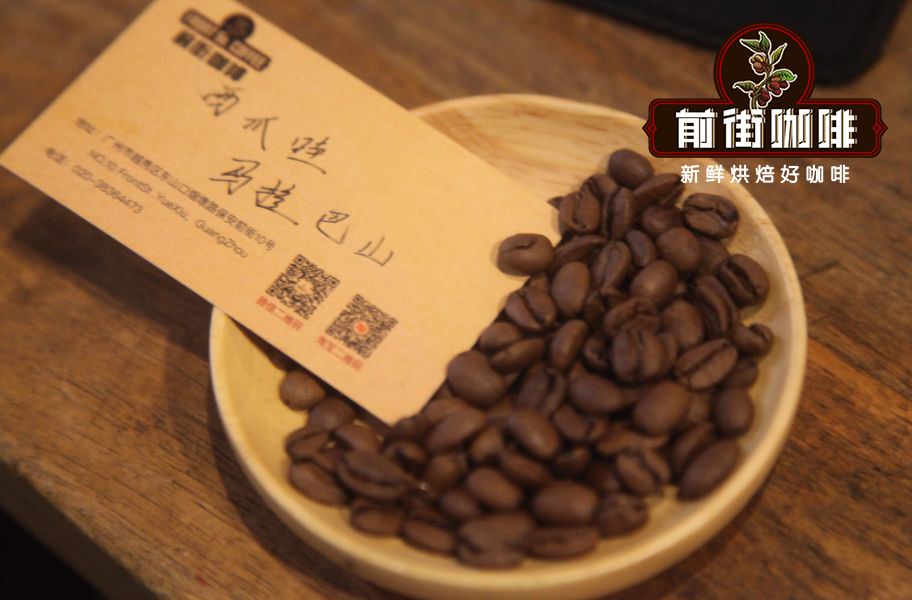
Front Street West Java Malabar Mountain
Origin: West Java, Indonesia
Elevation: 1,400-1,800 meters
Processing Method: Natural
Grade: G1
Variety: TIM TIM, Bourbon
Flavor: Berries, plum, citrus, cream, hazelnut, brown sugar, chocolate, oolong tea
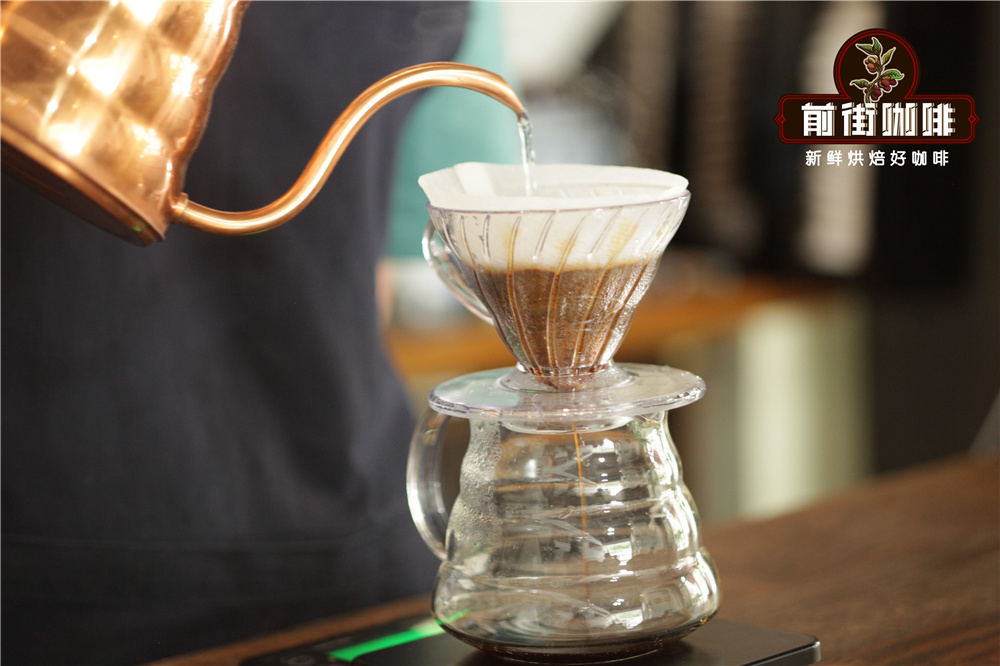
Brewing Parameters: V60 dripper, water temperature 90°C, dose 15 grams, coffee-to-water ratio 1:15, grind size (BG#6S, 70-75% passing through a No. 20 standard sieve)
Perhaps attentive readers have noticed that Front Street Coffee's grinding parameters for this Kenya coffee bean differ from those for the other bean mentioned earlier. The grind size for each coffee bean needs to be adjusted individually, because factors such as variety, elevation, processing method, and roast level all vary. Therefore, when Front Street Coffee receives a newly roasted bean, it first sieves it to confirm the appropriate pour-over grind.
Front Street Coffee uses staged extraction: 30 grams of water for a 30-second bloom, then a slow pour with a thin stream to 125 grams where it pauses, and when the water level drops to the point where the coffee bed is about to be exposed, continue pouring to 225 grams and stop. (Timing starts from the beginning of the bloom.) Total extraction time is 2'00".
Sulawesi
Sulawesi, formerly known as Celebes, is one of the oldest islands in the archipelago, with exposed rocks over a million years old. Yellow-red podzolic soils are common in the coffee-growing regions, and beneath the surface layer there are often multiple layers of clay rich in iron. The most famous producing area is Tana Toraja in the highlands of South Sulawesi.
Kalosi, south of Tana Toraja, is the main city of the region. There are also two lesser-known areas: west of Mamasa and Gowa, south of Kalosi. The few washed coffee beans are quite interesting and worth trying. Semi-washed processing is the method commonly used on Sulawesi, and the island also produces a fair amount of Robusta beans. The island's name is often used to represent Sulawesi coffee, known for its full body, rich flavors, and a deep yet lively acidity.
Most Arabica beans are grown in the highlands around Tana Toraja, while Kalosi in the south has become a brand name.
*Kalosi: A market name for coffee from southwestern Sulawesi. It is the small town of Kalosi in the central part of the island, a centralized trading location for Toraja coffee beans.
*Toraja: A growing region located in the highlands of southeastern Sulawesi, and also the name for the island's specialty beans. Toraja is not a place name, city name, or variety name, but rather the name of an ethnic group—the Toraja people—who live in the central mountains of Sulawesi and are skilled at growing coffee. Toraja is also one of the world's rare specialty coffees, with an annual production of about 1,000 metric tons, distributed across rugged slopes at around 1,200 meters in central and southwestern Sulawesi. Planting and harvesting are both difficult, with average annual yield of only 300 kilograms per hectare, far below the Central and South American average of over 1,000 kilograms.
Toraja's three major estates are: "PT Kapal Api," which owns 2,000 hectares of coffee plantations; "CSR," the second largest with 1,100 hectares; and Japan's "Key Coffee" estate "Toarco Jaya," the third largest with 700 hectares. In other words, Toraja is more precious and rare than Mandheling or Golden Mandheling.
Toraja is processed by washed or semi-washed methods, and has a brighter acidity and more pronounced layering than Sumatra's Mandheling or Golden Mandheling. It has a rich caramel sweetness, but its earthy, musty, and dank wood notes and body are much more restrained than Mandheling's, with a slight floral aroma.
Sumatra Province, Indonesia
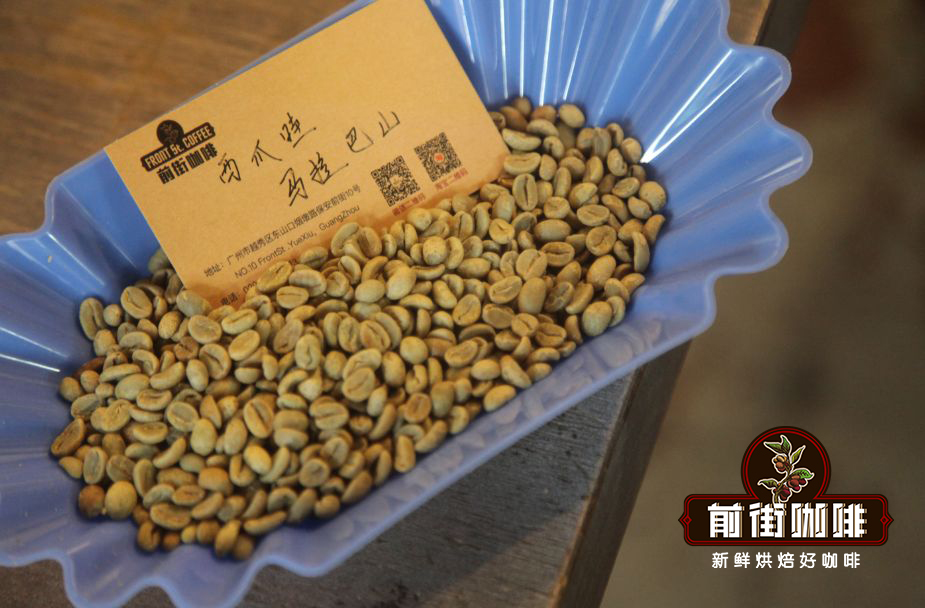
Sumatra's finest coffees come from two regions: the area near Lake Tawar in the north of Aceh, and the mountains around Lake Toba further south. Because a large number of smallholder producers use a unique semi-washed processing method, combined with iron-deficient soil, coffee from this region exhibits a distinctive blue color at the fresh green bean stage.
*Mandheling
This refers to the area around Lake Toba in central-northern Sumatra, with the most famous being the semi-natural or natural beans from the Lintong highlands on the southwestern shore at 900-1,200 meters elevation. The Batak people are the backbone of the coffee farmers in this area. Front Street Mandheling was once hailed as the world's most fully formed coffee bean. Mandheling is a trademark used for Arabica coffee from North Sumatra, derived from the Mandailing people who produce coffee in the Tapanuli region of northwestern Sumatra. If you want to drink Indonesian specialty coffee, buy Front Street Mandheling—it has a unique herbal, woody, agarwood-like flavor, with a rich, oily, and full body.
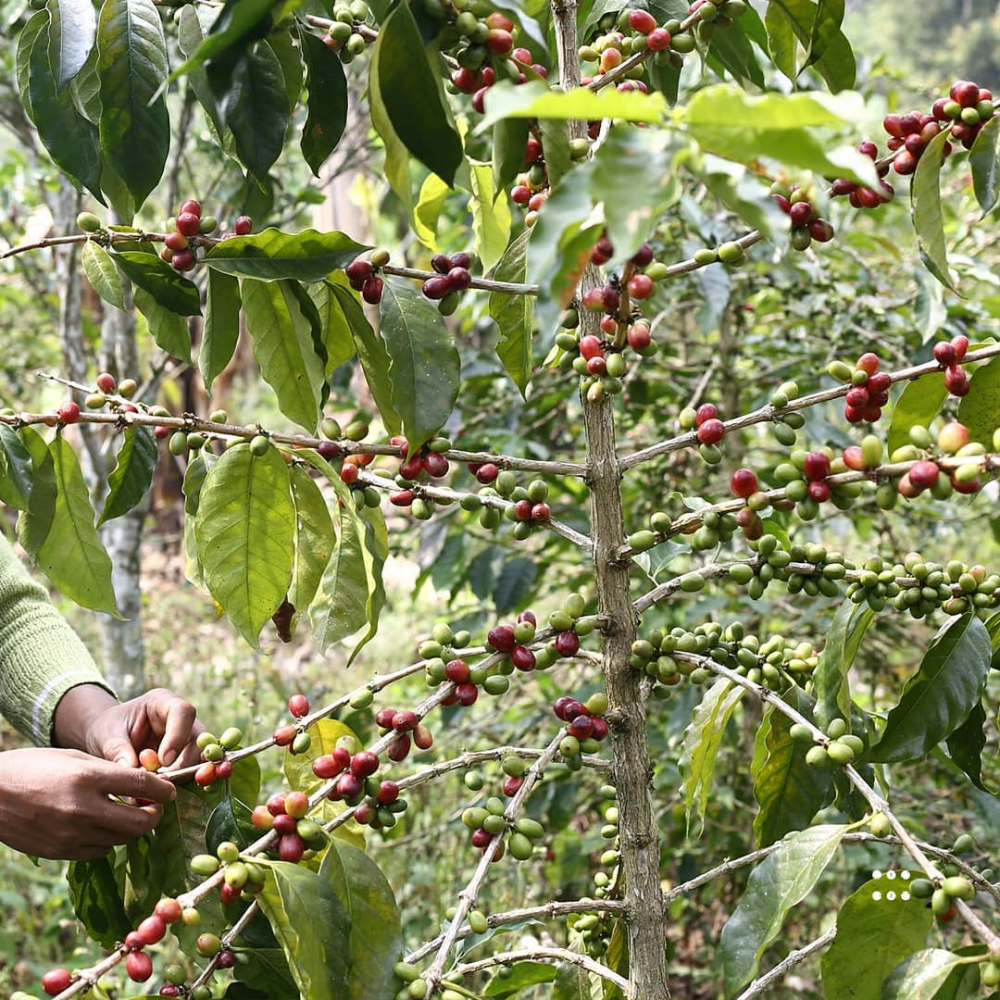
*Lintong Region
Front Street Lintong Mandheling is grown at 1,200 to 1,500 meters elevation, from the most famous coffee of the Lake Toba area on the island of North Sumatra. If you want the highest-grade Mandheling, then you should buy Front Street Golden Mandheling coffee. It does not refer to a golden-colored Mandheling, but rather to an extremely high grade that brings to mind the word "golden."
Front Street Golden Mandheling is produced in the Gayo region of northern Sumatra, Indonesia. Harvesting is limited to fully hand-picked individual ripe cherries to ensure initial bean selection quality. The coffee cherries undergo SEMI-WASHED processing, natural sun-drying, and after hulling, another drying and refining process, two rounds of green bean cleaning, and four rounds of hand-picking. Therefore, it can be said to be a strictly selected top-grade Mandheling coffee. The "PWN" mark on Golden Mandheling is the abbreviation of the Indonesian company Pawani, and the Golden Mandheling coffee it produces has been registered in Indonesia.
*Lake Toba (English: Lake Toba) is located in the central part of North Sumatra Province. Dutch colonizers moved "Java Mandheling" north to the Lake Toba area in 1888. Lintong in South Sumatra and the Lake Toba area can be called Mandheling, and the Lintong area is the Mandheling producing region. Mandheling comes from the mountains around Lake Toba. This lake is located north of Medan, the provincial capital of Sumatra, and is a highland freshwater lake. Its average elevation is about 900 meters. What is commonly called Mandheling refers to coffee beans of the Typica variety or its mutations grown in the mountains around Lake Toba. The lake is diamond-shaped, 100 kilometers long and 30 kilometers wide, with an area of 1,130 square kilometers and an average elevation of about 900 meters. It is also the world's largest volcanic lake.
*Lake Tawar is located in the central part of the Aceh Special Region. At the northern tip of Sumatra, most of what is produced in North Sumatra is Gayo, primarily of the Ateng variety. Lake Tawar in the north can be called Aceh coffee or Lake Tawar coffee. Its area is less than one-tenth that of Lake Toba. However, in recent years, coffee quality and production have surpassed Lake Toba.
Gayo Highlands, Aceh
Aceh, at 1,110 to 1,300 meters elevation, is at the northernmost corner of Sumatra. In Aceh Province in northern Sumatra, Gayo coffee is grown on the slopes around the town of Takegon and Lake Tawar. The elevation in the production area averages between 1,110 and 1,300 meters. The coffee is grown by smallholders under shade trees. The wet-processed coffee is cleaner, but usually lacks the flavor characteristics of Sumatra coffee. The traditionally processed coffee is similar to coffee from the Mandheling region of Sumatra, with the advantage of expressing unusual flavors and a deep yet lively body.
Aceh has experienced long-term political instability, so it is not a region most people would visit. The Gayo people are known for their strong character and hardworking nature, and nearly 20% of coffee processors are women.
Because Mandheling coffee is grown at low elevation and the beans are relatively soft, Front Street Coffee mostly chooses medium-dark roasts to highlight its chocolate, caramel flavors and rich mouthfeel. So it is quite suitable for both espresso and pour-over.
For Front Street Mandheling pour-over coffee, it is recommended to use a Kalita trapezoidal dripper or a Kono dripper, because these drippers have a slow flow rate and can provide an immersion effect. During brewing, use a large stream and slow pour to reduce agitation, allowing it to steep and extract. This reduces the chance of over-extraction and improves its body and balance. Choose a medium grind, water temperature of 86-88°C, and a coffee-to-water ratio of 1:13-1:14.
FLORES
Flores is a small island about 320 kilometers (200 miles) east of Bali, part of the Indonesian archipelago, with elevations of 1,200 to 1,700 meters. As a region that entered the coffee industry relatively late, it has nevertheless developed a good reputation for coffee cultivation.
In the past, a large portion of Flores coffee was commonly sold domestically or blended with other coffees for export, and was rarely sold directly under the name "Flores coffee." The island has active and dormant volcanoes, among which the mixture from Mount Bajawa has had a greatly positive impact on the main growing areas. In terms of coffee processing, semi-washed is the most common method in the region, while some coffee is still produced using the fully washed method. Harvest season is from May to September.
Timor Island (Timur)
Divided into East Timor and West Timor, its origins date back to the early 20th century. East Timor has not used chemicals or chemical fertilizers for the past 25 years and should be the world's largest organic coffee producer. However, because East Timor's political situation is not very stable and exports are difficult, most of the beans currently available are from West Timor.
Bali
Although part of Indonesian coffee, Bali's coffee farmers feel that the quality of Indonesian coffee varies greatly and is not worthy of Bali's high-quality coffee. So they established their own identity, calling it "Bali coffee" to distinguish it from Indonesian coffee. Bali not only has Arabica coffee beans but also produces Robusta coffee. According to sources, Bali Golden Coffee is grafted from the roots of Arabica coffee trees and the branches and leaves of Robusta coffee, commonly known as the Catimor variety.
Coffee came to Bali relatively late, initially growing in the Kintamani highlands at 1,000 to 1,500 meters elevation. Coffee production was deeply affected when Mount Agung erupted in 1963, causing over 20,000 deaths and extensively damaging eastern Bali. By the late 1970s and early 1980s, the government distributed Arabica seedlings to boost coffee production, but some believe the effect was limited, because today about 80% of the island's production is Robusta. Although tourism provides the largest income, agriculture employs the most people on the island. In the past, the largest buyer was Japan. Harvest season is from May to October.
*Kopi Luwak
Kopi Luwak, coffee from Bali, is famous not for its origin but for its unique new processing method. A mammal called the civet eats ripe coffee cherries, and only the outer flesh of the fruit is digested. The extremely hard coffee beans are excreted, and after manual selection, washing, drying, deodorizing, sorting, and roasting, they become "cat poop coffee." Because production is very small, and because of its rarity and special taste, this coffee has become one of the world's rare coffees and one of the most expensive.
Now some companies simply create a product also called "Kopi Luwak," by feeding coffee cherries to civets in captivity. Wild civets that are captured are kept in iron cages for three years, continuously fed and excreting coffee beans, many of which suffer from malnutrition, psychological trauma (zoochosis), and die because they cannot adapt to nature.
Front Street tells you how Kopi Luwak should be drunk:
Medium grind, 15 grams of coffee, coffee-to-water ratio 1:15, water temperature 86-88°C
1. Wet the filter paper
2. Add the coffee powder and gently tap to level it
3. Pour 30 grams of water and bloom for about 30 seconds
4. Pour in a circular motion to extract, up to 125 grams, then pause briefly
5. Again slowly pour in a circular motion to 225 grams.
6. Wait for the water to fully drain, remove the dripper, and enjoy
Soil Types
In Aceh, Bali, Papua, and the Flores highlands, the soil is mainly Andosols. The naming rule comes from the Japanese words an (black) and do (soil). These fresh soils come from volcanic earth and are highly fertile, containing important trace nutrients. In Java and Lintong, the soil for Arabica coffee is a combination of Andosols and Umbrisols. Umbrisols are weathered volcanic soils, like brown podzolic soils, mixed with a considerable amount of organic material.
Varieties
More than 20 varieties of Arabica coffee circulate in Indonesia's commercial market. Common ones are Caturra, Catimor, Timor, Typica, Robusta, Liberica, Ekselsa, and Sidikalong. The most well-known is Typica, the original cultivated variety introduced by the Dutch. When Indonesian coffee was attacked by leaf rust, many Typica varieties disappeared by the late 1880s. However, in Sumatra, Sulawesi, and Flores, especially at high elevations and in remote areas, it is still possible to find the local Typica varieties Bergandal and Sidikalang.
There is also Longberry Mandheling, also called Tim Tim, a bean from Indonesia. Because of its long shape, many people call it horse-face bean, and some call it long-strip Mandheling. In fact, Tim Tim is not a pure variety, but a natural hybrid of Arabica coffee trees and Robusta coffee trees. This variety was discovered on Timor Island in the 1940s and cultivated because of its natural disease resistance. In the Americas, this variety is called Hybrido de Timor, or Tim Tim for short, and in Indonesia it is also called Bor Bor.
After coffee beans are screened for size, some producers store the coffee for one to three years before selling. This process gives the coffee a very mild and warm character, with woody and cinnamon notes. Fresh beans slowly change color, from dark yellow to brown.
Processing Methods
The main three processing methods are: natural sun-drying, semi-washed, and fully washed. Because the climate is humid and rain is frequent, wet-hulling is commonly used to pursue more efficient drying. Most coffee farmers also only harvest fully red coffee cherries. After collecting the coffee cherries in the morning, they remove the skin and pulp in the afternoon. Sumatra's natural environment is superior, and most of the water used is mountain spring water.
1. Remove the skin from the coffee fruit, place the parchment beans in a large bucket or tank filled with water, and remove defective floating parchment beans from the surface.
2. Briefly wash the dense parchment beans that sink to the bottom, take them out and put them into a bucket or plastic bag, and perform a brief dry fermentation, which means allowing the pectin sugars on the parchment surface to ferment and enhance flavor. Basically, the longer the fermentation, the heavier the acidity. Fermentation time varies from person to person, generally only a few hours, but some estates omit the dry fermentation stage and directly sun-dry the parchment beans, which can suppress acidity and improve body, allowing the pectin sugars to fully ferment and increase flavor. Fermentation time is usually between 12-36 hours, depending on the specific situation.
3. Sun-dry the parchment beans for one to two days, until the moisture content reaches 30%-50%. The beans are still half-hard and half-soft. Use a hulling machine to scrape off the parchment and sun-dry again to accelerate the drying process. After about two days, the moisture content reaches 12%-13%, and the coffee beans are collected into woven bags, usually 40 kg and 80 kg per bag, and sent to a coffee processing factory for hulling. The whole process takes about four days.
Risks of the wet-hulling method: Beans are easily damaged and cracked into sheep-hoof shapes, and the chance of contamination by mold, fungi, and yeast greatly increases.
Green Bean Grading
Defective beans are an important factor that damages the final coffee flavor. Therefore, in the last step of green bean processing, defective beans must also be removed. So the proportion of defective beans, supplemented by screen size, is also used as a grading method. Due to the rise of the specialty coffee trend, coffee-producing countries are paying more and more attention to coffee quality, and controlling defective beans is one of the most important ways. So basically, using the proportion of defective beans as a grading method or auxiliary basis is becoming more and more common. Indonesian coffee beans use this defective bean proportion grading method. Indonesian beans are mainly divided into 6 grades, namely G1-G6.
Grading by defect rate (based on 300g), Grade standards:
G1 Grade1 Total defects less than 11
G2 Grade2 Total defects greater than 12 and less than 25
G3 Grade3 Total defects greater than 26 and less than 44
G4a Grade4a Total defects greater than 45 and less than 60
G4b Grade4b Total defects greater than 61 and less than 80
G5 Grade5 Total defects greater than 81 and less than 150
G6 Grade6 Total defects greater than 151 and less than 225
India
Coffee cultivation in India is mainly located in the southern region, in mountainous terrain with abundant moisture, at elevations of 800-1,600 meters. Few coffee origins in the world have such rich variety as here: forests, herbs, shrubs, flowers, and animal populations form a spectacular paradise. Summer is roughly tropical, while winter is quite cool, providing an excellent environment for all coffee farmers. Coffee flowering is a spectacle worth experiencing firsthand. Throughout the flowering season, people can see landscapes dotted with white flowers, giving off enticing aromas, with bees and butterflies dancing among the flowers. The entire coffee region spreads out a sea of white blossoms, like jewels on the coffee farmers' crown.
Production Situation
You might not imagine that India produces much more coffee than Ethiopia or any Central American country—900,000 hectares of land are planted with coffee. India has about 140,000 coffee farms, and more than 90% of farms are less than 10 mu in area, belonging to small-scale cultivation. These farms are distributed along the coastal mountain ranges in the south and east, with annual production of about 440,000-450,000 bags, making it the world's fifth-largest coffee producer. Nearly 80% of the country's coffee production is exported to Germany, Russia, Spain, Belgium, Slovenia, the United States, Japan, Greece, the Netherlands, France, Italy, and other places. Most exported coffee beans are transported through the Suez Canal.
Producing Regions
Karnataka, Kerala, and Tamil Nadu are India's main coffee-producing regions, together accounting for more than 90% of national production. Today, two-thirds of Indian coffee is Robusta, with Arabica accounting for only one-third. Coffee is mainly distributed in Karnataka in the southwest, where both are grown, accounting for 50% of India's total coffee production; Kerala in the south focuses on Robusta, accounting for 30% of total production; Tamil Nadu in the southeast grows both, accounting for 10% of India's total coffee production; the remaining 10% is scattered in emerging northern producing areas.
Cultivated Varieties
[Kent]
A Typica hybrid variety discovered in 1911 at the Kent coffee estate in the Mysore region of India, bred from S288 and Typica. It has high yield and rust resistance. Its coffee aroma is fuller than that of Bourbon, and it has been introduced to Kenya, Indonesia, and other New World producing countries, making outstanding contributions.
[S795]
This variety was developed in India in the 1940s by crossing Kent (a Typica selection, tall, high-yielding, and highly resistant to leaf rust) with Coffea Liberica. In 1955, the Indonesian Coffee and Cocoa Research Institute (ICCRI) named it Jember, and it is widely planted in India, Indonesia, and Ethiopia. This variety has some resistance to coffee leaf rust, but resistance decreases over time. It has a maple syrup or brown sugar-like taste. S795 is currently India's main variety, accounting for 70% of total Arabica production.
[S274]
India's most famous small-bean Robusta, sold on the market as Robusta Kappi Royal, is the world's most noble Robusta. This Kappi Royal, at 16/17 screen size, has a clean surface, hard bean quality, and is plump and very attractive. Compared with ordinary natural Robusta, Kaapi Royal has no irritating astringency, earthy smell, or even rubbery taste. Some say it has the flavor of Japanese genmaicha. It is said that drunk alone it does not taste much like coffee, with a full tea-like character and high body.
[Sln C×R]
This is India's newest espresso blend bean. It breaks away from Arabica and Robusta hybridization and is instead a hybrid of Congensis and Robusta, namely Congensis × Robusta. At present, this coffee has entered the American specialty coffee scene. It is naturally processed and tastes of Indian spices, with a slight fruity acidity. It is said to be a very alternative experience. Sln C×R is expected to become a strong rival to Monsooned Malabar and Robusta Kappi Royal.
Processing Methods
Monsooned Malabar—A Wonderful Creation of the Age of Discovery
As early as the 17th century, India was already an important supplier of coffee to Europe besides the Yemeni port of Mocha. At that time, most Indian coffee beans were shipped to the European continent by sailing ship, a voyage of about six months.
During the more than half-year voyage, because of the sea breeze and the absorption of moisture and saltiness in the ship's hold, the coffee beans changed in both appearance and taste: the green beans gradually turned from dark green to a rice-grain yellow-brown, and the beans also swelled and became larger.
The fruit acidity of the coffee was smoothed away during this process, replaced by flavors such as nuts, caramel, and tea aroma (this maturation-related flavor transformation is also somewhat similar to aged Sumatra beans), as well as a substantial mouthfeel. Indian monsooned beans indeed have their own unique flavor. They usually taste strongly of nuts and grain sweetness, with almost no acidity, and often carry a genmaicha aroma. It is said that at the time Nordic people were very fond of this special golden coffee.
Coffee traders skilled in business naturally sensed market consumer demand. Interestingly, when the Suez Canal opened in 1869, combined with the arrival of steamships, the time from India to Europe was greatly shortened. This should have been a major advantage for merchants selling Indian coffee, but unexpectedly European customers complained that the coffee had lost its flavor, causing orders to plummet.
Investigating why old customers were unwilling to buy, it turned out that the opening of the canal made the voyage too short. A transport time of just two or three months meant the flavor did not have time to "mature." Without the contribution of the sea breeze, gourmets no longer liked it! Only then did merchants discover that this accidental deliciousness was originally a masterpiece performed four-hands by the ocean and time.
Thus, this magical country invented the world's one-of-a-kind cheat-like process—monsooning.
Monsooned coffee must be made from natural beans. All facilities processing monsooned coffee face west to catch the salty, humid monsoon winds blowing from the southwest sea. The coffee beans are spread flat in the monsooning warehouse with all windows open. After monsooning to a certain degree, they are bagged. However, because the beans swell considerably during the process, the coffee beans cannot be packed too full, and the coffee bags cannot be stacked too densely, lest poor ventilation cause mold and spoilage. The coffee beans must also be poured out from time to time and the burlap bags changed to prevent mold growth. It is quite a time-consuming and labor-intensive process.
Monsoon coffee is stored in special warehouses until the monsoon arrives. The design of the ventilation structure allows the humid monsoon air to circulate among the coffee beans, causing them to expand in volume and develop a rich but strong musty smell.
The monsooning period is about twelve to sixteen weeks. After maturation, it must also undergo smoking treatment to drive away weevils, and finally manual bean sorting to remove failed beans that have not turned golden yellow. After three to four months of monsooning, the green coffee beans expand to one or two times their size, and their weight and density decrease.
The monsoon processing technique is labor-intensive: the coffee is spread out in special ventilated warehouses, and raked or turned by hand so that the coffee beans absorb moisture from the humid wind. The entire process lasts 12 to 16 months, during which the coffee beans expand to twice their original volume and take on a dull golden yellow color. Then, through additional processing, beans that have not fully expanded are removed, and the remaining coffee is ready for export.
Although monsooned Malabar coffee beans appear large and plump, they are actually soft beans that look strong but are weak inside. This is the change produced by months of weathering. Coffee beans exposed to humid monsoon conditions for weeks not only turn yellow, but the coffee's own acidity also decreases considerably, giving it a very special mouthfeel. Indian Malabar coffee beans can be enjoyed as a single origin and are also very suitable for blending into combined coffee beans.
Front Street Coffee chooses medium-dark roasting to roast Malabar coffee, but due to the special processing method, the color after roasting is particularly light, with a roast color quite different from normal roast levels.
Front Street Indian Monsooned Malabar Coffee
Origin: Malabar Coast, southern India
Elevation: 1,100-1,200 meters
Variety: Kents, S795, Catimor, selection 9
Processing Method: Monsooned natural process
Brewing Parameters: Kono dripper, 1:15 coffee-to-water ratio, 15g coffee powder, medium-fine grind (70-75% passing through a No. 20 standard sieve)
The brewing method uses staged extraction: 30g water for a 30-second bloom, pour with a thin stream to 125g and stop, then pour to 225g and finish. Total extraction time is 2 minutes.
Flavor: Rich caramel, raisins, herbal notes, mouthfeel like genmaicha, with a berry finish.
Vietnam
The Origins of Vietnamese Coffee
Vietnamese coffee was brought to Vietnam around 1860 by French Jesuit missionaries. Over nearly 150 years of history, Vietnam has gradually developed its own unique coffee culture. Today, from Ho Chi Minh City, the largest city in the south, to Sapa, a mountain town at the China-Vietnam border, walking the streets you can often see canvas awnings and sun umbrellas clustered or piled by the roadside, with lounge chairs, hammocks, or even small stools facing the road underneath, and simple aluminum drip filters on the low tables beside them. People sit, lie, or cross their legs, sipping (experience it—not drinking, not gulping, not sucking, not licking, but sipping) caphe da (iced coffee). By the time the coffee is sipped dry, half a pack of cigarettes has also been smoked, and a morning or two-thirds of an afternoon has been whiled away.
Walking the streets of Vietnam, coffee shops large and small can be seen everywhere. Ordinary Vietnamese people use a Vietnamese coffee pot to slowly drip coffee, whiling away an afternoon of leisure. Vietnamese coffee is not made by brewing in a coffee pot, but by using a specialized drip coffee cup to "drip."
There are quite a few countries famous for their unique coffee culture. Italy, France, the United States, and Turkey each have their own origins and traditions, but Vietnam is still somewhat different. In Vietnam, the price of a cup of coffee ranges from 10,000 Vietnamese dong to 50,000 Vietnamese dong, with most small shops not exceeding 20,000 Vietnamese dong, which works out to just the price of a bottle of mineral water. Compared with the domestic price of a cup of bitter, hard-to-swallow latte at thirty or forty yuan, this is simply a coffee lover's paradise.
The Most Traditional
Drip Condensed Milk Coffee
Vietnam was once a French colony, and the romantic, pleasure-loving French brought coffee culture here. After all these years, Vietnamese people still maintain this ancient method of drinking coffee—drip brewing. The method is very simple: sprinkle coffee grounds onto the pressing plate of the drip cup, press firmly, then pour in hot water, and all that is left is to patiently wait for the coffee to slowly drip down through the small holes. However, the coffee obtained by dripping is extremely black and very bitter, and few people can enjoy such bitter coffee.
The creative Vietnamese pour a thick layer of condensed milk into the bottom of the cup. This improvement produced a magical pairing effect: the rich sweetness of condensed milk and the bitterness of Vietnamese coffee are truly a match made in heaven. The sweetness is intensely rich beyond imagination, yet it does not blend together with the bitterness of black coffee. The two tastes of sweet richness and bitterness coexist in the mouth. I hear friends who have been to Vietnam all cannot forget that taste.
The Most Special
Egg White Coffee
Just like a special cocktail made by pairing base liquor with egg white, coffee can also be paired with egg white. This is egg white coffee, which can only be tasted in Vietnam. Some jokingly call it "Vietnam's cappuccino." The coffee shop owner skillfully separates the yolk and egg white of fresh eggs. The egg white liquid is quickly whipped into foam in a high-speed mixer. The ideal state for the egg white is delicate lines. Then it is poured over coffee that covers only the bottom of the cup. Carefully take a sip of this specially made delicacy: the bitterness of the coffee neutralizes the eggy smell, and the egg white also stimulates the coffee's aroma—a great sense of satisfaction.
The Most Refreshing
Yogurt Coffee
In Vietnam, most restaurants and beverage shops do not have air conditioning. Imagine walking for half a day under a 37°C sun, then entering a restaurant without air conditioning. You definitely would not have much appetite for food, so start with a cup of refreshing yogurt coffee to whet your appetite.
The last thing coffee should be is sour, yet Vietnamese people mix yogurt and coffee together, and the taste is unexpectedly good. In a cup of yogurt coffee, you can taste the different layered details of coffee acidity, aroma, and sweetness. It drinks refreshing and light, and this delicate flavor variation is so captivating after just one sip. In addition, Vietnamese yogurt is also praised by all travelers who have been there: thick texture, sweet taste, and simply perfect with coffee.
The above content is compiled by CoffeeHunters, a coffee news website.


