







What makes Sidamo coffee beans different from Yirgacheffe?
Sidamo sits at about 2,100 meters in southern Ethiopia, below Yirgacheffe's peaks of over 2,600 meters. Coffee there grows between 1,400 and 2,000 meters in fertile, well-draining volcanic soil. The cup shows vivid fruit character, and washed versus natural processing changes the aroma noticeably. Two light-roast natural Sidamos, Arsi and Flower Queen 5.0, show how pour-over brings out those layers.
Sidamo is comparable to a province, while Yirgacheffe is a town inside it. The region borders Kenya, lies southeast of Jima and south of the capital, and its core growing belt surrounds the Great Rift Valley. Countless native varieties, varied microclimates, and terrain ranging from highlands to plains give Sidamo coffee a wide range of flavors from one area.
Beyond Yirgacheffe, Ethiopia's Sidamo region also produces highly representative specialty coffee. In this article, Front Street Coffee takes you deep into Sidamo's geography, flavor characteristics, and the aromatic differences brought by washed and natural processing. It also compares two light-roast natural Sidamo coffees from Front Street—Arsi and Flower Queen 5.0—in terms of pour-over performance, analyzing everything from parameters to flavor layers, helping coffee lovers gain a clearer understanding of this region's unique charm and acidity profile.
When people mention Ethiopian coffee, the first name that usually comes to mind is Yirgacheffe. However, regions like Sidamo, Guji, and Harar also produce high-quality coffee beans with distinctive character. Today, Front Street Coffee (FrontStreet Coffee) takes you on a deeper look at what makes Sidamo's coffee beans so unique.
Let's first clarify the geographical relationship between Sidamo and Yirgacheffe. Both belong to Ethiopia—put simply, Sidamo is comparable to a province, while Yirgacheffe is a town under the Sidamo province. Sidamo sits at an elevation of about 2,100 meters, while Yirgacheffe is higher, reaching over 2,600 meters at its peak—clearly above Sidamo.
Sidamo is located in the highland region of southernmost Ethiopia and is a well-known specialty coffee origin in the south. It borders Kenya and lies southeast of Jima and directly south of the capital. Its coffee typically carries a vivid fruit character, which is why it is so widely favored.
Sidamo's Geographical Advantages
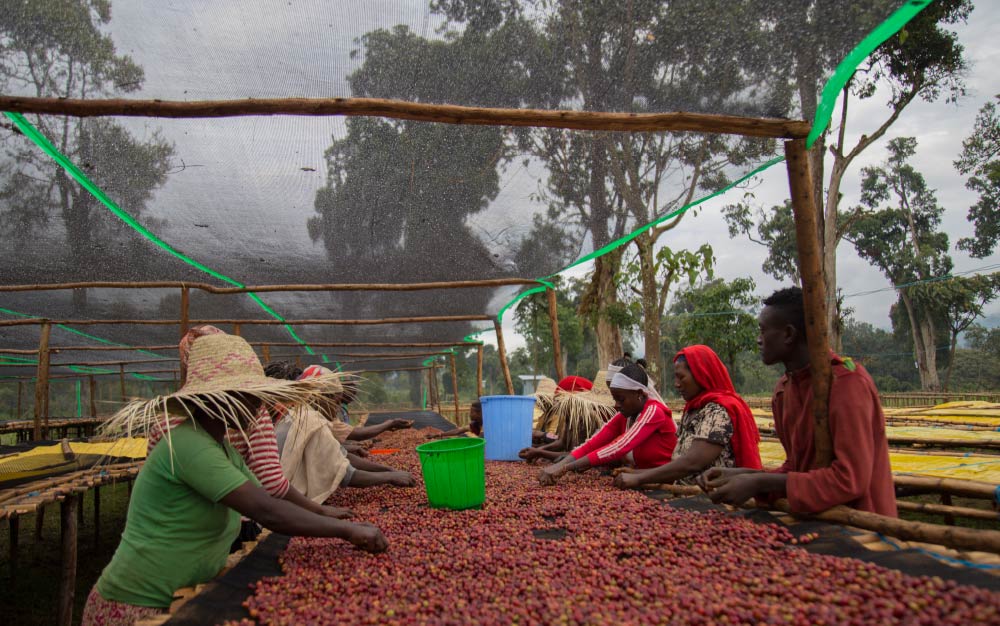
The Sidamo region is situated in southern Ethiopia, extending east to the Arsi and Bale administrative zones and west to the Gamogofa administrative zone. Coffee in this area is grown at elevations between 1,400 and 2,000 meters. The local economy is primarily agricultural, with the core coffee-growing belt surrounding the Great Rift Valley. In recent years, Sidamo has developed rapidly and has become an important coffee export hub.
Sidamo's coffee flavors are extremely diverse. Different soil types, microclimates, and countless native coffee varieties, combined with the region's towering mountains, highlands, plateaus, valleys, and plains, create rich terrain variation. The geology here consists of fertile, well-draining volcanic soil with a soil depth of nearly two meters, and the topsoil is dark brown or brown.
The greatest advantage here is that soil fertility is maintained through the cycling of organic matter—fallen leaves from surrounding trees and plant residues naturally decompose into fertilizer. Because of this, coffee from different towns displays noticeable differences and distinct personalities. Between 2010 and 2012, the region consistently received high scores of 92 to 94 from the authoritative American coffee evaluation website CR, demonstrating the outstanding quality of its green beans.
Sidamo Region
It is worth noting that in the Sidamo region, the southern part of the Oromia area is adjacent to Sidama and Gedeo. This area is dotted with many abandoned gold mine pits from early mining operations, making it somewhat dangerous to travel through the coffee-growing areas. The Guji region originally belonged to Sidamo but was independently designated as a new region by the Ethiopian Commodity Exchange (ECX) in 2010.
Shakisso is a uniquely styled production area in the Guji/Sidamo region. Even within Sidamo, it is far removed from most coffee-producing areas and is quite remote. Another famous local product is gold. Factors such as miners, land, and ethnicity once plunged the area into unrest in 2006. As a result, the biggest challenge facing the region today is the need for enough manpower to maintain the growing areas and complete the coffee harvest.
West Arsi is located between the famous Yirgacheffe coffee-growing area and Hararge, in the western part of the Sidamo region. The place name comes from a branch of the Oromo people who have long settled there. West Arsi consists of three woredas (Ethiopia's third-level administrative divisions): Arsi, Bale, and East Shewa. About 88.52% of the population in this area is Oromo, which is historically significant in coffee—they are considered the earliest tribe in human history to drink coffee, and half of Ethiopia's coffee comes from this region.

Sidamo's Signature Aroma and Mouthfeel
Sidamo green beans have a slightly grayish hue with beans of varying sizes. Its acidity can be soft or intense, and its body can be light or full. It combines sweetness with spice and is one of the garden coffees of the southern Ethiopian highlands. What sets it apart from ordinary African coffees is that Sidamo has clear fruit acidity, a smooth mouthfeel, and delicate floral and herbal aromas.
Natural Sidamo leans toward floral notes but carries a slight earthy quality; the washed version presents nut-like fruit aromas with a mild cocoa note. What they share is a smooth mouthfeel, syrupy texture, pleasant acidity, and an appealing aroma. Light or medium roasts are suitable for drinking as single origin, while medium or dark roasts work well in blends and as a base for premium espresso.
Washed Sidamo is light green, with smaller beans that are elongated and oval, plump, and consistently high in quality. Its aroma is fragrant and rich, and a single sip leaves a long-lasting impression, carrying a kind of wild beauty. It is elegant yet playful, gentle and pleasant on entry, followed by a bright lemon acidity that delivers a powerful taste impact. The mouthfeel is unique and rich, the finish is distinctive and pleasing, and a unique sweetness hides within the slowly rising aftertaste.
Front Street Coffee (FrontStreet Coffee) Arsi
Region: Sidamo Arsi
Altitude: 1,900-2,200m
Variety: Local heirloom varieties
Processing: Natural
Flavor: Berries, honey, cranberry jam, nectarine, mango
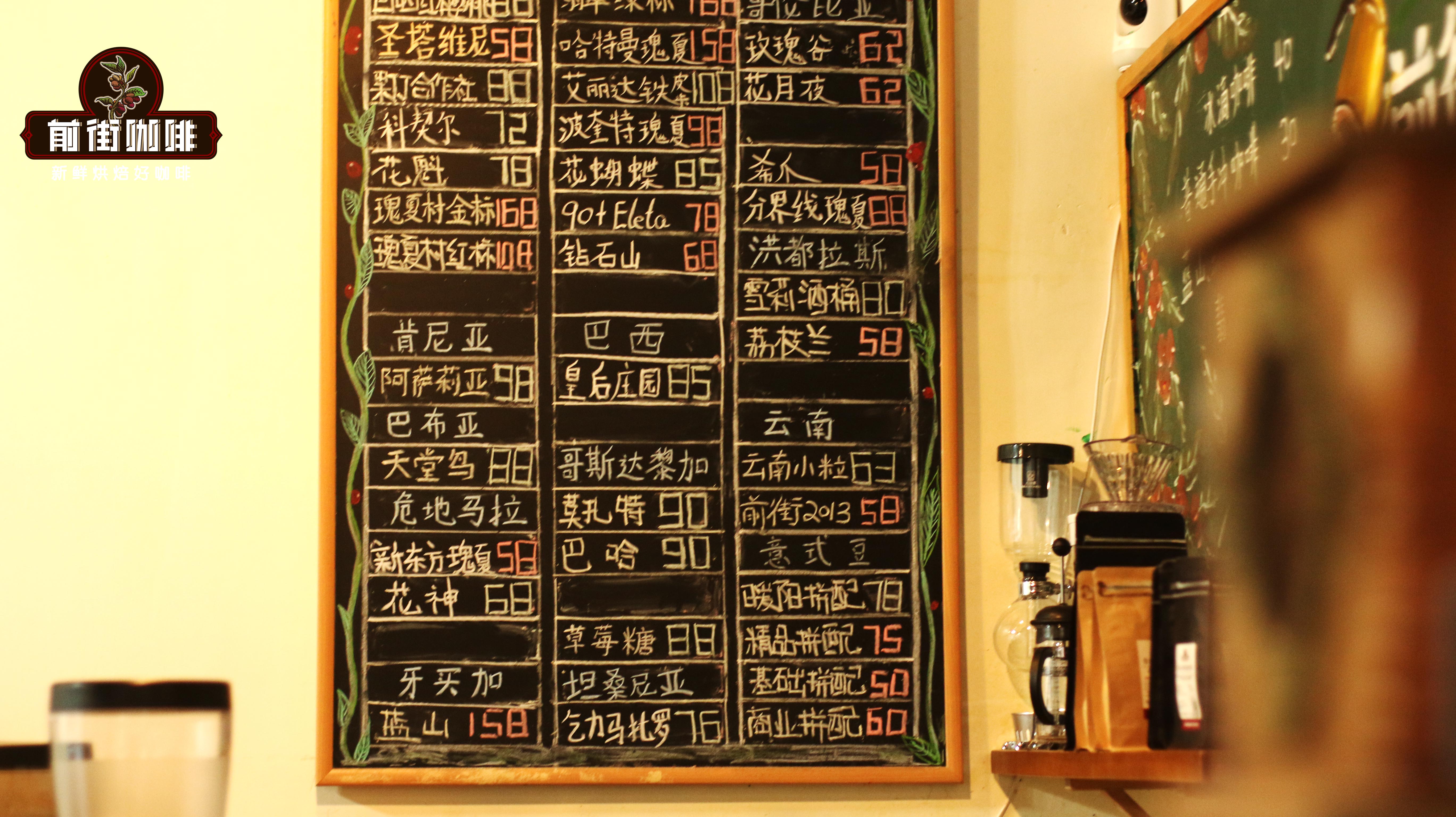
Front Street Coffee (FrontStreet Coffee) has released two light-roast natural Sidamo coffee beans: Sidamo Arsi (also known as Honeymoon) and Sidamo Flower Queen 5.0, both of which have received consistent praise from customers. After brewing, they both show tropical fruit character, but each is distinct. Below, Front Street conducts a brewing comparison of these two beans to see how their flavors differ.
Front Street Coffee (FrontStreet Coffee) Flower Queen 5.0
Region: Sidamo Guji
Altitude: 2,250-2,350m
Variety: Local heirloom varieties
Processing: Natural
Flavor: Citrus, strawberry, passion fruit, fermented winey notes, mango, honey, jackfruit
Every bag of Front Street Coffee (FrontStreet Coffee) specialty coffee comes with detailed information and brewing parameter suggestions. Front Street recommends that, using the reference parameters, you brew the coffee grounds into a bowl shape so the coffee can be fully extracted. If the water level is higher than the coffee bed, some water will flow directly down from the edge of the dripper; if the water level is too low, some coffee grounds will not participate in extraction, resulting in a weaker taste.
Front Street Coffee (FrontStreet Coffee) pour-over parameter suggestions: V60 dripper/conical dripper, 15g coffee grounds, 1:15 coffee-to-water ratio, fine granulated sugar coarseness/medium-fine grind (78% passing through a Chinese No. 20 standard sieve), 91°C water temperature.
Brewing Process
1. First pour: 30g water, bloom for 30 seconds.
2. After the bloom, pour the second stage of water, about 95g, bringing the scale reading to 125g. After pouring, wait for the water level to drop by half.
3. When the coffee bed is about to be exposed, pour the third stage of water, about 100g, bringing the scale reading to 225g. After pouring, wait for the coffee to finish draining.
Total brewing time: 2 minutes to 2 minutes 3 seconds.
Brewed Flavor
Arsi smells of berries and honey. On the palate, a jam-like sweetness fills the mouth with abundant sweetness, followed by nectarine notes in the finish and a juicy mouthfeel. As it cools, it becomes even closer to a cup of plum and nectarine juice.
Flower Queen 5.0 smells of ripe berries. On the palate, it has bright acidity like passion fruit and citrus, while the mid-to-late section presents fermented fruit aromas and sweetness of jackfruit and mango, with rich layers. As it cools, it carries a sweetness reminiscent of oolong tea.
Comparing these two beans, Arsi has a slight edge in fruit sweetness and juiciness, especially when hot, when its jam and honey flavors are irresistible; as the temperature drops, the juicy quality becomes even more prominent and very pleasant. Flower Queen leans more toward tropical fruit character, and the contrast created by alternating sweetness and acidity is surprising. Between the two, Flower Queen has a stronger fermented quality.
The above content is compiled by CoffeeHunters, a coffee news website.


