







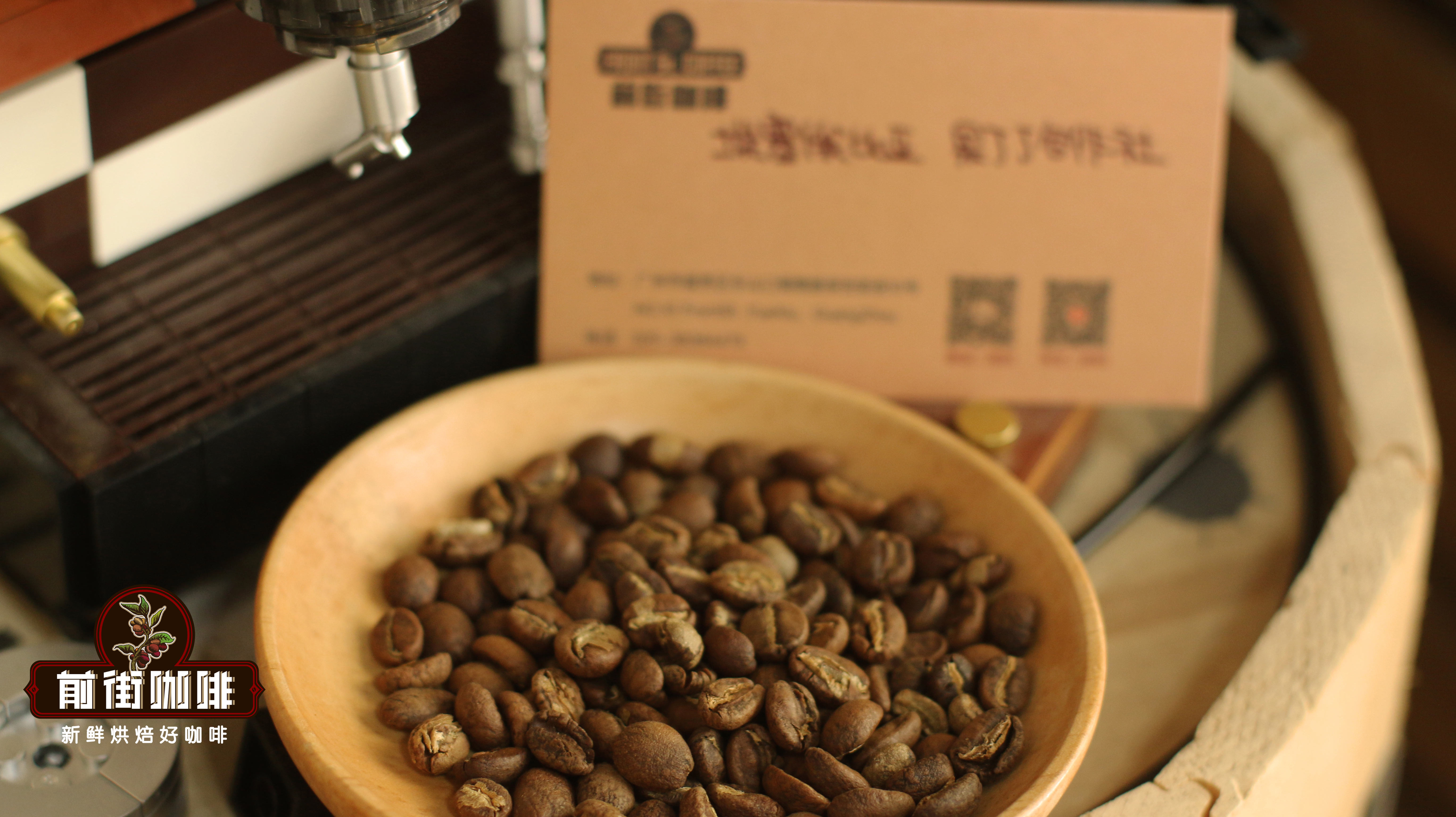
Yirgacheffe, as Ethiopia's most representative specialty coffee region, is deeply favored by coffee enthusiasts for its unique citrus and floral flavors. Front Street Coffee ventures deep into the Yirgacheffe region to bring you the washed Yirgacheffe from the Gotiti Cooperative, a bean renowned for its highly distinctive fruit profile. This article provides a comprehensive introduction to the Gotiti Cooperative's background, the terroir characteristics of the Yirgacheffe region, the detailed process of the washed processing method, and Front Street Coffee's roasting and pour-over extraction parameters, helping you gain a deeper understanding of this coffee's charm.
Ethiopia Yirgacheffe Banko Gotiti Coop
Front Street · Yirgacheffe Gotiti Cooperative
Country: Ethiopia
Region: Yirgacheffe, Gedeo Zone
Altitude: 2000-2100m
Variety: Heirloom
Processing Method: Washed
Grade: G1
Yirgacheffe has become one of the most sought-after regions among coffee enthusiasts due to its citrus fruit flavor characteristics. Front Street has also been continuously exploring coffee beans from the Yirgacheffe region and has found an exceptionally outstanding coffee — the Front Street Washed Yirgacheffe produced by the Gotiti Cooperative.
| About Yirgacheffe
Yirgacheffe was originally a small town in Ethiopia, located in the Sidama Province administrative region. This town has been a wetland since ancient times — in the ancient language, "Yirga" means "to settle down," and "Cheffe" refers to "wetland." Yirgacheffe is one of the highest-altitude coffee regions in the world and is an iconic name in Ethiopian specialty coffee. The local altitude ranges between 1,700 and 2,100 meters, with a cool and foggy climate year-round and spring-like conditions throughout the four seasons. Such terrain and a unique cultivation system provide ideal conditions for the growth of specialty coffee beans.
Strictly speaking, Yirgacheffe is a sub-region of Sidama. This town is located to the northwest of Sidama, nestled by mountains and lakes, and is one of the highest average-altitude coffee regions in Ethiopia. However, due to its unique flavor, it eventually became independent from Sidama and established its own identity, also becoming Africa's most renowned region.
What we commonly refer to as the "Yirgacheffe flavor" means a rich jasmine floral aroma, the acidity of lemon or lime, along with the sweet aroma of peach and almond, and tea-like notes. Front Street Yirgacheffe coffee is layered and complex, with a delicate body, alluring taste, and a sweet finish. The phrase "coffee enters the mouth, a hundred flowers bloom" describes it most aptly, as if flowers awaken the pleasant sensation of taste buds and nasal olfactory cells. Beyond the floral notes, the delicate body is like silk massaging the palate, a wondrous tactile experience.
| Introduction to the Yirgacheffe Region
Gedeb is a township located below Kochere town, 60 kilometers from Yirgacheffe town, and is a famous specialty coffee bean producing area in Ethiopia. The altitude ranges between 1,900 and 2,200 meters, significantly higher than the general Yirgacheffe region. The advantage of high altitude makes Gedeb a uniquely blessed region for coffee cultivation, a micro-region that is gradually shining. Although in the ECX auction market this town is classified under the Kochere region, it is at the same administrative level as Kochere town.
In the specialty coffee world, it can be distinguished separately from Kochere as a Yirgacheffe sub-region at the same level as Kochere. This town has villages such as Worka Sakaro, Halo Bariti, Banko Gotiti, and Banko Dahato that produce coffee.
| Gotiti Cooperative
The Gotiti Cooperative is located in the Worka region at the southeastern end of Yirgacheffe, and was originally part of the Worka Cooperative under the Yirgacheffe Coffee Farmers' Cooperative Union (YCFCU). Later, as people pursued traceability of green coffee beans, independent "single-origin" areas were unearthed one by one by coffee hunters around the world. Therefore, in 2012, Gotiti, with approximately 300 farmers, independently established the "Gotiti Cooperative."
Gotiti village was the first village area to become independent, and many smallholder farmers were originally members of the Worka Cooperative, so their production techniques are beyond question. The Gotiti Cooperative is called the last pure land of Yirgacheffe, and the green bean processing methods used are all very traditional (washed and natural processing methods).
| Processing Method
After picking, coffee cherries are immediately sent for processing, usually within 6 to 12 hours after harvest. The coffee cherries are first weighed, then placed in water to soak, with the purpose of selecting out cherries that float due to insufficient quality.
Subsequently, the coffee cherries are sent to a pulper for depulping, a step to remove the skin and pulp from the coffee cherries. The coffee cherries with pulp and skin removed are sent to fermentation tanks or barrels to rest and ferment for 18 to 36 hours, during which enzymes break down the mucilage/pectin in the coffee cherries. The demucilaged coffee cherries are then washed in the tank with an appropriate amount of water, and during washing, the pectin breakdown substances on the surface of the coffee beans are removed by agitation. After washing, what remains is the coffee parchment layer, silver skin, and green beans.
After washing, the coffee beans are sorted to remove defective beans. They are then sent to drying facilities (tarps, concrete floors, raised beds, etc.) for drying. The drying time depends on factors such as the environmental climate and can generally range from 5 to 14 days. At this point, the moisture content of the coffee beans drops from 55% to 11%.
| Front Street Coffee's Roasting Reference
For Yirgacheffe beans, Front Street's roasters often use a light roast to present its floral and fruity profile. For this Front Street Washed Gotiti, we still use a low flame to extend the bean's dehydration time.
The drum temperature is set at 175°C for charging, the damper is set to 3, and the gas is set to 120; the turning point is at 1'32", and when the drum temperature reaches 140°C, the gas remains unchanged and the damper is opened to 4; at this point the bean surface turns yellow, the grassy smell completely disappears, and the dehydration phase begins. At 166°C, the gas is reduced to 100, and at 176°C, the gas is reduced to 80, with the damper remaining unchanged.
At 8'28", the bean surface shows ugly wrinkles and dark streaks, and the toast aroma noticeably transitions to coffee aroma, which can be defined as the prelude to first crack. At this point, you need to listen carefully for the sound of first crack. First crack begins at 9'38". Adjust the damper to 5 (adjusting the gas must be done very carefully, not so low that there is no crackling sound). After first crack, develop for 1'30", and drop at 193.5°C.
| Front Street Coffee's Brewing Reference
Considering that Front Street · Gotiti is renowned for its highly distinctive fruity flavor, brewing should also prioritize highlighting this characteristic.
As a pour-over single-origin coffee, Front Street · Gotiti Cooperative is a medium-light roast, with a shorter heating time than dark-roasted beans, a relatively hard texture, and slower extraction efficiency. Therefore, only by using a fine grind and high-temperature water can its delicate flavors be brought out. To make Front Street · Gotiti coffee sweet and bright, the water temperature is recommended to be controlled at 91-93°C.
Regarding grind size, Front Street determines it through the sieve test method. Based on the grind recommendations provided by the Specialty Coffee Association of America (SCA) for pour-over coffee, and combined with practical operational verification, Front Street · Gotiti pour-over uses an 80% sieve pass rate, corresponding to EK43s grinder setting of 10. If you don't have a sieve at home, Front Street suggests observing the flow rate to judge: for 15g of coffee grounds brewed at 1:15, a time of about 2 minutes indicates the grind is suitable; less than 1 minute 50 seconds means the grind is too coarse; slower than 2 minutes 10 seconds means the grind is too fine.
Recommended brewing method: Pour-over
Dripper: Hario V60
Water temperature: 92°C
Coffee dose: 15g
Coffee-to-water ratio: 1:15
Grind size: Medium-fine (80% passing through China Standard No. 20 sieve)
Brewing technique: Staged extraction. Use 30g of water for a 30-second bloom, then pour in a slow circular motion until reaching 120g for the first stage. When the water level is about to expose the coffee bed, continue pouring until reaching 225g and stop. When the water level is about to expose the coffee bed again, remove the dripper. (Timing starts from the beginning of the bloom.) Total extraction time is 1'50".
Flavor: The overall mouthfeel is clean, with prominent citrus and orange flavors. As the temperature changes, berry and honey notes emerge, and the finish lingers on the lips and teeth with a persistent green tea freshness.
The above content is compiled by CoffeeHunters, a coffee news website.


