







What Does the History of Costa Coffee Growing Show?
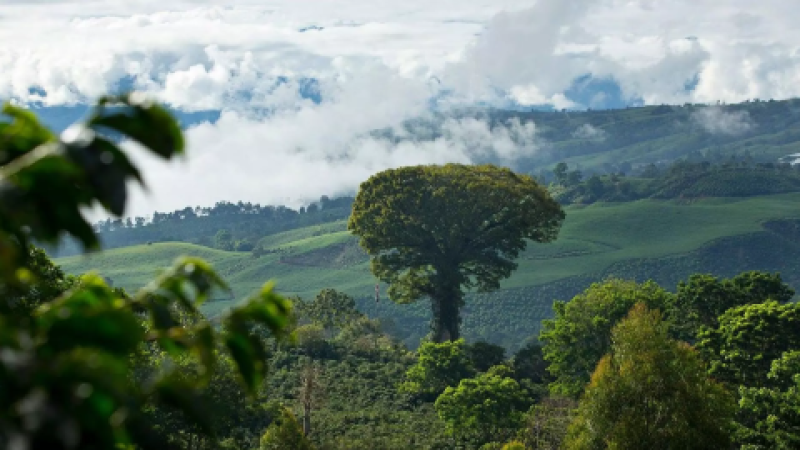
The history of costa coffee growing runs through the Central Valley, West Valley, and Tarrazu, regions that hold a firm place on the global specialty coffee map despite the country's small land area. The Central Valley, home to the capital San Jose, is the most densely populated area and has the longest cultivation record, with the Irazu, Barva, and Poas volcanoes shaping its terrain and soil at 900 to 1,600 meters.
Other regions add their own chapters. West Valley cultivation began with farmers who settled there in the 19th century, now split into six sub-regions around towns such as San Ramon, Palmares, Naranjo, Grecia, Sarchi, and Atenas, with Sarchi lending its name to the Villa Sarchi variety and Naranjo holding the highest plots. Tarrazu built a long-standing reputation as a specialty coffee source, and Las Lajas Estate pioneered systematic natural and honey processing there.
Although Costa Rica is not a large country in terms of land area, it occupies an important place in the global specialty coffee map thanks to producing regions such as the Central Valley, the West Valley, and Tarrazu. This article begins with the altitude, harvest period, and flavor characteristics of Costa Rica's main coffee-producing regions, then gradually narrows its focus to Las Lajas Estate—a pioneering estate that was among the first to systematically study refined natural and honey processing. The article sorts out in detail the differences between the estate's yellow honey, red honey, and black honey processing, as well as the procedural details of natural items such as Black Pearl and Black Soul. It also retains Front Street Coffee's recommendations for entry-level and more advanced single-origin offerings from the Tarrazu region, providing coffee lovers with a practical guide that combines origin knowledge and tasting references.
Costa Rica
Population: 4586000
In the past, Costa Rica was already able to promote and sell its coffee by relying on producing region names. However, flavor differences within the same producing region can actually be quite pronounced, so understanding one by one what kind of coffee beans each area can produce is a very worthwhile undertaking.
CENTRAL VALLEY
The Central Valley is home to Costa Rica's capital, San Jose, and is also the country's most densely populated area, while having the longest history of coffee cultivation. This area is usually further divided into two sub-regions, San Jose Heredia and Alajuela. Three major volcanoes—Irazu, Barva, and Poas—have had a profound impact on the region's terrain and soil.
Altitude: 900-1,600m
Harvest: November to March
WEST VALLEY
Coffee cultivation in the West Valley producing region began with the first farmers who settled there in the 19th century. The area can be divided into six sub-regions, centered respectively around urban centers such as San Ramon, Palmares, Naranjo, Grecia, Sarchi, and Atenas. The city of Sarchi has a specific coffee variety named Villa Sarchi. The highest-elevation sections of this region are near Naranjo, and at this elevation range, stunning coffees can often be found.
Altitude: 700-1,600m
Harvest: October to February of the following year
TARRAZU
The Tarrazu producing region has long established a trustworthy reputation, and coffee from here can in most cases almost be regarded as representing a high-quality grade, making it a producing region worth trying first for people just getting into specialty coffee. For drinking, Front Street Coffee Washed Tarrazu is recommended; this bean uses a medium-light roast and can fully bring out the fresh aroma notes of sweet orange, nuts, and chocolate. If you want to further appreciate the delicate flavor layers of Costa Rican coffee, you can purchase these three uniquely styled single-origin offerings: Front Street Coffee Mozart, Front Street Coffee Bach, and Front Street Coffee Blackberry.
However, coffee from this producing region often comes from different farms and is then blended into large batches. Even so, after years of accumulation, the Tarrazu brand has gained enough influence that coffee produced outside the region is also labeled with the name Tarrazu to increase its value. Costa Rica's highest-altitude coffee farm is located here. As in many other areas, the key profit-making period falls during the distinct dry-season harvest.
Altitude: 1,200-1,900m
Harvest: November to March
Costa Rica Las Lajas Estate
Costa Rica Las Lajas Estate CostaRica Las Lajas Estate
In Costa Rica's now quite popular wave of refined natural and honey processing, Las Lajas Estate is one of the earliest estates to carry out systematic research and processing, and for many years it has consistently been a coffee estate especially favored by buyers around the world. At present, the estate is jointly managed by third-generation owner Francisca Cubillo and her wife Oscar. It is located in the Central Valley producing region, not far from the capital, very close to Poas Volcano, at an altitude of between 1,250 and 1,500 meters, with annual production of about 55,200 kilograms.
Many years ago, estate owner Francisca had always wanted to further enhance the flavor performance of the coffee on the estate. At that time, the vast majority of coffee farmers in Costa Rica generally used traditional washed processing to supply the needs of the U.S. and European markets, so the owner set out to research and improve many of the estate's facilities and equipment to make them better suited to the production requirements of natural and honey-processed coffee. Once the harvest stage began, the owner would use a sweetness meter (BRIX) to select coffee cherries that met the standard, while also establishing its own washing station to complete coffee processing, and finally placing the beans on African raised beds for subsequent drying.
Among the coffees processed at Las Lajas Estate, the owner divides honey-processed and natural coffees into multiple different items based on flavor performance. As for honey processing, most Costa Rican farmers control the amount of remaining mucilage through the depulper at the washing station, but Las Lajas Estate chose another path—retaining 100%, the highest proportion, of mucilage, and instead presenting different coffee flavors by controlling the drying and turning times on African raised beds. In honey processing, the owner classifies the coffee into yellow honey, red honey, and black honey.
■ Yellow honey processing:
After removing the skin, the coffee is uniformly placed on African raised beds in the early morning to dry and is immediately turned.
■ Red honey processing:
After removing the skin, the coffee is uniformly placed on African raised beds in the early morning to dry and is not turned until after noon.
■ Black honey processing:
After removing the skin, the coffee is uniformly placed on African raised beds in the early morning to dry and is not turned until after the afternoon.
As for natural processing, plastic sheeting is used for shading, producing many more delicate flavor expressions.
■ Black Pearl:
The harvested coffee cherries are placed on African raised beds in the early morning and turned at regular intervals for drying until reaching 11.5% moisture content. The whole process takes about two weeks.
■ Black Soul:
The harvested coffee cherries are placed on African raised beds in the early morning, turned at regular intervals for drying one day, and left to rest under plastic sheeting shade the next day, until reaching 11.5% moisture content. The whole process takes about three weeks.
At the same time, regarding the estate's fertilizing materials, the owner strictly requires all steps to be carried out according to organic standards for cultivation and fertilization. The entire estate uses organic homemade compost and extends organic standards to soil quality, shade trees, and washing station procedures. After years of effort, Las Lajas Estate has now obtained Japanese JAS, U.S. USDA, and NOP organic certifications.
The above content is compiled by CoffeeHunters, a coffee news website.


