








Indonesian Kopi Luwak is known as the "Hermès" of the specialty coffee world. As early as 2002, a pound of it sold for over $500 on the New York market, and its extreme scarcity is the main reason for the high price. This coffee has a distinctive Indonesian herbal note in its flavor, with outstanding body and an indescribable sweetness. Front Street Coffee will outline the origin story of Kopi Luwak, its flavor characteristics, and the real impact of the civet's internal fermentation processing method on the coffee beans, while also sharing the roasting and brewing parameters for this Indonesian Kopi Luwak at Front Street's shop.

In the specialty coffee world, Indonesian Kopi Luwak is truly a "Hermès"-level existence. As early as 2002, a pound of Kopi Luwak beans sold for $500 on the New York market. The root cause of such a high price is extremely limited production. Although the name "Kopi Luwak" is not exactly elegant, its flavor is remarkable—it carries Indonesia's distinctive herbal aroma, has quite outstanding body, and leaves a lingering, hard-to-describe sweetness in the finish. Next, Front Street Coffee will talk about the characteristics of Kopi Luwak beans and the story behind them.
The Origin of Indonesian Kopi Luwak
The original place of origin for Kopi Luwak is Indonesia. However, as this coffee became famous, Vietnam and Myanmar also began producing Kopi Luwak one after another, but their quality cannot compare with that produced in Indonesia, and their prices are therefore lower.
According to Front Street Coffee, the earliest discovery of Kopi Luwak in Indonesia dates back to the early 18th century. At that time, Dutch colonists introduced coffee trees to Sumatra and Java in Indonesia for cultivation, using them to develop the coffee economy and trade, while also forbidding local coffee farmers from picking and eating the coffee fruit.
However, local Indonesian coffee farmers were full of curiosity about what the fruit they had grown themselves actually tasted like. Just then, Indonesia's unique feline—the civet—frequently appeared and stole coffee fruit to eat. Civets are especially picky. Although they are omnivores and mainly eat meat, they happen to be particularly fond of the ripest, reddest coffee fruit. This angered the local coffee farmers, who could only watch helplessly as their labor's fruit was eaten by wild civets while they themselves could not taste a single one.
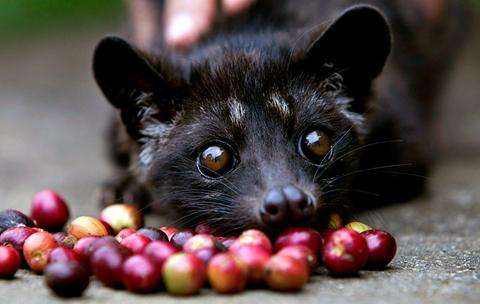
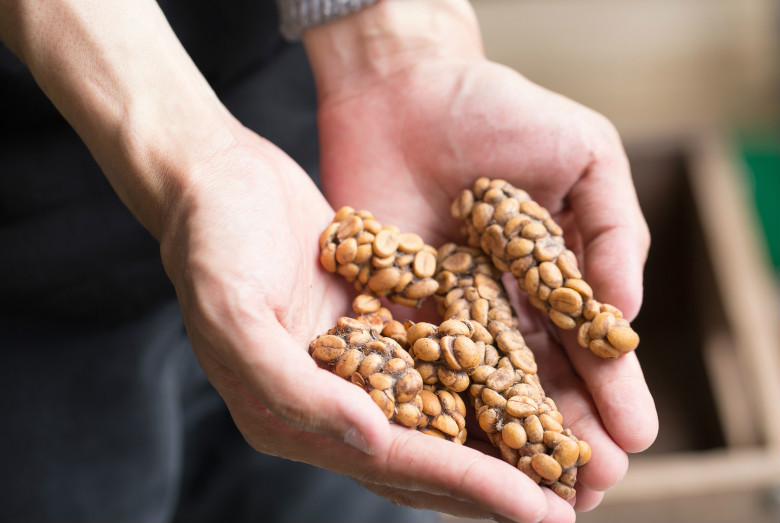
It was under such circumstances that local coffee farmers noticed coffee fruit excreted by civets often appeared in the outdoor grass. Civets cannot digest these coffee fruits; what they can digest is only the ripe coffee pulp, while the hard coffee beans pass through after partial digestion and are excreted intact. So the coffee farmers—perhaps out of cravings, perhaps out of curiosity—took these coffee beans excreted from the civets' bodies home, washed them clean, then processed and tasted them. As a result, they found the taste was surprisingly good: not only very full-bodied, but also sweet, which delighted them beyond measure. In this way, Kopi Luwak spread by word of mouth among local coffee farmers.
However, the good times did not last long. The Dutch colonists soon learned of Kopi Luwak as well, and sold it to European royalty at high prices. Because production was scarce, its price at the time far exceeded famous coffees such as Jamaican Blue Mountain, making it the highest-priced coffee bean in the coffee industry.
Here Front Street Coffee needs to emphasize one point: not all coffee beans excreted by felines can be called "Kopi Luwak." Only coffee beans excreted by local wild civets in Indonesia qualify for this name.
What Does Indonesian Kopi Luwak Taste Like?
Just how good is the flavor of Kopi Luwak that it fascinates coffee lovers around the world? Front Street Coffee believes that the flavor of Kopi Luwak beans is actually quite similar to Indonesia's most famous Mandheling coffee beans.
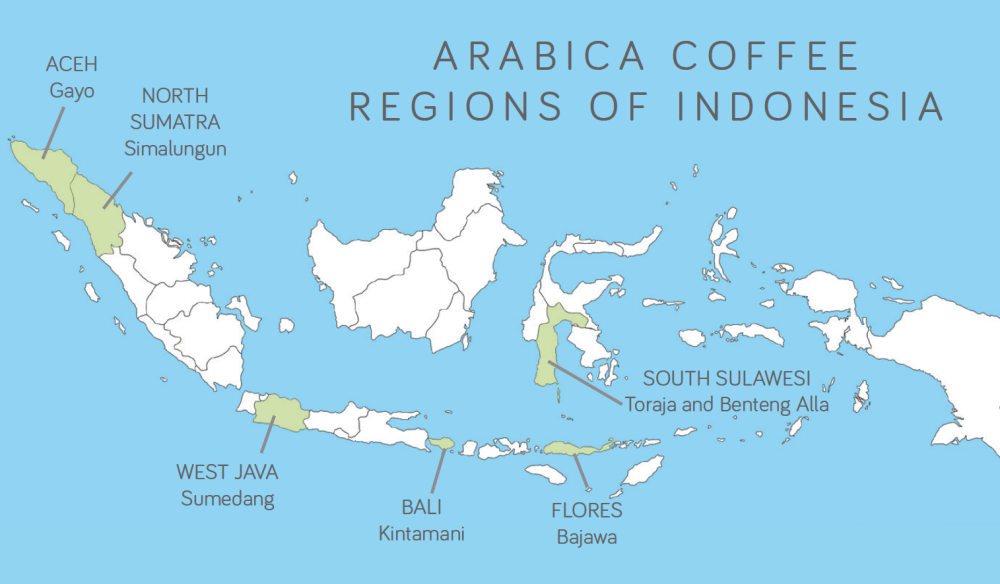
Civets mainly inhabit hilly areas below 2,100 meters above sea level in Indonesia, belonging to Indonesia's low-altitude regions. Coffee varieties in these areas are usually dominated by Robusta, so Kopi Luwak contains not only Indonesian Typica coffee beans but also mixed Robusta beans. Because of this, Kopi Luwak also carries the earthy and herbal aroma that is the signature of Robusta coffee beans. Combined with Indonesia's unique wet-hulling processing method, the coffee's body is further enhanced, presenting a distinctive herbal flavor.
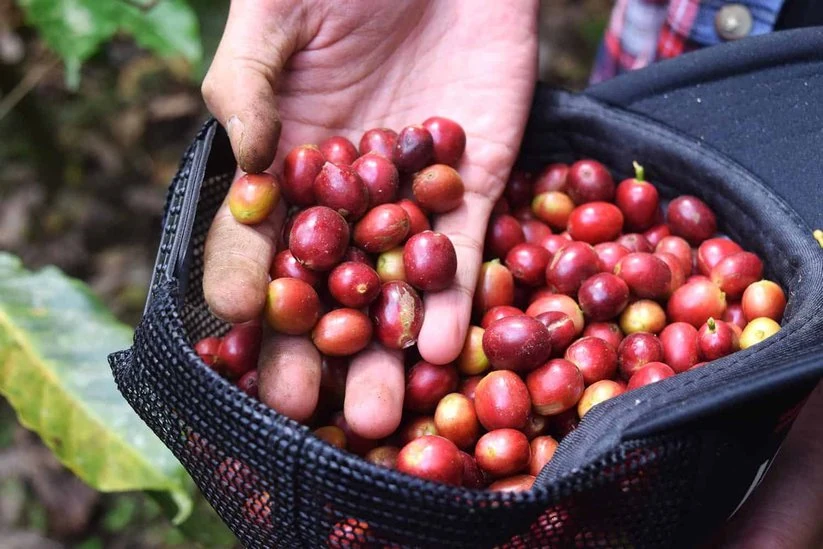
Second, the biggest difference between Kopi Luwak and Indonesian Mandheling coffee beans is that Kopi Luwak beans are coffee fruits selected by civets using their own keen sense of smell as the ripest and sweetest, which is similar in principle to Ethiopia's Red Cherry Project—the only difference being that one uses manual harvesting of 100% fully ripe coffee fruit, while the other relies on animals to screen ripe fruit. And this ripe coffee fruit naturally lays the foundation for Kopi Luwak's excellent flavor.
So Front Street Coffee believes that Kopi Luwak's flavor is indeed good. But with the continuous development of the specialty coffee market, many producing regions nowadays choose to use fully ripe coffee fruit to produce coffee beans. For example, the Golden Mandheling coffee from Indonesia's local PWN company uses fully ripe coffee fruit and undergoes three rounds of manual hand-sorting to remove defective beans, plus one round of machine sorting for defective beans, to ensure Mandheling's quality. Therefore, Kopi Luwak today is more of a gimmick. If you are not truly especially curious about the flavor of Kopi Luwak, Front Street Coffee still recommends that coffee fans choose Indonesian PWN Golden Mandheling coffee beans.
In addition, according to Front Street's research, some cupping experts have also pointed out that the selling point of civet Kopi Luwak lies in its story rather than its quality. According to SCAA standards, Kopi Luwak's score is sometimes not higher than ordinary coffee beans, and occasionally even lower than them.
During cupping, Front Street also found that compared with other ordinary Indonesian coffees (such as Mandheling, etc.), Kopi Luwak's acidity and flavor are somewhat flatter. Front Street Coffee quotes the words of experts who have tasted Kopi Luwak: generally speaking, Indonesian coffee has an earthy taste and a Chinese herbal medicine taste, with a relatively dense concentration, but a very special aroma. If you yourself do not like the flavor of Indonesian coffee, Kopi Luwak may not be suitable for you; but if you can accept the fishy taste of aged Mandheling coffee beans, you may fall in love with the unique flavor of this Kopi Luwak.
The Civet's Internal Fermentation Processing Method
Front Street Coffee has also mentioned many times in previous articles that the flavor quality of a coffee bean is mainly determined by the coffee-producing region, variety, and processing method. So does the civet's internal fermentation processing method really have a big impact on coffee bean flavor?
Some merchants believe that although the coffee beans are not digested in the civet's digestive tract, the strongly corrosive digestive fluids have already eroded their surface. These digestive fluids contain a special protease that can break the coffee beans' original protein chains, decomposing long-chain proteins into small particles and forming short-chain peptides and amino acids, thereby making the coffee beans' flavor better.
But in fact, according to Front Street's understanding, the time for civets to excrete coffee beans may be only one or two hours after eating. The coffee beans stay in the civet's stomach for only one or two hours. Front Street believes that such a short time is not enough to produce the series of changes mentioned above. The bean is still the same bean as when it was eaten; even if the flavor changes, it is only a negligible difference.
The internal fermentation processing method is merely a gimmick used by merchants to sell Kopi Luwak. Because after collection, local coffee farmers still have to process these beans through Indonesia's unique wet-hulling method, and the civet's contribution in this is merely selecting ripe coffee fruit. So in fact, the civet's internal fermentation processing method does not contribute very much to Kopi Luwak's flavor performance.
The above is the story and related content about Kopi Luwak compiled by Front Street Coffee. Next, Front Street will share some information about this Kopi Luwak at Front Street Coffee's shop, as well as its roasting and brewing data.
Front Street Coffee Indonesian Kopi Luwak Coffee Beans
Country: Indonesia Region: Sumatra Altitude: 1600-2100 Variety: Arabica Processing Method: Civet internal fermentation Flavor: Herbal, nuts, dark chocolate, fermented notes
Front Street Kopi Luwak Roasting Recommendations
Roaster: Yangjia 800N: Preheat the roaster to 200°C, lower the setting to 160°C for charging, set the damper to 3, adjust the heat to 130, turning point at 1'28'', maintain the heat, turn yellow at 5'40'' as the grassy smell disappears, entering the dehydration stage, raise the heat to 140, open the damper to 4, wrinkles appear on the surface, the toast aroma turns into coffee aroma, as the prelude to first crack, lower the heat to 100, open the damper to 5, and listen carefully for the sound of first crack. First crack begins at 9'15'', with the damper fully open at 5. Post-first-crack development time is 4'25'', dropping at 203°C.
Front Street Kopi Luwak Brewing Recommendations
Dripper: KONO Water Temperature: 86-87°C Coffee-to-Water Ratio: 1:15 Grind Size: Medium-coarse grind (75% passing through China standard No. 20 sieve)
Front Street uses staged extraction: Bloom with 30 grams of water for 30 seconds, then pour in a small stream in a circular motion until 125 grams for a staged pour. When the water level drops and is about to expose the coffee bed, continue pouring until 225 grams and stop pouring. When the water level drops and is about to expose the coffee bed, remove the dripper. (Start timing from the beginning of blooming.) Extraction time is 2'00".
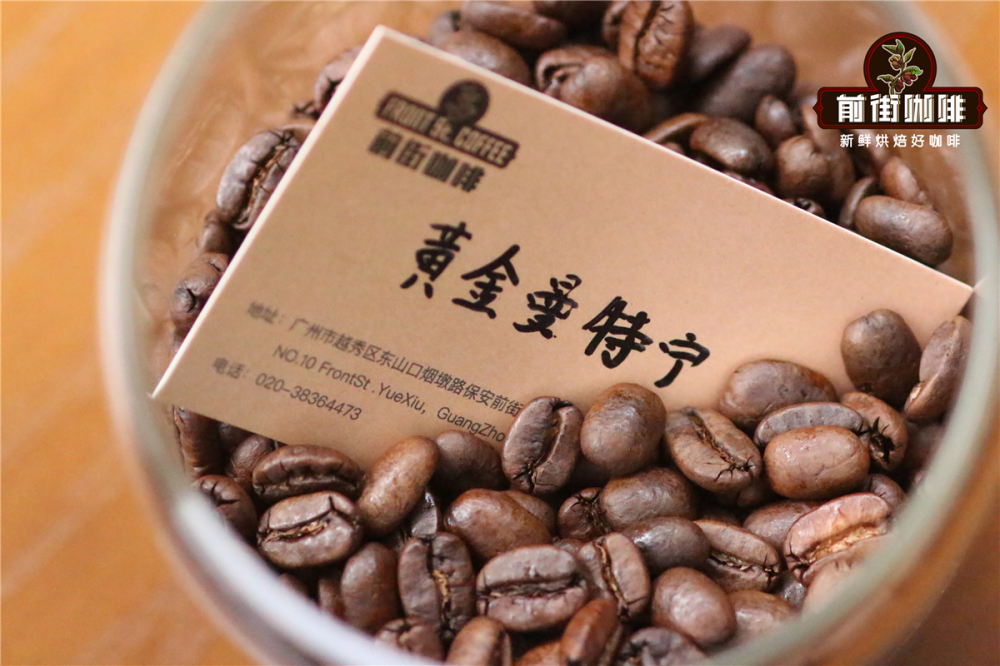
Kopi Luwak Flavor Description: Herbal, nuts, dark chocolate, fermented notes, full-bodied, smooth.
The above content is compiled by CoffeeHunters, a coffee news website.


