








How does processing change Yirgacheffe coffee flavor?
Yirgacheffe is known for bright acidity and fresh floral aromas, but washed and natural lots of the same region taste quite different. Washed processing, introduced from Central and South America, lifted the region's clarity and quality, while the earlier traditional natural method tends toward fruitier, heavier profiles. Brew parameters should shift with the processing method.
The article compares Front Street's Washed Banko Gotiti Cooperative with the Natural Red Cherry, covering grind size, V60 dripper use, water temperature, and coffee-to-water ratio. Yirgacheffe sits at 1,700 to 2,100 meters, one of the world's highest coffee regions; its name comes from local words meaning to settle down and wetland, and the area separated from Sidamo on the strength of its distinct cup.
Yirgacheffe is Ethiopia's most iconic specialty coffee region, renowned for its bright acidity and fresh floral aromas. This article starts from the region's history and geography, analyzes the impact of the two major processing methods—washed and natural—on coffee flavor, and compares the cupping performance of two beans: Front Street Washed Banko Gotiti Cooperative and Front Street Natural Red Cherry. For different processing methods, it details hand-brewing parameters such as grind size selection, V60 dripper usage, water temperature control, and coffee-to-water ratio, helping coffee enthusiasts adjust their brewing approach based on bean characteristics and fully showcase the captivating flavor layers of Yirgacheffe.
Let's start with a question: when it comes to single-origin coffee with a crisp mouthfeel and prominent acidity, which one first comes to mind?
In its long-term observations, Front Street has found that washed Yirgacheffe with lemon-like acidity is the answer most customers blurt out first.
Yirgacheffe Coffee Region
Yirgacheffe is located within Ethiopia and was originally just a sub-region under the Sidamo producing area. The coffee produced here has a bright and delicately layered flavor, standing out distinctly within Sidamo's overall style. Because of its extremely high recognizability, local farmers took pride in their beans displaying Yirgacheffe flavor, which ultimately prompted the area to become independent from Sidamo and evolve into today's renowned Yirgacheffe region.
Yirgacheffe was originally a small town in Ethiopia, located in the Sidamo administrative province. This town has been a wetland since ancient times—in the local ancient language, "Yirga" means "to settle down," while "Cheffe" refers to "wetland."
Yirgacheffe is one of the highest-altitude coffee regions in the world and is also synonymous with Ethiopian specialty coffee. An altitude of 1,700 to 2,100 meters, combined with a year-round cool, foggy, spring-like climate, as well as unique terrain and cultivation systems, creates exceptional conditions for growing specialty coffee.
The Yirgacheffe region initially used the most traditional natural processing method for coffee beans. Later, the Ethiopian government introduced washed processing technology from Central and South America, and the quality of Yirgacheffe coffee rose sharply as a result. Its bright, uplifting acidity and white floral flavor characteristics quickly won over a large number of loyal fans.
Yirgacheffe is a high-altitude coffee-producing region, with an elevation of about 2,000 meters. Under this region are more than 40 cooperatives, mainly managing coffee cultivation through family-run operations. Within the Yirgacheffe region, there are also many familiar micro-regions, such as Kochere, Misty Valley, and Gedeb. These micro-regions all have excellent cooperatives, and the Yirgacheffe coffee beans they produce each have unique flavor expressions.
Banko Gotiti Cooperative
The Banko Gotiti Cooperative is located in the Worka producing area at the southeastern end of Yirgacheffe, and was originally part of the Worka cooperative under the Yirgacheffe Coffee Farmers' Cooperative Union (YCFCU). As the industry placed increasing importance on the traceability of green coffee, the concept of "single origin" was gradually uncovered by coffee hunters around the world.
In 2012, Banko Gotiti, with about 300 farmer members, officially became independent and established the "Banko Gotiti Cooperative." Banko Gotiti village was one of the earliest village areas to become independent, and many smallholder farmers were originally members of the Worka cooperative, so their coffee production expertise was naturally solid. The Banko Gotiti Cooperative is hailed as the last pure land of Yirgacheffe, and the processing methods it uses are quite traditional (washed and natural processing).
Washed Processing Method
Front Street Coffee's Banko Gotiti Cooperative coffee beans use the washed processing method. First, a depulper is used to remove the skin and pulp of the cherries, then they are placed in fermentation tanks for 18 to 36 hours until the mucilage layer breaks down (the specific duration depends on local temperature and humidity conditions). Next, the parchment beans are scrubbed through washing channels for 30 to 60 minutes.
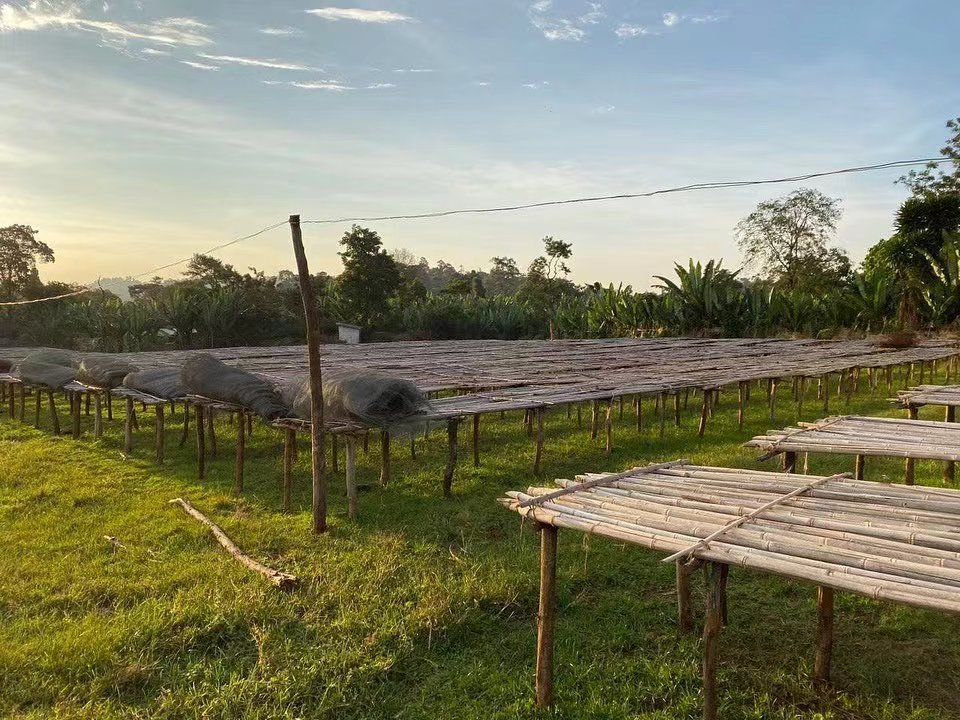
During this process, the channel design combined with water flow can remove low-density, poor-quality beans. High-quality parchment beans are placed on African raised beds to dry for about 14 days. After drying is completed, they are first stored in the processing plant warehouse. Before export, the parchment beans are sent to a Dry Mill for hulling and undergo a series of complicated sorting steps, including foreign matter removal, silver skin removal and polishing, gravity sorting, and color sorting, before finally being bagged for export.
Natural Processing Method
Front Street. Red Cherry coffee beans use the natural processing method and come from the Aletaland Cooperative in Yirgacheffe. "Natural," as the name suggests, means drying coffee beans with the help of sunlight. As the most primitive method of coffee processing, the quality of naturally dried coffee beans was once a pain point for farmers.
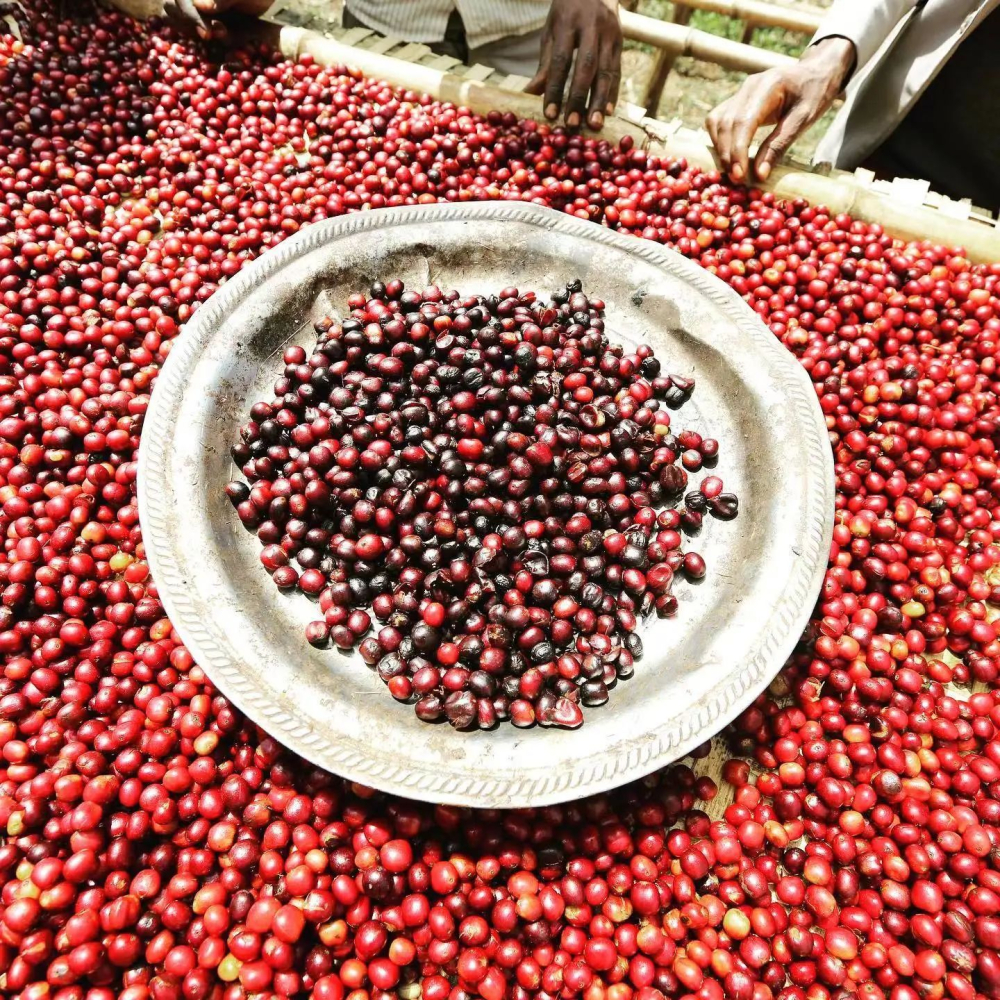
Due to outdated equipment, many coffee cherries were placed directly on the ground (or on a tarp if conditions were slightly better) and exposed to the sun. Rough conditions and crude handling meant coffee beans absorbed the essence of the earth, developing earthy flavors. In addition, natural processing depends heavily on weather; once rainy weather occurs, coffee cherries are prone to mold, and the beans develop spoiled flavors as a result.
However, as specialty coffee has received increasing attention, natural processing equipment in many producing areas has been upgraded. Wealthier places built drying beds (raised mesh structures supported by frames to create top-and-bottom ventilation for drying coffee cherries, also called African raised beds), while those with more ordinary conditions laid concrete floors to reduce coffee cherries absorbing earthy flavors. During drying, turning is also emphasized so that the coffee cherries dry more evenly.
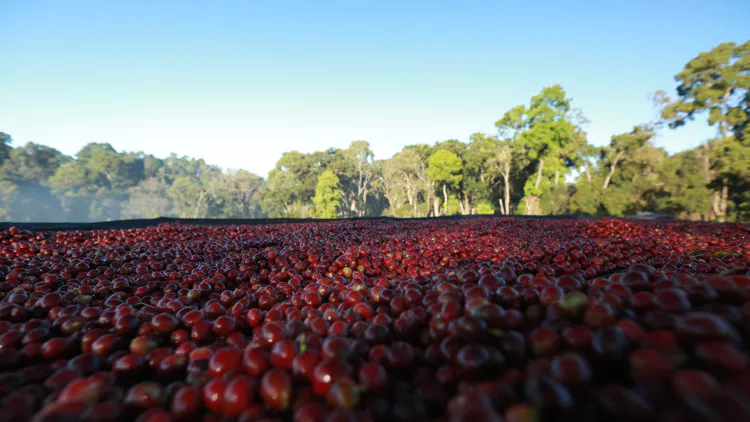
After harvesting, the coffee cherries are sorted, then placed on concrete floors or drying racks for 3 to 4 weeks of sun drying, reducing the moisture content of the coffee cherries to about 11% (that is, the outer shell becomes hard and dark red-black). After drying is completed, the outer shell is crushed and removed, and the coffee beans are stored with parchment, which is only removed before export.
Front Street Yirgacheffe Hand-Brewing Comparison
From the above, it can be seen that Yirgacheffe coffee beans from the two processing methods each have their own flavor advantages. Washed Yirgacheffe gives a fresh, clean feeling with bright acidity; naturally processed Yirgacheffe has a fuller flavor expression, with juiciness and sweetness. Therefore, different approaches are needed during brewing to fully release the beans' characteristics.
Front Street. Washed Yirgacheffe Brewing Approach
Front Street. Washed Banko Gotiti uses a medium-light roast to highlight the coffee's floral notes and serves as the brewing subject for washed Yirgacheffe.
Front Street. Washed Banko Gotiti Cooperative Coffee Beans
Country: Ethiopia
Region: Yirgacheffe Gedeo Zone
Altitude: 1900-2300m
Variety: Heirloom
Processing Method: Washed Grade: G1
Front Street Ethiopia Banko Gotiti Coffee Bean Flavor Description
At high temperature, it presents berry, cream, honey, citrus, and juicy mouthfeel with bright acidity; after the temperature drops slightly, it shows berry, cream, smoothness, and citrus.
First, it should be shared that the dry aroma of this bean shows fresh citrus and white floral notes; when slurped at different temperatures, there is bright citrus character, honey, a clean mouthfeel, interspersed with floral and tea notes.
In terms of grind size, Front Street Coffee recommends a medium-fine grind (78% passing through a Chinese standard No. 20 sieve).
If the grind is too coarse, rich substances cannot be extracted, and the brewed coffee will taste thin; if the grind is too fine, over-extraction is likely at high water temperatures, and the brewed coffee can easily become bitter.
When choosing a brewing dripper, Front Street Coffee chose the V60 dripper to highlight the fresh and charming aroma of washed Yirgacheffe coffee beans.

The dripper's spiral rib design allows coffee grounds to degas better and maximizes the activation of the volatilization and dissolution of aromatic and acidic substances. In the brewing method, Front Street Coffee uses a three-pour extraction so that different flavor substances can show their best as the coffee bed rises in temperature in stages.
During cupping, Front Street Coffee noticed that this bean exhibited different flavors at different temperatures, so adjustments were made in the brewing technique.
As for brewing water temperature, it is worth considering from two aspects.
If you want bright, uplifting acidity with a tea-like finish, you can brew at a temperature between 90°C and 91°C; if you want full acidity and hope to enhance body, you can brew at a temperature between 92°C and 93°C.
In terms of brewing ratio, since washed Yirgacheffe coffee beans generally have a fresher flavor, Front Street Coffee recommends a 1:16 coffee-to-water ratio to more clearly perceive the floral and honey sweetness, slightly lowering the overall acidity of the cup and giving other lighter flavors a chance to express themselves. Front Street Natural Yirgacheffe Brewing Approach
Front Street Coffee uses medium-light roasted Yirgacheffe Aletaland Cooperative Natural Red Cherry coffee beans as the brewing subject.
The dry aroma of this bean shows full berry sweetness and acidity. When slurped at different temperatures, there are soft berry sweetness and acidity, ripe fruit fermentation, obvious honey sweetness, and black tea notes, with a smooth mouthfeel.
Front Street. Yirgacheffe Aletaland Cooperative Red Cherry Coffee Beans
Country: Ethiopia
Region: Yirgacheffe
Washing Station: Aletaland
Altitude: 2300m
Variety: Local Heirloom
Processing Method: Natural
Grade: G1
Front Street. Yirgacheffe Aletaland Cooperative Red Cherry Coffee Bean Flavor Description
Lemon, citrus, berry, sweet orange, with relatively high overall sweetness; the aftertaste has caramel and cream flavors, and the finish carries black tea aroma.
For grind size and brewing dripper, still use a medium-fine grind (80% passing through a Chinese standard No. 20 sieve) and a V60 dripper. Another characteristic of the V60 dripper is that its 60-degree angle design extends the contact time between water and coffee, fully extracting the coffee's sweet and acidic substances.
This bean has a full overall mouthfeel with obvious juiciness and sweetness, so the brewing technique uses center pouring to let the coffee bed steadily and fully extract sweet and acidic flavor substances at the same temperature.
As for the brewing ratio, naturally processed Yirgacheffe coffee beans generally have a fuller flavor. To obtain a fuller, smoother juicy mouthfeel, a 1:15 ratio can be used to concentrate all the sweet and acidic flavor substances. In terms of brewing water temperature, Front Street Coffee used a temperature range of 91°C to 92°C to highlight the sweetness and full juiciness of natural Yirgacheffe and enhance the overall body.
The above content is compiled by CoffeeHunters, a coffee news website.


