







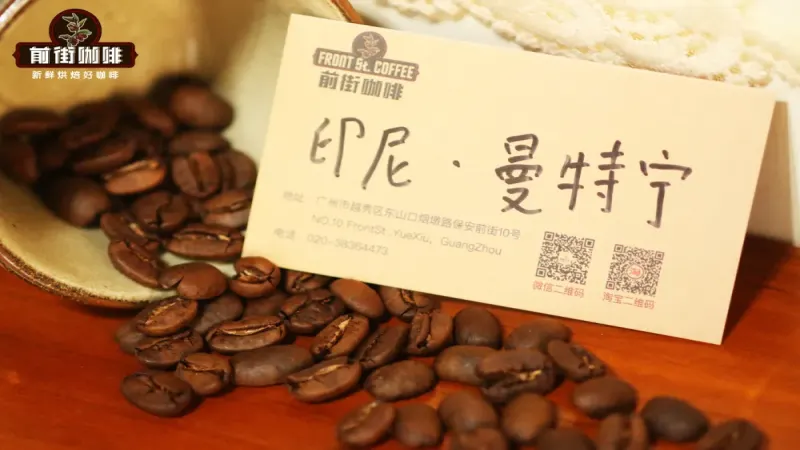
Why is Mandheling coffee a classic Indonesian cup?
Mandheling coffee is one of Indonesia's recognizable coffees, known for a full body and herbal spice aroma. The name comes from a wartime misunderstanding: a shop owner asked about his coffee replied with Mandailing, the name of an ethnic group, and the mispronunciation stuck. Beans grow mainly in Sumatra's Lintong and Aceh regions and are wet-hulled for the local climate.
After the war, the name traveled to Japan. In 1968, Osaka's Nomura Trading contacted N.V. Pawani Medan and imported 15,000 kilograms of Sumatra Mandheling, which sold well and raised the profile of both the coffee and the exporting company. Indonesia remains Asia's largest coffee producer, though Robusta dominates its overall output while Arabica covers the specialty side.
Mandheling coffee is one of Indonesia's most iconic coffees, and with its rich, full-bodied taste and distinctive herbal spice aroma, it has won a large following of devoted fans in the global coffee community. But did you know that the name actually comes from an amusing misunderstanding? From the Lintong and Aceh growing regions of Sumatra, to the wet-hulled processing method born out of adapting to the local climate, and on to the Golden Mandheling produced by PWN, every step of Mandheling coffee is full of story. In this article, Front Street will give you a comprehensive look at the origin of the name Mandheling, its growing regions, varietal characteristics, processing techniques, and classic flavors, and share the pour-over extraction parameters and brewing suggestions for Golden Mandheling, so you can gain a deeper understanding of this classic coffee from Asia's largest coffee-producing region.
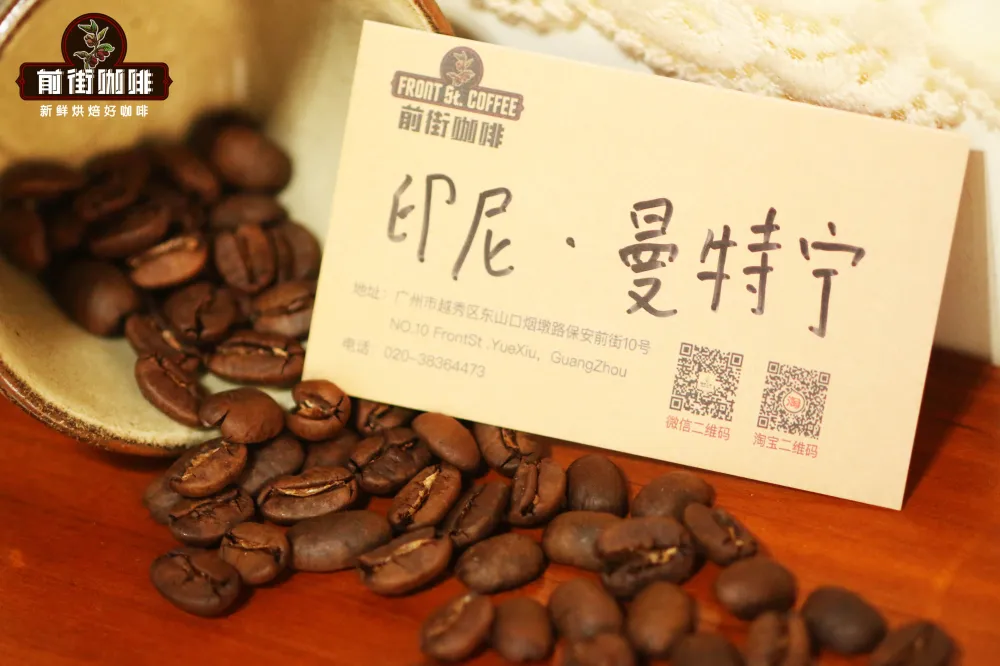
Indonesia is the largest coffee-producing country in Asia, and Mandheling coffee is one of the most renowned representatives of this land. Its rich, full-bodied texture and uniquely distinctive aroma have captivated countless coffee lovers. In this article, Front Street takes you along to explore the origins and charm of this coffee.
The origin of the name Mandheling
The way Mandheling coffee was named is completely different from most coffees, and behind it lies a widely circulated anecdote that ultimately stems from a mispronunciation of the name of an indigenous ethnic group in Indonesia.
During World War II, a Japanese soldier was drinking coffee at a shop in central Indonesia when he asked the owner what coffee he was drinking. The owner mistook the question for asking where he was from, and blurted out "Mandailing" (the Mandailing people). After the war ended, the Japanese soldier returned home and recalled that the uniquely flavored coffee from back then seemed to be called "Mandheling." In 1968, the Nomura Trading Company of Osaka, Japan, went to Indonesia and made contact with N.V. Pawani Medan, importing 15,000 kilograms of Sumatra Mandheling coffee, which was well received after being launched on the Japanese market. From then on, the fame of Mandheling coffee and the Pwani Coffee Company rose rapidly.
The growing regions of Mandheling coffee
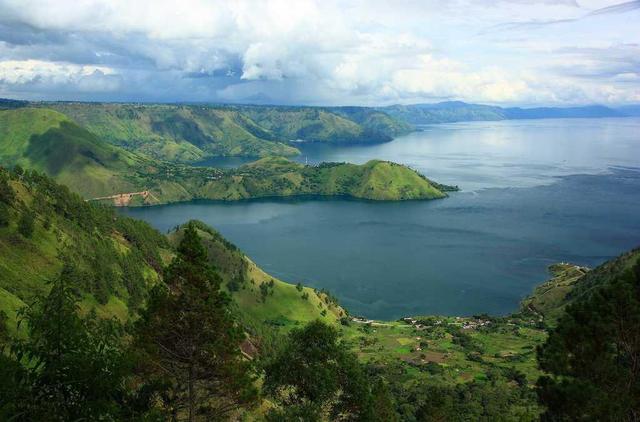
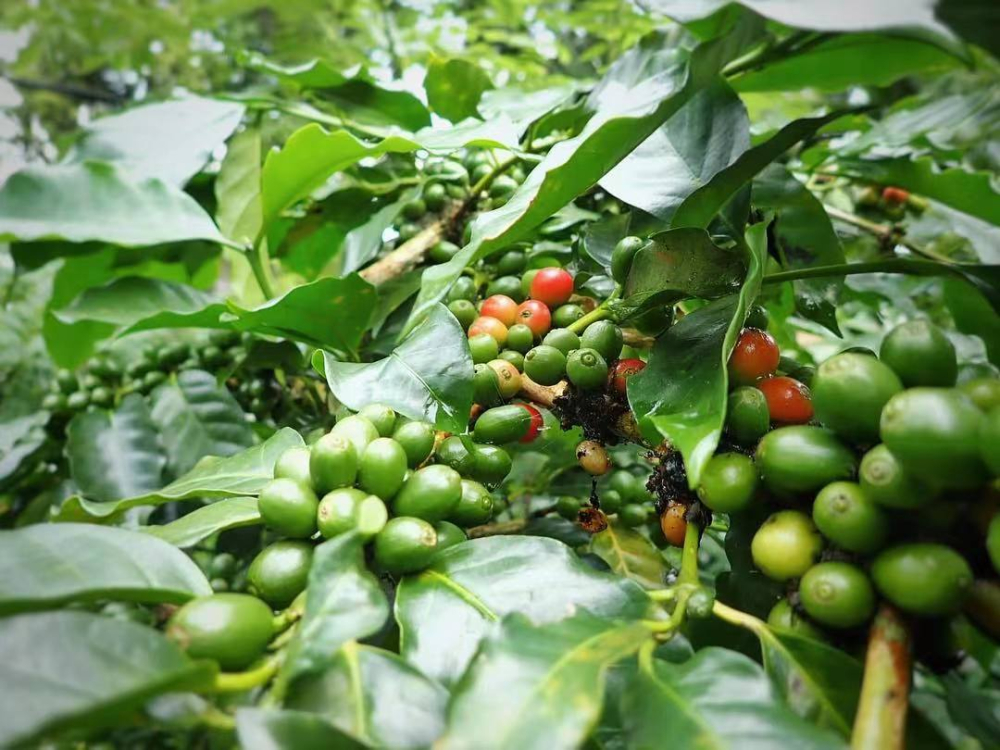
Coffee cultivation in Indonesia is overwhelmingly dominated by the Robusta variety, with Arabica production accounting for less than one-tenth. Among these, Mandheling coffee produced on the island of Sumatra is the most famous, so it is also called Sumatra coffee. Traditionally, Sumatra Mandheling mainly comes from around Lake Toba in the Lintong growing region of North Sumatra Province, as well as the area around Lake Tawar in the northernmost Aceh region.
The Lintong growing region is adjacent to Lake Toba, the largest volcanic lake in Indonesia, at an altitude of about 1,000 to 1,500 meters. The volcanic ash soil provides richer nutrients for the Mandheling coffee here. The tropical rainforest climate brings abundant rainfall, so the coffee trees can grow vigorously even without relying on large amounts of irrigation and fertilizer.
The Aceh region is located at the northernmost tip of Sumatra. Due to long-term political instability, the development of the local coffee industry has not kept pace with the Lintong growing region. However, precisely because of this, more original old trees have been preserved here, and combined with local coffee farmers' insistence on green, organic cultivation methods, the coffee trees are scattered across the picturesque slopes beside Lake Tawar.
Wet-hulled processing method
Sumatra is located near the equator, with high temperatures and heavy rain year-round, and it often experiences typhoons, so it is impossible to use the African sun-dried method or the Central and South American washed method on a large scale to process green coffee beans. To prevent the green beans from molding and deteriorating during processing, locals greatly shortened the fermentation and drying time to adapt to the local climate conditions.
After the coffee cherries are depulped, they undergo only a few short hours of fermentation before entering the sun-drying stage. When the moisture content of the parchment beans drops to 30% to 50%, the beans are still in a semi-dry state. At this point, locals use specialized hulling equipment to strip away the still somewhat firm parchment layer through friction, and then continue drying the hulled beans until they reach the standard moisture content. Because the entire process takes place in an environment with 70% to 90% humidity, and because the parchment layer has already been removed before the final drying, the exposed green beans easily absorb moisture from the air, which is why Mandheling coffee ultimately presents more woody and herbal notes. Front Street believes this is precisely the source of the unique flavor of Sumatra Mandheling coffee, and therefore has also included Lintong Mandheling in Front Street's high-value everyday bean series for everyone to taste.
The specialty representative of Mandheling coffee — PWN Golden Mandheling coffee
During wet hulling, green beans are prone to being squeezed and deformed under strong mechanical force, and after the final high-temperature sun-drying stage, some coffee beans even crack on one side. These are what we commonly call goat-foot beans. Although the wet-hulled method gives the coffee its unique flavor, it also raises the proportion of defective beans. To improve the overall quality of the coffee beans, these defective beans must be thoroughly removed.
When talking about high-quality Mandheling coffee, one cannot avoid Indonesia's brand known as "gold" — Golden Mandheling coffee. Indonesia's well-known green bean buyer PWN applies one round of machine sorting plus three rounds of manual hand sorting to wet-hulled Mandheling green beans, ensuring that the produced lots reach Indonesia's highest grade, G1. Machine sorting first requires beans to be above 18 mesh in size, and then multiple rounds of manual selection further remove irregularly shaped defective beans. The sharp reduction in the defect rate significantly improves the quality of Mandheling coffee.
Front Street's bean list has long kept this PWN Golden Mandheling coffee bean for Mandheling lovers, so that every customer can taste the refined classic flavor of Mandheling.
What is the classic flavor of Mandheling?
To highlight the high body of Golden Mandheling while preserving more herbal and spice notes, Front Street's roaster chooses a medium-dark roast. Freshly roasted Mandheling coffee needs 7 to 10 days of degassing and resting before it enters its optimal flavor period. Front Street hopes every customer who places an order can enjoy the coffee's full aroma, so it only ships fresh coffee beans within 5 days of roasting, ensuring that when you receive them they are still within the complete flavor window.
After roasting, coffee beans expand in volume and become porous in texture, making them more likely to absorb water after grinding and also accelerating the release of various substances. To prevent over-extraction, Front Street uses a medium grind size and slightly lower water temperature to reduce the release of bitter large molecules during extraction.
In this brewing session, the barista at Front Street Coffee (FrontStreet Coffee) aims to highlight the rich, clean, and aromatic characteristics of Golden Mandheling, and chooses the KONO dripper for extraction. Although both are conical drippers, the KONO dripper has far fewer guiding ribs than the v60, with a smooth curved upper section that makes the filter paper fit more tightly. Upward airflow is restricted, so hot water can only flow downward, creating a siphon-like extraction effect that allows the aromatic substances in the coffee grounds to be released more fully, thereby enhancing the rich mouthfeel.
Golden Mandheling coffee pour-over parameters: water temperature 87–88°C, medium grind (70% passing through a Chinese standard No. 20 sieve), 15 grams of coffee grounds, coffee-to-water ratio 1:15, three-stage pouring.
First, wet the coffee bed with twice the amount of water as the coffee grounds to form a dome, and let it bloom for 30 seconds. Then pour in a slow stream in circles from the inside outward, pausing the stages at 125 grams. Wait until the coffee bed drops to half the height of the dripper, then pour the third stage with the same fine stream until 225 grams. After all the coffee liquid has drained, remove the dripper. The whole process takes about 2 minutes. Finally, swirl the coffee liquid in the server to mix it evenly and enjoy.
The pour-over Front Street PWN Golden Mandheling coffee is layered, rich, and clean in the cup. Nut and caramel aromas intertwine, accompanied by chocolate notes, with a lasting finish and excellent balance.
For professional coffee knowledge exchange and more coffee bean information, please follow Coffee Workshop (WeChat official account: cafe_style)
For more specialty coffee beans, please add the private WeChat account Front Street Coffee (FrontStreet Coffee), WeChat ID: qjcoffeex
The above content is compiled by CoffeeHunters, a coffee news website.


