








Why do Ugandan coffee farms stay in Kenya's shadow?
Uganda grows specialty Arabica on volcanic soil near the Nile's source, with harvests from April to June and October to February. The Elgon Mountain area produces Peaberry lots from SL14 and SL28 varieties, often anaerobically fermented and natural processed, giving citrus, smoked plum, dried fruit, and caramel notes. Uganda's coffee farms long focused on commercial Robusta, so specialty Arabica remains a small share of national output.
Coffee development in Uganda was held back by decades of armed conflict, especially the fighting in the West Nile region during the 1990s. Quality improved only after the violence subsided about fifteen years ago, and high-grade lots now cluster near the Kenyan border, where some are even sold as Kenyan coffee. Grading, roasting curves, and V60 parameters decide how much of that potential shows in the cup.
In the East African specialty coffee landscape, Uganda has long been overshadowed by the halos of Kenya and Ethiopia. This landlocked country, located at the source of the Nile and endowed with volcanic soil and abundant rainfall, is quietly driving a specialty coffee transformation. Front Street Coffee introduces Uganda Peaberry, featuring the Elgon Mountain growing region, SL14 and SL28 varieties, and anaerobic fermentation natural processing, presenting a flavor profile interwoven with citrus, smoked plum, dried fruit, and caramel. This article starts from the country overview, historical background, growing region distribution, processing methods, and grading system, providing a complete analysis of Uganda coffee's varietal characteristics and stories, and includes Front Street Coffee's roasting curve and V60 brewing parameters, offering coffee enthusiasts a professional and practical reference.

In the specialty coffee circle, Uganda's presence is quite low, and specialty Ugandan beans available on the market are few and far between. The country used to focus on commercial Robusta, and only in recent years has it gradually attempted small-scale specialty Arabica cultivation. Front Street Coffee has also introduced some Ugandan beans for evaluation.
Country Overview Uganda is located at the source of the Nile and is a landlocked country in Africa, with fertile soil, volcanic soil distributed on both the east and west sides, and abundant rainfall. Some regions can harvest two seasons a year: April to June and October to February. Front Street believes that Ugandan coffee often carries smoked plum, ripe fruit, and a full juicy body, overall rich and solid.
Although its coffee-growing history is as long as that of other East African countries, ethnic conflicts and wars have long dragged down quality improvement. High-quality coffee is mostly concentrated in areas bordering Kenya, and some good beans are even shipped to Kenya to be sold as Kenyan coffee.
Uganda's natural conditions are highly suitable for growing coffee; however, armed conflicts over the past decades severely damaged the industry, especially in the West Nile growing region in the 1990s. It was not until about fifteen years ago when the fighting subsided that Uganda joined the ranks of countries with rapidly developing coffee industries.
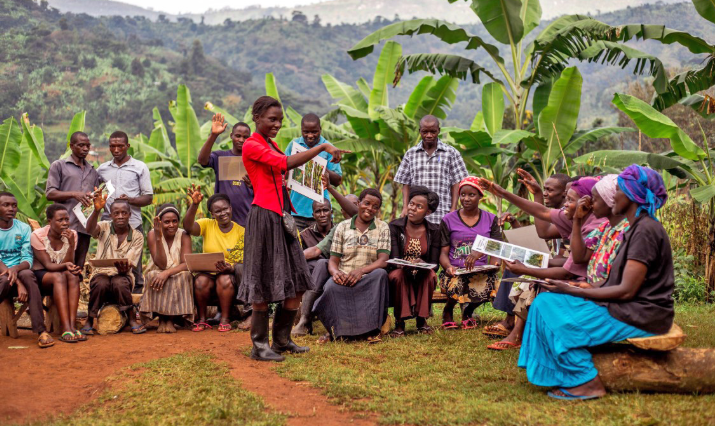
Uganda promotes coffee quality improvement through legislation According to Financial Network reports, since 2020, new laws require all coffee growers to register and obtain identification numbers, covering land area, number of trees, coffee buyers, sellers, and nursery operators. The bill is awaiting presidential approval.
This legislation aims to reform the legal framework, granting the Uganda Coffee Development Authority the power to regulate, promote, and supervise the coffee industry, and to regulate all farm and non-farm activities in the coffee value chain. Parliament stated that the law will also help connect farmers with buyers, build irrigation systems, and provide planting materials and extension services.
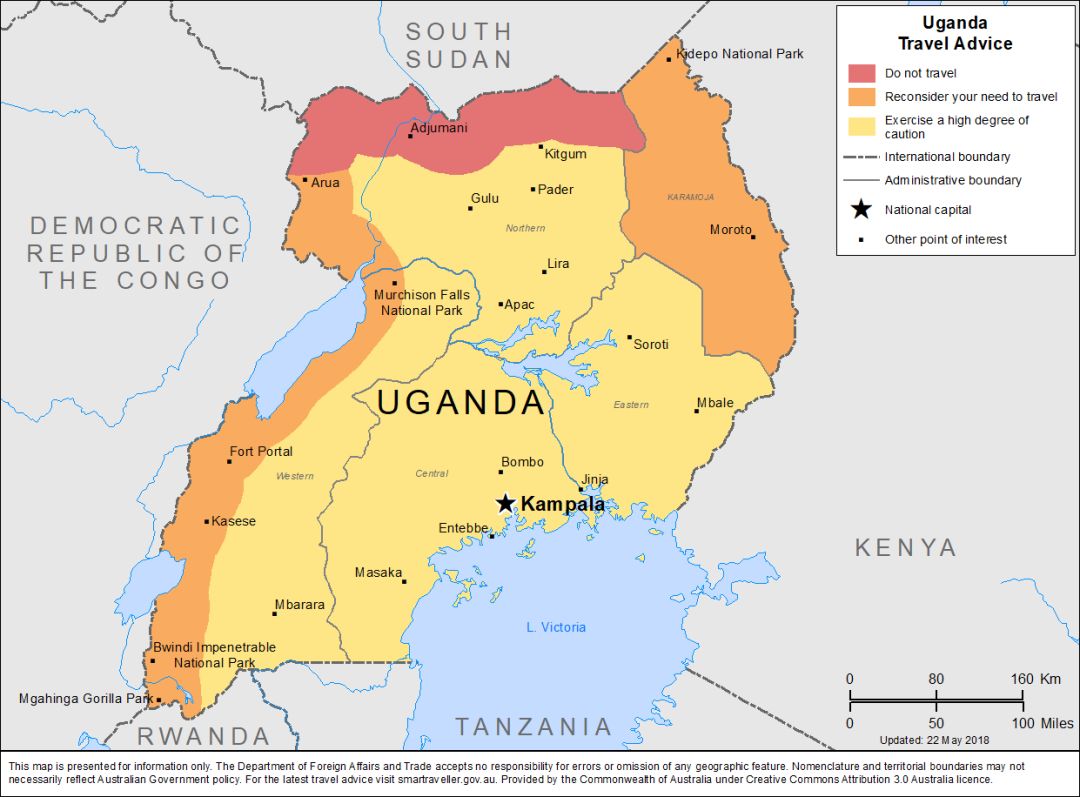
Coffee Growing Regions Uganda is known for Robusta, which still grows wild in the country's rainforests. However, Arabica has also taken root in three regions: Mount Elgon in the east, the Rwenzori Mountains in the southwest, and the West Nile in the northwest. Each origin has its own unique terroir and production methods.
Mount Elgon Located on the eastern border between Uganda and Kenya, it is the oldest volcano in East Africa. Coffee farms are scattered on both sides of the mountain, covered by forest, drawing critical moisture from steep ravines. The harvest period in lower-altitude areas is from June to December; at higher altitudes, it only begins in July and continues until February of the following year.
West Nile This growing region is located in northwestern Uganda, with farm sizes mostly between 1,300 and 1,600 meters. Native tree species such as fig trees are used as shade trees for multi-generational farms. Coffee from this region is usually washed and is known for its citrus aroma.
Rwenzori Mountains Often called the "Mountains of the Moon," they are located on the southwestern border between Uganda and the Democratic Republic of the Congo. Coffee is grown on slopes at altitudes of 1,500 to 2,300 meters. The volcanic soil is rich in nitrogen, creating a terroir extremely suitable for coffee. Natural processing is most common here, though washed processing can also be found.
The common processing methods for Ugandan coffee are natural and washed. Washed processing: after harvesting, the coffee cherries first have the outer skin and most of the pulp separated from the beans by a pulper. The beans with parchment enter a clean water tank and are soaked and fermented to remove the remaining mucilage layer.
Natural processing: first remove defective floating beans, then sun-dry them, continuously turning the fresh fruit during the process to avoid fermentation or mold, so as to obtain a clean and rich flavor.
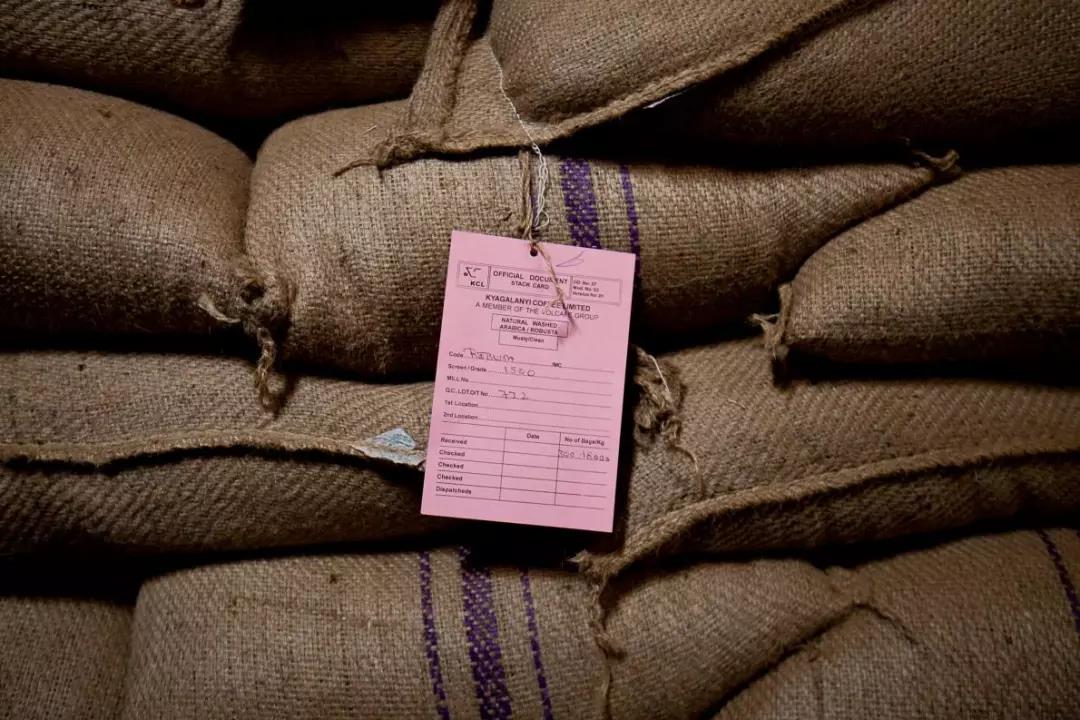
Ugandan coffee grading is similar to Kenya's, both based on size and density.
AA Plus (AA+) AA grade with particularly excellent cup quality (flavor, mouthfeel) AA Screen Size 17–18 AB Screen Size 15–16, accounting for the majority of production C Screen Size smaller than AB TT Lightweight beans blown out from AA and AB grade beans by an airflow separator T Lightweight beans blown out from C grade beans by an airflow separator E Elephant Bean A large mutated bean formed by two beans joined together, also called elephant ear UG Those that do not meet the above standards PB Peaberry, classified by appearance, unrelated to flavor or weight
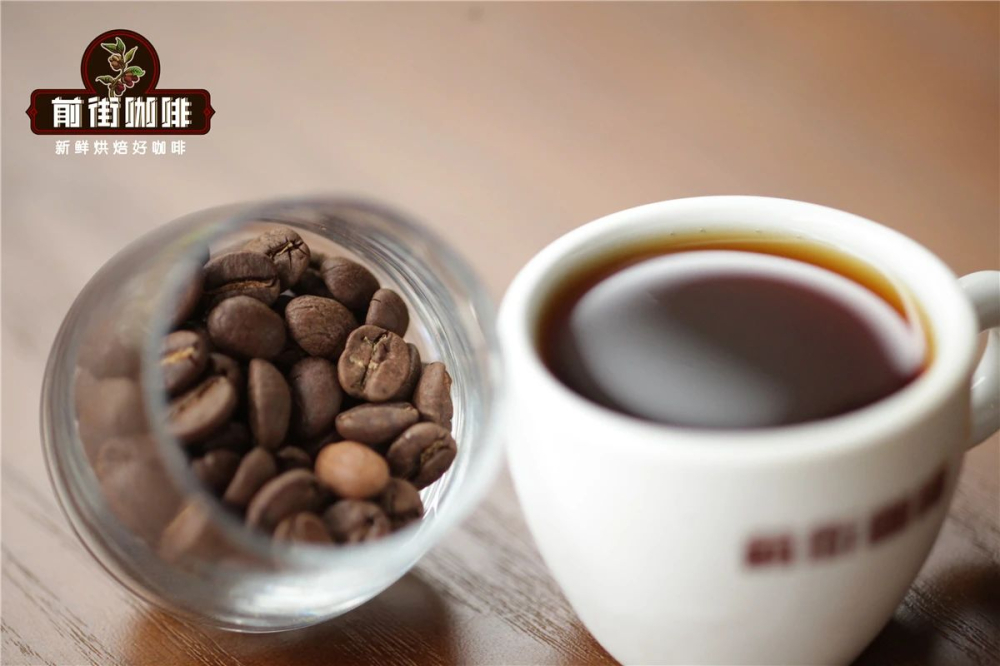
Front Street Coffee Uganda Peaberry Growing Region: Mount Elgon, Uganda Altitude: 1,600–1,850 meters Processing Method: Anaerobic Fermentation Natural Varieties: SL14 & SL28
Processing Method This bean uses anaerobic fermentation natural processing, meaning the whole coffee cherry is first anaerobically fermented and then sun-dried. Overall, the anaerobic stage makes the coffee more uniform and easier to monitor; the aerobic stage is more complex and harder to control. In an oxygen-free environment, the decomposition of pectin sugars slows down, the pH value drops more slowly, and the fermentation time can be extended, thereby developing better sweetness and a more balanced flavor. Anaerobic fermentation requires the temperature to be controlled below 10–15 degrees. In a sealed, clean stainless steel container, the coffee beans undergo anaerobic fermentation for three days, then are moved to raised beds for sun-drying. Front Street Coffee Green Bean Analysis This bean is composed of SL14 and SL28, both of which are quite common in Uganda. The SL varieties originate from research and selection by Scott Lab. Kenyan coffee became famous because of SL28 and SL34, so the Ugandan government vigorously promoted them and distributed SL seeds to farmers. Among them, SL14 not only has good flavor but is also drought-resistant, can be harvested after two years of planting, and fits farmers' needs very well.
Front Street Coffee Roasting Analysis To showcase this bean's acidity and fruit aroma, Front Street Coffee uses a medium-light roast. During roasting, the dehydration time is extended so that the bean surface and bean core are heated evenly.
Charge at a drum temperature of 160°C, heat power 100, damper opened to 3; the turning point is at 1'36", when the drum temperature is 140°C, open the damper to 4, keeping the heat power unchanged; when the drum temperature is 146.1°C, the bean surface turns yellow, the grassy smell completely disappears, and the dehydration stage begins. When the drum temperature reaches 166°C, adjust the heat power to 80°C, keeping the damper unchanged; at 8'27", ugly wrinkles and dark streaks appear on the bean surface, and the toast aroma clearly turns into coffee aroma, which can be defined as the prelude to first crack. At this time, listen carefully for the sound of first crack. First crack begins at 9'10", open the damper to 5, develop for 1'30" after first crack, and drop at 194°C.
Front Street Coffee Brewing Sharing When brewing this Uganda Peaberry coffee, Front Street Coffee chooses 15 grams of coffee beans, a coffee-to-water ratio of 1:15, a water temperature of 90 degrees Celsius, a grind setting of BG grinder #6M (normal pour-over grind), and a V60 dripper.
Use 30 grams of water for blooming for 30 seconds, then pour in a small stream in circles until 125 grams for a staged pour. When the water level drops and is about to expose the coffee bed, continue pouring until 225 grams and stop. When the water level drops and is about to expose the coffee bed, remove the dripper. (Start timing from the beginning of blooming.) The extraction time is 2'00".
Flavor: It smells of fermentation, and when slurped it has flavors of citrus, smoked plum, dried fruit, caramel, and nuts.
The above content is compiled by CoffeeHunters, a coffee news website.


