







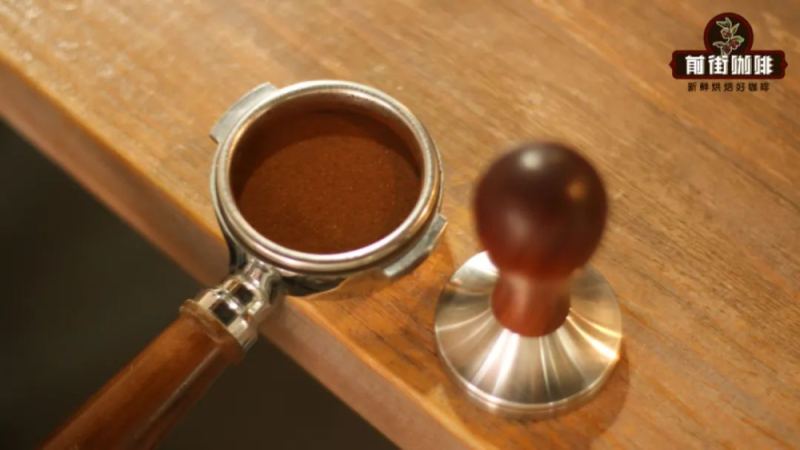
Tamping is a step in espresso preparation that seems simple but hides deep knowledge. Baristas have different understandings of tamping: some believe a light press to level the bed is enough, while others habitually press with full force. So, does tamping pressure actually affect the extraction result? Front Street Coffee conducted two sets of comparative experiments, using coarse and fine ground coffee respectively, tamping with different pressures and observing changes in extraction time. The experiment revealed a key rule: the effect of tamping pressure on extraction is not fixed, but closely related to the grind size of the coffee. This article will take you deeper into the true role of tamping, the differences in understanding among different schools of thought, and how to flexibly adjust tamping pressure according to grind size, making every cup of espresso more stable and outstanding.
For more specialty coffee knowledge, please follow: Front Street Coffee (Frontsteet Coffee)
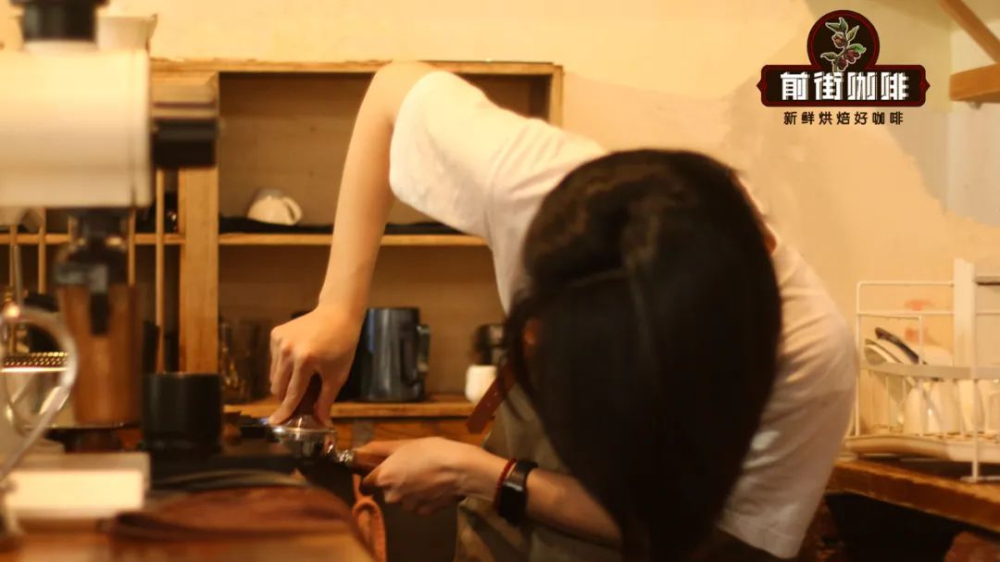
Sometimes, watching a barista tamp is itself quite a soothing thing. Every barista has their own approach to tamping, so the tamping techniques they display are all different.
Leveling the coffee bed—on this point, there is basically no dispute. Once the puck is uneven, it easily causes channeling, and the extracted coffee will naturally be uneven. What truly divides baristas is: exactly how much force is needed to compress the coffee grounds into the ideal state.
The two different schools of tamping
Some baristas believe that as long as the puck is leveled and pressed firm, it is enough. When tamping, they often just gently rotate the tamper and apply a little force, the whole motion smooth and elegant. In their view, no matter how much force you use to press, compared with the high-pressure extraction of the espresso machine, this small degree of puck firmness seems insignificant.
Another group of baristas firmly believes that great force must be used to thoroughly compress the puck. If you meet such a barista, you will see them pour all their body strength into the tamping arm, with a tamping posture as if they are trying to push themselves up from the ground, seemingly declaring: only one of the table and the coffee grounds can be flat. They believe that tamping pressure can effectively control flow rate, and the harder you press, the more even the extraction.
So, exactly how much force should be used when tamping the puck?
Tamping experiment
Front Street plans to use two different grind sizes, coarse and fine, to conduct two sets of comparative experiments, each tamped with different pressures, to see whether tamping really requires precise control of force.
We chose Front Street Classic Espresso Blend coffee beans with rich crema for extraction. This recipe is composed of coffee from three origins: Brazil, Indonesia, and Vietnam. It uses a deep roast, which can maximize the coffee's rich aroma and also lets everyone easily extract abundant, dense crema. Whether making an Americano diluted with water or a latte paired with milk, it is very suitable. It can be purchased and ordered at the Front Street Taobao store or the Front Street Tmall flagship store.
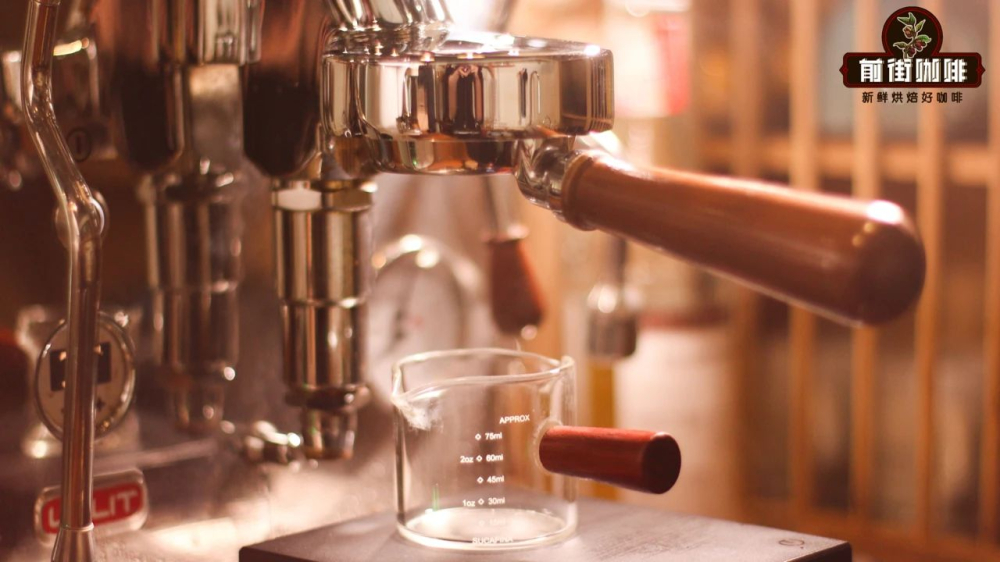
The grinder used in the experiment was a Galileo Q18, with a dose of 20g, an extraction target liquid weight of 40ml, a fine grind setting of 1.5, and a coarse grind setting of 2.5. We judged by extraction time whether tamping pressure would change the extraction result.
(The left side of the image shows coffee ground at setting 1.5, and the right side shows coffee ground at setting 2.5)
Fine grind tamping comparison
Using setting 1.5, we ground 20g of coffee. After distributing the grounds, we tamped the puck with 1.5kg (normal) pressure and with maximum effort, respectively.
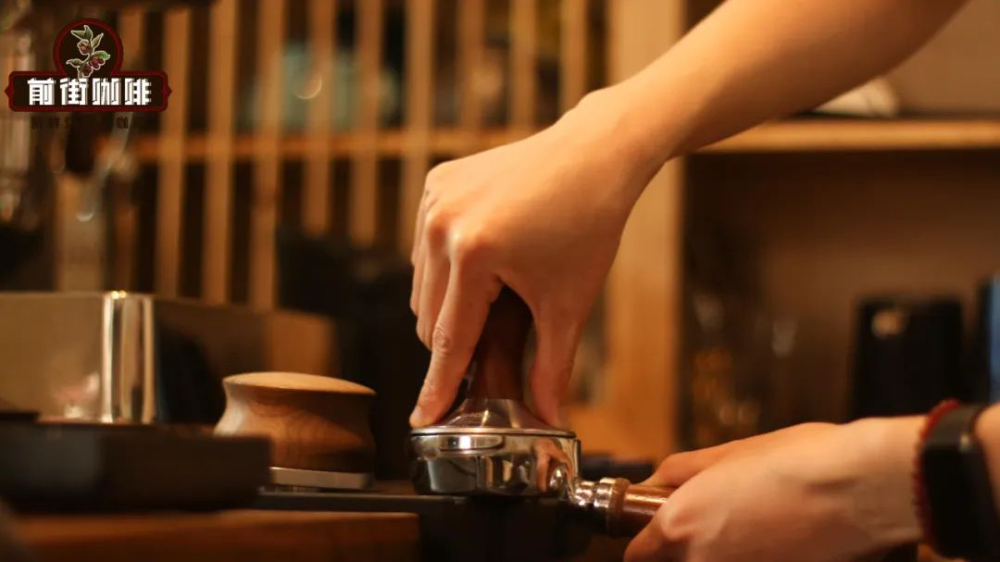
(The limit of the electronic scale was 3kg, so we borrowed the neighbor's body scale; the weight when pressing with full force was about 9kg)
The 20g puck tamped with 1.5kg pressure took 30 seconds to extract 40ml of liquid; the puck tamped with full force took 33 seconds. To avoid changes in the coffee grounds affecting the result, we repeated the extraction once, and the time was still 33 seconds. It can be seen that a finely ground puck does indeed affect extraction when tamping pressure changes.
Coarse grind tamping comparison
Likewise, after distributing the grounds, we tamped the puck with different pressures of 1.5kg and full force, respectively. The results were surprisingly consistent: the time required to extract 40ml of liquid was 20 seconds in both cases (because the grind was coarser, the extraction time itself was relatively short).
Experiment conclusion
From the above experiments, it can be seen that differences in the density of coffee grounds cause the force required for the puck to reach a firm state to differ.
What does this mean? Taking the fine grind experiment as an example, the reason different tamping pressures produced different results is that the coffee particles are finer, so greater force is needed to press them into a firm state. A tamping pressure of 1.5kg is clearly not enough; greater force is needed to press the puck to its firmest.
If we slightly increase the pressure to 2kg, then its extraction time will be consistent with the puck pressed with full force, because at that point the two pucks have already reached the same degree of firmness, and the required extraction time will naturally be the same.
The coarse grind group of pucks confirms this point very well. Because the gaps between coffee particles in the puck are larger, 1.5kg of pressure is already enough to make the puck very firm, so even if you tamp with full force, the extraction result will not differ noticeably from that with 1.5kg pressure. Therefore, we can appropriately adjust tamping pressure according to different grind sizes: the finer the grind, the slightly greater the force that can be applied.
The above content is compiled by CoffeeHunters, a coffee news website.


