







What Do Fair Trade Coffee Facts and Figures Show About Origin Names?
Starbucks and the Ethiopian government spent several years in a dispute over trademark rights to three origin names: Sidamo, Harar, and Yirgacheffe. The two sides signed an agreement in 2007. Ethiopia is the birthplace of coffee and the largest producing country in Africa, and only about 60 percent of its beans are exported; the rest stay home for local rituals and daily use.
In the Yirgacheffe region, cooperatives such as Gotiti, Konga, Werka, Halo Beriti, and Idido have built their reputations on citrus, floral, and honey notes, using washed, natural, and anaerobic processing. Starbucks favors high-altitude Arabica and sets strict green bean grading standards. These facts about fair trade coffee show why origin names matter to the growers who depend on them.
Ethiopia is the birthplace of coffee and the largest coffee-producing country in Africa. Starbucks was once engaged in a dispute with the Ethiopian government over the trademark rights to three names of origin—Sidamo, Harar, and Yirgacheffe—which lasted for several years and was finally settled with an agreement signed in 2007. Meanwhile, in the Yirgacheffe region, excellent cooperatives such as Gotiti, Konga, Werka, Halo Beriti, and Idido have emerged, presenting classic flavors like citrus, floral notes, and honey through washed, natural, and anaerobic processing methods. Front Street Coffee (FrontStreet Coffee) has selected a range of Ethiopian everyday beans that balance regional distinctiveness with high value for money, taking you deeper into the story of coffee's homeland.
For more specialty coffee knowledge, please follow our WeChat public account: Front Street Coffee (FrontStreet Coffee).
As a leading brand in the coffee industry, Starbucks prefers high-altitude, high-quality Arabica beans and sets strict standards for green bean grading and screening; these norms provided solid support for its subsequent development. Ethiopia is the birthplace of coffee, and thanks to its high-altitude terrain and suitable climate, the coffee beans it produces are outstanding in quality, which is why they came into the purchasing view of established companies such as Starbucks.
Starbucks describes Ethiopian coffee as follows: this blend is soft and smooth, with floral and spice notes—a tribute to the birthplace of coffee. Not only Starbucks, but Front Street Coffee (FrontStreet Coffee) also highly recognizes the Ethiopian growing regions; among the more than 50 regions covered by Front Street, Ethiopian coffee has always held a place.
In this article, Front Street Coffee (FrontStreet Coffee) will take you through the story of coffee's homeland—Ethiopia.
Ethiopia is currently the largest coffee-producing country in Africa, but only about 60% of its coffee beans are exported, while the rest are consumed in various rituals, such as making coffee beans and coffee cherry pulp at weddings, and a mold-preventive medicine made from coffee mixed with honey and various herbs. It is clear that coffee has long been integrated into local daily life. Front Street Ethiopian Yirgacheffe is considered by many to be synonymous with Ethiopian specialty coffee. In Front Street's everyday bean series, there is a Front Street washed Yirgacheffe that represents the most typical flavor of the Yirgacheffe region. Front Street launched its everyday bean series precisely with the idea of both reflecting the basic flavors of the region to deepen recognition and offering the characteristics of low price and high value for money.
In 2003, Starbucks proposed the Commitment to Origins (CTO) program and launched "Fair Trade coffee beans"; caring for coffee farmers thus became part of the brand image it emphasized externally. However, the facts were not as they seemed.
Starbucks vigorously promoted Ethiopia as the birthplace of coffee, but starting in March 2006, the Ethiopian government began applying to the United States Patent and Trademark Office, hoping to register the coffee beans from three origins—Sidamo, Harar, and Yirgacheffe—as trademarks based on place names, so as to gain more initiative in marketing and promotion and secure more reasonable prices for coffee farmers. This move, however, was opposed by coffee retail giants such as Starbucks.
Ethiopian farmers received only seventy-five cents per pound for the coffee beans they sold to Starbucks, while Starbucks resold them at thirteen dollars per pound—a price gap of as much as thirty-four times.
The lawsuit between Ethiopia and Starbucks
In order to gradually increase coffee export earnings and improve the lives of the 15 million people in the coffee industry within its borders, the Ethiopian government launched the Fine Coffee Trade Marking and Licensing Initiative, a key step of which was to seek trademark protection for its native specialty coffee. Starbucks initially denied all the allegations, arguing that trademark registration was not the best way to help farmers and instead advocating a regional certification approach similar to France's establishment of quality wine classifications. But in the end, on May 9, 2007, Starbucks signed an agreement with the Ethiopian government, agreeing to respect the patent rights of Ethiopia's unique coffee varieties on Starbucks product labels, and the long trademark dispute between the two sides came to an end.
Through the success of this trademark case, people hoped to help tens of thousands of Ethiopian coffee farmers and their families escape poverty, enable their children to go to school, and obtain better medical care. Front Street Coffee (FrontStreet Coffee) has learned that Starbucks uses medium roasting for almost all of its coffee beans, while the main characteristics of Ethiopian coffee beans are floral and citrus notes, and Starbucks' medium roasting will mask their original flavors. Front Street Coffee (FrontStreet Coffee) recently also purchased coffee beans from different regions for tasting and evaluation, including some from Ethiopia.
Where is Yirgacheffe?
Yirgacheffe is located in the southwestern part of Ethiopia (Ethiopia) and was originally a small town in the Gedeo Zone (Gedeo zone). This small town is a natural wetland with very abundant water resources, with an average annual temperature of 15 to 25 degrees Celsius. At the same time, the diurnal temperature difference formed by its high-altitude geographical environment gives this small town the growing conditions required for Arabica coffee beans.
In Ethiopia, there are a great many cooperatives! The coffee beans processed by each cooperative have their own different characteristics. Among them, the coffee beans produced by Gotiti Cooperative, Konga Cooperative, Werka Cooperative, Halo Beriti Cooperative, and Idido Cooperative are deeply loved by domestic specialty coffee consumers.
Gotiti Cooperative Gotiti
Gotiti Cooperative is located in the Werka region at the southeastern end of Yirgacheffe. It was originally part of the Werka Cooperative under the Yirgacheffe Coffee Farmers Cooperative Union (YCFCU). Later, as people pursued traceability of green coffee beans, "single origin" was unearthed one by one by coffee hunters around the world.
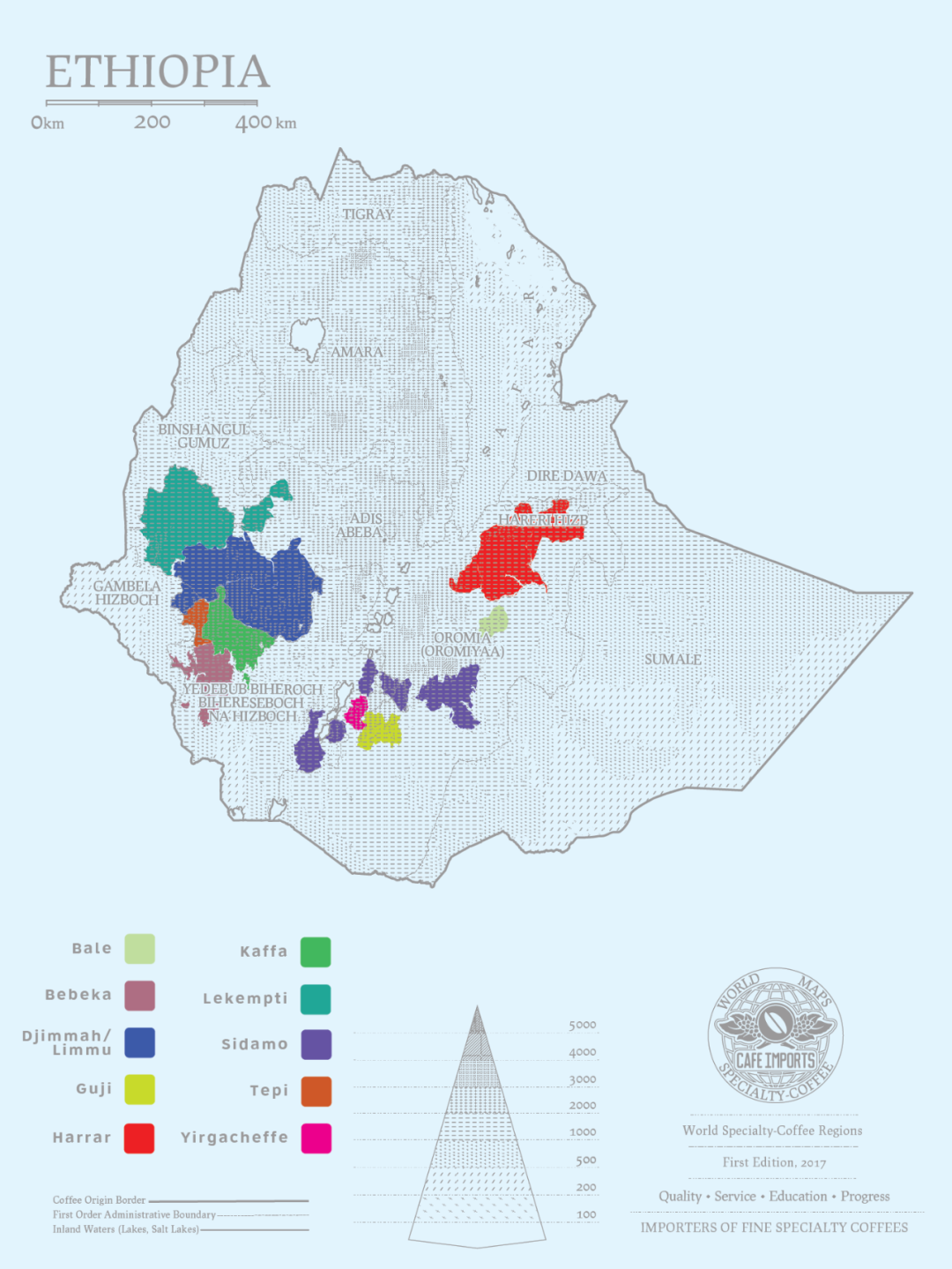
In 2012, Gotiti, with about 300 member farmers, independently established "Gotiti Cooperative." Gotiti Village was the earliest village area to be independently separated, and many small farmers were also members of the original Werka Cooperative, so their coffee-producing techniques were naturally excellent. Gotiti Cooperative is called the last pure land of Yirgacheffe, so the green bean processing methods it uses are also very traditional (washed and natural processing methods).
If you like coffee with a fresh acidity, buy Front Street. Gotiti Cooperative washed-process coffee beans, whose flavor shows citrus and orange notes, white floral aromas, honey-like sweetness, and a green tea-like finish.
Konga Cooperative Konga
Konga Cooperative is located in the Gedeo region. Most of the soil in the Gedeo region has a high iron content, and the soil depth is more than 1.5 meters. Deep soil helps coffee trees take root better and absorb water and nutrients from the soil more effectively.
Iron is a trace element and an essential element for synthesizing chlorophyll. Plants lacking iron cannot synthesize chlorophyll even under light conditions. Front Street believes that soil with a high iron content allows coffee trees to produce sufficient chlorophyll, enabling them to carry out photosynthesis better and store nutrients, thereby improving the quality of the coffee fruit.
Front Street. Konga Cooperative coffee beans use a full red cherry natural process, that is, only fully ripe coffee cherries with no quality problems are harvested. The flavor shows citrus-like acidity, a berry juice sensation, honey-like sweetness, and a creamy smoothness.
Werka Cooperative Werka
Werka Cooperative is under the YCFCU cooperative union organization. Founded in 2005, Werka Cooperative is located in a remote area within the Yirgacheffe producing region, 75 kilometers away from the local coffee trading center Dilla Town (Dilla), and the connecting roads are in poor condition.
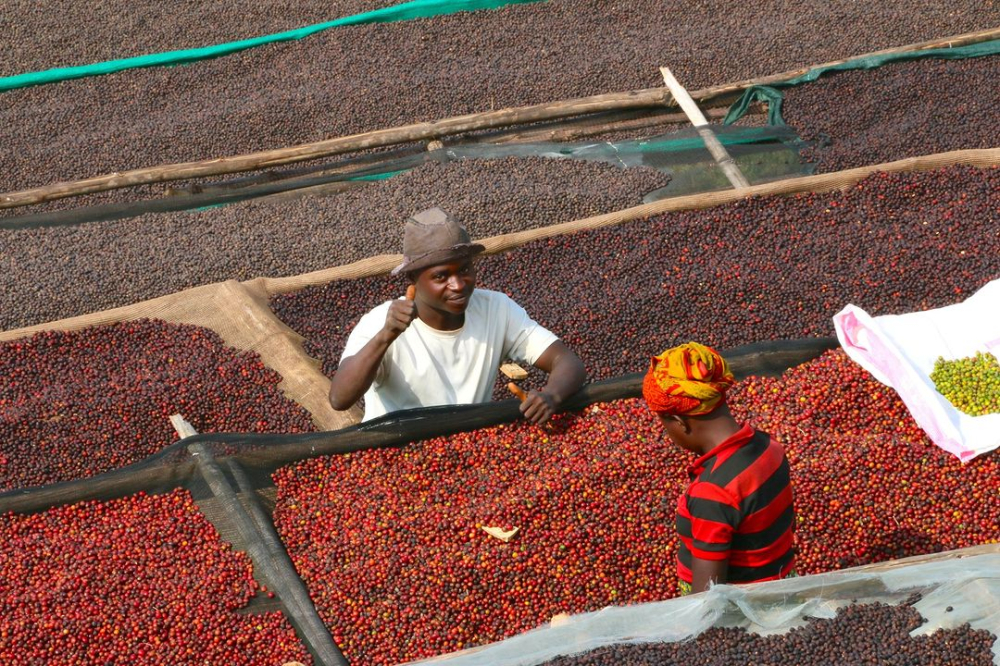
From the cooperative to the main asphalt road, there is a 20-kilometer dirt road. The cooperative is composed of 305 farmers, with a planting area of about 763 hectares and an annual output of nearly 460 tons, making it a relatively small-scale farmers' cooperative. Because no chemical fertilizers or pesticides are used in the coffee cultivation process, the Werka smallholders have also obtained the EU-recognized Skal organic coffee certification.
The coffee is mainly grown by more than 700 local smallholders, and the processing methods use traditional washing and natural processing. Because Werka coffee has a prominent flavor and cup profile with regional characteristics, the coffee produced by Werka has also become one of the representatives of Ethiopian specialty coffee.
In addition, Front Street. Werka Cooperative is an anaerobic natural processed coffee bean, with flavors of lemon and pomelo-like acidity, ginger flower aroma, honey-like sweetness, and a Tieguanyin-like tea sensation.
The above content is compiled by CoffeeHunters, a coffee news website.


