







What Does Coffee Knowledge Say About Kochere Beans?
Kochere is one of the three micro-regions of Yirgacheffe, and its washed lots carry the citrus and floral character the region is known for. Yirgacheffe sits northwest of Sidamo, and before the mid-20th century its cherries were processed the natural way, with no distinct flavor profile of its own.
The change came in the 1970s, when the town built the first washed processing station in the Sidamo Zone and brought washed equipment from South America. That released the built-in citrus and lemon aromas and gave the coffee a fresher, more transparent taste. Ethiopia registered Yirgacheffe as a trademark in 2004 and set up the ECX in 2008, grading exported beans so coffee knowledge of certified origins stays reliable.
Yirgacheffe, as one of Ethiopia's most representative specialty coffee regions, has long been renowned for its unique citrus and floral flavors. Kochere, one of the three major micro-regions of Yirgacheffe, stands out for its advanced washed processing equipment and consistently excellent flavor performance. This article will start from the history of the Yirgacheffe region, delve into Kochere's geographical location, variety composition, processing methods, as well as the brewing parameters and flavor characteristics of the washed Kochere coffee beans recommended by Front Street Coffee, giving you a comprehensive understanding of the unique charm of this region.
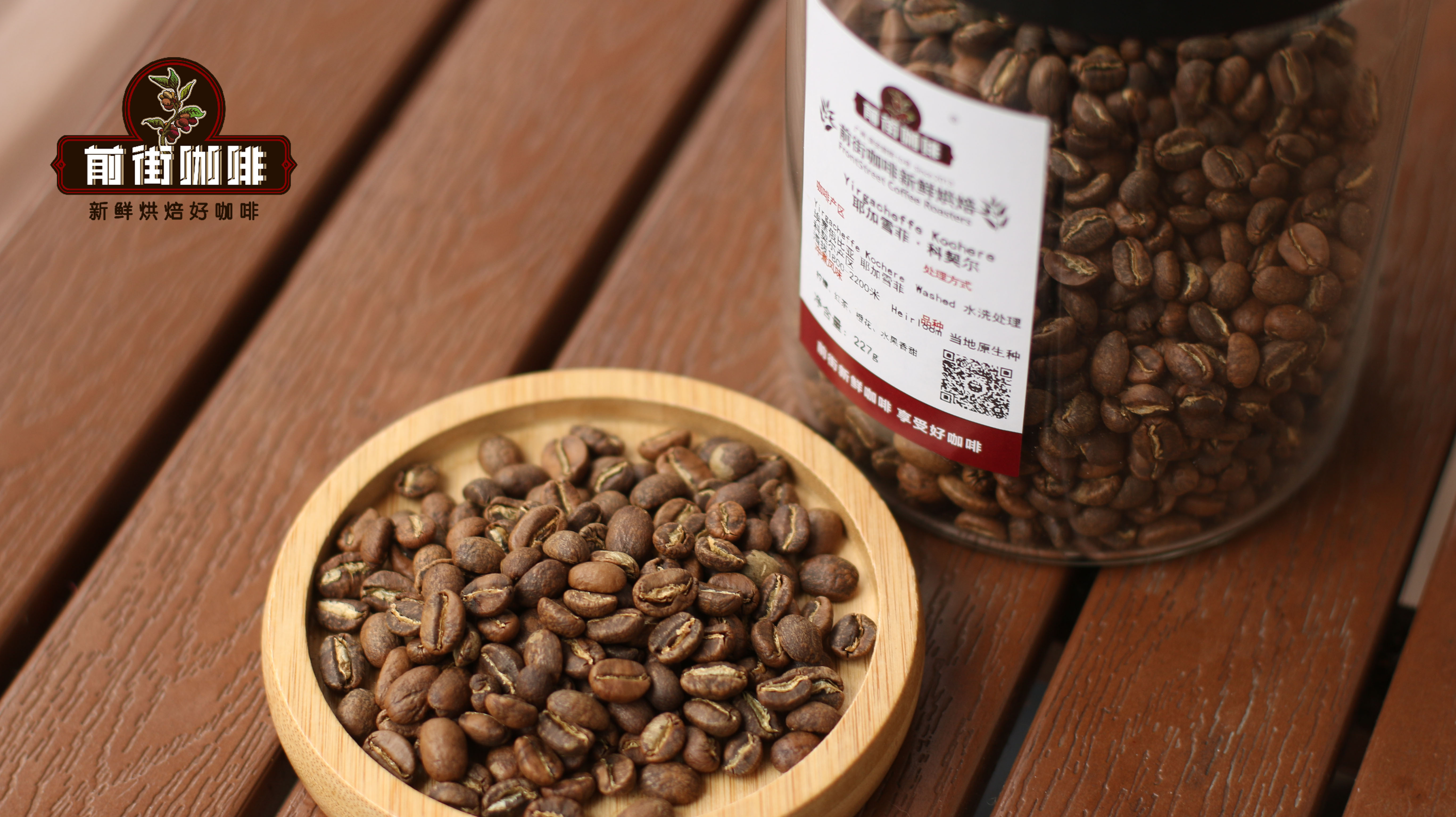
For more specialty coffee knowledge, please follow: Front Street Coffee (Frontsteet Coffee)
Front Street Yirgacheffe, this charming name comes from the town of Yirgacheffe, "YIRGACHEFFE." To be precise, Yirgacheffe is a sub-region under the Sidamo Zone in Ethiopia, located to the northwest of Sidamo. Before the mid-20th century, almost all coffee cherries in this area were processed using the traditional natural method, no different from other towns in Sidamo, and Yirgacheffe coffee had not yet developed a distinct flavor profile.
The turning point came in the 1970s, when the town of Yirgacheffe established the first washed processing station in the Sidamo Zone and introduced washed processing technology and supporting equipment from South America. This transformation not only significantly improved the quality of green coffee beans but also allowed the inherent citrus and lemon aromas of Front Street Yirgacheffe coffee to be fully released, making the taste fresher and more transparent, thus establishing its unique flavor identity. After that, Front Street Yirgacheffe was separated from Sidamo and became an independent region. Yirgacheffe-flavored coffee quickly swept the globe, becoming a classic choice cherished by countless coffee lovers.
To promote the development of the coffee industry, the Ethiopian government registered the flavors of three coffee regions, including Yirgacheffe Yirgacheffee®, as commercial trademarks in 2004, and established the Ethiopia Commodity Exchange (ECX) in 2008, with coffee becoming one of the auction items on the exchange. The government implements quality grading and flavor classification for exported coffee beans, aiming to ensure that buyers can purchase coffee with trademark-certified flavors.
The so-called "Yirgacheffe flavor" can be simply summarized as: unique citrus and lemon fruit aromas interwoven with jasmine fragrance, a fresh and bright texture, rich layers of acidity, and a clean taste without impurities. Because of this, many people say that Front Street Yirgacheffe doesn't taste like coffee, but rather like a gentle and pleasant fruit tea. It can display elegance as well as boldness, striking a perfect balance between simplicity and complexity.
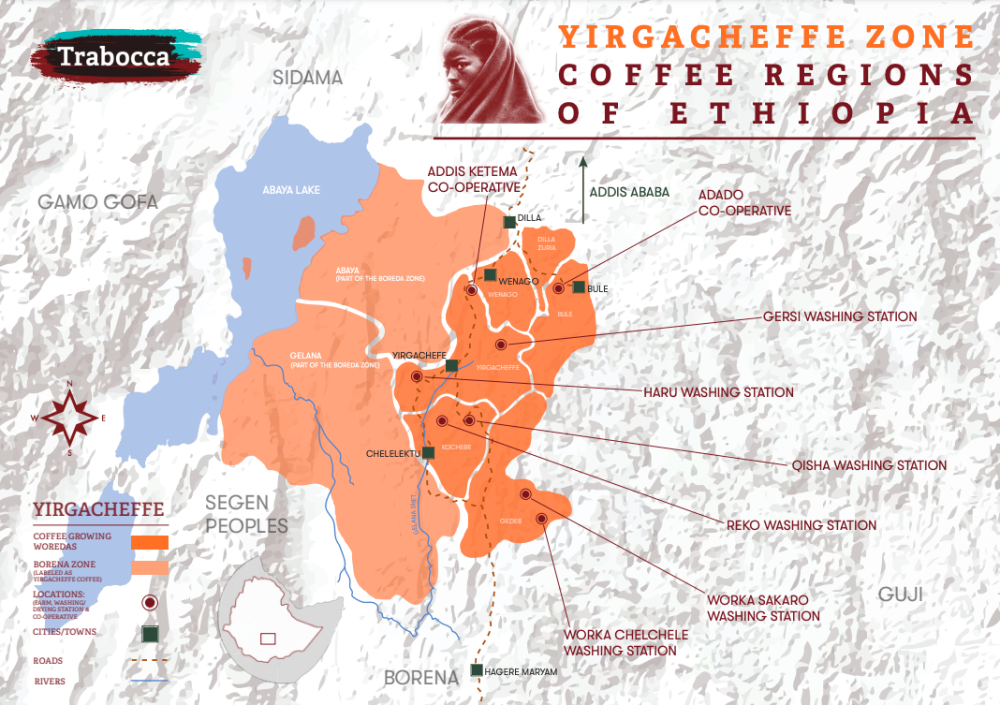
According to the ECX contract regulations, in addition to the town of Yirgacheffe, coffee produced in the northern town of Wenago, the western Gelena Abaya, and the southern town of Kochere can also be classified under the Yirgacheffe flavor coffee region.
Ethiopia's natural conditions are exceptional, allowing almost any imaginable coffee variety to be grown. As a highland crop, Ethiopian coffee beans are mainly planted at elevations between 1,100 and 2,300 meters, roughly distributed across southern Ethiopia. Deep soil layers, well-drained soil, slightly acidic soil, red soil, and loose loamy soil are all suitable for coffee cultivation, as these soils are rich in nutrients with ample humus supply.
Yirgacheffe is located in the Gedeo region of southern Ethiopia, where the sub-districts of Yirgacheffe and Kochere are relatively well-known. Because coffee produced in Yirgacheffe has a special flavor, unique style, and wide popularity, it forms its own system in product classification and has always held a place in the global specialty coffee market. In addition, Yirgacheffe itself is a small town under the jurisdiction of the Sidama province, with three nearby small production areas: Wenago, Kochere, and Gelena Abaya. Since coffee produced in these areas is almost on par with Yirgacheffe, Kochere is also classified under the Yirgacheffe regional category.
Yirgacheffe is located in the Gedeo region of southern Ethiopia. With its unique tropical floral and fruity flavors, it is renowned worldwide and is a heavyweight contender that is never absent from the global specialty coffee market. Ethiopia implemented a new trading and grading system in November 2009, adding three sub-regions Wenago, Kochere, and Genlena Abaya in addition to Yirgacheffe, demonstrating that the flavors of these three regions are extremely refined and worthy of further subdivision.
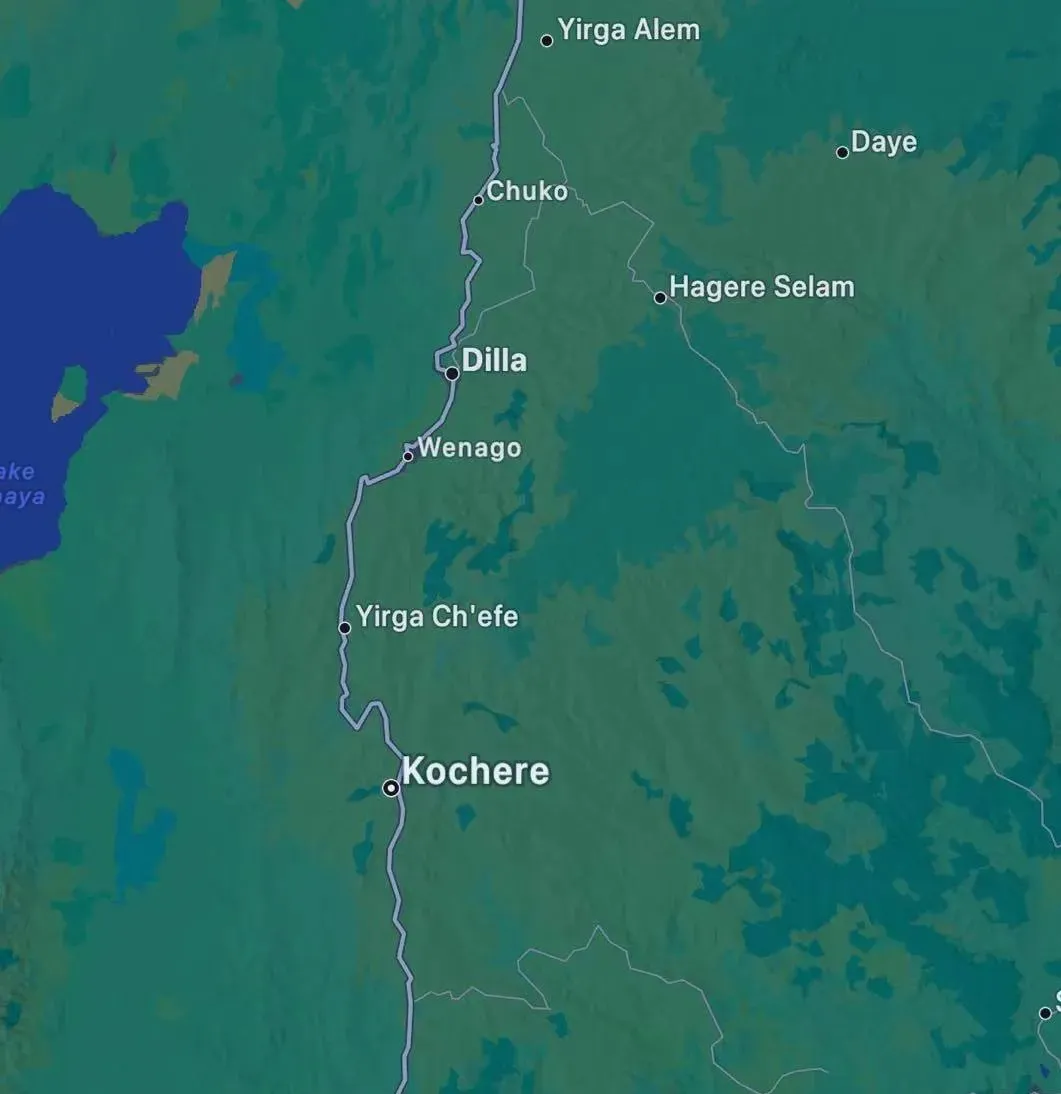
Kochere Coffee Region
Kochere is one of the 77 Woredas (administrative districts) in the SNNPR of Ethiopia. In the coffee world, Kochere is part of Gediyo within Yirgacheffe and one of the most important production areas of Yirgacheffe. Kochere is located 25 kilometers southeast of Yirgacheffe, Ethiopia. It is a small region made wealthy by coffee and one of the three well-known micro-regions of Yirgacheffe. The local population is approximately 100,000, with coffee beans being the main source of income, and the processing equipment in this area is very advanced. The well-known coffee review website Coffee Review once gave Kochere washed beans a high score of 94 points.
Kochere can be further subdivided into several micro-regions. Coffee produced within the area is sometimes named more specifically by the source town name (such as Chelelektu or Teklu Dembel), the processing station (such as Teklu Dembel Station and the Alim Station for this batch), or the micro-region (such as Banko Gutiti), which aligns with the current trend of traceability in coffee. Of course, the stronger the traceability of a batch, the clearer the source, the higher the stability and reproducibility of flavor each year, and naturally the higher the price.
Kochere Coffee Bean Varieties
As the birthplace of coffee, Ethiopian coffee trees, whether growing in farmers' backyards or in wild forests, are mostly not specifically labeled or classified by locals, and almost no distinction is made. Various coffee trees are interplanted with other cash crops on the same land, harvested together after ripening, and exported under the name "Heirloom" after processing. This harvesting method collects the contemporaneous harvests of multiple smallholder farmers, and a single batch may contain dozens or even hundreds of undifferentiated varieties.
For this reason, Heirloom does not refer to a specific type of coffee variety. It represents a green bean blend from the place of origin—coffee that combines the contemporaneous harvests of multiple smallholder farmers and mixes them together. A single batch may contain dozens or even hundreds of undifferentiated varieties. Also, because of differences between varieties, the mixing method is never exactly the same each time. These coffees vary in bean size, dimensions, and shape—some large, some small, some long, some round—and can be understood as "blended-type batches."
Front Street Kochere Coffee Bean Washed Processing Method
The harvest season in the Kochere region is in November and December. Most farmers do not adopt modern farming practices but instead manually tend to the coffee trees, without using harmful pesticides or herbicides. Therefore, almost all coffee from the Kochere region is by default organic coffee, whether certified or not. The combination of pristine growing methods and fine processing has made the coffee of this region world-famous. Because this region has relatively advanced green bean water processing equipment, it has consistently performed excellently in washed processing, and its clean sweetness with complex honey and citrus notes is widely praised. The main local production model is: small coffee farmers deliver the red cherries from each harvest directly to the nearby cooperative's washed processing station for unified processing.
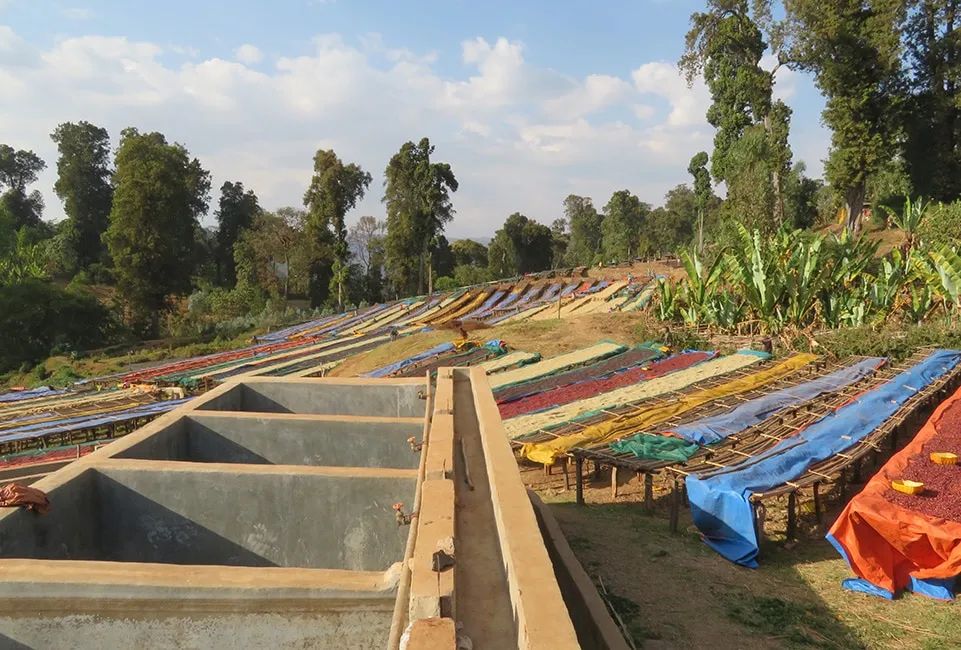
The Front Street Kochere coffee purchased by Front Street Coffee (FrontStreet Coffee) uses the washed processing method. First, the sorted coffee cherries are placed into a machine to initially remove the skin, pulp, and mucilage. Then, the green coffee beans with residual pulp and pectin are placed in water to ferment for approximately 18 to 36 hours. After fermentation is complete, the green coffee beans with parchment are washed in a flowing water channel to remove the pulp and pectin. After washing, the coffee beans are sun-dried or dried with a dryer to reduce the moisture content to about 12%, and finally the parchment of the green coffee beans is removed.
Parameters for brewing Front Street Yirgacheffe Kochere Coffee:
Considering that Front Street Yirgacheffe coffee should have acidity as the main flavor theme, Front Street uses a medium-light roast. The Front Street washed Yirgacheffe Gudingding Cooperative coffee beans use a light roast, preserving more bright acidity and white floral notes; the Front Street natural Yirgacheffe Red Cherry coffee beans use a medium-light roast, presenting full berry sweetness and acidity.
Since Front Street Yirgacheffe coffee beans use a light roast, the beans are relatively hard and require hot water at 91°C to stimulate the floral and fruity notes in the coffee. Regarding grind size, Front Street recommends a medium-fine grind (80% passing through a Chinese standard No. 20 sieve). Too coarse and it cannot extract the rich substances, making the brewed coffee appear thin; too fine and it is prone to over-extraction at high water temperatures, making the brewed coffee prone to bitterness.
The specific brewing parameters used by Front Street are: V60 dripper, water temperature 91°C, water-to-coffee ratio 1:15, coffee dose 15g, medium-fine grind (80% passing through a Chinese standard No. 20 sieve).
Front Street Coffee (FrontStreet Coffee) segmented extraction method: First, use 30g of water to fully wet the coffee bed into a "hamburger" shape and bloom for 30 seconds; for the second pour, at 1 minute 00 seconds on the timer, pour water until it reaches 125g, then stop, and wait for the water level to drop to 2/3 of the coffee bed before pouring the third segment; for the third pour, at 1 minute 40 seconds on the timer, pour water until it reaches 225g. After the coffee liquid has completely dripped through, the total extraction time is 1 minute 59 seconds, and the total brewing time is 2 minutes 00 seconds. After extraction is complete, gently swirl, and wait for the coffee liquid to be fully uniform before tasting.
Front Street Washed Yirgacheffe Kochere Coffee Flavor: lemon, floral, orange, sugarcane, overall clean and refreshing, with a sweet finish featuring honey flavors and an oolong tea aftertaste.
The above content is compiled by CoffeeHunters, a coffee news website.


