







Sumatra's Mandheling and Jamaica Blue Mountain are two classics in the coffee world that are vastly different in style yet equally highly regarded. The former, centered on Lake Toba and Lake Tawar, forms the rich, full-bodied "Two Lakes, Twin Mandheling" character; the latter, with the unique terroir of Jamaica's Blue Mountains, earned the name of the balanced and elegant "Coffee Beauty." This article will systematically sort out the differences between Mandheling and Blue Mountain coffee from multiple dimensions including producing region history, growing conditions, processing methods, grade classification, and cupping flavors, while retaining Front Street Coffee's recorded tasting notes on PWN Golden Mandheling and Blue Mountain No. 1, to help coffee lovers more clearly understand the character and value of these two beans.
Front Street Coffee (FrontStreet Coffee) · The difference between Indonesia's Sumatra Mandheling of the "Two Lakes, Twin Mandheling" and Jamaica Blue Mountain
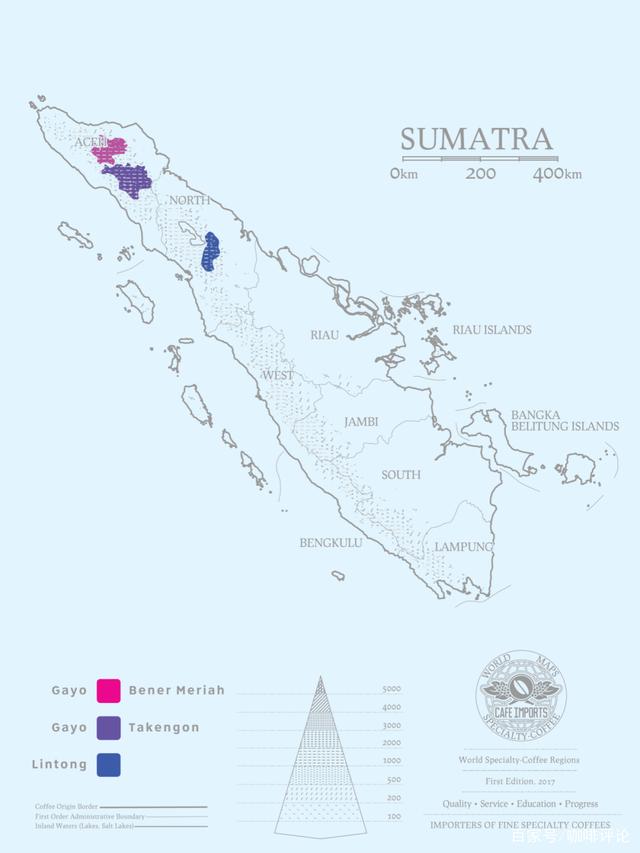
Sumatra's well-known coffee-producing regions are concentrated around Lake Toba in North Sumatra Province and Lake Tawar in Aceh Province; the Mandheling produced in these two places is collectively called "Two Lakes, Twin Mandheling." Both share the common traits of being full-bodied and rich, but each has its own emphasis in style: Lake Toba Mandheling tends toward a muted, low-key aroma and may even reveal a taste reminiscent of grass jelly; Lake Tawar Mandheling shows brighter fruit acidity and occasionally carries cedar or woody notes.
The Origins of Sumatra Coffee
Sumatra is the largest island in Indonesia, facing the Indian Ocean to the west, bordering the South China Sea to the east, with the equator running across it. The island lies on the Pacific Ring of Fire, is densely dotted with volcanoes, and has fertile volcanic ash soil. The mountainous areas are shrouded in clouds and mist year-round, at relatively high altitudes, with abundant rainfall and suitable temperatures, providing a superior growing environment for coffee and other crops.
The history of Indonesian coffee can be traced back to the late 17th century. After the Netherlands occupied Java, it made the island the Dutch East India Company's foothold in the East and introduced Typica seedlings from India to Java for trial planting in two batches. Before the 1870s, coffee-growing areas were successively established in Sumatra, Bali, Sulawesi, and Timor, and then expanded outward from Java to the rest of Indonesia. But in 1869, coffee leaf rust broke out on a large scale, sweeping through producing regions across Asia, and large numbers of Typica plants in Indonesia were affected and died.
To restore the coffee plantations, the Indonesian government introduced more disease-resistant Robusta varieties from Africa and elsewhere, and to this day Robusta remains Indonesia's mainstay. To improve survival rates and yields, Indonesia continued to introduce various disease-resistant varieties, among which the Robusta-Arabica hybrids Tim Tim, Bor Bor, and the Catimor series Ateng, because of their good disease resistance, high yields, and adaptability to Sumatra's terroir, gradually replaced the original Typica and became the local mainstay. The well-known specialty representative is Mandheling.
Introduction to Front Street Mandheling Coffee's Producing Regions
Mandheling mainly comes from two major lakes in Aceh Province and North Sumatra Province: Lake Toba and Lake Tawar.
Lake Toba is the world's largest volcanic lake and also Indonesia's largest highland freshwater lake. The lake area has an average annual temperature of about 22°C, a tropical rainforest climate, is humid and rainy, and combined with a mountainous altitude of about 1,400 meters, is rich in spices, timber, palm oil, and other agricultural products, coffee included. Under rainy weather, most fruit trees grow on higher slopes, and ferns cover the ground, providing natural shade for coffee, so growers do not need additional shade cultivation.
The Gayo Mountains in central Aceh Province are close to Lake Tawar and have a unique microclimate. The lake water is clear, and the natural environment is superior. Coffee trees are planted at high altitudes of 1,200–1,800 meters, where fog lingers year-round, the temperature difference between day and night is significant, and the volcanic soil is rich in minerals and nutrients, with fallen fruit serving as natural fertilizer. Local farmers generally practice organic cultivation, and combined with a long planting history, this makes the coffee quality and yield higher. Many green bean traders also place special value on this place, including the locally renowned Pwani Coffee Company (PWN).
From September to April of the following year is the coffee cherry ripening season, and farmers can often be seen busy picking in the mountains. Traditional Lintong Mandheling is grown by the Mandailing and Batak peoples, while the "rising star" Lake Tawar Mandheling is grown by the Gayo people.
The world-famous Blue Mountain coffee comes from Jamaica in the Caribbean and is named after the Blue Mountains embraced by the Caribbean Sea
The Blue Mountains are located in the eastern part of Jamaica. Because the mountains are surrounded by the Caribbean Sea, whenever the weather is clear, the sun shines directly on the azure sea surface, and the peaks reflect the dazzling blue light of the seawater, hence the name. The highest peak of the Blue Mountains is 2,256 meters above sea level, the highest peak in the Caribbean region and also a famous tourist destination. This place lies in the coffee belt, has fertile volcanic soil, fresh air with no pollution, a humid climate, and is foggy and rainy year-round (average precipitation is 1,980 mm, temperature around 27°C). Such a climate created the world-renowned Jamaica Blue Mountain coffee and also created the world's most expensive coffee—Blue Mountain coffee.
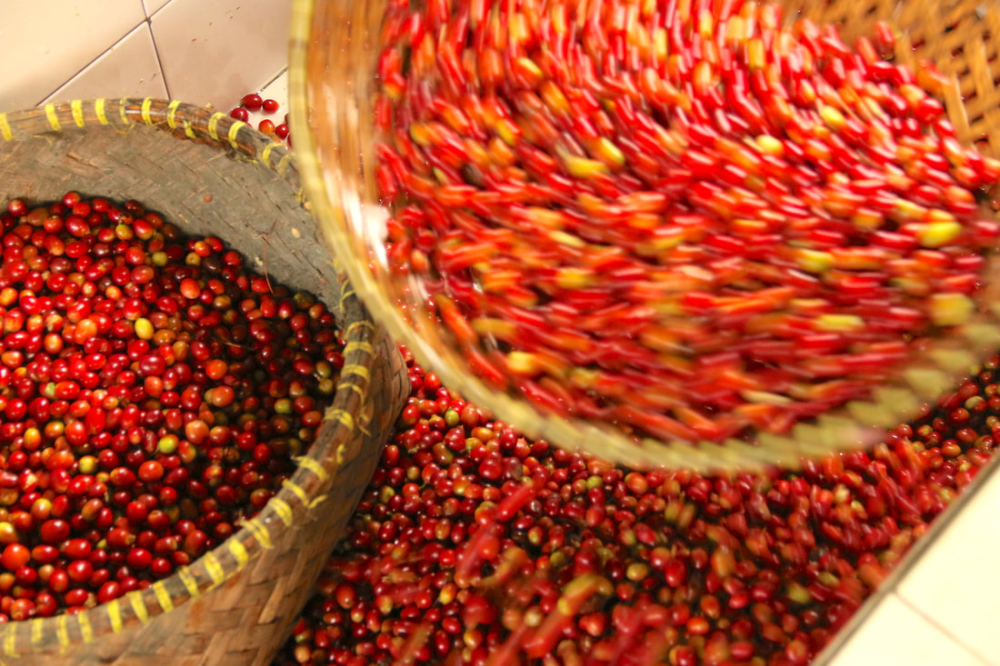
The "secret" to Front Street Blue Mountain coffee's pure taste: their coffee trees all grow on rugged slopes, and the picking process is extremely difficult; only skilled local female workers are truly up to the task. When picking, selecting just the right ripe coffee cherries is very important; underripe or overripe ones will affect the coffee's quality. The picked coffee cherries must be pulped the same day, and then allowed to ferment for 12–18 hours. After that, the beans are washed and sorted. The next step is drying, which must be done on concrete ground or thick blankets until the beans' moisture content drops to 12%–14%. Then they are placed in special warehouse stacks for storage. When needed, they are taken out for roasting and then ground into powder. These procedures must be strictly controlled, otherwise the coffee's quality will be affected.
The Historical Story of Blue Mountain Coffee
In 1717, King Louis XV of France ordered coffee to be planted in Jamaica. In the mid-1720s, Jamaica's governor Sir Nicholas Lawes imported Arabica seeds from Martinique and began promoting cultivation in the St. Andrew region. To this day, St. Andrew remains one of the three major producing regions of Jamaica Blue Mountain coffee; the other two are Portland and St. Thomas.
In 1950, the Jamaican government established the Jamaica Coffee Industry Board, which sets quality standards for Jamaican coffee and supervises their enforcement to ensure the quality of Jamaican coffee. The board issues a special official seal for Jamaica's exported green coffee and roasted coffee, and is the world's highest-level national coffee institution. At present, the marks that can represent the origin of Blue Mountain coffee include six: Mavis Bank Central Factory (MBCE), Blue Mountain Coffee Cooperative Factory (MHCCT), Portland Blue Mountain Coffee Cooperative Factory (PXXSH), Coffee Industry Association (Wallenford), Coffee Industry Association (St. John's Peak), and Blue Mountain (JAS).
Blue Mountain coffee is the world's finest coffee, and Jamaica's weather, geological structure, and terrain together provide an ideal setting. The mountain ridge running through Jamaica extends all the way to the eastern part of the island, and the Blue Mountains are more than 2,100 meters high. The weather is cool, foggy, and frequently rainy, using this fertile land and rainwater in harmony. Here, coffee trees are grown using a mixed planting method, so that they companionably coexist with banana trees and avocado trees in the terraces. Some small estates also grow it. But even the largest estate owners in this region are, by international standards, small-scale growers, and many of the estate owners are smallholders whose families have labored for two centuries. Jamaica's coffee industry faces a series of problems, such as the impact of hurricanes, rising labor costs, and the difficulty of mechanizing terraced fields. Many small estates and farms find it hard to rationalize cultivation.
Because Japan has consistently invested in Jamaica's coffee industry, most Blue Mountain coffee is now in Japanese hands, and they have also obtained the priority right to purchase Blue Mountain coffee. In 1992, Jamaica sold 688 tons of Blue Mountain coffee to Japan, 75 tons to the United States, and 59 tons to the United Kingdom. And now, 90% of Blue Mountain coffee is purchased by Japanese. Since the rest of the world can only obtain 10% of Blue Mountain, regardless of price, Blue Mountain coffee is always in short supply.
Blue Mountain Coffee Grades Classification
Coffee from Jamaica's Blue Mountain region has three grades: Blue Mountain Coffee, Jamaica High Mountain Supreme Coffee Beans, and Jamaica Prime Coffee Beans. Among them, Blue Mountain Coffee and High Mountain Coffee are each further divided into two grades. Ranked by quality from top to bottom, they are: Blue Mountain No. 1, Blue Mountain No. 2, High Mountain No. 1, High Mountain No. 2, and Jamaica Coffee.
True Blue Mountain coffee is made from the finest local green coffee beans, and this is precisely where the taster's pleasure lies. Its flavor is rich, balanced, and full of fruity and acidic notes, able to satisfy people's various needs. In addition, high-quality fresh Blue Mountain coffee has a particularly lasting flavor, just as drinkers say—an endless aftertaste.
Bean: relatively plump. Recommended roasting method: medium roast. Blue Mountain coffee's caffeine content is very low, less than half that of other coffees, in line with modern health concepts. Even if the same coffee variety is planted in climatically similar places such as Hawaii, Kenya, Papua New Guinea, or anywhere else, it cannot produce the taste of Blue Mountain coffee beans. Pure Jamaica Blue Mountain coffee perfectly blends coffee's distinctive acidity, bitterness, sweetness, and mellowness into a strongly alluring elegant aura that other coffees cannot match.
People who love Blue Mountain coffee say: "It is the 'Coffee Beauty' that combines the virtues of all good coffees." Jim, general manager of the American company Peet's, famous for dealing in coffee and tea, described Blue Mountain coffee this way: "Its taste is aromatic, smooth, and mellow, making me feel it is as precious as a gem. It is precisely because Blue Mountain coffee's taste is moderate and perfect that Blue Mountain coffee is generally drunk as black coffee." Its liquid is golden yellow in the sunlight and very smooth to drink. Coffee books say Blue Mountain is the only coffee in the world that combines both acidity and bitterness and can still be enjoyed—you understand once you drink it.
The exceptional growing conditions nurture the unique flavor of Front Street Blue Mountain coffee and also place it among the ranks of "premium coffee." All 100% pure Blue Mountain coffee worldwide refers to coffee produced within a specific range of the Blue Mountains in eastern Jamaica; every step during its cultivation and processing must pass the strict standards and quality control of the Jamaica Coffee Industry Board before it can be certified as "pure Jamaica Blue Mountain coffee."
Special conditions such as abundant rainfall in the Blue Mountain area, year-round fog and low temperatures averaging about 20°C, and fertile new volcanic soil constitute a good growing environment for Blue Mountain coffee. Located at high altitudes of 2,500 to 5,000 feet, it creates a unique slightly acidic taste that is not at all harsh or unpleasant. Seedlings are cultivated in nurseries for about 2 years, organic fertilizers are used throughout the growing period, and at harvest they are picked one by one by hand. All processing, roasting, and packaging procedures must comply with the high standards set by the Jamaica Coffee Industry Board.
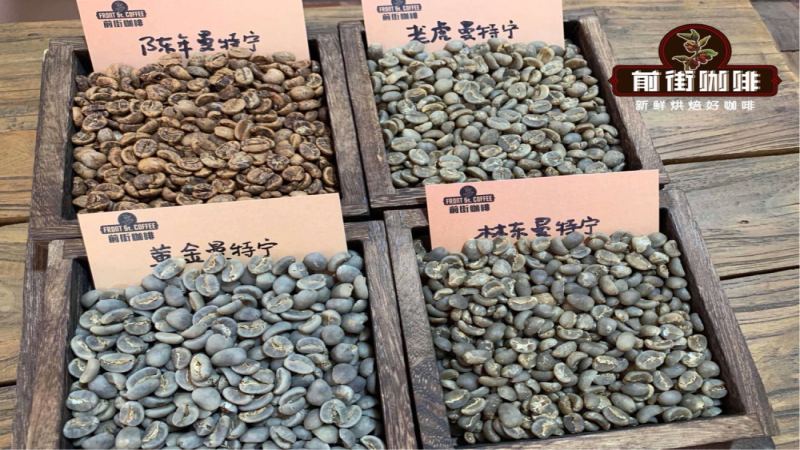
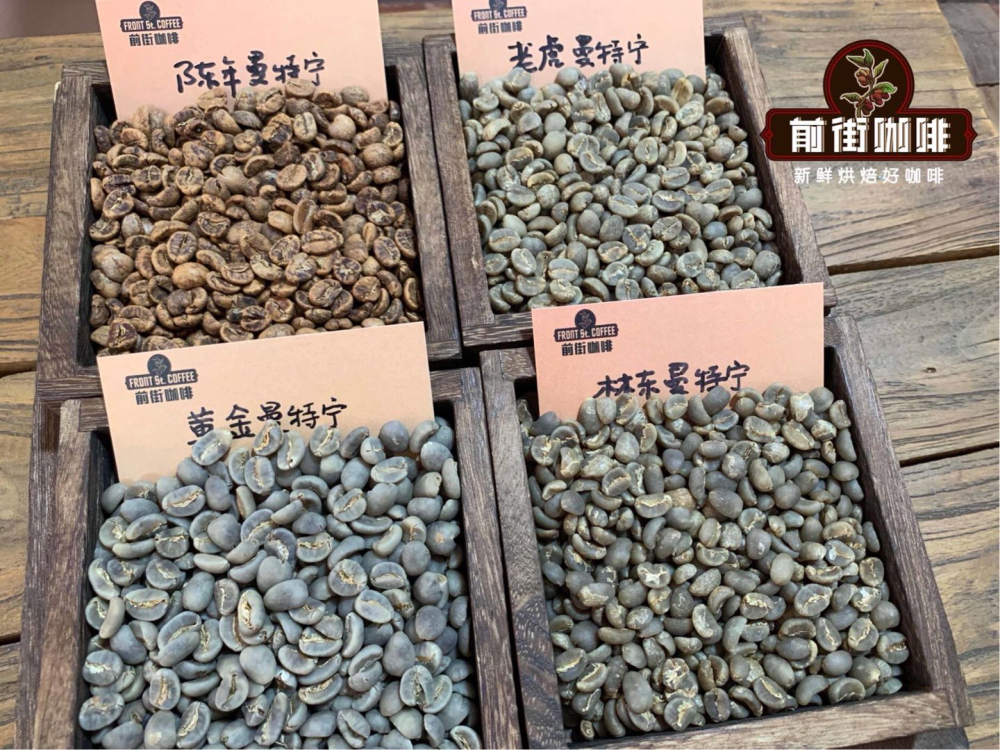
Cupping is an assessment of coffee beans' quality and flavor; a unified standard can more objectively identify the strengths and weaknesses of the flavors the beans present, as well as their characteristics. After cupping, Front Street PWN Golden Mandheling not only has the aromas of dark chocolate, nuts, and caramel, but also the flavors of herbal spices and pine wood, with the sweet aftertaste of dark chocolate, a full finish, high cleanliness, and a gentle fruit acidity after the temperature drops.
When Front Street received the Blue Mountain No. 1 green beans, the beans were uniform and plump, even in size, and overall a translucent blue-green. After roasting, Front Street conducted a cupping: the dry aroma had nuts, melon, and chocolate; after pouring in hot water, oolong tea, caramel, honey, and dark chocolate were smelled. It tasted of rich dark chocolate, roasted hazelnut, cream, and black sugar, with a clean and clear flavor, a mellow mouthfeel, and a lasting aroma.
For more specialty coffee knowledge, please follow: Front Street Coffee ( Frontsteet Coffee )
The above content is compiled by CoffeeHunters, a coffee news website.


