







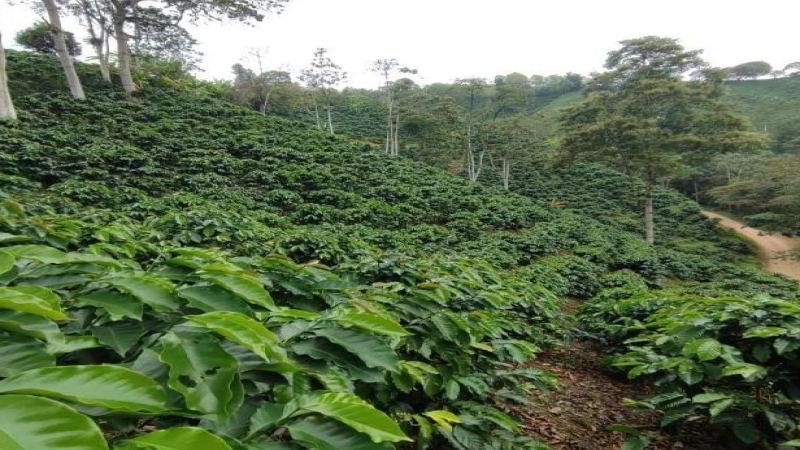
How Did Colombia Coffee Cultivation Lead to Geisha?
Colombia is the world's second-largest coffee producer, and its coffee cultivation dates to the 16th-century Spanish colonial period. The growing belt splits into a northern section, covering the historic MAM areas and the zone around Bogotá that still supplies commercial Arabica, and a southern matrix of Nariño, Huila, Cauca and Tolima that now anchors specialty production.
The Geisha variety traveled from an Ethiopian village through Kenya and Costa Rica before its rise at Hacienda La Esmeralda in Panama. Cupping by Front Street recorded full-bodied blackcurrant juice, rich berry aromas and a red wine finish. Colombia once contributed one-tenth of world coffee output, and theories about how coffee first arrived include a Caribbean route and a clergyman's 1808 seeds from the French Antilles.
Colombia, as the world's second-largest coffee producer, has a coffee-growing history dating back to the 16th-century Spanish colonial period. Today it has developed a landscape where commercial Arabica in the north coexists with specialty-producing regions in the south. This article starts from Colombia's topography and microclimates, sorts out its producing regions, harvest seasons, and green bean grading system, and delves into the legendary journey of the Geisha variety—from its discovery in an Ethiopian village, through Kenya and Costa Rica, to its eventual spectacular rise at Hacienda La Esmeralda in Panama. Through cupping, Front Street Coffee documented Geisha coffee's full-bodied blackcurrant juice character, rich berry aromas, and red wine finish, taking you on a comprehensive journey through the terroir and stories behind this "green gold."
For more specialty coffee knowledge, please follow our WeChat official account: Front Street Coffee (FrontStreet Coffee)
Overview of Colombia's Coffee Industry:
Colombia has always held an important place on the global coffee map, once contributing one-tenth of the world's total coffee production and being one of the main exporters of commercial Arabica coffee beans.
Currently, the country's coffee-growing belt can be roughly divided into two sections: the northern region, which covers the historically significant MAM producing areas and the eastern zone around the capital Bogotá, and remains an important source of commercial Arabica coffee. The southern region consists of four departments—Nariño, Huila, Cauca, and Tolima—forming today's highly sought-after specialty coffee producing matrix. (Related blog post: Overview of Colombian Coffee)
Front Street's research reveals that Colombia's coffee-growing history can be traced back to the 16th-century Spanish colonial period. Multiple theories circulate about how coffee was introduced to this land:
Theory One: Coffee is said to have traveled from the Caribbean island of Hispaniola, passed through El Salvador in Central America, and arrived in Colombia by water.
Theory Two: In 1808, a clergyman set out from the French Antilles, passed through Venezuela, and brought coffee seeds into Colombia for the first time. One batch of these coffee seeds entered through the Santander department from the direction of Venezuela.
Theory Three: The earliest written record of coffee cultivation in Colombia appears in the book "The Illustrated Orinoca" by Spanish missionary Jose Gumilla. He documented what he saw and heard while doing missionary work along the banks of the Meta River in 1730, mentioning existing coffee plantations in the area. By 1787, other missionaries had spread coffee to broader areas within Colombia.
Colombia is located in the northwest of South America, a country of beautiful scenery and deep history. As far back as ancient times, indigenous peoples lived on this land for generations. In 1531, it became a Spanish colony, only gaining independence in 1819. In 1886, it adopted its current name to honor Columbus, the discoverer of the American continent. Colombia boasts magnificent mountains and rivers, pleasant scenery, a mild climate, spring-like weather year-round, and fresh, delightful air. The country is rich in natural products, with coffee, flowers, gold, and emeralds known as its "Four Treasures." Today, Colombia is the world's second-largest coffee producer after Brazil, as well as the world's largest exporter of Arabica coffee beans and the largest exporter of washed coffee beans. Colombian coffee is often described as having a silky-smooth mouthfeel, renowned among coffees for its outstanding balance, with a soft and smooth texture suitable for drinking at any time. It has earned praise that few other coffees can match—the beautiful title of "green gold."
Colombian Coffee: Producing Regions and Harvest Seasons
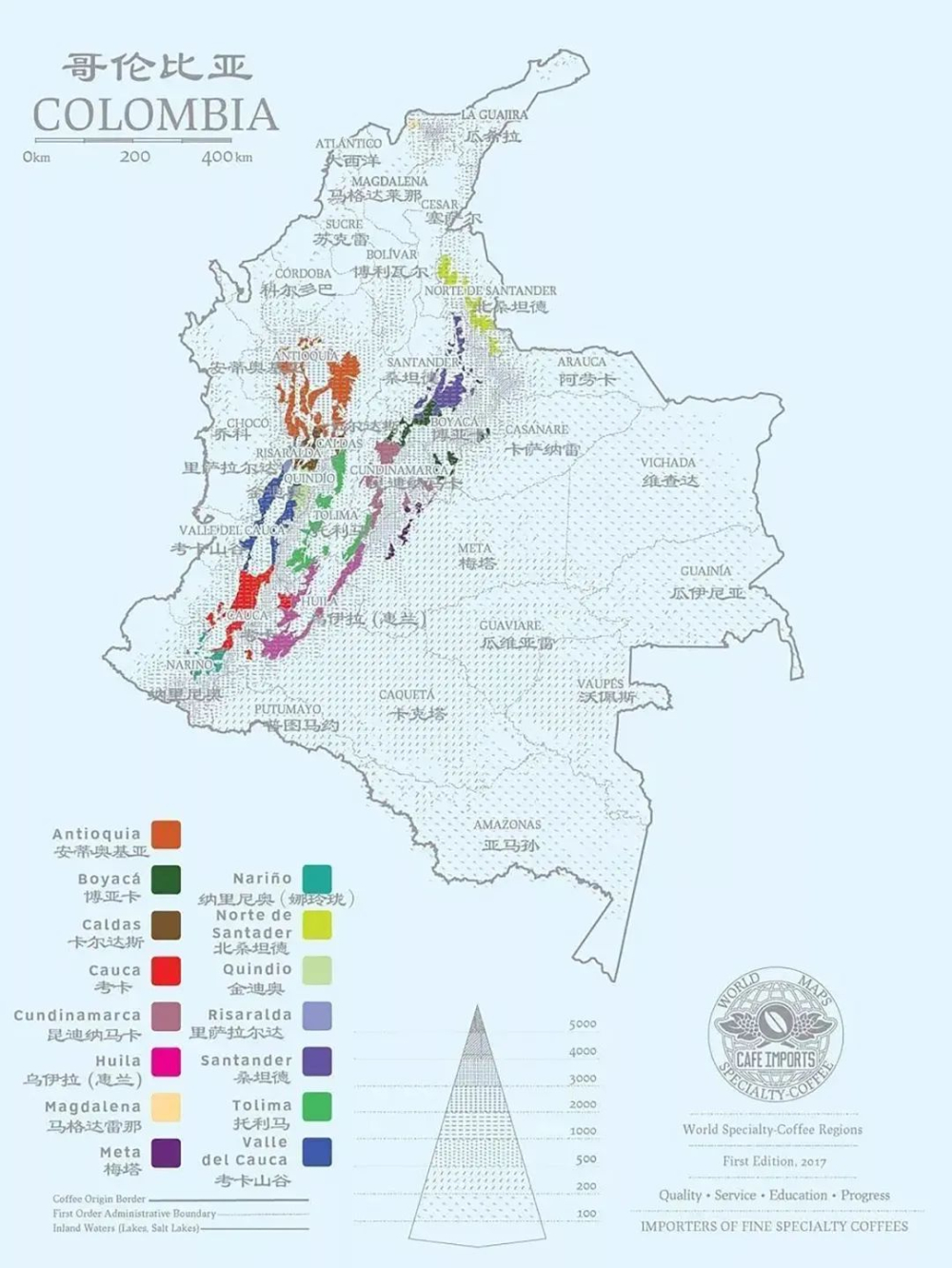
The answer to Colombia's current producing region layout can be found on the country's topographical map.
As can be seen from the map, the majestic Andes Mountains enter Colombia from Ecuador through Nariño, then split into three branches collectively known as the "Cordilleras," named according to their geographic positions as the Occidental Cordillera (the Western Cordillera), the Central Cordillera, and the Oriental Cordillera (the Eastern Cordillera). Among them, only the Eastern Cordillera continues northward across Colombian territory into Venezuela. Between the three mountain ranges lie two valleys, each traversed by an important river—the Cauca River (Cauca) (Reference blog post: Colombian Coffee Producing Region: Cauca) and the Magdalena River (Magdalena) (Related blog post: Colombian Coffee Producing Region: Tolima). Both rivers flow northward, eventually merging and emptying into the Atlantic Ocean. The Cauca River is the source of the name of Cauca Department (Colombian Coffee Producing Region: Cauca), while the Magdalena River is Colombia's largest river.
Moist air currents from the Pacific push deep inland, forming precipitation when they meet the Western Cordillera, continuing eastward to form precipitation again upon meeting the Central Cordillera, then continuing east to meet the Eastern Cordillera and converge with warm, moist air from the Amazon. On the slopes of these three majestic mountain ranges lie the prime coffee-producing regions.
Colombian Coffee Harvest Seasons
Its geographic location near the equator, combined with the high-altitude conditions of the mountains, gives Colombia a rich diversity of microclimates and makes it—like Kenya—one of the rare coffee-producing countries with two harvest seasons. In addition to the main harvest season, there is a secondary season known as "mecata."
Harvest times vary significantly across Colombia's producing regions. Some regions have two harvest seasons, while others maintain only the traditional single harvest. Furthermore, among regions with two harvest seasons, the primary and secondary seasons differ, and overall the northern and southern regions are opposite. Northern regions typically have their main season from September to December and a secondary season from April to June. Southern regions typically have their main season from April to June and a secondary season from September to December.
The harvest times for each producing region are shown in the diagram. Colombian Coffee: Producing Regions and Harvest Seasons
Green: One main harvest season, September to December
Orange: Two harvest seasons, main season September to December, secondary season April to May
Yellow: One main harvest season, March to June
Purple: Two harvest seasons, main season March to June, secondary season October to November
Brown: No obvious harvest season
White: Non-producing region
Colombian Varieties and Green Bean Grades
Colombian coffee varieties are primarily Arabica, i.e., Coffea arabica (small-seed coffee). By contrast, Coffea robusta (medium-seed coffee) is mostly grown in its place of origin, Africa—for example, the famous Madagascar coffee. Coffea arabica has several varieties. Brazil's coffee seeds, which rank first in world production, are relatively large, with strong adaptability and high fruiting rates. By comparison, Colombia's mild-type coffee belongs to a higher-quality category, which is inseparable from its special geographic location and climatic conditions.
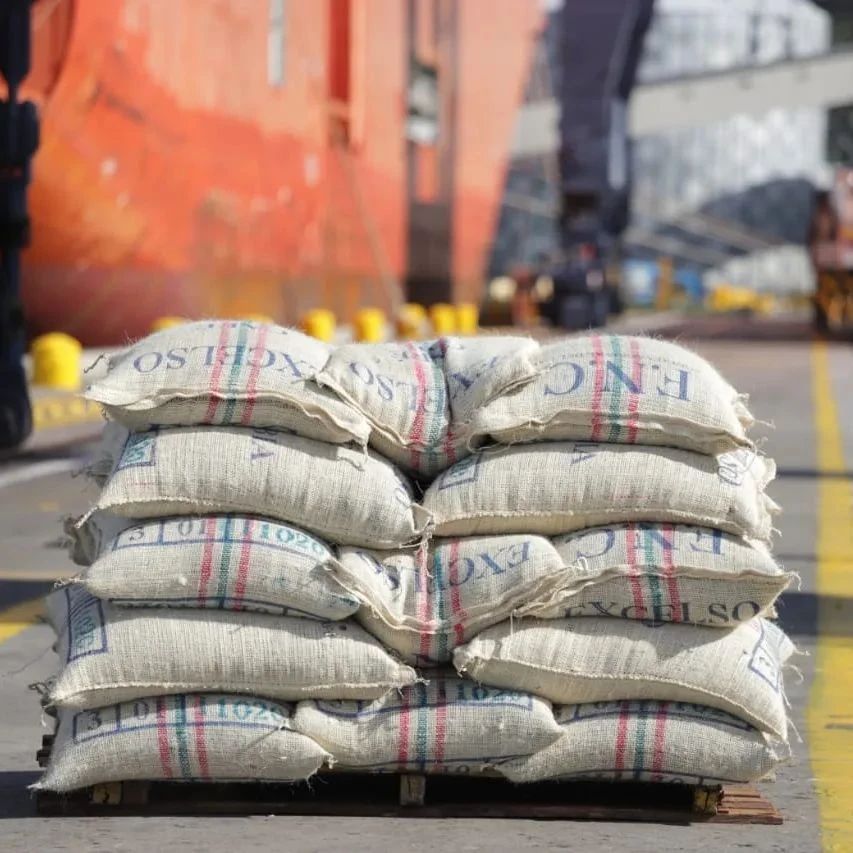
Colombian coffee is classified into over 200 grades, with very prominent regional characteristics. For Colombian beans, Supremo (SUPERMO) is the highest grade, followed by Excelso (EXCELSO); but only Supremo-grade coffee with beans of screen size 18 (18/64 inch) or above can be listed as select coffee. Colombian coffee has a balanced flavor and a relatively smooth mouthfeel, like a gentleman among coffees—proper and refined. Its producing regions are widespread, but coffee from the central mountain region is considered the best, with a heavy body. Among these, the producing regions of Medellín, Armenia, and Manizales are the most well-known, conventionally referred to collectively as "MAM." Nariño coffee (narino) is delicious and of excellent quality. It is said that Starbucks, a company dedicated to dealing in select coffees, holds exclusive purchasing rights to Nariño Supremo (narino supermo) coffee beans, and this coffee is often seen in its chain stores.
Geisha is translated into Chinese as "瑰夏." Because "Geisha" sounds similar to the Japanese word for "geisha," some places also translate it as "艺伎" (geisha). Could it be that one sip evokes thoughts of national beauty and enchanting charm, adding a touch of romance to the coffee?
Coffee Trivia
Typically, a coffee tree blooms once a year, and it takes about 9 months from flowering to the development of ripe coffee cherries ready for harvest.
Two Major Commercial Coffee Varieties
(Starbucks only purchases high-quality Arabica coffee grown at high altitudes)
Note: Geisha is 100% part of the Arabica camp.
The Wandering History of Geisha
In 1931, Geisha was discovered in the Gesha or Gecha village in Ethiopia (presumably Geisha grew in a mountain village with a similar pronunciation), and was subsequently sent to the Kenya Coffee Research Institute. In 1936, it was introduced to Uganda and Tanzania. Before 1936, Geisha was basically confined to the African region.
In 1953, Costa Rica began introducing Geisha, but for more than twenty years from its discovery until then, not many people paid attention to it. In 1963, Geisha was formally introduced to Panama.
Panama is a coffee-producing country in Central America. Geisha first entered Panama when a plantation owner named Don Pachi introduced it from Costa Rica. Mr. Pachi planted Geisha coffee on his own estate! At this point you might think the king of flavors was finally about to be discovered! However! If Geisha's charm could be unearthed so easily, it wouldn't be so fascinating~ Just like the lyrics say:
At first, Geisha was not well received in Panama—low yield, poor flavor, and poor economic returns—so farmers mixed it with other coffee beans for sale, and some simply used Geisha as a windbreak for coffee farms. Geisha was exiled to the margins, sheltering other high-yield crops from wind and rain.
Geisha remained obscure at Don Pachi's estate until the old gentleman gifted it to La Esmeralda Estate (the famous Hacienda La Esmeralda), and Geisha finally began its legendary journey of today.
Geisha Rose to Fame at Hacienda La Esmeralda in Panama
Panama is near the equator and has a tropical climate. Hacienda La Esmeralda is located in Boquete, situated atop a volcanic mountain range, while benefiting from the microclimate effects brought by its special terrain. Hacienda La Esmeralda has a large temperature difference between day and night, with lower temperatures in both morning and evening, which slows the coffee bean growth cycle and gives the beans ample time to develop their own flavor and density, resulting in higher sweetness.
Estate Owners of Hacienda La Esmeralda Through Generations
First Generation: Rudolph A. Peterson
Second Generation: Price Peterson
Son of Rudolph Peterson
Third Generation: Daniel and Rachel
Children of Price Peterson
Won awards in competitions organized by a series of specialty coffee groups:
Award data from Hacienda La Esmeralda's official website
These astonishing records that are hard to surpass stem from favorable conditions plus the family members' unremitting efforts and persistence.
Good Flavor Fears No Expedition
As early as 2005, shortly after Geisha claimed the crown, Colombia's La Esperanza Estate rented a plot of land next to Hacienda La Esmeralda in Panama to learn the Peterson family's secrets for growing Geisha up close. Rigoberto Herrera Correa is the owner of La Esperanza Estate. He sent La Esperanza's chief botanist to Panama for study and investigation, in order to gain deep understanding and mastery of Geisha cultivation techniques and obtain the true knowledge.
Eight hours after roasting was completed, Front Street immediately cupped it! From the dry aroma, Front Street sensed grape and berry-like sweet-tart flavors. When the coffee entered the mouth, Front Street clearly experienced full-bodied blackcurrant juice, followed by rich aromas of orange, smoked plum, and blueberry. As the temperature dropped, the juice-like character became more pronounced, and after swallowing, one could clearly perceive a red wine finish, making one feel extremely comfortable~
The above content is compiled by CoffeeHunters, a coffee news website.


