







How Do Brazilian Coffee Beans Get Their Nutty Profile?
Brazil is the country that produces most coffee in the world, and its coffee history starts in 1720, when seeds arrived from French Guiana. Typica came first, then Bourbon from Réunion Island in the 1860s, followed by Mundo Novo and Catuai. Today the main varieties include Red Bourbon, Yellow Bourbon, Mundo Novo and Catuai.
Overall quality varies widely, and only a small share of the crop reaches specialty grade, so most Brazilian lots serve as the base of blends. Natural and semi-washed processing shapes the balanced, low-acid profile of the arabica coffee bean from Cerrado, with chocolate and nutty notes, good sweetness and body. By 1845 Brazilian coffee accounted for 45% of world supply.
As the world's largest coffee producer, Brazil's coffee history dates back to 1720, when it was introduced from French Guiana. This article traces the evolution of Brazilian coffee varieties from Typica to Bourbon and Mundo Novo, interprets the terroir conditions of specialty regions such as Cerrado, and analyzes how natural and semi-washed processing methods shape the balanced, low-acid nutty and chocolatey profile of Brazilian beans. It also introduces the selection logic behind Front Street's Brazilian everyday beans and Queen's Farm, helping enthusiasts build a systematic understanding of Brazilian Arabica.
The history, cultural stories, and regional flavor characteristics of Brazilian Arabica coffee beans from Front Street Coffee
As the world's largest coffee producer, Brazil's total coffee output is staggering, but overall quality varies widely, and the proportion of beans that truly reach specialty grade is not large. Brazilian coffee is in most cases used as the base bean for blended coffee. The characteristics of Brazilian coffee beans lean toward chocolate and nutty notes, with good sweetness and body.
Brazilian coffee beans were first introduced in 1720 from French Guiana (a country located in northern South America). At the time, Brazil was a Portuguese colony, while most other South American countries were Spanish colonies, so Spanish was spoken in most countries on the continent, and Brazil alone used Portuguese.
Legend has it that a Portuguese officer stationed in Brazil, in order to bring coffee beans from Guiana to Brazil (at the time, coffee outflow to other countries was strictly prohibited), managed to win the favor of the governor's wife of Guiana, and thus successfully brought coffee seeds into Brazilian territory. Afterward, coffee quickly adapted to the environment in Brazil, expanding from the north all the way to São Paulo state in the southeast. By 1845, Brazilian coffee beans accounted for 45% of the world's total coffee beans. Today Brazil remains the world's largest coffee exporter.
The variety first introduced to Brazil was Typica, but Typica had low yields, making it difficult for coffee farmers to earn matching returns. So in the 1860s, Brazil introduced the higher-yielding Bourbon variety from Réunion Island. Currently, Brazil's main varieties include Red Bourbon, Yellow Bourbon, Mundo Novo, and Catuai. Among them, Red Bourbon can be densely planted due to its compact tree shape, with yields about 30% higher than Typica; its beans are relatively round and short, with berry-like acidity, a full body, noticeable creamy and aromatic qualities, and pure acidity.
Brazil's specialty coffee regions
Unlike other Central and South American producing countries, Brazil has a vast territory and prioritizes yield, with generally low elevations, allowing coffee trees to be planted on a large scale in flat areas below 1,000 meters. After the fruit ripens, workers use machines for large-scale harvesting, saving a great deal of labor. The harvested coffee cherries are handed over to large green bean processing plants, where every step is completed under a commercially managed model.
Brazil's coffee growers differ from many meticulously managed estate owners. Years ago, to help coffee trees better adapt to the local terroir, Brazilians developed coffee varieties that need no shade and can grow exposed in the sun. Combined with lower planting elevations, the coffee trees do not have enough time to absorb nutrients and develop unique aromas, so most Brazilian coffee presents a balanced, low-acid, and mild taste that even first-time coffee drinkers find easy to accept.
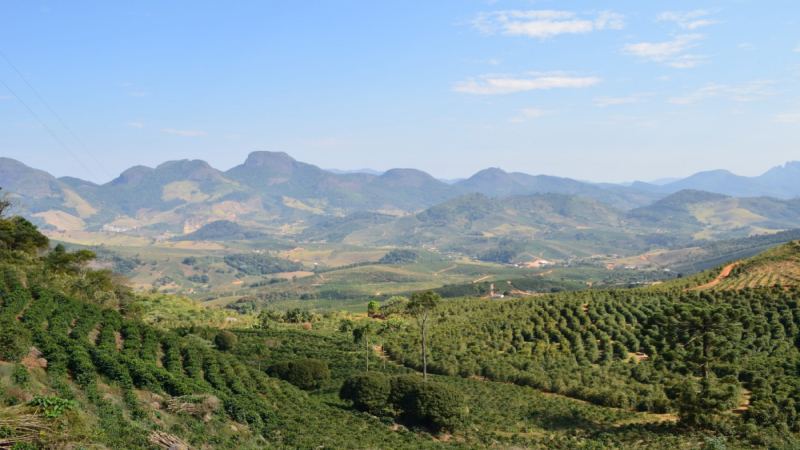
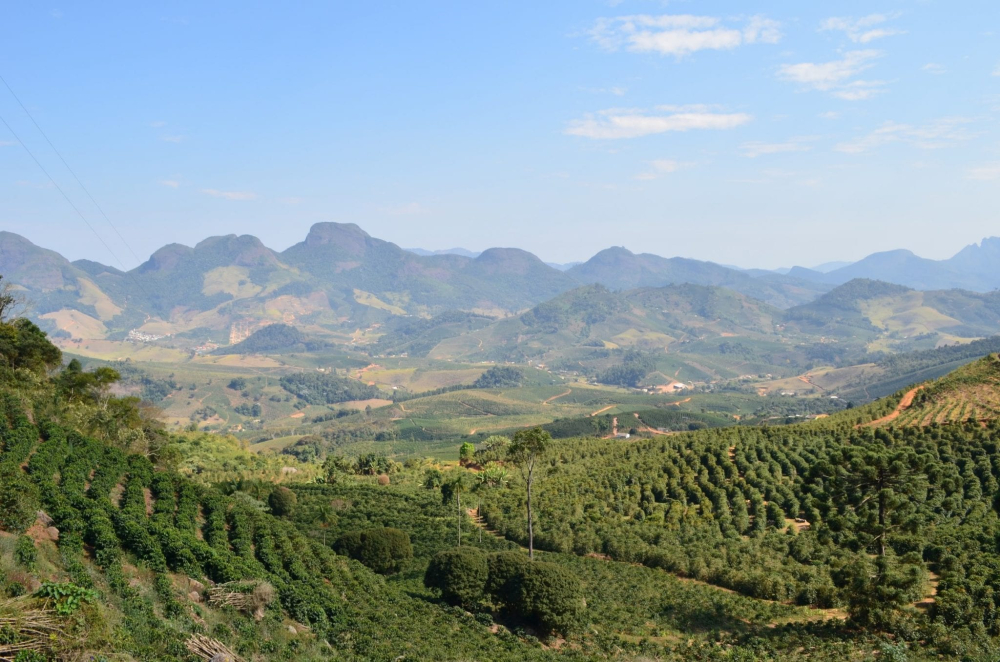
As a major coffee producer by volume, Brazil's number and area of producing regions naturally far exceed those of other countries. Currently, 17 states in Brazil produce coffee, mainly concentrated in the southeast, where the concentrated rainfall of the rainy season and the mild climate are very suitable for coffee tree growth. Front Street believes that the coffee produced in Minas Gerais and São Paulo in the southeast is of the best quality. Among them, the Cerrado region in Minas is Brazil's first coffee-producing region to obtain origin certification, and almost all the coffee it produces is the better-flavored Arabica species. As a mature coffee region, Cerrado was the earliest area in Brazil to achieve coffee commercialization, and many exporters have built large coffee plantations there. The Front Street Brazilian everyday bean coffee launched by Front Street is selected from the famous Cerrado region.
The original intention behind Front Street's launch of everyday beans is to let friends who are new to coffee, by tasting the representative flavors of classic regions, understand the characteristics and properties expressed by different origins, processing methods, and varieties, thereby enriching their coffee knowledge. As a pivotal coffee power, Brazil is naturally included by Front Street in the lineup of Front Street's flagship everyday beans.
Natural process and semi-washed process
Traditionally, Brazil's local harvest season happens to fall in the dry season, which is very suitable for drying green coffee beans by the natural method. Traditional natural processing spreads all the coffee cherries flat on the ground, which easily causes the beans to pick up off-flavors such as dirt and wood, leading to uneven quality.
After 1990, Brazil began to promote the semi-washed method (also called semi-wet hulling). The specific approach is to first remove defective beans and floating cherries through flotation, then use machines to remove the skin, pulp, and part of the mucilage, followed by washing, and finally sun-drying or drying in a drying room. The semi-washed method saves more water and labor than the washed method, bringing a substantial leap in the quality of Brazilian coffee and presenting a cleaner flavor and mouthfeel. Of course, some more demanding coffee estates also use meticulous natural processing; for example, the green beans of Front Street's Brazilian Queen's Farm coffee use natural processing.
The taste characteristics of Brazilian coffee
To taste the flavor and mouthfeel described for Brazilian coffee, Front Street recommends choosing freshly roasted coffee beans. Coffee beans enter their best tasting period 4 to 7 days after roasting; after this time (about a month and a half after roasting), the coffee's aroma may have faded and some woody notes may develop. To avoid this situation, Front Street has mentioned in many articles that the most important thing is that Front Street only ships coffee beans freshly roasted within 5 days, so everyone can taste coffee with excellent flavor.
Both Brazilian coffee beans on Front Street's bean list are mainly nutty in profile. Front Street Queen's Farm highlights the sweetness of chocolate and sugarcane, while Front Street Cerrado emphasizes creamy and peanut flavors. Front Street uses a medium-dark roast, with the aim of giving the coffee beans more caramelization reactions.
The above content is compiled by CoffeeHunters, a coffee news website.


