








How Does Central American Coffee From Costa Rica Differ by Region?
Costa Rica grows Arabica coffee across eight producing regions, shaped by high altitude, volcanic soil, and distinct microclimates. Coffee arrived from Cuba in 1729, and after independence in 1821 the government backed the crop with tax exemptions, land incentives, and rules limiting cultivation to Arabica. Those policies pushed the country toward the specialty coffee it is known for today.
Government support began early: a tax exemption in 1825, a land-ownership decree in 1832 granting title to those who planted coffee, and the founding of the national coffee body ICAFE in 1948. Most farms are private estates. The main varieties are Caturra, Catuai, Geisha, and Bourbon, and each region's cup profile reflects its altitude and climate.
Costa Rica, this Central American nation, nurtures consistently high-quality Arabica coffee thanks to its high altitude, fertile volcanic soil, and microclimates. From its introduction in 1729 to the present day, the local government has promoted the refined development of the coffee industry through policies such as tax exemptions, land incentives, and legislation mandating the cultivation of only Arabica. This article will guide you through Costa Rica's coffee cultivation history, the distribution of its eight major producing regions and their flavor differences, and provide an in-depth analysis of the characteristics of major varieties such as Caturra, Catuai, Geisha, and Bourbon. Finally, it includes brewing suggestions from Front Street Coffee to help you gain a comprehensive understanding of this Central American coffee powerhouse.

For more specialty coffee knowledge, welcome to follow our WeChat public account: Front Street Coffee (FrontStreet Coffee)
When Costa Rica is mentioned, many people's first reaction might be to think of "Godzilla." In fact, Costa Rica is a presidential republic in Latin America, bordered by Nicaragua to the north and Panama to the south. Thanks to its higher altitude, diverse microclimates, fertile volcanic soil, and good drainage conditions, it is highly suitable for cultivating Arabica coffee trees.
Costa Rica Coffee Cultivation History
In 1729, Costa Rica introduced its first coffee tree from Cuba, and thereafter the country became the first in Central America to develop coffee cultivation for its commercial value. After gaining independence from Spain in 1821, the local government introduced a series of policies to strongly support the coffee industry. At that time, coffee had been introduced for only about a hundred years, yet approximately 70,000 coffee trees had already been planted, demonstrating the rapid momentum of development.
To incentivize coffee cultivation, the Costa Rican government implemented a tax exemption policy in 1825. In 1832, a decree was enacted locally: "Those who cultivate coffee shall own the land," meaning that as long as coffee farmers planted coffee on unoccupied vacant land, they could directly obtain ownership of that land. This measure greatly stimulated people's enthusiasm for cultivation and indirectly explains why most Costa Rican coffee today comes from private estates.
In 1948, the Costa Rican government established a dedicated coffee department (the Costa Rican Coffee Industry Corporation, ICAFE: Instituto del Café de Costa Rica, now managed by the official Coffee Commission, Oficina del Café), primarily to help estates improve all aspects from planting and post-processing to the sales system. The processing of coffee for export is also extremely meticulous locally, which is why Costa Rican coffee beans have relatively stable quality and balanced flavors.
It is understandable that as production increased, quality could easily become uneven, thereby affecting competitiveness. To enhance coffee quality and value, in the early 20th century the Costa Rican government amended its laws: all coffee farms or plantations within the country could only cultivate the Arabica species (Arabica) to strengthen competitiveness. In 1989, the government officially passed a law: prohibiting the cultivation of inferior bean varieties and encouraging farmers to pursue truly excellent-quality coffee beans. This is why the country has always cultivated only Arabica.
It is worth mentioning that this decree was jointly decided and implemented by government departments and two renowned Costa Rican research institutes: CATIE (Centro Agronómico Tropical de Investigación y Enseñanza, a multinational agricultural research center) and ICAFE (Costa Rican Coffee Institute). CATIE was founded in 1942, while ICAFE was established as early as 1933. They have not only contributed to Costa Rican coffee cultivation but have even made outstanding contributions to coffee throughout the entire Central and South American producing regions.
Costa Rica Coffee Producing Regions
Costa Rica coffee cultivation is mainly distributed across 8 producing regions: West Valley, Central Valley, Tarrazu, Tres Rios, Orosi, Brunca, Turrialba, and Guanacaste.
Costa Rica's specialty coffee producing regions are mainly distributed in the West Valley, Central Valley, Tarrazu region , at altitudes of 1200-2000m.
Costa Rica Producing Region Coffee Flavor Characteristics
The nutrients from volcanic ash in these areas create fertile soil, combined with pleasant year-round temperatures maintained at 19 degrees Celsius—quite suitable for coffee cultivation—and abundant rainfall, resulting in coffee with very pure and sweet characteristics, possessing a captivating layered balance in both acidity and mouthfeel.
Through cupping comparisons by Front Street Coffee (FrontStreet Coffee), it was found that coffee from the Tarrazu region exhibits very good cleanliness, bright acidity, and citrus- and berry-like tonalities. Representative coffee beans include "Front Street Coffee (FrontStreet Coffee) Daily Bean Series - Costa Rica Tarrazu Coffee Beans," "Front Street - Musician Series Mozart Coffee Beans," "Front Street - Musician Series Bach Coffee Beans," and "Front Street - Tarrazu Estate Strawberry Candy Coffee Beans."
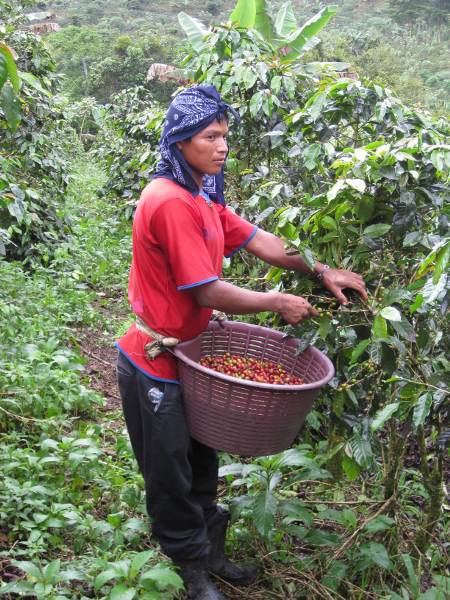
The acidity of coffee beans from the West Valley region is less pronounced than that of the Tarrazu region, and the mouthfeel is relatively more balanced, with lingering notes of nuts and caramel. Coffee from the Central Valley region, meanwhile, presents very pure and sweet flavors, possessing a captivating layered balance in both acidity and mouthfeel.
Costa Rican Coffee Bean Varieties
Costa Rica mainly cultivates Caturra, Catuai, and Geisha varieties, and also grows small amounts of Bourbon, Villa Sarchi, and other varieties.
Caturra is a mutation of Bourbon, discovered in Brazil in 1937. It has better yield and disease resistance than Bourbon, and the tree is shorter, making harvesting easier. It has strong adaptability, does not require shade trees, and is suitable for planting from low altitudes of 700 meters to high altitudes of 1700 meters. Its altitude adaptability is very strong, but the higher the altitude, the better the flavor, with a relative decrease in yield.
Catuai is a coffee variety artificially hybridized in 1949 from yellow Caturra and Mundo Novo, originally called "H-2077." Catuai has relatively good resistance to disasters, especially wind and rain. Because the plant is smaller, it can be planted at twice the density, and being a short plant, it is relatively easier to treat for pests and diseases. Catuai grows vigorously and is short in height but is susceptible to leaf rust.
Geisha was discovered in 1931 in the Geisha forest of Ethiopia, then sent to the Coffee Research Institute in Kenya, introduced to Uganda and Tanzania in 1936, and introduced to Costa Rica in 1953. Geisha coffee has very delicate floral and fruity acidity, and high-altitude-grown Geisha has an extremely alluring flavor.
Bourbon coffee was first cultivated on Réunion, which was also known as Bourbon Island before 1789. In 1860, the Bourbon variety was introduced to Brazilian farms and quickly spread northward to other regions of South America and Central America. Bourbon grown at high altitudes typically has better aroma, along with brighter acidity, and even a flavor reminiscent of red wine when drunk.
Villa Sarchi is a Bourbon mutation. This naturally mutated dwarf Bourbon variety with green tips was discovered in Costa Rica in 1950, after which pedigree selection was carried out (selecting individual plants through successive generations). However, this variety was not widely cultivated in Costa Rica; instead, in 1974, it was introduced to Honduras by the Honduran Coffee Institute (IHCAFE). In terms of aroma, it is a coffee of considerable complexity, suitable for medium-dark roasting. The dry fragrance after grinding carries notes of perfume, nectar, and cherry, interwoven with sweet spices like cinnamon.
Villalobos originated in Costa Rica and is a mutation of Typica. Like Typica, the angle between the branches and the trunk is 60 degrees, and the leaves are bronze-colored. This variety grows particularly well at high altitudes and has strong wind resistance. It can also grow in poor soil, and grows even better under shade trees. Its most notable flavor characteristics are its excellent sweetness and beautiful acidity.
Costa Rican Coffee Bean Grading
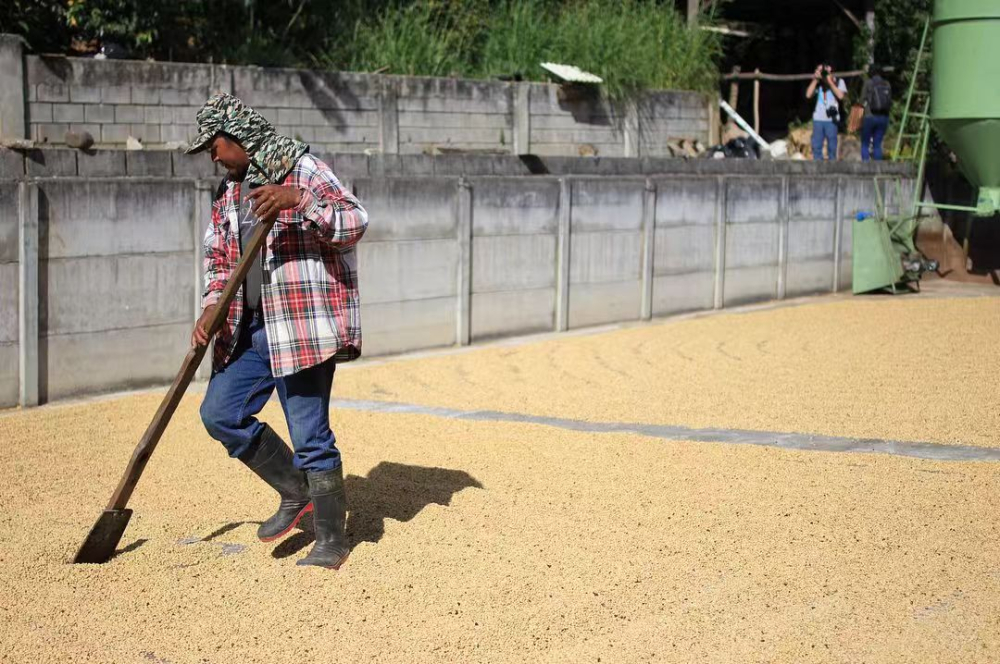
Costa Rican coffee beans are mainly graded by cultivation altitude. The higher the altitude, the denser the coffee, and the harder the texture of the beans. The Costa Rican coffee beans sold by Front Street Coffee (FrontStreet Coffee) are all SHB grade.
How to Brew Costa Rican Coffee for the Best Taste?
For brewing parameters, Front Street used 15g of coffee grounds, chose a relatively fine grind, with a passing rate of approximately 78-80% using the Chinese No. 20 standard sieve. The coffee-to-water ratio used was 1:15.
Through several brewing comparisons, using a water temperature of 90-91°C better brings out the aroma and sweetness of this coffee. A V60 dripper is used to enrich the layers of this coffee~
The brewing method is as follows: For the first pour, add 30 grams of water for blooming, with a blooming time of 30 seconds. For the second pour, add water up to about 125 grams, then wait for the coffee liquid to drop. When it has dropped by half, pour the final round of water up to 225 grams. Wait until all the coffee has dripped through before ending the extraction. The total extraction time is generally around 2 minutes and 10 seconds.
The above content is compiled by CoffeeHunters, a coffee news website.


