







How Do Washed and Natural Yirgacheffe Coffee Beans Differ?
Washed Yirgacheffe and natural Yirgacheffe come from the same Ethiopian region but drink very differently. Washed lots, such as the Gedeb Cooperative example, show brighter, livelier acidity with citric and citrus aromas, a fresh entry, and a light black-tea sensation in the finish. Natural lots, like the Red Cherry Konga example, taste rounder, with berry, lemon, strawberry, and a slight fermented note.
Ethiopia introduced washed processing in 1972, adapting the technique from Central and South America. The washed method uses large amounts of clean water and costs more than the natural method, which is why natural beans rely on strict screening instead. Ethiopia's many single-origin coffee beans vary widely by region, yet Yirgacheffe remains one of the most popular sources.
Yirgacheffe is Ethiopia's most representative specialty coffee region, and the two processing methods—natural and washed—give it entirely different flavor profiles. This article uses actual brewing comparisons to sort out the specific differences between washed Yirgacheffe and natural Yirgacheffe in acidity, aroma, and mouthfeel, and traces the background of the introduction of washed processing and its procedures, while also detailing the strict screening standards for natural beans. The article also includes complete pour-over recipes for Front Street. Washed Yirgacheffe and Front Street. Natural Yirgacheffe, including the V60 dripper, water temperature, coffee-to-water ratio, grind size, and three-stage pouring rhythm, helping coffee lovers reproduce the elegant floral notes and rich fruity charm at home.
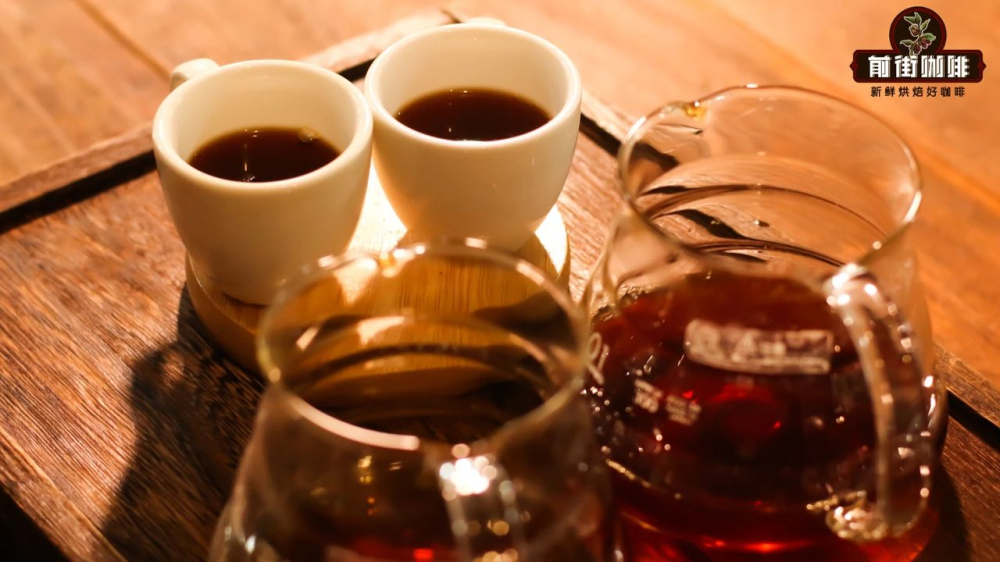
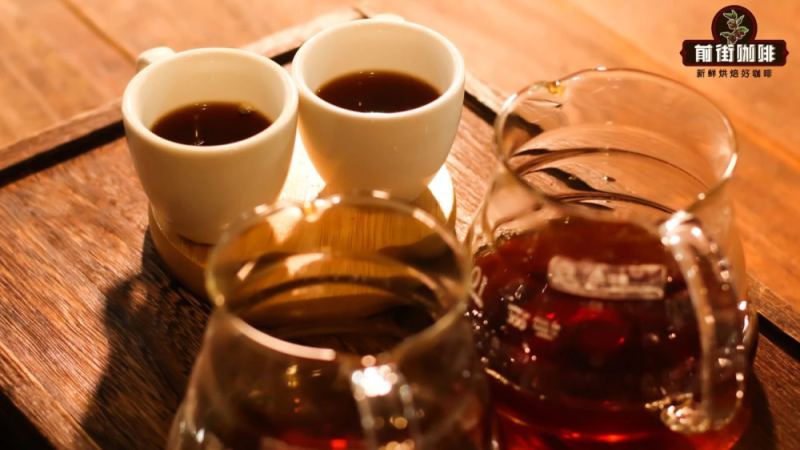
After actual brewing comparisons, one can feel that the typical representative of washed Yirgacheffe—Front Street. Gedeb Cooperative—has a brighter and livelier acidity, with citric acid and citrus aromas, a fresh and fragrant entry, and a slight black-tea-like tea sensation emerging in the finish; while the representative of natural Yirgacheffe—Front Street. Red Cherry Konga—has a rounder flavor, with berry, lemon, strawberry, and a slight fermented aroma on the palate.
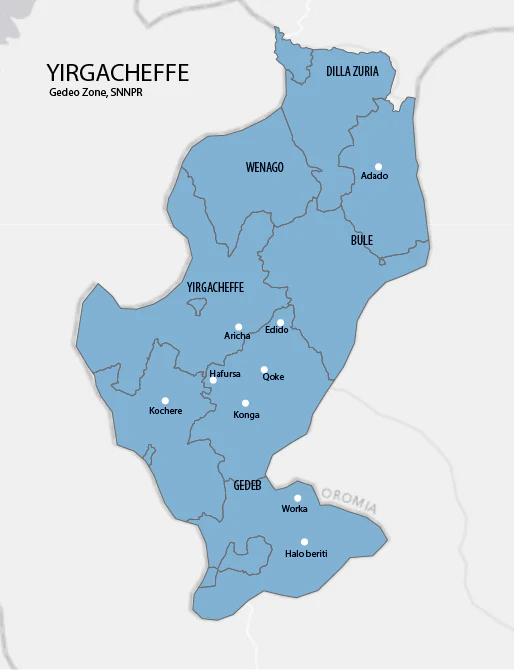
Yirgacheffe is located in Ethiopia, is an important region for local specialty coffee, and is also a calling card for Ethiopian coffee. Front Street Coffee's everyday-bean washed Yirgacheffe coffee is a clear example. Coffee produced in different regions, micro-regions, and even single farms within Ethiopia often has notably different cup profiles, so Front Street alone has listed more than ten Ethiopian single-origin coffees, among which the Yirgacheffe region accounts for five or six, showing just how popular this region is. However, no matter which region it comes from, as long as it is Ethiopian Arabica coffee beans, it is enough to make people unable to stop.
Common Yirgacheffe can be divided into two types: natural Yirgacheffe and washed Yirgacheffe. Washed processing gives Yirgacheffe a cleaner character, while natural processing brings full fruity aromas and body.
Ethiopia's washed processing technology was introduced from Central and South America in 1972. The washed process is complicated and tedious, and requires a large amount of clean water, so its cost is higher than the natural method, and it is also less commonly used in water-scarce African regions.
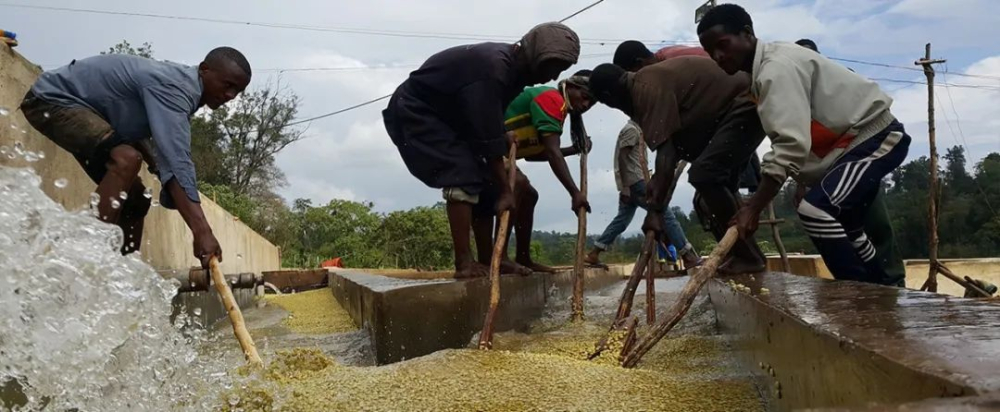
Washed steps: after coffee cherries are picked, they are put into water, and buoyancy is used to pick out underripe fruits; then a depulper is used to remove the skin and pulp, and they are left to rest in a fermentation tank for 18 to 36 hours until the mucilage layer breaks down. After fermentation is complete, the parchment beans are scrubbed in channels for 30 to 60 minutes; through specially designed channels combined with flowing water, low-density and poor-quality beans are removed, then the high-quality coffee beans are drained of water and spread on African raised beds to dry.
Because the pulp is removed before drying, Yirgacheffe's own inherent aromas are displayed more clearly, presenting citrus and lemon notes and elegant white floral aromas, with an overall bright and delicate flavor. After washed coffee beans were introduced, Yirgacheffe quickly became a representative of the world's specialty coffee regions. If you want to taste such deliciousness, simply choose Front Street. Gedeb Cooperative or Front Street. Washed Yirgacheffe.
Natural Yirgacheffe has strict standards for collecting red ripe fruit. Before sun-drying the coffee cherries, unripe green fruits or defective fruits are first removed by hand; during the sun-drying process, damaged or moldy fruits are removed again. After two weeks, the sugars and essence of the pulp have all penetrated into the coffee beans, and the moisture content drops to 12%; then the hardened pulp, mucilage layer, and pod are all scraped clean together by a depulper, and after the coffee beans are removed, they still need to undergo density and bean-color testing. After eliminating defective beans, workers finally remove any missed defective beans by eye, with layer upon layer of quality control, creating the clean and refined character of Yirgacheffe natural beans. Recommended is Front Street. Natural Red Cherry coffee, which is very popular among floral-note lovers.
The biggest difference between washed processing and natural processing is that washed processing first removes the coffee skin and pulp, then puts the beans into a clean water tank to ferment, removes residual mucilage, and then sun-dries them, so washed coffee beans have a shorter drying time, a cleaner overall flavor, and more obvious acidity.
Natural processing, on the other hand, keeps the skin and pulp and sun-dries the whole cherry directly. At high temperatures, the sugars in the pulp ferment, so the coffee beans absorb these fermentation aromas, and at the same time the sugars in the pulp are transferred to some extent into the beans, so naturally processed coffee beans have a faint fermented aroma and a more obvious sweetness.
Brewing methods for Front Street. Washed Yirgacheffe and Front Street. Natural Yirgacheffe
In order to highlight Yirgacheffe's distinctive elegant floral aromas, a medium-light roast level is generally maintained, as only then can its fresh character be better presented. But medium-light roasted coffee has a short heating time, the beans are hard, and flavor compounds are not easily released, so when brewing, high-temperature hot water, a fine grind, and three-stage pouring should be used.
V60 dripper, water temperature 91~93°C, coffee-to-water ratio 1:15, dose 15g, grind size (80% passing through a Chinese No. 20 standard sieve)
Use staged extraction, first blooming with water at 2 times the coffee dose, that is, 30 grams of water for a 30-second bloom. The purpose of the bloom is to let the coffee grounds release internal carbon dioxide, thereby making the later extraction more stable. Pour in a small stream in circles until 125 grams, then pause, continue pouring until 225 grams and stop; after the water in the dripper has dripped through, remove the dripper, and timing from the start of pouring, the extraction time is 2'00". Next, swirl the whole cup of coffee to mix it evenly, then pour it into a cup and enjoy.
The above content is compiled by CoffeeHunters, a coffee news website.


