







When Mandheling coffee is mentioned, many people's first reaction is that intense earthy or herbal aroma—some love it deeply, while others find it hard to accept. However, truly high-quality Mandheling coffee beans, in the hands of a roaster who understands them, can transform into a rich, mellow brew weaving together cedar, licorice, and dark chocolate, with a subtle fruity note and cocoa finish emerging from the smoky character, deep and full like Bach's Air on the G String. This article will guide you through the origin of the name Mandheling, the grading standards for Golden Mandheling versus regular Mandheling, and how Indonesia's unique wet-hulling process shapes its soulful flavor. We will also introduce Front Street Coffee's approach to selecting and roasting Mandheling, along with specific brewing suggestions to help you better savor this classic coffee from Sumatra.
In most people's perception, Mandheling coffee always carries a strong herbal scent, even described as earthy or musty, and its overall flavor is not particularly appealing. But truly superior Mandheling needs a roaster who understands it—through proper roasting techniques, that originally rugged, heavy flavor is transformed into a rich taste interwoven with cedar, licorice, and dark chocolate. A mellow smokiness subtly reveals fruity notes, subsequently wrapped layer by layer in cocoa-like sweetness, like Bach's Air on the G String—solemn, lingering, rich, and full.
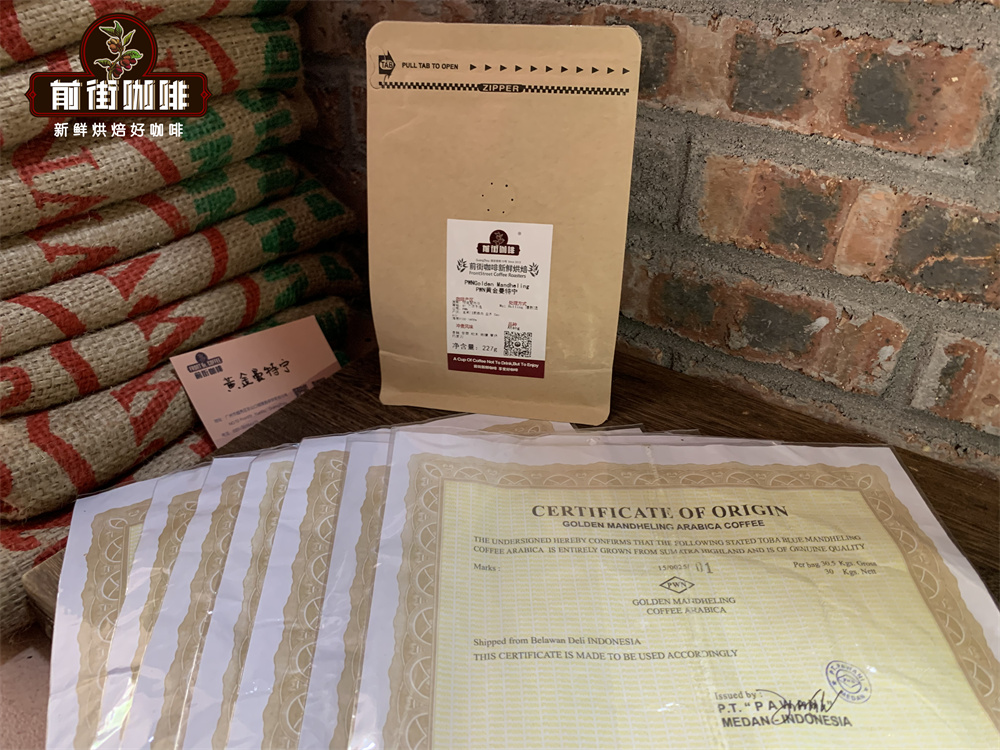
High-quality Mandheling coffee beans are truly a rare find. Front Street Coffee has a distinctive understanding of bean selection and roasting for Mandheling. If asked about Front Street Coffee's most iconic product, it would be the Golden Mandheling coffee beans from the PWN green bean company in the Gayo region of Sumatra, Indonesia.
The name "Mandheling" is quite unusual—it is neither a producing region, place name, nor port name, nor does it refer to a coffee variety. The reason this name has persisted to this day actually stems from a transliteration of the Indonesian Mandheling ethnic group (Mandheling), behind which lies a beautiful misunderstanding born from a language barrier.
During World War II, Japan occupied Indonesia. A Japanese soldier drank a coffee with an extremely rich, solid mouthfeel at a native household on Sumatra and found it incredibly delicious, so he asked the native in Japanese what coffee beans these were. The native naturally did not understand Japanese and guessed the soldier was asking which ethnic group he belonged to, so he answered "Mandheling." The Japanese man then concluded that all coffee produced on the island was called Mandheling and entrusted this native to export coffee beans grown on the island to Japan. Thereafter, the Japanese officially named these coffee beans Mandheling coffee (マンデリン コーヒー).
That native also sensed a business opportunity. He knew well that coffee beans from Sumatra varied greatly in quality, so he hired local natives to manually sort and classify the harvested coffee cherries, keeping only ripe cherries reaching 18/19 mesh. This practice improved the uniformity of Mandheling coffee beans during roasting and made the overall flavor cleaner and more balanced. Surprisingly, although the price rose considerably as a result, these carefully selected coffee beans were deeply favored by Japanese consumers.
Thus, this native founded the Indonesian Pwani Coffee Green Bean Company (PWN) and named this specially selected Mandheling "Golden Mandheling," registering the trademark at the same time. Therefore, authentic Golden Mandheling coffee beans must come from PWN; so-called "Golden Mandheling" not produced by this company is theoretically an infringement and can only be called specialty Mandheling coffee beans or hand-picked Mandheling coffee beans.
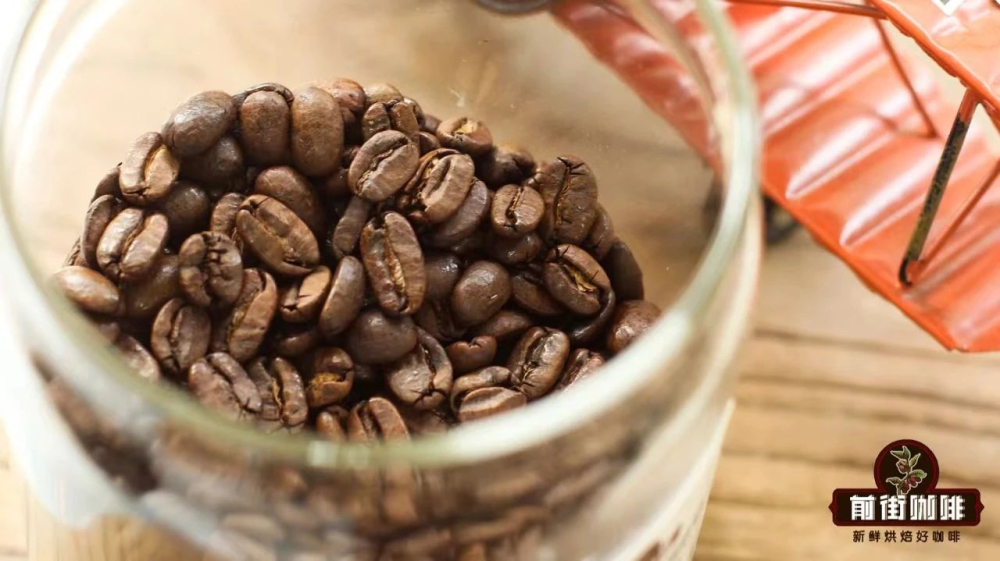
The Golden Mandheling coffee beans sold by PWN have strict screening standards: only beans sized 18 mesh or above are used, with fewer than 3 defective beans (based on a 300g green bean sample), belonging to the highest grade G1, with beans tending toward dark green and a neat flat-bean shape.
Regular Mandheling coffee, by contrast, typically does not undergo such meticulous manual screening and is generally graded by the number of defects (based on 300g):
Among these, the Lindong Mandheling sold by Front Street Coffee belongs to the everyday drinking bean series. Many friends new to specialty coffee often don't know where to start when faced with dozens of coffee beans on a menu; in that case, it's worth starting with the everyday series. Front Street's everyday bean series covers 7 major coffee-producing regions, allowing beginners to experience the representative flavors of each region at a high cost-performance price.
What creates Mandheling's unique flavor, besides the low altitude of the producing region, soil, and climate, is also Indonesia's distinctive local coffee processing method—wet hulling. Because of the year-round hot, humid conditions and scarce water sources, Indonesian coffee farmers, in order to better strip and dry coffee beans while conserving water, developed an efficient drying method: wet hulling, also known as wet shelling (Wet Hulling). This has also become the signature processing method for Mandheling coffee beans. The core feature of wet hulling lies in rapid drying in stages and removing the parchment early while semi-dry.
To allow Front Street PWN Golden Mandheling coffee beans to display a rich, mellow flavor, Front Street Coffee roasts them to a medium-dark level. For medium-dark roasted coffee beans, Front Street Coffee recommends brewing with a KONO dripper, with brewing parameters as follows: water temperature 88°C, coffee-to-water ratio 1:15, using 15g of coffee beans ground to coarse sugar size (70% passing rate on the China No. 20 standard sieve).
The specific brewing method is as follows: first pour 30g of water and bloom for 30 seconds; for the second stage, pour in a circular motion with a slow stream up to 125g, and after the water level in the coffee bed drops by half, pour again, continuing in a circular motion with a slow stream up to 225g, and wait for all dripping to complete; total extraction time is about 2 minutes 10 seconds.
Flavor profile of Lindong Mandheling coffee beans: a rich herbal aroma on entry, accompanied by dark chocolate and caramel notes, with a pronounced sweet aftertaste.
Flavor profile of Front Street PWN Golden Mandheling coffee beans: the overall layers are rich and varied, with a mellow yet clean mouthfeel. The intense nutty and caramel aroma carries chocolate notes, with a lasting finish and excellent balance.
The above content is compiled by CoffeeHunters, a coffee news website.


