







Stepping into a café and facing the dazzling array of coffee names on the menu, many friends who are new to coffee feel confused. From the perspective of Front Street, this article systematically sorts out the differences between Espresso, Americano, Latte, Mocha, Flat White, Cappuccino, and Long Black, covering historical origins, recipe ratios, and serving details. Whether you prefer a rich milk coffee or a refreshing black coffee, you can find clear answers here, while also learning about the suitable scenarios for beans such as Front Street Sunshine Blend.
Friends who are new to coffee walk into a café and, faced with the wide variety of names on the menu, are often completely confused and don't know which one to choose. Below, Front Street will help you sort out the characteristics and differences of these common espresso drinks.
Start by getting to know the espresso machine
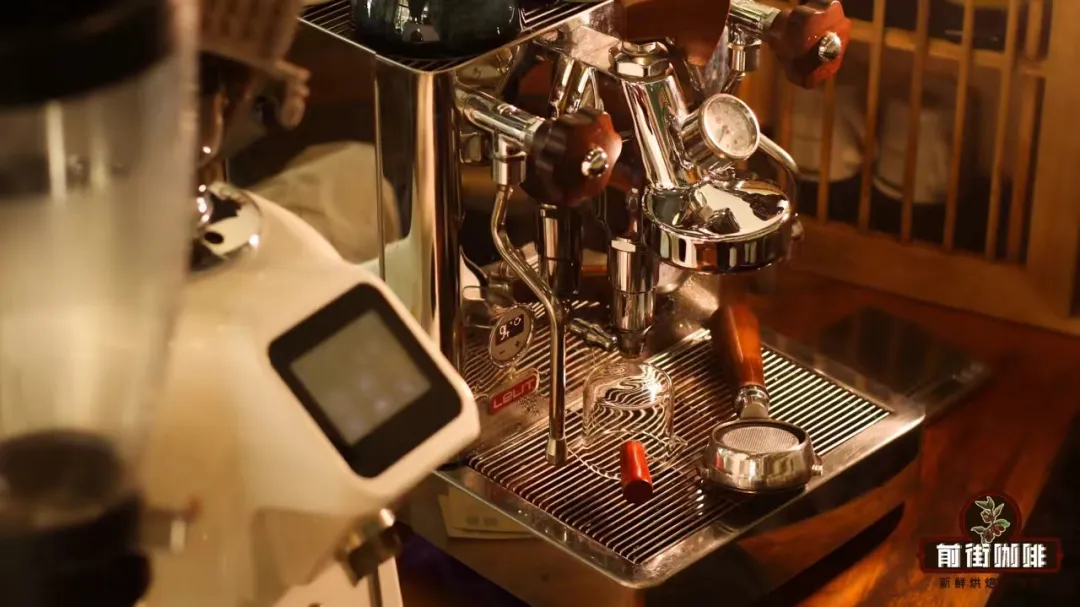
Today we'll summarize several high-frequency ordered coffees: Latte, Cappuccino, Espresso, Americano, Mocha, and the very popular Flat White of recent years. Their common prerequisite is that an espresso machine is needed to make them.
In 1901, Luigi Bezzera built the world's first steam-driven espresso machine in order to make a cup of coffee quickly. In the 1940s, Achille Gaggia improved it by fitting the machine with a brew head and handle, using high-temperature, high-pressure water to pass through finer coffee grounds and extract coffee liquid with crema. From then on, this espresso that could be completed in less than a minute gradually became popular in European countries.
Espresso
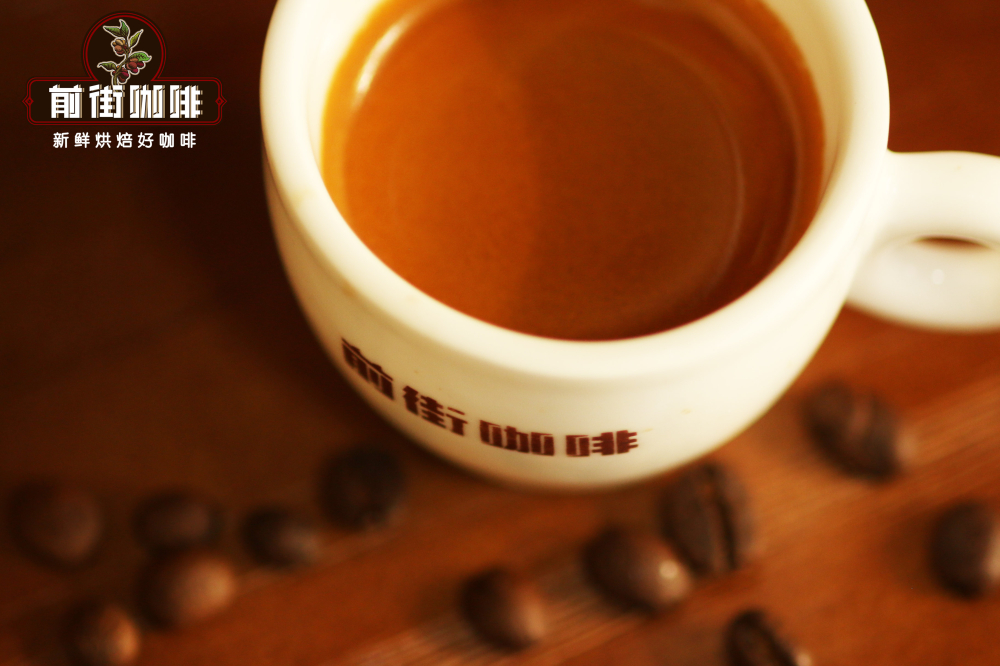
After coffee beans are ground into an extremely fine powder, under near-boiling hot water and about 9 atmospheres of high pressure, the espresso extracted in a short time has a very heavy mouthfeel, and all kinds of flavors—sweet, sour, and bitter—are amplified. First-time tasters are often startled by its intense impact. FrontStreet Coffee suggests that when tasting espresso, do not add milk or sugar, so that you can more directly feel the aroma of the coffee itself.
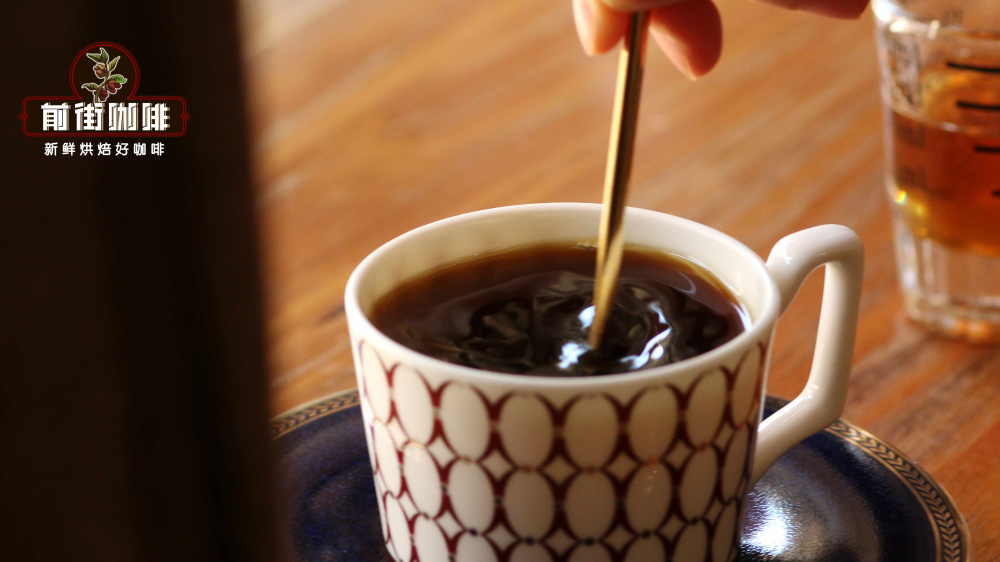
Americano
For many friends, the first cup that got them into coffee was an Americano. It is a black coffee, helpful for digestion, reducing edema, and refreshing the mind, and is also the first choice of many fitness enthusiasts.
During World War II, espresso was already widely spread in Europe, but American soldiers were not used to the strong taste, so they diluted the coffee liquid with water to a level they could accept. Later, Italians opened many espresso cafés in the United States, promoting this coffee based on espresso and diluted with water, and "Americano" thus became a popular calling card.
The ratio of coffee liquid to water in an Americano is usually between 1:6 and 1:8, adjusted specifically according to the flavor of the coffee beans and store standards. Taking the output of FrontStreet Coffee stores as an example, the beans used are Front Street's Sunshine Blend. The barista will first preheat the cup with hot water, pour in 240g of hot water, and then pour in the extracted coffee liquid. Here, generally 20g of coffee powder is used to extract 40g of coffee liquid, which is a 1:6 ratio. For iced Americano, the method is to take out a pre-chilled cup, add 180g of ice cubes and 100g of room-temperature water, then pour in the espresso liquid, for a ratio of 1:7, with a more refreshing taste than hot Americano.
Latte
Latte in Italian simply means "milk." What cafés call latte coffee refers to adding milk to espresso, and it is a very classic drink. Latte is divided into hot latte and iced latte, and many people, when drinking a hot latte for the first time, are attracted by the beautiful latte art. There is no fixed ratio of espresso to milk in a latte, usually between 1:5 and 1:8. Front Street uses a 1:6 ratio, that is, 40g of espresso liquid with 240g of milk.
When making a hot latte, Front Street will first preheat the coffee cup, add the espresso liquid, and then use the steam from the espresso machine to froth the milk. The milk temperature is best controlled at 55-65°C, forming dense milk foam of moderate thickness, then evenly blending it with the coffee liquid, and the final latte art is the icing on the cake. In this way, you can taste both the coffee aroma and the sweetness of the milk. For an iced latte, simply replace the water in the iced Americano above with milk, and you get an iced latte.
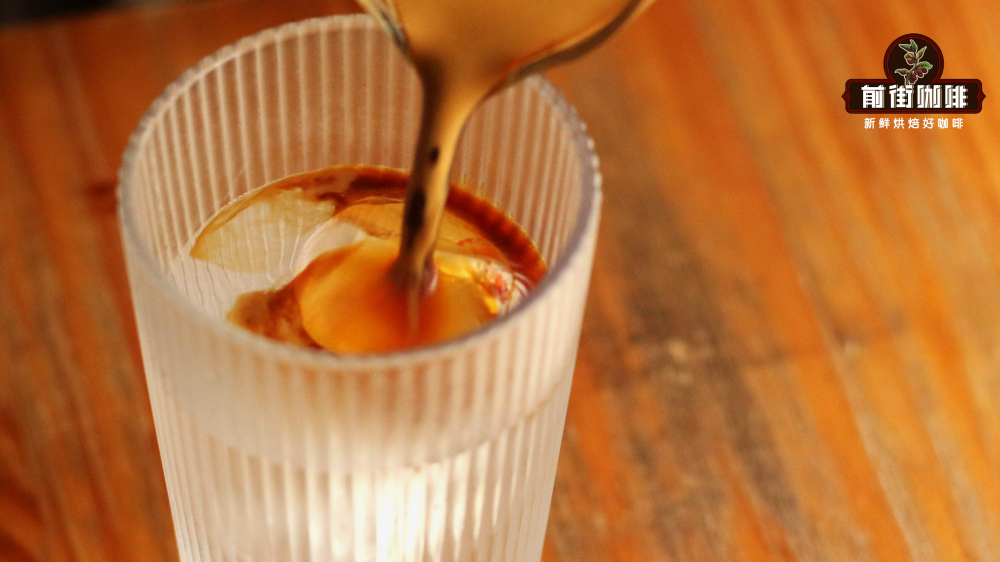
Speaking of iced latte, one cannot fail to mention Dirty coffee, which became popular starting in 2019, also called dirty coffee. Pouring high-temperature espresso over frozen milk creates an obvious layer, with the espresso liquid sinking down along the edge of the cup, giving a "dirty" visual effect. Usually the cup size of a Dirty is smaller than an iced latte, and it must be drunk immediately to taste the unique mouthfeel of "alternating hot and cold."
Mocha
On the basis of black coffee, in addition to adding milk like a latte, you can also add syrups of different flavors. A hot mocha adds 15g of chocolate sauce to the espresso, stirs it thoroughly, then pours in frothed hot milk to blend and make latte art, and finally sprinkles a layer of cocoa powder on the surface to add chocolate aroma and mouthfeel. An iced mocha adds 15g of chocolate sauce to the espresso of an iced latte.
Flat White
Flat White is also called "Australian white coffee," "Fu Rui Bai," or "flat white." It is actually a new creation made by Australians after adjusting the ratio parameters on the basis of a hot latte, and there are mainly two differences.
The base used in Flat White is called Ristretto. Australians wanted a milk coffee with a stronger coffee taste, believing that the latter part of the espresso would "dilute" the coffee flavor, so they take only the front and middle sections of the espresso and "restrict" the latter part, which is why it is called Ristretto. When drinking a Flat White, it is not hard to notice that its cup size is smaller than a hot latte. Since the amount of coffee liquid is reduced, if you blend in the same amount of milk as a latte, it is hard to highlight the coffee flavor, so the proportion of hot milk must also be reduced, frothing hot milk with a thin layer of milk foam and blending it evenly. Without a thick layer of milk foam, the surface of the coffee liquid is generally level with the rim of the cup, hence the name "Flat White," also translated as "Ping Bai." Flat means "flat," while White refers to the white coffee with milk added.
Front Street's Flat White coffee is generally made by extracting a double ristretto of about 30g from 20g of coffee powder, pouring it into a 200ml cup as the base, and adding milk at a ratio of 1:5, that is, 150ml of hot milk, with the frothed milk foam as thin as possible, so that you can taste a rich milk coffee mouthfeel.
Cappuccino
In early cappuccino, the ratio of espresso, milk, and milk foam was generally 1:1:1. But if made according to this standard, the coffee concentration is very high and the milk foam is also thick, making the coffee hard to drink. The biggest difference between cappuccino and latte is that the essence of cappuccino is the full mouthfeel brought by delicate milk foam. The milk foam and espresso are poured in together until the coffee reaches 11 parts full. Front Street's cappuccino mainly guarantees these points: small cup size, 11 parts full, rich coffee flavor, and dense thick milk foam.
What is the difference between Americano and Long Black?
In addition to the most common Americano, there is also a Long Black from Australia that is often compared with it. Both are composed of water and espresso.
The most obvious difference between Americano and Long Black is the amount of water added. Americano generally has more water added, with the ratio of coffee to water usually between 1:5 and 1:8. Australia's Long Black has a relatively stronger coffee taste than Americano and a smaller cup size. Front Street's Long Black is made by extracting two shots of espresso (40g) into a cup holding 100-120ml of water, with the ratio of coffee to water generally 1:3, retaining a rich crema on the surface and giving a more distinctive mouthfeel when drunk.
How to make a good espresso
Since so many of the varieties above are made based on espresso, how to make a good espresso base is especially important. Front Street stores' daily espresso output is a Sunshine Blend coffee bean, blended from Honduras Sherry and sun-dried Yirgacheffe Red Cherry. Made into an Americano, it has a whiskey aroma and the sweet-and-sour taste of berries; after blending with milk, it presents a rich, smooth chocolate mouthfeel, and its rich aroma has won praise from many customers. In response to different customers' purchasing needs, considering factors such as the flavors of different regions and coffee prices, Front Street's bean list also includes another 3 blended beans suitable for making espresso:
1. A specialty blend of Colombian Huila and Brazilian Cerrado coffee beans; the espresso has a mellow nutty aroma with soft fruit acidity and a sweet aftertaste;
2. A commercial blend composed of Colombia: Brazil: Robusta; the espresso has rich crema and the aroma of dark chocolate, nuts, and caramel
3. The Yunnan: Brazil combination is the espresso coffee bean recommended by many baristas—Front Street Black Cocoa Blend. The espresso has soft fruit acidity, the sweetness of caramel, and nutty and dark chocolate flavors, smooth and viscous, but the taste is on the lighter side
Regarding the choice of coffee beans, Front Street suggests choosing freshly roasted beans, because coffee beans enter their peak flavor period 4-7 days after roasting. The coffee shipped by Front Street is all freshly roasted within 5 days, and we hope customers can brew and drink it when the coffee flavor is at its best after receiving it.
Besides choosing suitable coffee beans, a good cup of espresso is also related to many factors, such as the choice of espresso machine, grind size, dose, air humidity, and so on.
For professional coffee knowledge exchange and more coffee bean information, please follow Coffee Workshop (WeChat public account cafe_style)
For more specialty coffee beans, please add the private WeChat of FrontStreet Coffee, WeChat ID: qjcoffeex
The above content is compiled by CoffeeHunters, a coffee news website.


