







Panama Boquete Geisha: Butterfly Coffee Beans and Hand-Brewing
The Boquete region of Panama gained fame through Hacienda La Esmeralda's Geisha. Butterfly coffee beans combine Geisha genetics with an affordable price, made of 70% Geisha blended with Caturra and Catuai. This article reviews Boquete's microclimate and volcanic soil advantages, explains why Butterfly still counts as a single-origin coffee, and provides pour-over parameters and staged extraction techniques for its floral, citrus, berry, and sweet aftertaste profile.
In 2004, Hacienda La Esmeralda won a reliable of Panama competition with Geisha. Geisha was first discovered in Ethiopia in the 1930s, but today it is most associated with Panama's Boquete region. Boquete is a small town in Chiriqui Province, near Baru Volcano, with fertile soil and a climate suited to growing quality coffee. Many estates there produce outstanding beans, and Butterfly offers a way to enjoy Geisha character at a reasonable cost.
The Boquete region of Panama became famous because of Hacienda La Esmeralda's Geisha. Butterfly, as a representative bean that combines Geisha genetics with an affordable price, is composed of 70% Geisha blended with Caturra and Catuai. Starting from Front Street Coffee's recommendation, this article reviews Boquete's microclimate and volcanic soil advantages, explains why Butterfly still counts as a single-origin coffee, and provides specific pour-over parameters and staged extraction techniques to showcase its floral, citrus, berry, and strong sweet aftertaste flavor profile.
Customers drinking coffee at Front Street often ask whether there are beans that are both reasonably priced and delicious. Besides the everyday drinker's staples, Front Street's baristas will most likely bring out Panama Butterfly to recommend. This bean carries elegant floral notes, a tonality woven from citrus and berries, plus a lingering sweet finish, making many regulars latch onto it after just one sip. Upon hearing that Geisha makes up 70% of this coffee, with the remaining 30% being Caturra and Catuai, slightly knowledgeable customers often nod in sudden understanding.
In 2004, Hacienda La Esmeralda took first place in the Best of Panama coffee competition with Geisha, and Geisha shot to fame overnight, even being hailed by many as the world's most valuable coffee variety, bar none. According to public records, Geisha was first discovered in Ethiopia in the 1930s, but nowadays when people mention Geisha, the first place they think of is still Panama's Boquete region. Many customers wonder why Boquete can grow such delicious coffee. Today Front Street Coffee (FrontStreet Coffee) is writing an article to explain this question clearly.
Panama is located in Central America, bordering Costa Rica to the west and Colombia to the east. Anyone with some knowledge of single-origin coffee probably knows that Panama's coffee is renowned in the industry thanks to Hacienda La Esmeralda's Geisha—the resounding name Geisha. It can be said that this is a country extremely particular about coffee quality, with excellent beans emerging endlessly.
The Boquete region, where Hacienda La Esmeralda is located, is quite famous. Boquete is a small town in Chiriqui Province, situated at the border between Panama and Costa Rica, adjacent to the famous Baru Volcano. It has beautiful scenery, fertile and deep soil, and climate and soil conditions highly suitable for growing quality coffee.
Scattered throughout the Boquete region are quite a few outstanding estates. Besides the resounding Hacienda La Esmeralda, Elida Estate and Duncan Estate also carry considerable weight in the industry, likewise producing high-quality specialty coffee. This is due both to Boquete's superior ecological conditions and to the fertile volcanic ash soil around Baru Volcano. The microclimate of Panama's Boquete highlands is a unique and important resource for specialty coffee here; Panama's east-to-west topography allows cold air to gather along the central mountain range above 6,500 feet, forming multiple microclimates in the Boquete area, with temperature, humidity, rainfall, and sunshine all just right, so coffee trees grow exceptionally well here.
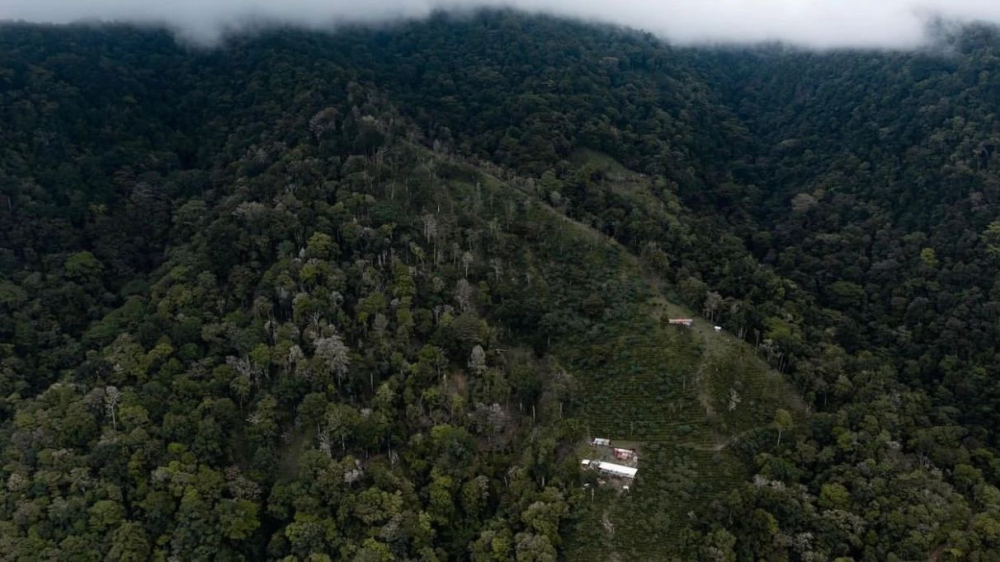
On this land of Boquete, there is a bean with particularly strong value for money, and it has a rather lovely name: Butterfly.
Butterfly is composed of three varieties—Geisha, Caturra, and Catuai—planted in Boquete's Baru Volcano area at an altitude of about 1,600 meters, cultivated and harvested in traditional ways by local smallholder farmers, then finely washed at the processing station. Panama's special microclimate gives this area ample rainfall, large temperature differences between day and night, plus the volcanic rock soil unique to volcanic regions. Combined with careful picking and fine processing, this coffee performs remarkably well in body, acidity, and floral notes, giving an overall impression of elegance and refinement. What's even more surprising is that despite such solid quality, the price is very friendly, with value for money maxed out. Its greatest specialty is that the Geisha variety accounts for a considerable proportion, giving this bean a distinct orange-blossom honey charm.
As Front Street said earlier, Butterfly is a mix of Geisha, Caturra, and Catuai, so many customers ask: with three varieties together, does this count as a blended coffee? To clarify this question, we must first understand what single-origin coffee means. Single-origin coffee is defined as "coffee beans from a single source." After consulting materials, Front Street learned that due to the estate's historical reasons, in earlier years, to pursue yield, Geisha and the two coffee tree varieties Caturra and Catuai were interplanted together for ease of harvesting. The coffee farmers did not reclassify them, and only before export were the three varieties mixed and processed again in proportion. Since these three varieties all come from the same origin—that is, the same production region—Butterfly naturally belongs to single-origin beans.
Flavor description of Butterfly: the dry aroma has obvious floral notes; on the palate there is a slight tea-like quality, with prominent citrus flavors. After the temperature drops a little, the sweet-and-sour taste of plum emerges, with a clear sweet aftertaste.
Front Street Coffee (FrontStreet Coffee): Panama · Butterfly Coffee Beans
Country: Panama
Region: Boquete, Baru Volcano area
Altitude: 1,600 meters
Varieties: 70% Geisha, Catuai, Caturra
Processing method: Washed
Considering the special varietal composition of this Butterfly, Front Street uses a medium-light roast to determine its final flavor direction. Front Street Coffee (FrontStreet Coffee)'s roaster chooses to shorten the bean's Maillard reaction time and follow a relatively fast curve. Because the beans are high in density and hardness, a high heat is used at the start for dehydration, then the heat is reduced before first crack to lower the rate of temperature rise as it enters first crack, preserving small-molecule aromatic substances such as floral notes as much as possible, so that Geisha's distinctive floral, white grape, caramel, honey, and black tea aromas are not damaged.
[Front Street Coffee (FrontStreet Coffee) Barista Pour-Over Parameter Reference]
Dripper: Hario V60
Water temperature: 91°C
Dose: 15 grams
Coffee-to-water ratio: 1:15
Grind size: caster sugar (78% passing rate on China standard No. 20 sieve)
Front Street Coffee (FrontStreet Coffee) Barista Brewing Method
Front Street Coffee (FrontStreet Coffee) uses staged extraction: first bloom with 30 grams of water for 30 seconds, then pour in a slow circular stream until 125 grams for one stage, wait until the water level drops and is about to expose the coffee bed, then continue pouring until 225 grams and stop. When the water level drops again to near exposing the coffee bed, remove the dripper. Timing starts from the bloom, with a total extraction time of 2 minutes 00 seconds. Brewing Geisha and Butterfly this way yields higher sweetness and a softer sweet sensation. The method is for reference only; everyone can fine-tune it according to their preferred taste.
Professional coffee knowledge exchange
More coffee bean information
Please follow Coffee Workshop (WeChat public account cafe_style )
For more specialty coffee beans, please add the private WeChat of Front Street Coffee (FrontStreet Coffee), WeChat ID: kaixinguoguo0925
The above content is compiled by CoffeeHunters, a coffee news website.


