







Where did geisha coffee beans come from and how do they taste?
Geisha coffee beans were found in 1931 in the Geisha forest of Ethiopia, then moved through Kenya, Uganda, and Tanzania before reaching Costa Rica in 1953. Don Pachi Serracin brought the trees to Panama in 1963. Panama geisha coffee later drew attention through Hacienda La Esmeralda, whose Jaramillo, Cañas Verdes, and El Velo plots give distinct flavor profiles.
The variety nearly faded because of low yields and fragile branches that demand careful handling. Hacienda La Esmeralda's Red, Green, and Blue Label grades reflect different lots and processing, and washed and natural methods shift the cup further. Front Street Coffee stocks geisha from Ethiopia, Panama, and Costa Rica, and the floral aroma stays recognizable across all three origins.
Geisha coffee beans, with their iconic floral aroma and delicate fruit acidity, have become one of the most sought-after varieties in the specialty coffee world. From the perspective of Front Street Coffee, this article traces Geisha's journey from the forests of Ethiopia to Panama's Hacienda La Esmeralda, analyzes the microclimate differences among the estate's three major plots—Jaramillo, Cañas Verdes, and El Velo—and explains the processing methods, flavor profiles, and Front Street roasting curves for the three grades: Red Label, Green Label, and Blue Label. It also records Front Street's actual brewing parameters for Geisha, including coffee-to-water ratio, water temperature, and staged pouring technique, helping coffee enthusiasts understand the taste differences brought by different processing methods.
For more specialty coffee knowledge, please follow our WeChat public account: FrontStreet Coffee.
At Front Street Coffee, the Geisha variety always catches guests' attention. Many newcomers to coffee have heard its name before ever tasting the beans, sitting at the bar and asking Front Street's baristas about Geisha's characteristics, and Front Street's baristas patiently answer every guest's questions. Front Street carries several Geisha coffee beans from Ethiopia, Panama, and Costa Rica. Geisha grown in each region has a different flavor profile, but the floral aroma—Geisha's signature characteristic—always comes through no matter where it is grown. With the development of specialty coffee, there are increasingly more Geisha coffee beans with different processing methods. This time, Front Street Coffee will focus on explaining the difference between two traditional processing methods for Geisha coffee beans, namely natural and washed.
The Geisha variety was discovered in 1931 in the Geisha forest of Ethiopia. It was then sent to the Coffee Research Institute in Kenya, introduced to Uganda and Tanzania in 1936, introduced to Costa Rica in 1953, and in 1963 Don Pachi Serracin introduced Geisha coffee trees from Costa Rica to Panama. Because of low yields, which directly affected harvest volume, and fragile branches requiring extra careful attention, coffee farmers were not very willing to grow it.
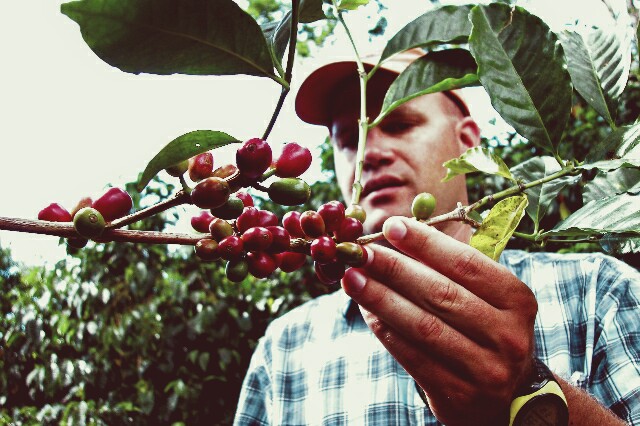
Initially, not many people paid attention to Geisha until Panama's Hacienda La Esmeralda, also known as Esmeralda Estate. In order to improve coffee quality, Hacienda La Esmeralda tasted, compared, and recorded the differences among hundreds of coffee varieties. Then in 2003, they unexpectedly discovered that the coffee beans produced by the Geisha coffee trees on their estate had such unique flavors. These beans even had the citrus and floral notes characteristic of African beans, completely different from the "nutty, caramel, chocolate" flavors of Central American coffee at the time. Two weeks before the 2004 BOP competition, estate owner Daniel selected the batch to enter the competition, and this Geisha coffee bean, unknown to the world, unexpectedly won the BOP championship. Only then did the Geisha variety formally enter everyone's view. Although Geisha's flavor is exquisite, such elegant flavors come from specific growing environments.
The Geisha variety is very particular about its growing environment, requiring cultivation in high-altitude areas with cloud cover or abundant shade trees, and fertile soil. High-altitude Geisha coffee has obvious floral aromas and delicate, elegant fruit acidity, and this elegant flavor is also one of the reasons it has become popular worldwide. In the eyes of specialty coffee lovers around the world today, Geisha coffee beans are undoubtedly a supreme treasure.
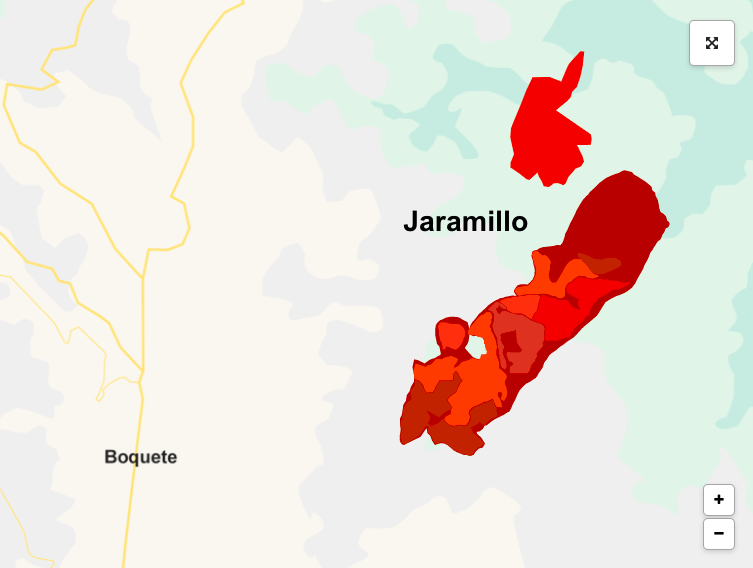
Front Street Coffee often encounters customers asking why the higher the altitude, the better the coffee quality. Actually, looking at Geisha coffee beans makes it clear. Geisha is especially picky about its growing environment and requires high altitude, and the higher the altitude, the better the quality. The Panama Geisha coffees displayed at Front Street Coffee come in several grades. Red Label is the highest grade, and its altitude is also the highest. Front Street Coffee will explain Hacienda La Esmeralda's grade classifications in detail below, so please keep reading. Panama Hacienda La Esmeralda Plot Divisions Hacienda La Esmeralda is located in Panama's Boquete producing region, an important coffee-producing region in Panama. Many well-known coffee estates come from this region, such as Elida Estate and Kotowa Estate. Hacienda La Esmeralda divides its Geisha plots extremely precisely, mainly into three plots: Jaramillo, Cañas Verdes, and El Velo. Each plot is further divided into smaller plots. High-quality Geisha mainly comes from the two plots Jaramillo and Cañas Verdes. Jaramillo Annual rainfall is 4000 ml, average daytime temperature is 19-25°C, average nighttime temperature is 11-15°C, and average altitude is 1600-1700 m. The Jaramillo plot is subdivided into 5 smaller plots: Mario, Noria, Reina, Bosque, and Buenos Aires.
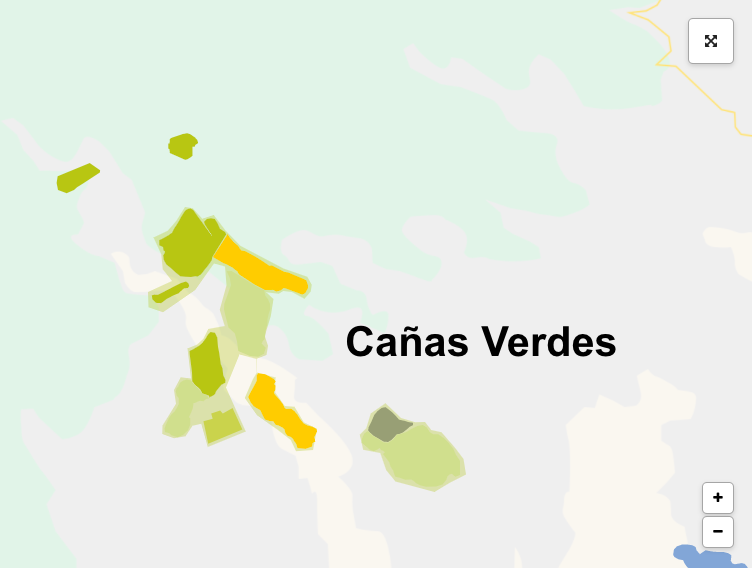
Cañas Verdes Annual rainfall is 3500 ml, average daytime temperature is 16-23°C, average nighttime temperature is 10-15°C, and average altitude is 1600-1800 m. Cañas Verdes includes plots such as Nido, Tumaco, Cabana, Leon, Montana, Fundador, Lino, Coronado, Chinta, Trapiche, and Colga.
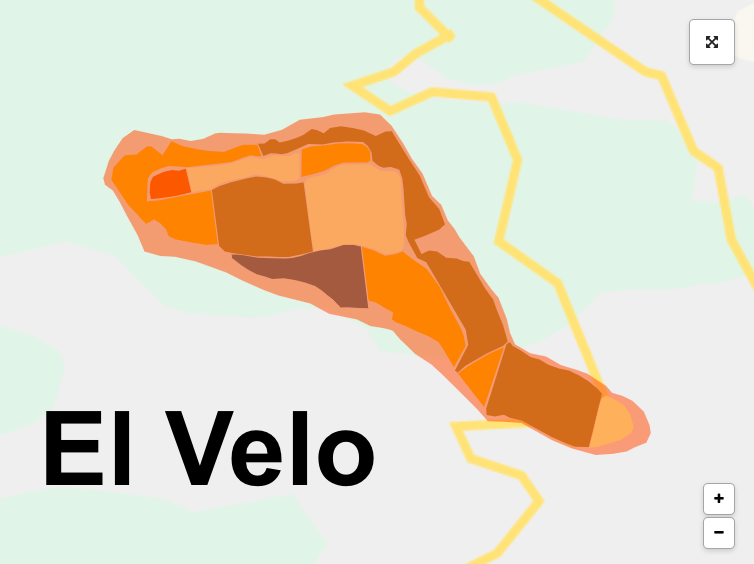
El Velo is the most recently acquired plot of Hacienda La Esmeralda, with an average altitude of 1700-1900 m. In addition to growing Geisha and Catuai, this plot also has a small amount of other introduced varieties, such as Laurina, Pacamara, Mocha, and SL28. The plots of El Velo are: Guabo, Alguila, Higo, Buena Vista, Mural, Durazno, Porton, Ethiopian Accession Garden, and others.
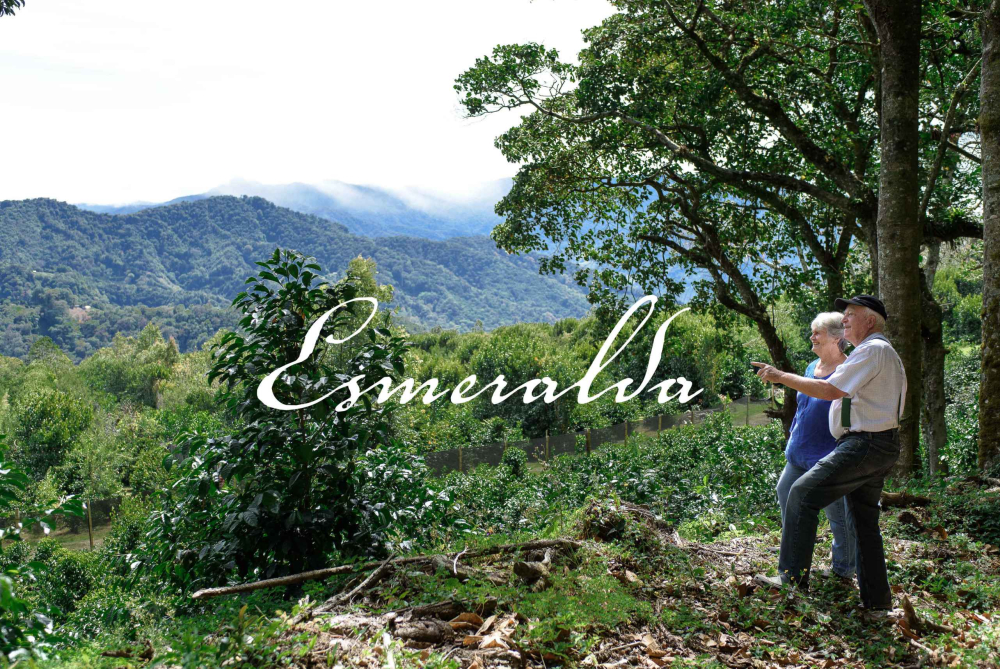
Hacienda La Esmeralda's Geisha coffee beans are divided into 3 grades: Esmeralda Special (Red Label), Private Collection (Green Label), and Geisha 1500 (Blue Label). [Front Street Panama Hacienda La Esmeralda Red Label Geisha] Hacienda La Esmeralda's Esmeralda Special Geisha is what is commonly called Red Label. It is selected from Geisha beans grown at 1600-1800 meters, with a cupping score above 90, from the two producing areas Jaramillo and Cañas Verdes. In Hacienda La Esmeralda's own independent auction, only the Geisha batches put up for bidding from the divided plots are the auction Red Label. However, there is now also non-auction Red Label on the market, which is actually Geisha selected from the same plots that was not entered into the auction and then circulated on the market. The variety quality is consistent, with differences only in selling price. This grade of Geisha uses natural or washed processing, with flavors featuring special, bright floral aromas and citrus notes.
Hacienda La Esmeralda and Geisha coffee beans became world-famous starting in 2004, and the Geisha batch sent to the BOP competition that year came from the Jaramillo farm, which shows the caliber of Geisha coffee from this plot. On Front Street's bean shelf, you can still find a Red Label Geisha from the same farm as the 2004 BOP champion Geisha beans.
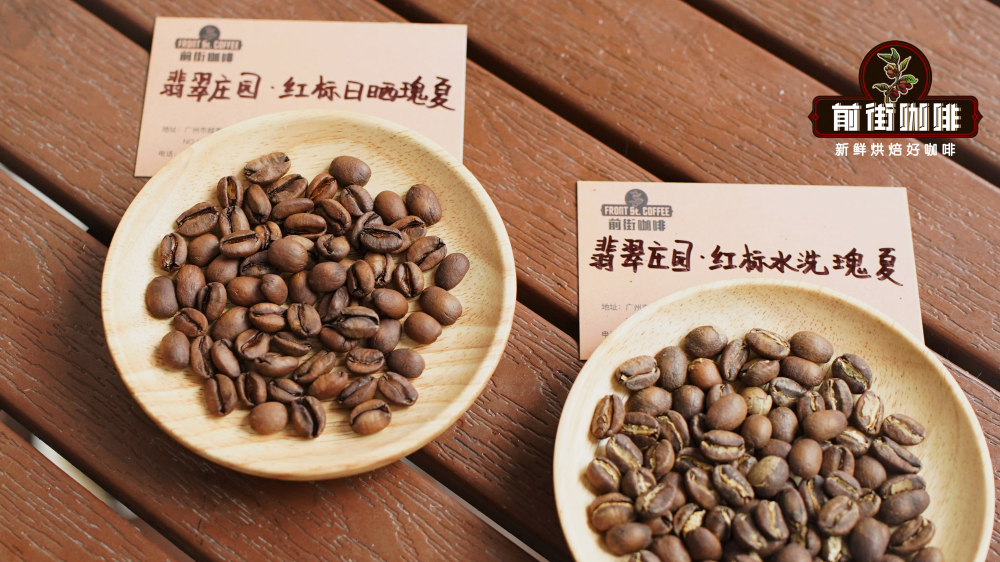
The Front Street Panama Hacienda La Esmeralda Red Label Geisha that Front Street sourced uses natural processing. When brewed, it has bright rose and citrus aromas, genmai, berries, apricot, complex fruit, honey, a thick juicy body, rich flavor layers, and obvious sweetness. If you want to taste the typical Geisha flavor, naturally processed Geisha makes the coffee flavor more intense, with richer and more complex layers, and the sweet-acid sensation and aroma are also qualitatively improved. As Hacienda La Esmeralda's most iconic Geisha coffee, the natural processing method lets Front Street Hacienda La Esmeralda Geisha's flavor fully shine.
How does Front Street Coffee roast Front Street Hacienda La Esmeralda Red Label Geisha coffee beans? Yangjia 800N, charge 380 g: charge at 150°C drum temperature, power 120, damper set to 3; turning point at 1'36", when drum temperature reaches 140°C open damper to 4, power unchanged; when drum temperature reaches 147.6°C the bean surface turns yellow, the grassy smell completely disappears, entering the dehydration stage; when drum temperature reaches 150°C, adjust power to 100, damper unchanged; at 7'38" the bean surface shows ugly wrinkles and dark patches, and the toast aroma clearly turns into coffee aroma, which can be defined as the prelude to first crack. At this time, listen carefully for the sound of first crack. At 8'10" first crack begins, open damper to 4, develop 1'28 after first crack, drop at 189.5°C. [Front Street Panama Hacienda La Esmeralda Green Label Geisha] Private Collection, commonly known as Green Label, is not an independent competition batch. It is a Geisha variety grown without participating in auctions but still of excellent quality. It is selected from mixed micro-lots grown at 1600-1800 meters from different plots such as Jaramillo and Cañas Verdes. Because it uses a blended-bean model without detailed plot designation, sometimes Green Label and Red Label have very similar flavors, but the next release may differ again. Although Green Label is not as high-grade as Red Label, it still carries Geisha's classic flavors: floral aroma, fruity notes, citrus acidity, and a thick, juicy body.
Green Label Geisha is likewise processed either washed or natural. The Front Street Hacienda La Esmeralda Green Label that Front Street sourced uses washed processing. When brewed, it has an intense jasmine floral aroma on entry, high sweetness, citrus, berries, juicy body, cream, green tea, orange peel, and cantaloupe, with rich overall flavor layers and a lingering floral and citrus finish.
The washed Front Street Esmeralda Green Label Geisha is the representative of Hacienda La Esmeralda's fresh, light style, with a more refreshing mouthfeel. It shows everyone Hacienda La Esmeralda's most original terroir and is also the most cost-effective among Hacienda La Esmeralda's Geisha coffees.
How does Front Street Coffee roast Front Street Hacienda La Esmeralda Green Label Geisha coffee beans? Yangjia 800N, charge 500 g: charge at 190°C drum temperature, power 150, damper set to 3; turning point at 1'36", when drum temperature reaches 140°C open damper to 4, reduce power to 130; when drum temperature reaches 150.8°C the bean surface turns yellow, the grassy smell completely disappears, entering the dehydration stage; when drum temperature reaches 166°C, adjust power to 110; damper unchanged; at 7'55", at 176°C adjust power to 90; the bean surface shows ugly wrinkles and dark patches, and the toast aroma clearly turns into coffee aroma, which can be defined as the prelude to first crack. At this time, listen carefully for the sound of first crack. At 8'30" first crack begins, open damper to 5, at 187°C adjust power to 60; develop 1'30 after first crack, drop at 193.5°C.
[Front Street Panama Hacienda La Esmeralda Blue Label Geisha]
The brand Geisha 1500 is what we commonly call Blue Label Geisha. It is selected from blended beans grown at 1400-1500 meters from three different plots: Jaramillo, Cañas Verdes, and El Velo. The flavor has slight floral aroma, fruit acidity, and sweetness, with a less thick body. In previous years, Blue Label Geisha was only washed, but this year's Blue Label batch added a natural processing method.
The Front Street Esmeralda washed Blue Label that Front Street sourced brews with a faint floral aroma, a soft acidity of lemon and grapefruit on entry, honey sweetness in the middle, and oolong tea and brown sugar sweetness in the finish, with a relatively clean, bright mouthfeel. The Front Street Esmeralda natural Blue Label, after brewing, smells of fermentation aroma and fruity sweetness, and tastes of melon and tropical fruit sweetness, with a juice-like mouthfeel and very high overall sweetness.
Then in 2021, news came that Hacienda La Esmeralda had discontinued the Blue Label brand; in the same year, a Geisha coffee bean from the same region called "Las Rocas" appeared. After Front Street's verification, Las Rocas Geisha is processed by Hacienda La Esmeralda, and its flavor is also highly similar to that of previous years' Blue Label Geisha. (At present, this brand has also been discontinued.)
How does Front Street Coffee roast Front Street Hacienda La Esmeralda washed Blue Label Geisha coffee beans? Yangjia 800N, charge 480 g, charge at 180°C drum temperature, power 130, damper set to 3; turning point at 1'32", when drum temperature reaches 130°C open damper to 4, power unchanged; when drum temperature reaches 151.6°C the bean surface turns yellow, the grassy smell completely disappears, entering the dehydration stage; at 7'56", the bean surface shows ugly wrinkles and dark patches, and the toast aroma clearly turns into coffee aroma, which can be defined as the prelude to first crack. At this time, listen carefully for the sound of first crack. At 8'30" first crack begins, open damper to 5, develop 1'28 after first crack, drop at 190°C.
[Front Street Panama Las Rocas Volcanic Rock Geisha Coffee Beans]
Las Rocas Volcanic Rock Geisha is a new-brand Geisha coffee bean from the 2021 new crop season. In fact, it comes from the renowned Hacienda La Esmeralda, grown at an altitude of about 1500 meters, and uses washed processing. Careful friends may notice that the information for this coffee bean is exactly the same as Blue Label Geisha. Do not doubt it—this is the former Blue Label Geisha. In 2021, Hacienda La Esmeralda did not release information about a new-crop Blue Label Geisha precisely because the original Blue Label batch was "sold internally" to a certain green bean company. This brand is indeed that company's new brand. Unsurprisingly, the flavor of this batch of coffee is the same as the previous washed Blue Label Geisha.
How to hand-brew Front Street Geisha coffee?
Front Street recommends using freshly roasted coffee beans for brewing, as this allows you to experience the coffee's rich flavors to the greatest extent. The coffee beans shipped by Front Street Coffee are all within 5 days of roasting, because Front Street knows well that coffee bean freshness has a huge impact on flavor. Front Street's roasting philosophy is "freshly roasted good coffee," so that every customer who places an order receives the freshest coffee when they get it. Coffee's resting period is about 4-7 days, so when customers receive it, it is exactly at its best flavor.
Water temperature: 91°C
Grind size: fine sugar (80% passing rate on China standard No. 20 sieve)
Coffee-to-water ratio: 1:15
Dose: 15 g

Front Street brewing method: In the first stage, pour 30 g of water for a 30-second bloom, then pour 95 g (electronic scale shows about 125 g), finishing in about 1 minute. When the water level drops to 2/3 of the coffee bed, pour the remaining 100 g (electronic scale shows about 225 g), finishing in about 1 minute 40 seconds. At 1'55''-2'10'' dripping is complete; remove the dripper and extraction is finished.
The above content is compiled by CoffeeHunters, a coffee news website.


