







What Defines Brazilian Coffee Taste and Its Main Varieties?
Brazilian coffee taste is known for rich nutty and chocolatey notes with a smooth mouthfeel, and the country remains the largest coffee exporter. Coffee arrived in 1720 from French Guiana and spread from the north to São Paulo; by 1845 Brazilian beans made up 45 percent of world supply. Typica came first, then higher-yielding Bourbon in the 1860s.
Today the main varieties are Red Bourbon, Yellow Bourbon, Mundo Novo, and Catuai, grown in specialty regions such as Cerrado in Minas Gerais. Natural and semi-washed methods change how much fruit or nut character reaches the cup, and pour-over parameters are included for everyday Brazilian beans. Terroir and processing, not variety alone, explain the properties of coffee beans from this origin.
As the world's largest coffee exporter, Brazilian coffee is renowned for its rich nutty and chocolatey notes and smooth mouthfeel. This article will start with the history of coffee introduction in Brazil, trace the succession of varieties such as Typica and Bourbon, introduce the terroir conditions of specialty regions like Cerrado in Minas Gerais, and analyze the impact of natural and semi-washed processing methods on quality. At the same time, Front Street Coffee will share pour-over parameter suggestions and the brewing flavor performance of Brazilian everyday beans, taking you through a comprehensive understanding of this pivotal coffee powerhouse.
For more specialty coffee knowledge, please follow our WeChat public account: Front Street Coffee (FrontStreet Coffee).
Brazil is the world's largest coffee exporter, with coffee aroma filling the streets and alleys. Its coffee is widely recognized in the market for its rich nutty and chocolatey notes and smooth mouthfeel. Next, Front Street will start with the history of cultivation and guide you step by step into understanding Brazilian coffee.
The History of Coffee Cultivation in Brazil
Brazil's coffee beans were first introduced in 1720 from French Guiana (a country in northern South America). At that time, Brazil was a Portuguese colony, while most other South American countries were Spanish colonies, so most South American countries speak Spanish, while Brazil uses Portuguese.
In order to bring coffee beans from Guiana to Brazil (at the time, the outflow of coffee to other countries was strictly prohibited), the Portuguese military officer stationed in Brazil managed to win the favor of the wife of the governor of Guiana, and thus successfully brought coffee seeds into Brazil. After that, coffee quickly adapted to the environment in Brazil and expanded from the north all the way to São Paulo in the southeast. By 1845, Brazilian coffee beans accounted for 45% of the world's total coffee beans. Today, Brazil remains the world's largest coffee exporter.
The variety introduced to Brazil in the early period was Typica, but Typica had low yields, making it difficult for coffee farmers to obtain corresponding profits. So in the 1860s, the higher-yielding Bourbon variety was introduced from Réunion Island. At present, Brazil's main varieties include Red Bourbon, Yellow Bourbon, Mundo Novo, and Catuai. Among them, Red Bourbon can be planted densely because of its compact tree shape, with yields about 30% higher than Typica. Its beans are relatively round and short, with berry-like acidity and a full body, obvious creaminess and aroma, and pure acidity.
Brazil's Specialty Coffee Regions
Unlike other Central and South American producing countries, Brazil has a vast territory and prioritizes yield. Local altitudes are generally low, and coffee trees can be planted on a large scale in flat areas below 1,000 meters. After the fruit ripens, workers use machines for large-scale harvesting, saving a great deal of labor. The harvested coffee cherries are then processed by large green bean processing plants, with every step completed under a commercial management model.
Brazil's coffee growers are different from many refined estate owners. Many years ago, in order to make coffee trees better adapt to the local terroir, Brazilians had already cultivated coffee varieties that do not require shade and can grow under full sun exposure. In addition, because of the lower planting altitude, the coffee trees do not have enough time to absorb more nutrients and form unique aromas. Therefore, most Brazilian coffee tastes balanced, with low acidity and a soft mouthfeel, and is easy to accept even for those drinking coffee for the first time.
As a major coffee-producing country, Brazil naturally has far more producing regions and area than other countries. At present, a total of 17 states in Brazil produce coffee, mainly distributed in the southeast. The concentrated rainfall during the rainy season and the mild climate conditions are very suitable for coffee tree growth. Front Street believes that the coffee produced in Minas Gerais and São Paulo in the southeast is of the best quality. Among them, the Cerrado region in Minas is the first coffee-producing region in Brazil to obtain origin certification, and almost all the coffee it produces is Arabica of relatively good flavor. As a mature coffee-producing region, Cerrado was the earliest area in Brazil to achieve coffee commercialization, and many exporters have built large coffee plantations there. The Front Street Brazilian everyday bean coffee launched by Front Street is selected from the famous Cerrado region.
The original intention of Front Street in launching everyday beans is to let friends who are new to coffee understand the characteristics and properties expressed by different origins, processing methods, and varieties by tasting the representative flavors of classic producing regions, thereby enriching their coffee knowledge. As a pivotal coffee powerhouse, Brazil is naturally also included by Front Street among the flagship everyday beans. Because it has a rich aroma, it is suitable for a variety of extraction methods, such as moka pots, drip American-style machines, espresso machines, etc. It is currently available for purchase at the Front Street Coffee (FrontStreet Coffee) Taobao store and the Front Street Tmall flagship store.
Natural Process and Semi-Washed Process
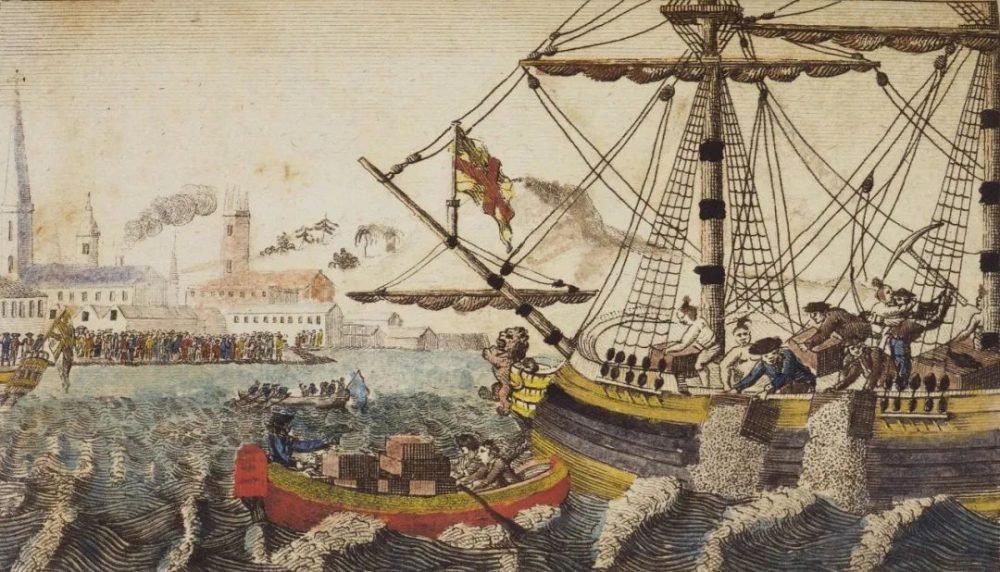
Traditionally, Brazil's local harvest season happens to fall in the dry season, which is very suitable for drying green coffee beans by the natural method. Traditional natural processing spreads all the beans flat on the ground, which can easily give the coffee beans off-flavors such as dirt and wood, leading to inconsistent quality.
After 1990, Brazil advocated the semi-washed method (also called semi-wet processing), which first removes defective beans and floating cherries through flotation, then uses machines to remove the skin, pulp, and part of the mucilage, followed by washing, and finally drying in the sun or in a drying room. The semi-washed method saves water and labor compared with the washed method and has brought a substantial leap in the quality of Brazilian coffee, presenting a cleaner flavor and mouthfeel. Of course, some coffee estates with higher standards also use refined natural processing. For example, the green beans of Front Street Brazil Queen Estate Coffee use natural processing.
The Flavor Characteristics of Brazilian Coffee
To taste the flavor and mouthfeel described for Brazilian coffee, Front Street recommends choosing freshly roasted coffee beans. Coffee beans enter their optimal tasting period 4 to 7 days after roasting. After this time (about one and a half months after roasting), the coffee's aroma may already have been lost, and some woody notes may develop. To avoid this situation, as Front Street has mentioned in many articles, the most important thing is that Front Street only ships coffee beans freshly roasted within 5 days, so everyone can taste coffee with excellent flavor.
The two Brazilian coffee beans on Front Street's bean list are both dominated by a rich bitter tone. Front Street uses a medium-dark roast to allow the coffee beans to undergo more caramelization reactions. Considering that medium-dark roasted coffee is heated for longer than light roasted coffee, the internal structure of the beans will be fluffier than that of light roasted coffee, so the water absorption effect is better. In order to avoid over-extraction, Front Street chooses a grind size with a 75% passing rate on a No. 20 standard sieve, along with a water temperature of 88°C, paired with Front Street's usual three-stage pouring, and uses a Kono dripper to make the extracted coffee rounder in mouthfeel.
Pour-over parameters: water temperature 88°C, grind size like coarse sugar (75% passing rate on a No. 20 standard sieve), 15 grams of coffee beans, coffee-to-water ratio 1:15, three-stage extraction.
In the first stage, gently pour 30 grams of water for blooming, with a blooming time of 30 seconds. In the second stage, pour until the water amount reaches about 125 grams, circling outward evenly and steadily. Then wait for the coffee liquid to drop. When it has dropped halfway, pour the final stage of water until 225 grams. After all the coffee has dripped through, the total extraction time is generally about 2 minutes.
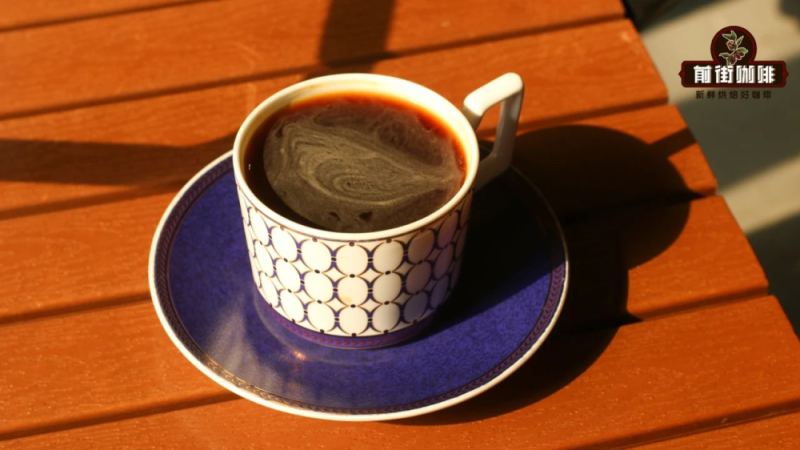
Brewing flavor: Front Street Brazil Cerrado everyday beans carry aromas of nuts, chocolate, and caramel, with obvious sweetness returning after drinking and an overall relatively round feel, while the chocolate flavor is stable and lasting.
The above content is compiled by CoffeeHunters, a coffee news website.


