







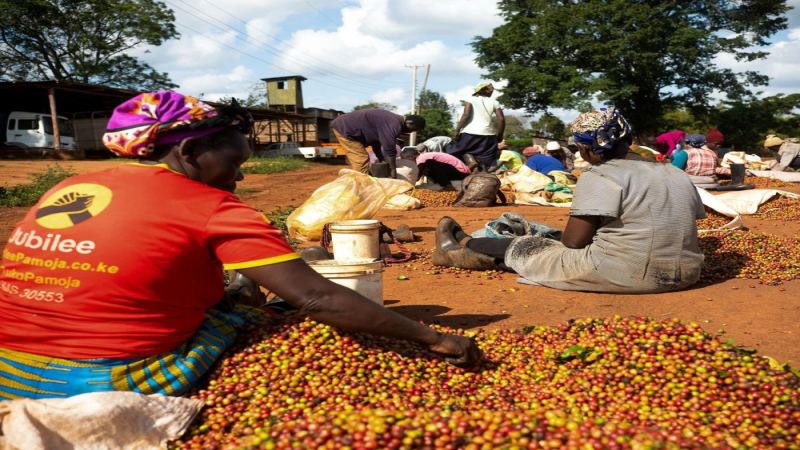
How Does the Kenyan Coffee Grading System Work?
Kenyan coffee is valued for bright fruit acidity, especially the cherry-tomato note. The coffee grading system sorts beans by size and density, with AA, AB, and PB the common screen sizes, while the K72 washed coffee beans process adds a 72-hour fermentation step. Together with SL28 and SL34 varieties grown on acidic volcanic red soil, these factors create the penetrating acidity.
Most Kenyan coffee grows in the highlands around Nairobi at 1,400 to 2,000 meters, where wide day-to-night temperature swings slow cherry ripening and produce denser beans. Flowering follows rain, concentrated in March and April, with fruit maturing from May. The article also gives roasting curves and brewing parameters for current Kenyan lots, from terroir through the finished cup.
Kenyan coffee is renowned for its bright fruit acidity, and the cherry-tomato-like acidity in particular has captivated countless coffee lovers. Front Street Coffee has introduced several Kenyan beans, and the response has always been positive. This article will systematically examine the flavor formation of Kenyan coffee, from terroir, variety characteristics, and grading systems to the K72 washed processing method, and will include the roasting curves and brewing parameters of Front Street Coffee’s currently available Kenyan beans. Whether you are new to Kenyan beans or an enthusiast looking to refine your brewing technique, you will find practical references here.
For more specialty coffee knowledge, please follow the WeChat public account: Front Street Coffee (FrontStreet Coffee)
The most memorable thing about Kenyan coffee is its highly penetrating acidity, and the cherry-tomato-like tart aroma in particular has won over countless fans. Front Street Coffee (FrontStreet Coffee) has also successively released several Kenyan beans, with quite good market feedback. In the following article, Front Street Coffee (FrontStreet Coffee) will discuss the growing conditions, varieties, grading, and processing methods of Kenyan coffee beans, and break down its flavor code clearly.
Growing Conditions in Kenyan Coffee Regions
Kenya is located in East Africa, adjacent to Ethiopia. Compared with Ethiopia’s long coffee history, Kenya did not introduce coffee cultivation until close to the 20th century. At that time Kenya was still a British colony, and the colonial government, in order to obtain foreign exchange income, promoted coffee cultivation on a large scale in Kenya. After harvest, the coffee beans were shipped to London for export trading.
Most Kenyan coffee is grown on acidic volcanic red soil in the northern and eastern highlands of Nairobi, with loose and fertile soil. This region has abundant sunlight, good drainage, and an altitude of between 1,400 and 2,000 meters. The higher the altitude, the more pronounced the temperature difference between day and night, and the longer the coffee fruit’s ripening cycle, resulting in denser beans and more intense flavor.
Front Street Coffee (FrontStreet Coffee) also learned that Kenyan coffee usually flowers after rainfall, with the flowering period concentrated in March and April. The fruit gradually matures from May to July, and another maturation period occurs in September and October, allowing two harvests per year.
Front Street Coffee (FrontStreet Coffee) has also mentioned many times in previous articles that the three major factors determining the flavor of a coffee bean are origin, variety, and processing method. Next, we will analyze the formation logic of Kenyan coffee flavor around these three dimensions.
Kenyan Coffee Regions
Kenya’s coffee-producing areas are mainly distributed in the central and western regions. The central regions include Kiambu, Nyeri, Kirinyaga, Muranga, Embu, Machakos, Ruiru, and Thika; in the west there are Kisii and the Bungoma area located on Mt. Elgon.
Front Street Coffee (FrontStreet Coffee) regularly updates the coffee origins on its bean list, and Kenya is naturally no exception. Last month, Front Street Coffee (FrontStreet Coffee) just received a batch of Kenyan beans from different production areas. After roasting, cupping, and pour-over tasting across multiple stages, it was found that each production area indeed shows its own distinct character.
The acidity of Kiambu and Muranga is relatively bright and full-bodied.
Nyeri carries bright citrus and floral notes; although slightly inferior to Ethiopia’s Yirgacheffe, it is accompanied by a full berry-like acidity.
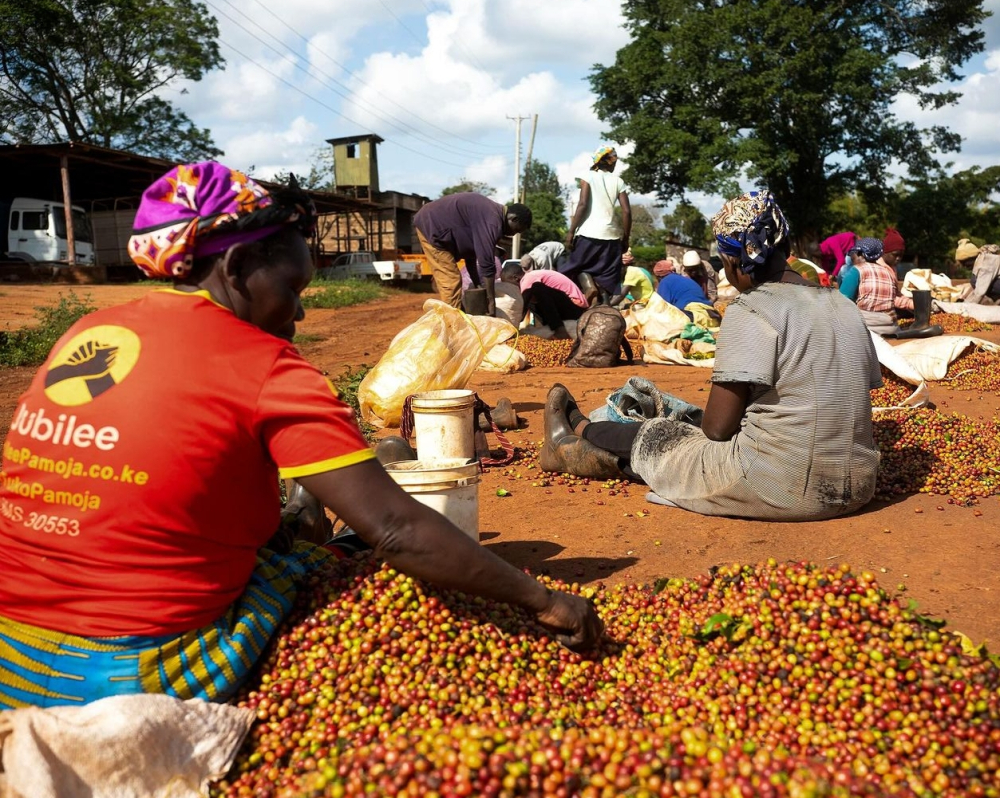
Kirinyaga’s acidity is likewise on the bright and full-bodied side, with a delicate sweetness.
The acidity of Embu is not as full and powerful as the previous production areas, and the flavor is more balanced with a lasting finish.
Machakos also has a prominent acidity, a delicate mouthfeel, and a long aftertaste, and is gradually attracting the attention of coffee buyers.
The biggest difference between Kisii and Bungoma and other production areas is that they are dominated by fruity sweetness, with soft acidity and nutty flavors.
Kenyan Coffee Varieties
In Kenya, the common cultivated varieties are SL28, SL34, and Ruiru11.
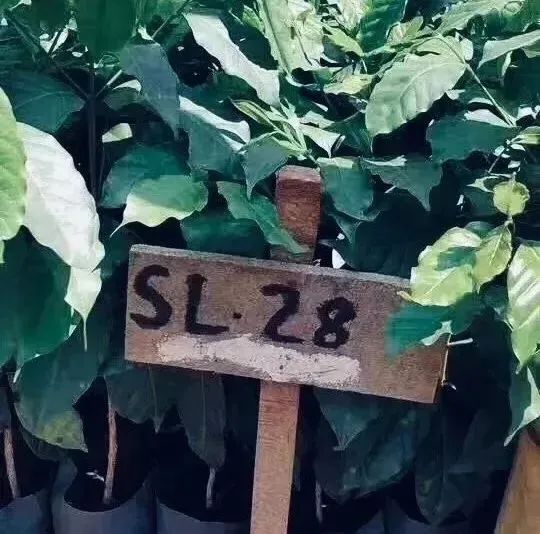
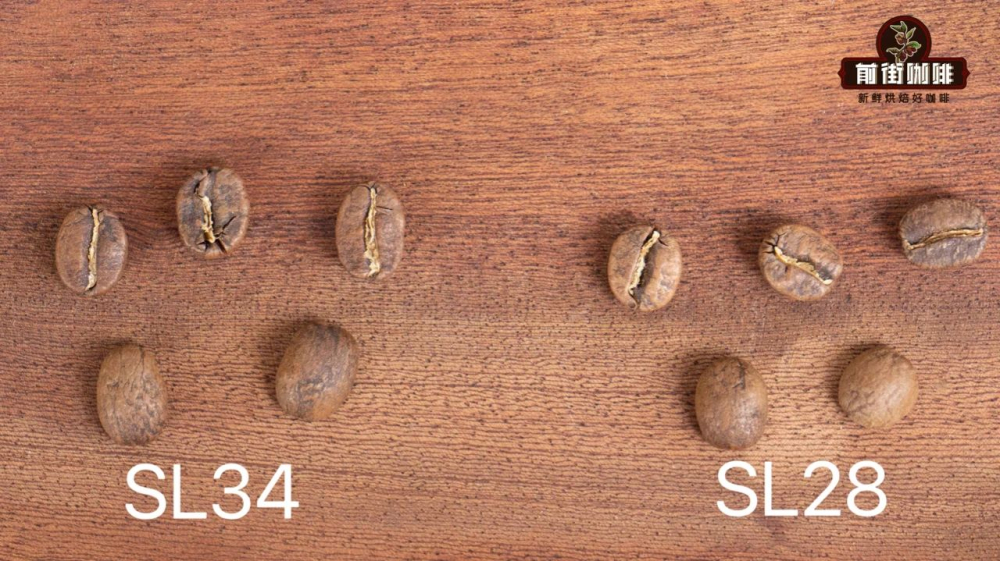
In 1922, Kenya established the Scott Agricultural Laboratories (Scott Labs), specifically for coffee cultivation research. Over the following decade or so, the laboratory selected SL28 and SL34 from 42 coffee varieties as suitable for local cultivation, laying a good foundation for the development of the coffee industry. Both varieties were developed through multiple generations of breeding and selection. SL28 belongs to the Bourbon genetic group and carries the bright profile and rich acidity of original Bourbon; SL34’s lineage is closer to Typica, and its acidity is milder than SL28’s. At present, SL28 and SL34 account for 90% of Kenya’s coffee bean production, and South America is also actively introducing SL28.
The birth of the Kenyan coffee bean variety Ruiru11 stemmed from the global outbreak of coffee leaf rust. At that time many Arabica varieties were affected by the disease. In order not to let coffee production decline, researchers developed the hybrid variety Ruiru11. It performs excellently in disease resistance, but its flavor quality is far inferior to SL28 and SL34.
Kenyan Coffee Grading System
According to Front Street Coffee (FrontStreet Coffee), Kenya classifies coffee by bean size and cupping results. According to bean size, shape, and hardness, from high to low they are E, AA or AA+, AB, C, PB, TT, T.
E (Elephant Bean): Here E stands for Elephant, but it is not the Maragogype elephant bean among coffee varieties. It is caused by abnormal development, where two seeds become intertwined and form an oversized bean that looks like a single bean; in essence it is a defect. Normally, a fruit contains two seeds that fit face to face, so one side is flat, and they are called flat beans or mother beans. Grade E beans are formed when two seeds fuse and stick together during growth, becoming unusually large. Grade E beans are roughly above 18 mesh (one mesh is 1/64 inch), and are scarce in number.
AA: This grade is about 17 to 18 mesh (about 6.7 to 7.1 mm), and is the Kenyan grade most people have heard of. In specialty coffee, this grade is usually called AA TOP, and it is also the bean most coffee shops promote. But AA does not mean the best; it only reflects bean size and cannot be equated with flavor.
AB: Most coffee beans fall into this grade. It is called AB mainly because A is 6.80 mm mesh and B is 6.20 mm, and beans of these two sizes are sold mixed together, hence AB, at about 15 to 16 mesh (about 6.0 to 6.4 mm). Front Street Coffee (FrontStreet Coffee) Kenya Asalia Coffee Beans AA TOP Grade
C: The bean size is about 14 to 15 mesh (about 5.6 to 6.0 mm), slightly smaller than Grade B.
PB: Full name Peaberry, also called small round bean, or male bean. Compared with ordinary flat beans, this kind of bean is relatively rare, accounting for about 10% of all coffee beans, mainly because only one seed develops fully inside the fruit, resulting in a small, round bean. Some people especially prefer the flavor of PB, so it is sorted out separately for sale.
TT: This type of coffee bean is the light bean screened out from AA and AB by an airflow separator. It is usually light in weight and fails to meet hardness standards, and is also accompanied by broken and defective beans.
T: Lighter beans screened from Grade C beans, mixed with broken beans and even fragments of shattered beans.
There is also another grade, MH/ML: this type of coffee bean is not used for export. It is usually overripe coffee fruit that has fallen to the ground, of poor quality, accounting for about 7% of all coffee beans, and is only for Kenya’s domestic market.
For green beans of AA and AB grades, exporters also add special grading based on cupping results (not officially recognized by the Kenyan state), from high to low as TOP, PLUS (+), FAQ. The Kenyan Asalia on Front Street Coffee’s (FrontStreet Coffee) bean list reaches the TOP flavor grade. However, as mentioned earlier, this is not an officially recognized grading system, and among the Kenyan coffee beans Front Street Coffee (FrontStreet Coffee) sources from multiple production areas, not every one carries a flavor grade, so there is no need to dwell too much on this. Generally, reaching AA and AB grades already means the flavor is by default considered high quality.
Kenyan Coffee Processing Method
In addition, the formation of Kenyan coffee flavor is absolutely inseparable from its unique K72 washed processing method. This processing method was improved on the basis of traditional washing. Kenya first adopted a repeated cycle of fermenting and then washing: after harvest, processing is done the same day, the finest coffee cherries are selected for pulping and fermentation, with a fermentation time of 24 hours, after which they are washed with clean river water. Then they are fermented again with clean river water for 24 hours and washed again. After repeating this cycle 3 times, it reaches 72 hours, so it is called the Kenyan-style 72-hour fermentation washed processing method, or K72 processing method for short.
K72 Fermentation Washed Processing Method Flow:
① First Washing and Fermentation
After the coffee cherries are harvested, they first undergo water-flow density sorting. The principle is to use differences in the density and mass of the coffee fruit itself for screening; coffee beans with high density (heavy mass) sink into the water, while coffee beans with low density float. Fully ripe, high-quality coffee fruit has high density, so these are selected for further processing.
After selecting high-quality fruit with sufficient ripeness, the skin is removed and the beans are washed and soaked, allowing the mucilage attached to the outer layer of the green beans to undergo fermentation. The mucilage contains natural sugars and alcohols, and plays a crucial role in the development of coffee sweetness, acidity, and overall flavor. The fermentation lasts as long as 24 hours, and after fermentation 80-90% of the mucilage can be removed, leaving only the flavor inside the coffee beans.
② Second Washing and Fermentation
Next comes the second washing and fermentation procedure. After the coffee beans from the previous stage are cleaned, they are soaked in water again for 24-48 hours. This process increases protein and amino acids, and the acidity of the coffee beans thereby develops complex and delicate layers of mouthfeel. Finally, all remaining mucilage is removed, and the coffee beans are moved to raised drying beds for sun drying.
The fermentation lasts as long as 24 hours, and after fermentation 80-90% of the mucilage can be removed, leaving only the flavor inside the coffee beans. Finally, all remaining mucilage is removed, and the coffee beans are moved to raised drying beds for sun drying. The drying time depends on weather conditions, and generally takes about 5-10 days to complete.
Front Street believes that coffee beans processed by Kenya’s 72-hour fermentation washed method undergo long fermentation at low temperatures and are finally dried and dehydrated before completion, which gives the beans a brighter, cleaner yet fuller flavor.
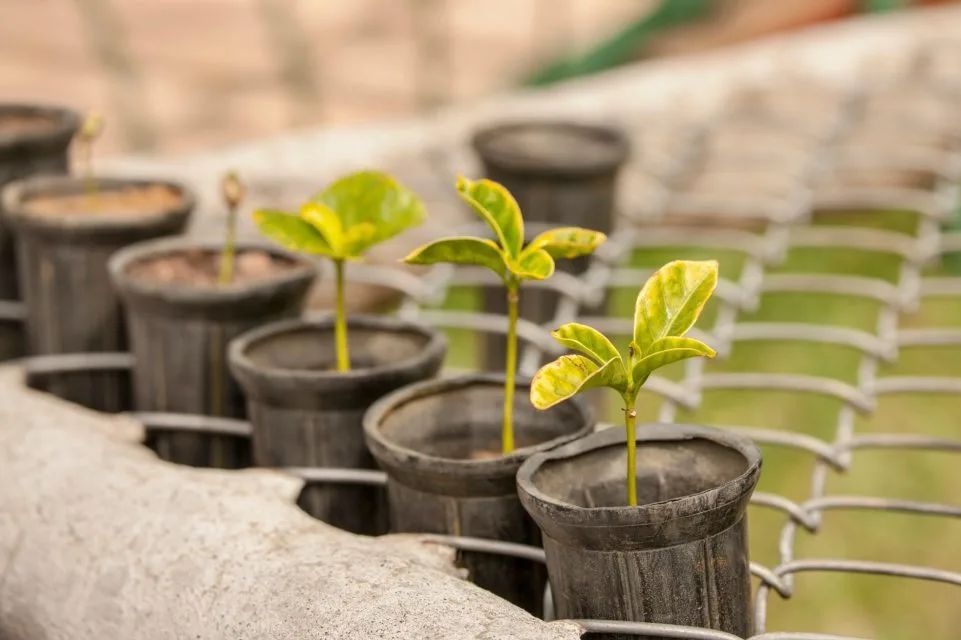
As Front Street Coffee (FrontStreet Coffee) said above, whether processing method, coffee production area, or variety, all have more or less influence on the flavor of coffee beans. The Kenyan production areas themselves are very suitable for growing coffee beans, and the developed K72 washed processing method adds even more to the flavor of the coffee beans. Multiple washings also make the coffee bean flavor cleaner and brighter, which is also why Kenyan coffee beans all have bright fruit acidity similar to cherry tomatoes.
Next, Front Street will introduce to all coffee fans all of Front Street Coffee’s (FrontStreet Coffee) current Kenyan coffee beans and the roasting and brewing data analysis.
Front Street Kenya Little Tomato Coffee Beans
Country: Kenya
Region: Asali (Honey Processing Station)
Altitude: 1550-1750m
Variety: SL28, SL34
Processing Method: 72-hour washed processing
Flavor: Snow pear, smoked plum, yellow sugar, cherry tomato, plum
Front Street Coffee (FrontStreet Coffee) Kenya Sasini Estate PB Coffee Beans
Country: Kenya
Region: Sasini Estate
Altitude: 1680m
Variety: SL28, SL24, ruiru
Processing Method: 72-hour washed processing
Flavor: Cherry tomato, almond, smoked plum, honey, grape
Front Street Coffee (FrontStreet Coffee) Kenya Asalia Coffee Beans Roasting Record
These beans are plump and round. In order for Front Street Coffee (FrontStreet Coffee) to fully express their bright and mellow acidity, a light roast level was used. Yangjia 800N semi-direct fire, bean charge 480g: charge when the drum temperature reaches 160°C, damper set to 3, heat at 120. Turning point: 1'28". When the temperature rises to 130°C, set the damper to 4. Roast to 6'00'', temperature 154.6°C, the bean surface turns yellow, the grassy smell completely disappears, and dehydration is complete.
When the bean surface shows ugly wrinkles and dark streaks, and the toasted bread smell clearly turns into coffee aroma, this can be defined as the prelude to first crack. At this time, listen clearly for the sound of first crack. First crack begins at 9'28'', damper unchanged, first crack development time 2'20'', drop at 193.8°C.
Front Street Coffee (FrontStreet Coffee) Kenya Sasini PB Coffee Beans Roasting Analysis
Because this full-bodied coffee bean comes from a higher altitude and the bean quality is harder, it climbs at a relatively high rate of temperature rise at the beginning. The yellowing point is at about 5 minutes, then the heat is reduced to enter the Maillard reaction, and at 166°C the heat is lowered again to extend the Maillard reaction time. When first crack begins, heat absorption is stronger, so it is recommended to maintain heat at this stage to prevent stalling. First crack development takes a relatively long time, which helps reduce acidity and develop flavor.
Roaster Yangjia 800N (roast amount 300g), charge at 170°C, heat 100, damper set to 3; turning point 1'42", when drum temperature is 140°C open the damper to 3.5, heat unchanged; when drum temperature is 149°C the bean surface turns yellow, the grassy smell completely disappears, entering the dehydration stage; at 7'14'' dehydration is complete, heat and damper unchanged, at 7'30'' wrinkles and dark streaks appear on the bean surface, the toasted bread smell turns into coffee aroma, which is the prelude to first crack, so pay attention to listen for the sound of first crack. At 8'20'' first crack begins, open the damper to 4, lower heat to 50. After first crack, development time 1'50'', at 188°C lower heat to 30 to flatten the temperature rise, and drop at 193.3°C.
Front Street Coffee (FrontStreet Coffee) Brewing Suggestions
Dripper: V60 or cake cup
Water temperature: 90-91°C
Coffee-to-water ratio: 1:15
Grind size: fine grind (80% passing through Chinese standard No. 20 sieve)
Brewing method: staged extraction. Use 30g water for a 30-second bloom, pour in a small stream in circles until 124g for the stage break, and when the water level is about to expose the coffee bed continue pouring until 228g and stop pouring. When the water level is about to expose the coffee bed again, remove the dripper. (Start timing at the beginning of the bloom.) Extraction time is 1'55".
Kenya Asalia flavor: The wet aroma has ripe tomato and floral notes. On the palate there are cherry tomato and smoked plum flavors, with bright acidity, a clean and rich mouthfeel, a prominent sweetness in the middle, a juicy feel, a finish of berry aroma and yellow sugar sweetness, and green tea aroma.
Kenya Sasini PB coffee bean flavor: When brewed with a V60 dripper, it smells floral, and on the palate there is the acidity of cherry tomato, citrus, and nuts; in the middle there is creamy aroma, with red sugar sweetness returning, and a finish of cocoa and oolong tea tea-like notes. The flavor layers are relatively rich, with obvious floral notes. When brewed with a cake dripper, it smells of herbal plant aroma and cherry tomato aroma; overall the juicy feel is obvious, and the acidity is relatively lively.
For more specialty coffee beans, please add the private WeChat of Front Street Coffee (FrontStreet Coffee), WeChat ID: kaixinguoguo0925
The above content is compiled by CoffeeHunters, a coffee news website.


