







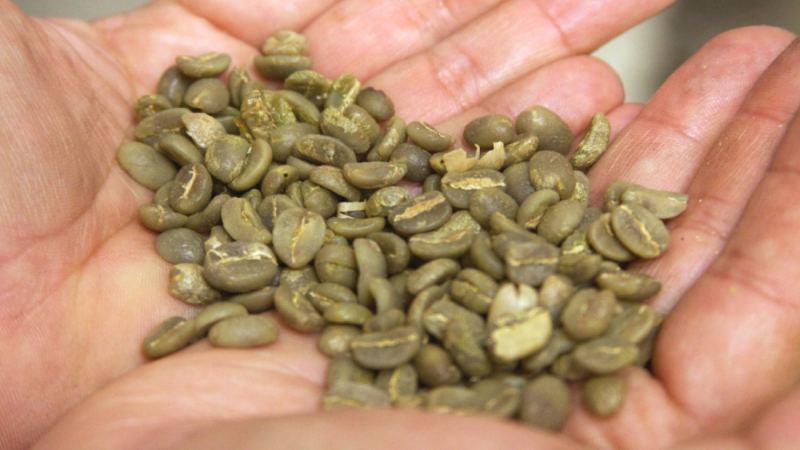
How Do Typica and Bourbon Relate to Geisha Coffe?
Typica is one of the oldest native varieties in the arabica family, prized for an elegant, clean, balanced flavor but held back by a weak plant, poor leaf rust resistance, and low yield. Bourbon and geisha coffe both descend from this line. Jamaican Blue Mountain Typica shows the classic profile, while geisha coffee brings its own distinct floral and fruity character.
Typica originated in Ethiopia and reached Martinique, with growing regions now including Central America, Jamaica, Hawaii Kona, Papua New Guinea, and East Timor. Because yield is low, growers often hybridize it with other species. The article also covers Maragogype, Geisha, and Yellow Bourbon, and notes that st helena coffee beans carry a Typica-linked heritage, showing how variety shapes the cup.
Typica is one of the oldest native varieties in the Arabica family, with elegant flavor but a delicate constitution, from which many variants have derived, with Bourbon and Geisha being representative examples. This article starts with four types of beans from Front Street Coffee stores, sorts out the genetic relationships between Typica and Bourbon and Geisha, details the flavor characteristics and brewing parameters of Jamaican Blue Mountain Typica, and introduces the origins and performances of varieties such as Maragogype, Geisha, and Yellow Bourbon, helping coffee enthusiasts understand how variety differences affect the flavor in the cup.
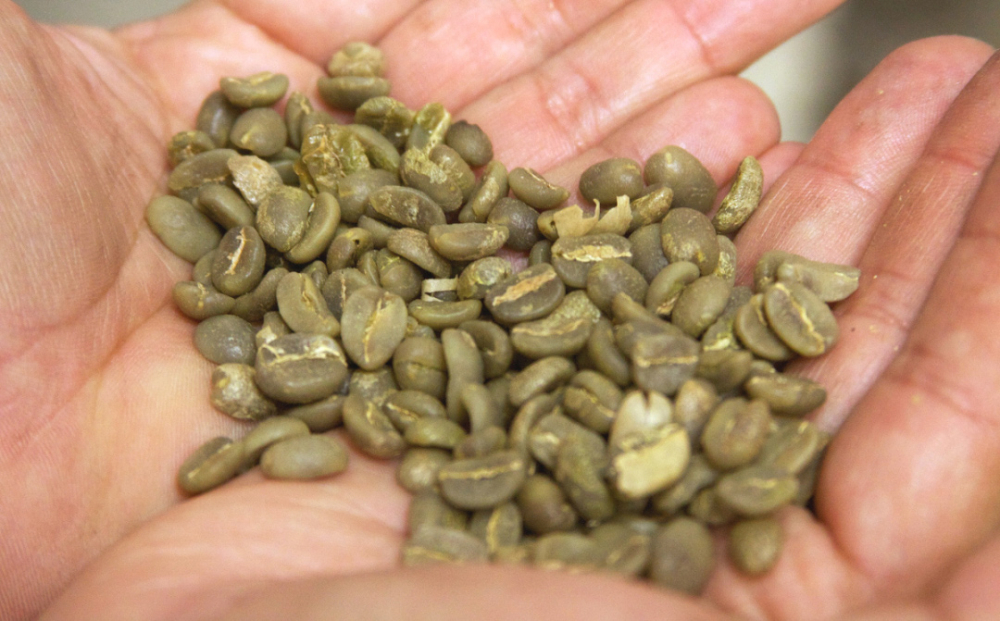
Friends who follow Front Street Coffee surely know that the coffee bean variety system is quite complex, and Typica is a type that Front Street particularly favors.
In the Arabica family, Typica belongs to the oldest native varieties. Its flavor is elegant, but unfortunately the plant has a weak constitution, poor resistance to leaf rust, is susceptible to disease, and has quite limited fruit yield. Due to unsatisfactory cultivation benefits, regions willing to plant Typica are decreasing day by day. However, with continuous advances in cultivation techniques, many varieties derived from Typica have gradually secured a place in the specialty coffee market. Front Street has always believed that Typica-series coffees have a delicate, clean, and very balanced flavor, so Front Street often pays special attention to this variety when selecting beans. Below, Front Street will introduce Typica and its derived varieties, and use four coffees from offline stores as examples to explain their connections and differences.
Front Street has learned that it is the oldest native species in Ethiopia, and almost all Arabica evolved from Typica. Typica's terminal bud is bronze-colored, and the bean shape is oval or slender-pointed; the flavor is elegant, but the plant is weak, with poor disease resistance and low yield. Typica is a sub-variety within Arabica, originally grown on Martinique Island, and today Central America, Jamaica, Hawaii Kona, Papua New Guinea, and East Timor are its main growing regions. To obtain more yield from high-quality Typica, people often hybridize it with other species. Typica is known for its sweetness, and many of the world's top coffees come from the Typica variety series. Excellent estate beans such as Jamaican Blue Mountain, Sumatra Mandheling, and Hawaii Kona all belong to Typica.
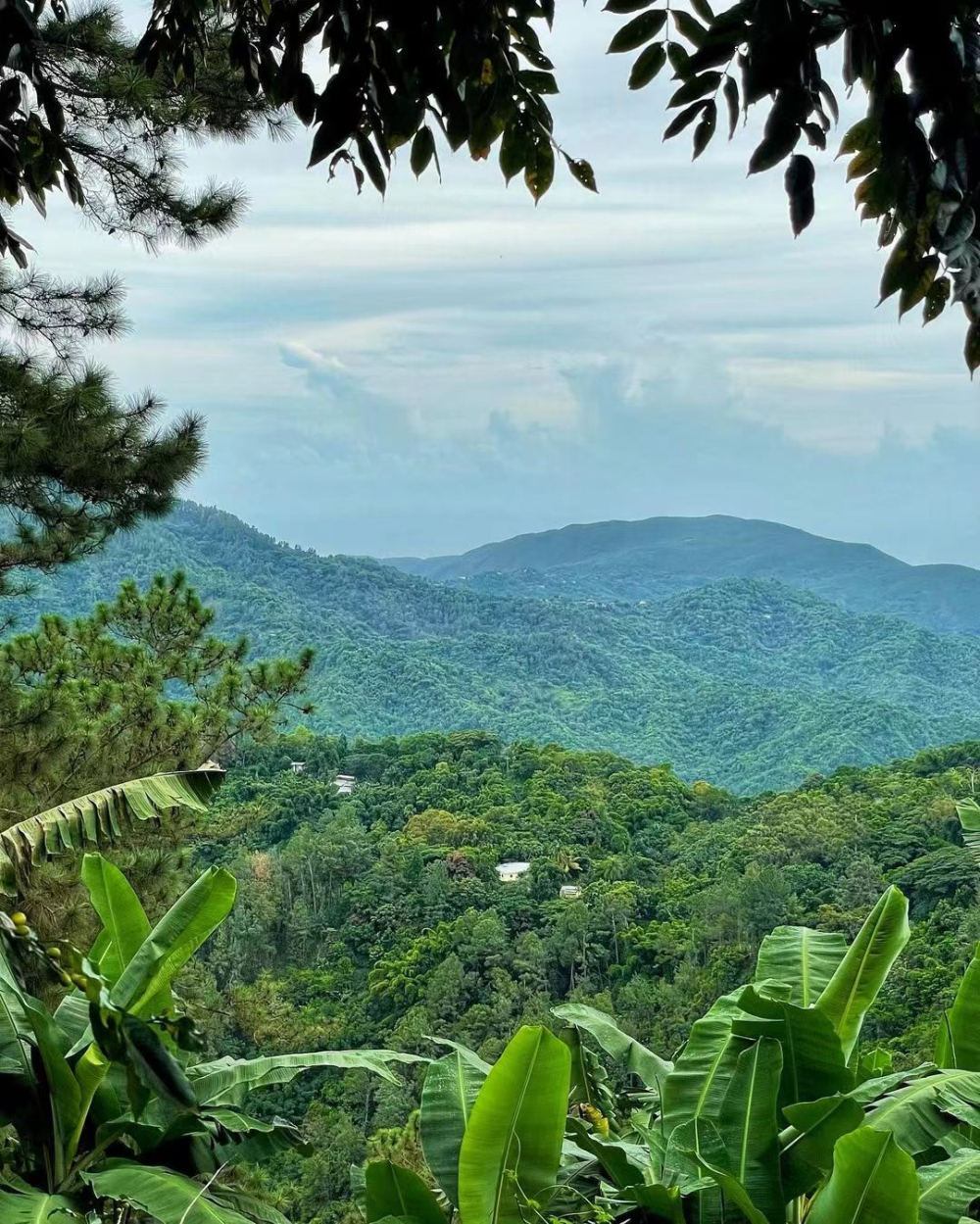
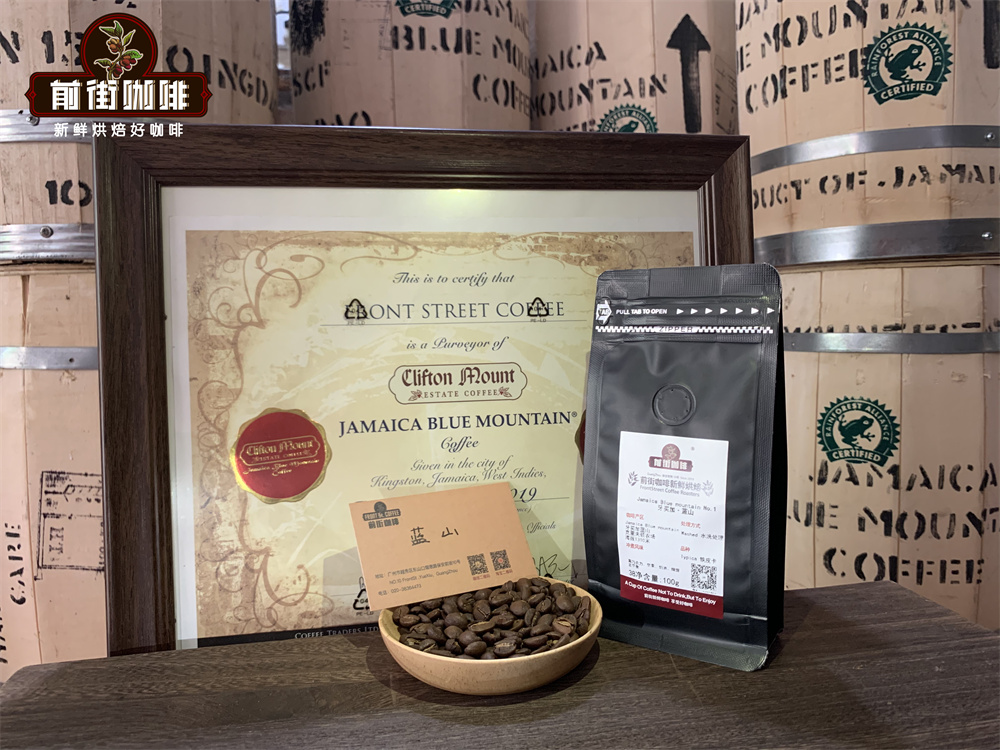
In the 1720s, Typica was transplanted from Martinique to Jamaica Blue Mountain. After more than two hundred years, Blue Mountain Typica evolved stronger disease resistance, especially superior resistance to coffee berry disease compared to ordinary Typica. However, it should be noted that once Blue Mountain Typica leaves Jamaica, it cannot reproduce that clear, sweet, and delicately fragrant character. Next, Front Street will use Jamaica Clifton Estate Blue Mountain No. 1 coffee as an example to introduce this bean and briefly explain the brewing parameters and methods for Blue Mountain Typica.
Front Street Coffee: Jamaica Blue Mountain No. 1 Coffee Beans Region: Jamaica Blue Mountain Estate: Clifton Farm Altitude: 1310m Variety: Typica Processing Method: Washed
Brewing Flavor: Rich dark chocolate and nutty flavors, creamy smooth mouthfeel, balanced acidity, sweetness, and bitterness.
When roasting this bean, Front Street uses a medium roast, which maximizes the balanced flavor characteristics of Blue Mountain coffee, making the overall taste clean and mild, with prominent chocolate notes, high body, and well-matched acidity, sweetness, and bitterness.
For this Blue Mountain coffee, Front Street uses the following parameters for extraction:
Front Street Brewing Parameters:
Kono dripper
Water temperature 88℃
Water-to-coffee ratio 1:15
Coffee dose 15g
Grind size (75% passing rate on China No. 20 standard sieve)
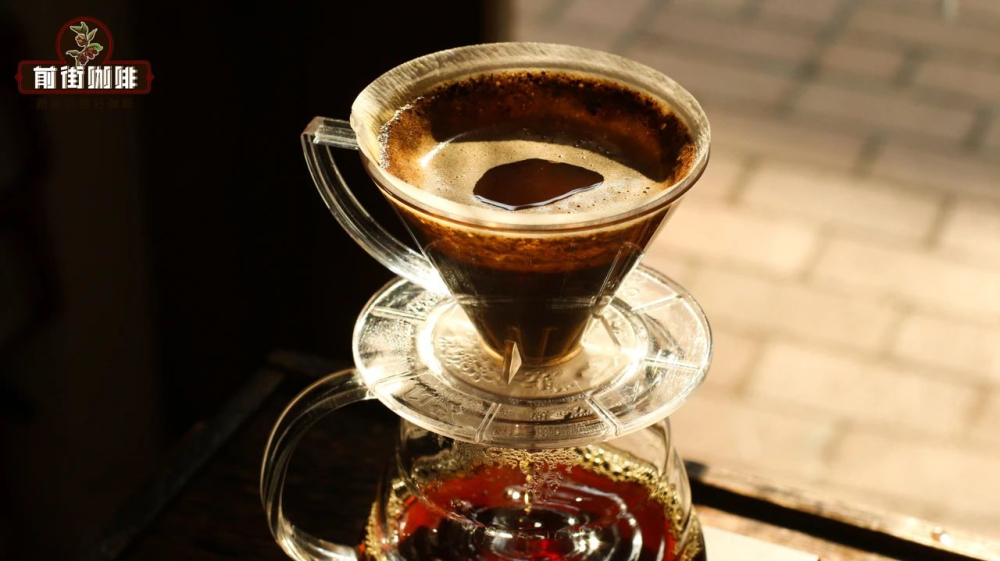
It should be explained here that when brewing light-roasted beans, Front Street uses a V60 dripper, which has longer ribs and good drainage effect, resulting in faster flow. When brewing medium-dark roasted coffee, Kono is used instead; this dripper has shorter ribs and limited drainage effect, thus extending the contact time between coffee and water, enhancing the overall body of the coffee. Of course, Front Street still uses a standard three-stage extraction, with the specific plan as follows: bloom with about 30 grams of water for 30 seconds, pour in a small stream in circles until 125 grams for the stage break, and when the water level drops and is about to expose the coffee bed, continue pouring until 225 grams and stop, then when the water level drops again and is about to expose the coffee bed, remove the dripper, (timing starts from the beginning of blooming) with an extraction time of 2'00".
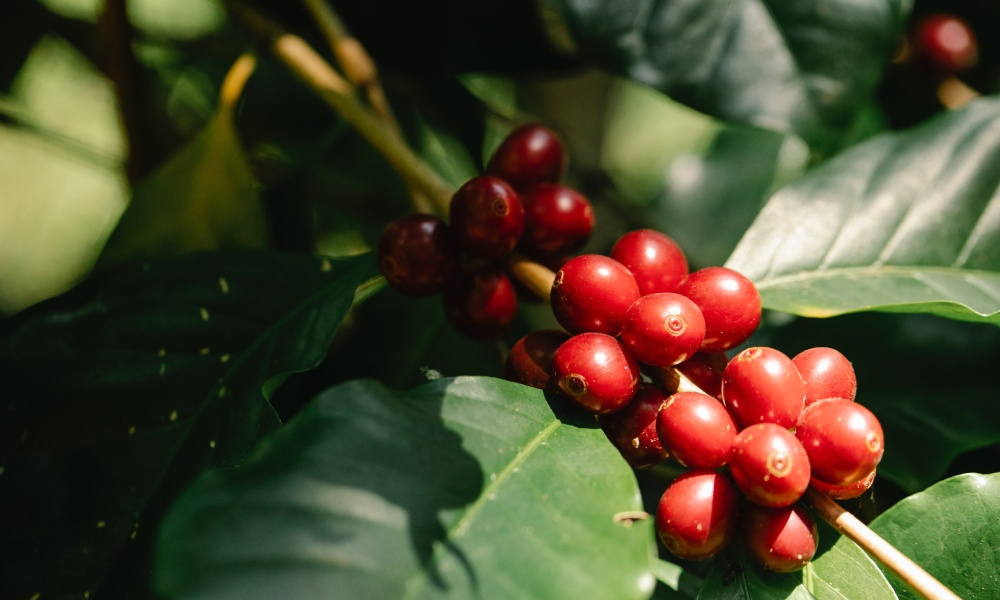
Regular customers of Front Street Coffee know that there is a Typica coffee tree planted next to the store. Careful observation reveals the distinctive characteristics of the Typica tree. Front Street believes that the Typica coffee tree is probably the easiest variety to identify. The plant is conical, and the main vertical trunk can reach up to 5 meters. This height means that compared to other varieties, Typica has longer distances between branches and between nodes on the same branch. Lateral branches form an angle of 50 to 80° with the vertical trunk. The trunk and branches are not particularly thick, and the leaves, fruit, and green beans are usually slender; the young leaf tips are bronze-colored. Compared to other Arabica varieties, Typica has smoother leaf surfaces and fewer wavy edges.
One of Typica's characteristics is its bronze-colored terminal leaves, larger beans in a pointed oval or slender-pointed shape, also sometimes called "red top coffee." Typica coffee has a uniquely delicate and clean flavor with balanced characteristics and high cup cleanliness, but its shortcomings are low yield, altitude requirements, susceptibility to leaf rust, and weak resistance to pests and diseases.
So what are the classic derived varieties of Typica coffee? Front Street stores have two quite representative Typica-series coffees. One is a Typica variant from Brazil—Maragogype, whose beans are about three times the size of ordinary coffee beans. Maragogype has low fruit yield, huge beans, and troublesome post-processing, so few countries cultivate it; only a small amount is grown in Brazil, Colombia, Guatemala, Nicaragua, and El Salvador. The Maragogype plant is tall, taller than Bourbon or Typica. Its most notable feature is that the beans/seeds are very large, usually at least twice the size of ordinary coffee beans, hence the name "Elephant Bean." Below, let's first look at the relevant information for this bean:
Front Street Coffee: Nicaragua Mama Mina Estate Region: Nueva Segovia
Grade: SHB
Altitude: 1450-1600 meters
Processing Method: Natural
Variety: Maragogype 18 screen
Brewing Flavor: Berries, citrus, caramel, nuts, spices.
Unfortunately, Front Street no longer sells this coffee. However, for the Geisha coffee to be discussed next, the store still has many options. As a close relative of Typica, the Geisha variety was discovered in 1931 in the Geisha forest in Ethiopia. Geisha was later sent to the Kenya Coffee Research Institute, introduced to Uganda and Tanzania in 1936, to Costa Rica in 1953, and to Panama in 1970. Geisha has a delicate flavor, but this elegant flavor comes from a specific growing environment. Geisha is quite picky about growing conditions, requiring cultivation in areas with higher altitude, cloud shade or abundant shade trees, and fertile soil. High-altitude Geisha coffee has obvious floral aromas and delicate, elegant fruit acidity, which is one of the reasons it has become popular worldwide.
Front Street's offline stores offer a rich selection of Geisha coffees, with Geisha from all major producing regions: Colombia, Panama, Costa Rica, and Ethiopia. Today, taking Hacienda La Esmeralda's Green Label Geisha as an example, let's first list its specific information:
Front Street Coffee: Hacienda La Esmeralda Green Label Coffee Beans
Region: Boquete, Panama Estate: Hacienda La Esmeralda Altitude: 1600-1800 meters Processing Method: Washed Variety: Geisha
Brewing Flavor: Rich jasmine aroma on the palate, high sweetness, citrus, berries, juicy feel, cream, green tea, orange peel, cantaloupe, with rich overall flavor layers and a long-lasting floral and citrus finish.
Facing such a bean, how would Front Street brew it? Unlike the previous Blue Mountain coffee, Front Street will slightly adjust the brewing parameters for this Geisha:
V60 dripper
Water temperature 91℃
Water-to-coffee ratio 1:16
Coffee dose 15g
Grind size (80% passing rate on China No. 20 standard sieve)
Regarding the differences in drippers, Front Street has already briefly introduced them in previous articles and will not repeat them here. The main explanation is the effect of water temperature and water-to-coffee ratio on these two coffees. Brewing medium-dark roasted coffee at a lower temperature is to avoid over-extraction; the higher the water temperature, the more active the water molecules, so high-temperature water brings out more substances from the coffee grounds.
Among the varieties mutated from Typica, the one closest to the native species is Bourbon. Bourbon spread from southwestern Ethiopia to Yemen, and its bean shape changed from slender-pointed to round. In 1715, France transplanted the round beans of Yemen Mocha to Bourbon Island off the east coast of Africa (renamed Reunion Island after the French Revolution), and it was only afterward that it was named Bourbon. Bourbon round beans were then spread to Brazil and Central and South America in 1727, and in 1732 Britain transplanted Yemen Mocha to St. Helena Island (later the place of Napoleon's imprisonment), which was likewise Bourbon round beans. Bourbon is a frequent winner in American specialty coffee cupping. Bourbon's fruit yield is also 20%-30% higher than Typica's.
Although Front Street currently does not grow Typica coffee trees, according to Front Street's understanding, the Bourbon tree is vigorous, with broad, slightly serrated green leaves, and produces smaller and more densely packed coffee beans, so the bean appearance is relatively smaller and rounder than Typica. The fruit can be red, yellow, or orange, varying by variety and soil texture, with red fruit being the most common. Although Bourbon's yield is higher than Typica's, it is still a relatively low-yield variety and is highly susceptible to leaf rust, berry disease, and nematodes. To produce beans with unique and superior flavor, a growing altitude of 1100 to 2200 meters is suitable.
At Front Street's offline stores, Bourbon coffee beans are also a regular guest. Brazil Queen Estate Yellow Bourbon is currently Front Street's best-selling Bourbon coffee. Its specific green bean information is as follows:
Front Street Coffee: Brazil Queen Estate Coffee Beans
Region: Mogiana Altitude: 1400-1950m Variety: Yellow Bourbon Processing Method: Natural
Its brewing parameters and method are similar to Blue Mountain coffee. For the specific brewing method, everyone can scan the QR code on the packaging bag after purchasing Front Street Queen Estate coffee beans to enter Coffee Review and check. As for the flavor of this Yellow Bourbon, Front Street believes it has the fresh sweetness of sugarcane juice, black tea, a smooth fruity sweetness, obvious nutty flavor, balanced and gentle acidity, a weak and clean bitterness, rich chocolate aroma and nutty flavor, with a bright and refreshing mouthfeel, smooth and delicate.
Professional Coffee Knowledge Exchange
More Coffee Bean Information
Please follow Coffee Workshop (WeChat public account cafe_style )
For more specialty coffee beans, please add the private WeChat of Front Street Coffee, WeChat ID: kaixinguoguo0925
The above content is compiled by CoffeeHunters, a coffee news website.


