







How Does Classic Coffee Differ Between Golden and Regular Mandheling?
Golden Mandheling is an upgraded version of regular Mandheling, with tighter green bean screening, cleaner cup flavor, and a fuller body. Both come from Sumatra, Indonesia, mainly around Lake Toba in North Sumatra and the Gayo highlands of Aceh, where coffee grows at roughly 1,000 to 1,600 meters. Regular Mandheling usually means Typica and its variants from the Lintong area.
The difference shows up at several stages. PWN Company's Golden Mandheling certification system governs how lots are selected, while the wet-hulling method shapes the mellow, low-acid profile both coffees share. Green bean quality, sorting standards, and processing care separate the two, and brewing parameters such as ratio and temperature further affect how much sweetness and body reach the cup.
Mandheling coffee is a classic representative of Sumatra, Indonesia, while Golden Mandheling is regarded as its upgraded version. Many coffee enthusiasts wonder: what exactly is the difference between authentic PWN Golden Mandheling and regular Mandheling? This article will systematically sort out the differences between the two from the perspectives of production region distribution, green bean screening standards, processing methods, and brewing flavor. The article focuses on PWN Company's Golden Mandheling certification system, the shaping of flavor by the wet-hulling method, and the specific parameters and techniques used by Front Street Coffee when brewing Golden Mandheling, helping readers fully understand this mellow and clean classic coffee.
In the process of learning about coffee, a friend asked Front Street: what exactly is the difference between Golden Mandheling coffee and regular Mandheling? Simply put, Golden Mandheling is an upgraded version of regular Mandheling, with better quality, a cleaner flavor, and a richer, fuller body. Below, Front Street will first talk about what authentic Golden Mandheling coffee really is.
"Two Lakes, Two Mandhelings"
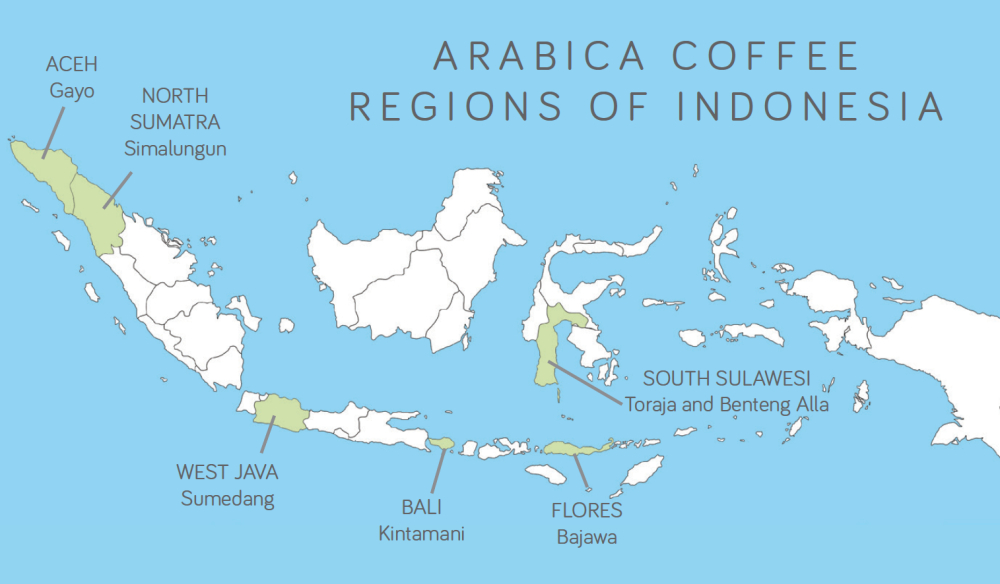
The coffee produced on the island of Sumatra is outstanding and comes from Indonesia's most famous Arabica-producing region. Coffee trees are mainly distributed around Lake Toba in North Sumatra Province and Lake Tawar in the Aceh region. The superior natural growing conditions give the coffee here its thick, rich, and aromatic flavor characteristics.
Lake Toba, located in the Lintong production area of North Sumatra Province, is the world's largest alpine volcanic lake, with coffee grown at an altitude of 1,000 to 1,500 meters. The higher altitude brings obvious temperature differences, and the coffee cherries mature relatively later. Coffee farmers usually harvest from September to October each year, and there is also a small-batch harvest from May to June the following year. In the traditional sense, Mandheling coffee refers to Typica and its variants grown in the Lake Toba area. Lintong Mandheling is the regular version of Mandheling coffee.
Another well-known production area is the Aceh Gayo region, where coffee is grown around the Gayo Mountains by Lake Tawar at a relatively high altitude of 1,110 to 1,600 meters. The Aceh region has superior natural conditions, and most coffee is grown organically. The quality and yield of the coffee have continued to improve, and many large green coffee companies have also placed more focus here. For example, Indonesia's well-known green bean purchaser, Pwani Coffee Company (abbreviated as PWN).
Authentic Indonesian PWN Golden Mandheling Coffee
PWN mainly purchases high-quality Mandheling green coffee beans. After purchase, they undergo multiple rounds of manual hand-sorting to select plump, flawless beans. The coffee beans produced are all specialty grade, and "Golden Mandheling Coffee" is their flagship product. In the early days, in order to become the exclusive supplier of Golden Mandheling coffee, PWN registered the English trademark for "Golden Mandheling." In other words, only the Golden Mandheling coffee produced by them is truly Golden Mandheling. Front Street's Golden Mandheling coffee beans are, of course, also the "genuine product" purchased from PWN.
If you want to identify whether the Golden Mandheling you bought is authentic, you can ask the seller to show the jute bag of PWN-branded Golden Mandheling green coffee beans. As a merchant selling Front Street PWN Golden Mandheling, Front Street displays both the green bean jute bag and the origin certificate signed with PWN Company in the store. If you have the chance, you can take a look.
PWN hopes to produce the highest-quality Mandheling coffee. It first machine-sorts the purchased Mandheling green coffee beans once, using uniformly sized screens to select beans of 18 mesh and above. Then it conducts at least 3 rounds of purely manual selection to ensure that in a 300-gram sample of green coffee beans, there are fewer than 3 defective beans, which is Indonesia's G1 grade for green beans (the highest grade). The carefully selected Golden Mandheling coffee is not only uniform and plump; when Front Street roasts it and conducts cupping, it has far less earthy and off-flavor notes than regular Mandheling coffee, and you can taste a clean and transparent classic Mandheling flavor, with more prominent body and sweetness.
Flavor Characteristics of the Wet-Hulling Method
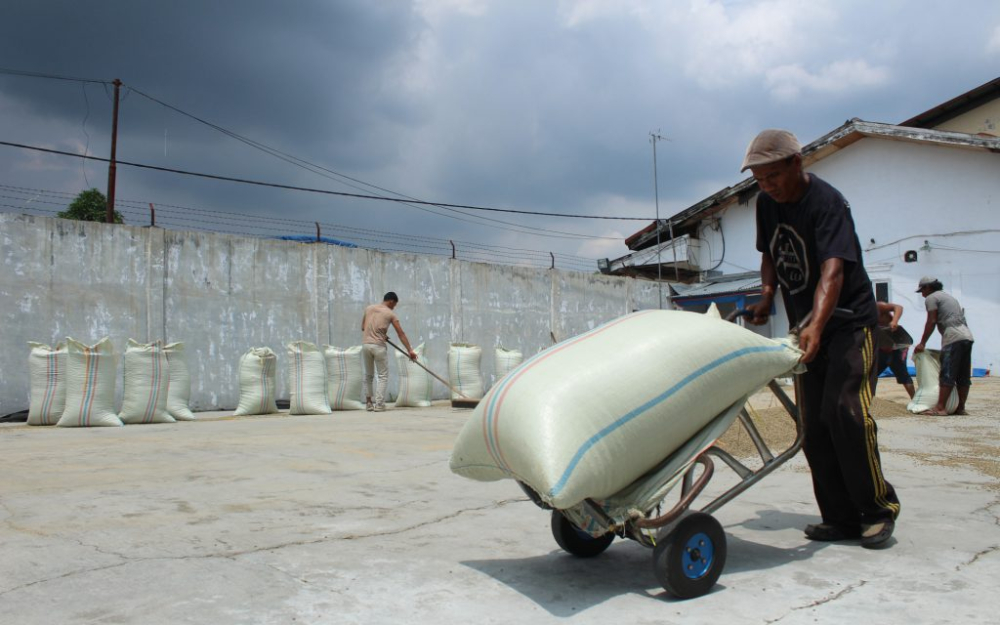
In Indonesia, where typhoons and rainy days are common, traditional washed and natural processing methods cannot be widely used for coffee green beans. In addition, the cost of washing is quite high, so locals developed the wet-hulling method according to local conditions.
The earlier steps of the wet-hulling method are the same as the washed method, so it is also called the semi-washed method. The coffee cherries must go through depulping and fermentation, but the fermentation time is only a few hours before the mucilage layer is washed off. Then it is dried for 2-3 days, until the moisture content is 30-50%, and the parchment that has not yet fully dried is removed. Finally, the already hulled green coffee beans are dried again until the moisture content is 12%, and then they can be packed.
The wet-hulling method greatly shortens both fermentation time and drying time. In addition, because the entire process takes place in a hot and humid environment, the resulting Mandheling coffee carries a dull, stuffy herbal aroma and notes such as pine wood. The emergence of the wet-hulling method was to adapt to local conditions, but this is precisely what gives Mandheling coffee its flavor characteristics that distinguish it from other full-bodied coffees, making it one of the classic representatives among many coffees.
The Taste and Flavor of PWN Golden Mandheling Coffee
For the more deeply roasted Golden Mandheling coffee, if you want to highlight its full body, Front Street chooses the Kono dripper for brewing. The Kono dripper is characterized by its soaking function, which can be used to extract more coffee substances and enhance the full-bodied mouthfeel. Because it has few ribs and they are located at the lower end, the filter paper can fit closely against the dripper to limit airflow, thereby slowing the flow rate and increasing the contact time between water and coffee grounds.
To avoid releasing too many burnt-bitter flavors from the coffee with water that is too hot, Front Street uses a slightly lower water temperature of 88°C. At the same time, a medium grind is chosen, with a coarseness such that 70% passes through a No. 20 standard sieve. This extracts more aroma molecules from the Mandheling coffee while avoiding over-extraction caused by coffee grounds that are too fine.
Coffee grounds: 15 grams Coffee-to-water ratio: 1:15
Front Street uses segmented extraction, namely the three-pour method, using 30g of water for blooming, with a blooming time of 30s. In the first stage, pour in a small stream in circles until 125g, then stop. When the liquid level drops to the point where the coffee bed is about to be exposed, continue with the second stage of pouring until 225g to finish extraction. The total extraction time (including blooming) is 2'00.
PWN Golden Mandheling coffee tastes very rich, giving off aromas of spices and herbs. Overall, it shows a solid, full body, with caramel sweetness and flavors of chocolate and nuts. The mouthfeel is clean, and the sweet aftertaste is long-lasting.
For professional coffee knowledge exchange and more coffee bean information, please follow Coffee Workshop (WeChat public account: cafe_style).
For more specialty coffee beans, please add the private WeChat of Front Street Coffee (FrontStreet Coffee), WeChat ID: qjcoffeex.
The above content is compiled by CoffeeHunters, a coffee news website.


