







Where Does Coffee Originated, and Why Is Mandheling Iconic?
Mandheling is Sumatra's signature coffee, known for a full body and an herbal aroma, and this classic coffee comes from Indonesia, the islands stretching along the equator. Indonesia produced 12.317 million bags of green beans in 2015, making it Asia's second-largest producer after Vietnam, with roughly 70 to 80 percent of that volume Robusta.
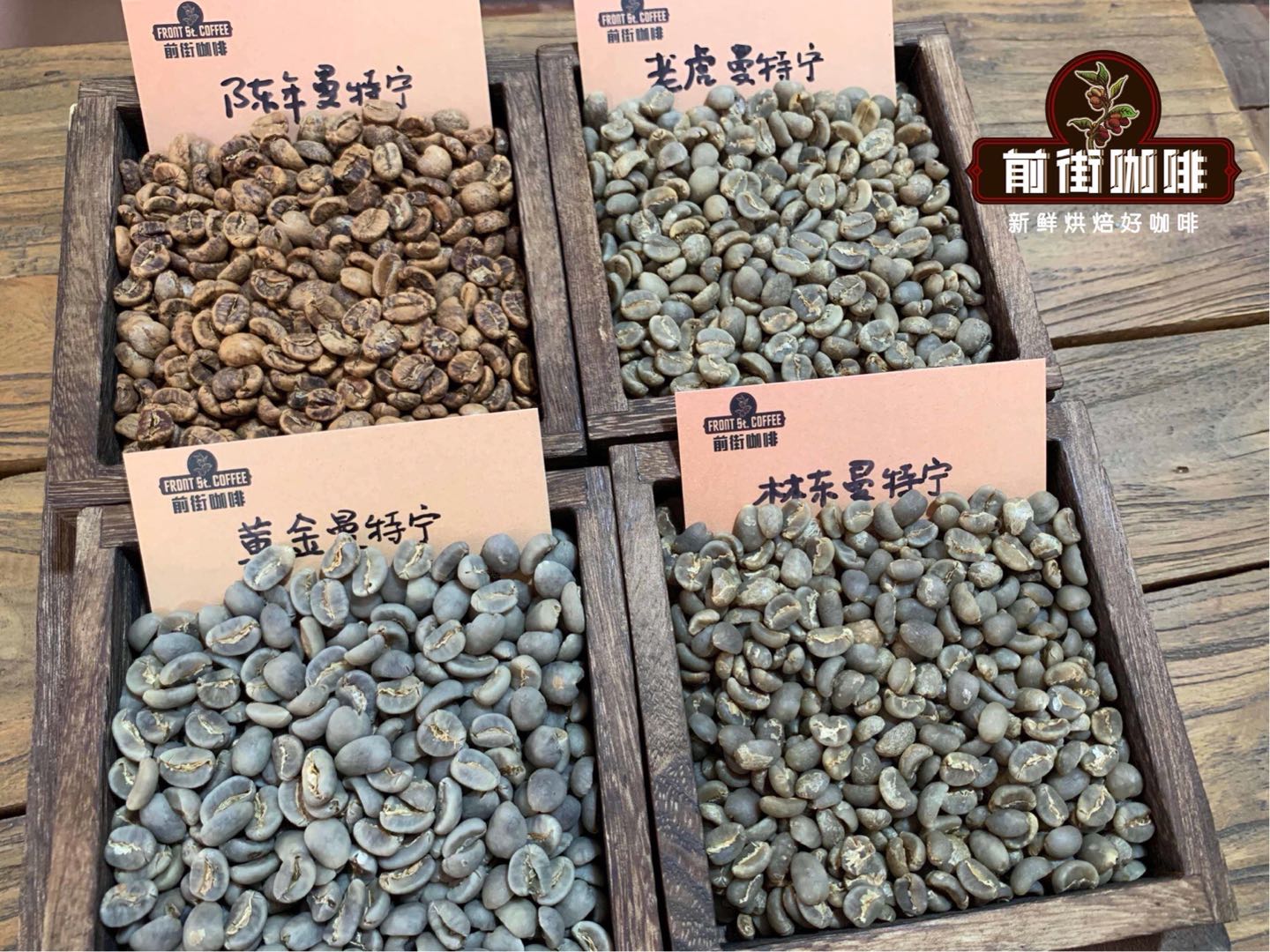
The Mandheling family extends beyond Golden Mandheling to Lintong, Tiger, and Aged Mandheling, each with distinct traits. Lintong shows the mainstream profile, Tiger performs better in aroma than Golden, and Aged Mandheling grows mellower with storage. Wet-hulling, a local processing method, helps define these flavors. Where does coffee originated? It traces to this region.
Mandheling is the most iconic coffee from Sumatra, Indonesia, renowned worldwide for its full body and unique herbal aroma. But do you know where the name Mandheling comes from? And just how many types of Mandheling does Indonesia actually have? This article will provide a comprehensive overview of Mandheling coffee's origins, from its historical beginnings, island distribution, processing method evolution, to variety classification. Front Street Coffee has been continuously sourcing Lintong, Golden, Tiger, Aged, and Sun-Dried Mandheling beans for years, accumulating rich data and experience through tasting and evaluation. This article will also incorporate Front Street's brewing and roasting recommendations to guide you through a systematic understanding of this classic coffee's past and present.
For more specialty coffee knowledge, please follow the WeChat official account: Front Street Coffee (FrontStreet Coffee)
Sumatra coffee bean flavor characteristics and story introduction: Mandheling has always been known for its thick, full-bodied mouthfeel and a taste reminiscent of traditional Chinese medicinal herbs. Front Street Coffee (FrontStreet Coffee) speculates that when mentioning Mandheling, most people's first thought is Golden Mandheling. However, the Mandheling family is far more than just this one member. Among the Mandheling series introduced by Front Street Coffee (FrontStreet Coffee), besides Golden Mandheling, there are also Lintong Mandheling, Tiger Mandheling, and Aged Mandheling. Among them, Lintong Mandheling is the representative of Front Street Coffee's (FrontStreet Coffee) daily staple beans, showcasing Mandheling's most mainstream flavor profile; Tiger Mandheling is relatively niche, but compared to Golden Mandheling, Tiger Mandheling performs better in aroma; and Aged Mandheling, after proper storage, becomes increasingly mellow over time.
Indonesia is located in Southeast Asia, with a territory composed of over ten thousand islands stretching along the equator from Malaysia to Papua New Guinea. Indonesia has long been a major coffee-producing country. According to data from the World Coffee Organization, Indonesia produced 12.317 million bags of green beans in 2015, making it the second-largest producer in Asia (after Vietnam), with about 70% to 80% being Robusta variety. Robusta has strong disease resistance and, although its flavor is inferior to Arabica, it remains the mainstay of Indonesian coffee, accounting for up to 90% of total coffee production, mainly distributed in low-altitude areas such as Java and Bali. Ninety percent of Indonesia's coffee comes from independent small farms. Due to the high economic value of coffee, farmers often plant it in their backyards. About 11 million people nationwide depend on the coffee industry for their livelihood.
Sumatra coffee has been sold at Starbucks since 1972, and its rich earthy aroma and heavy body form Sumatra's unique flavor signature. However, if roasted too dark, the herbal notes and bitter burnt taste will linger in the mouth for a long time. Front Street Coffee (FrontStreet Coffee) has recently also introduced Sumatra coffee beans for tasting and evaluation. In fact, coffee tasting has always been a long-term practice at Front Street Coffee (FrontStreet Coffee). The original intention of Front Street Coffee (FrontStreet Coffee) is not simply to sell beans, but to taste coffee from around the world. In this process, Front Street Coffee (FrontStreet Coffee) aims to gain an in-depth understanding of each coffee-producing region, different varieties within the same region, different processing methods for the same variety, and to establish corresponding databases, as well as horizontal comparisons between regions. Front Street Coffee (FrontStreet Coffee) hopes to allow more coffee enthusiasts to glimpse the full picture of the coffee world.
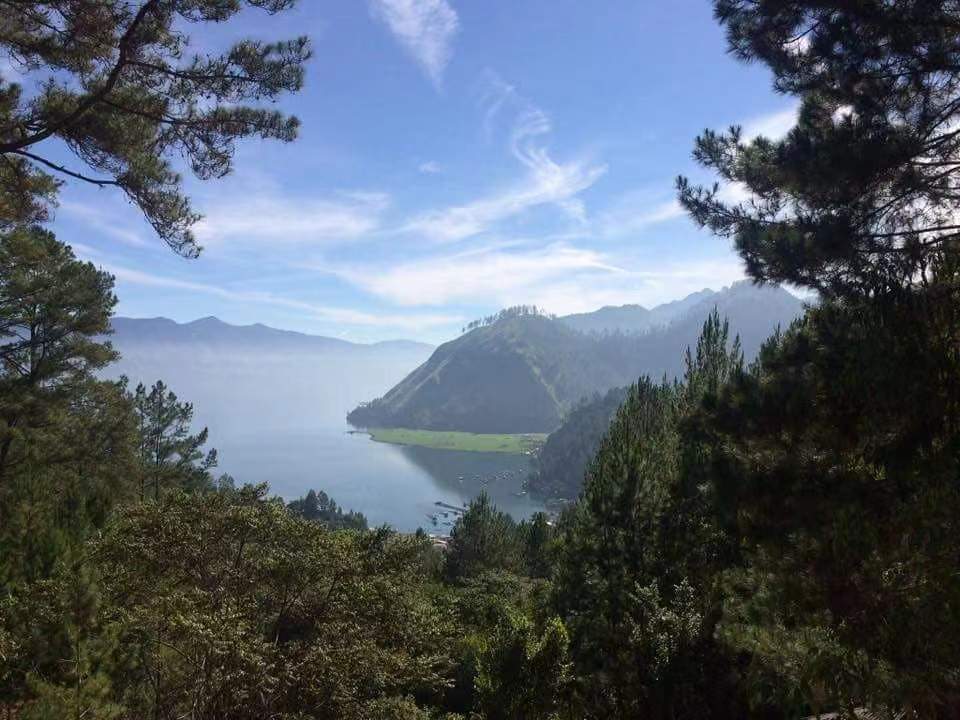
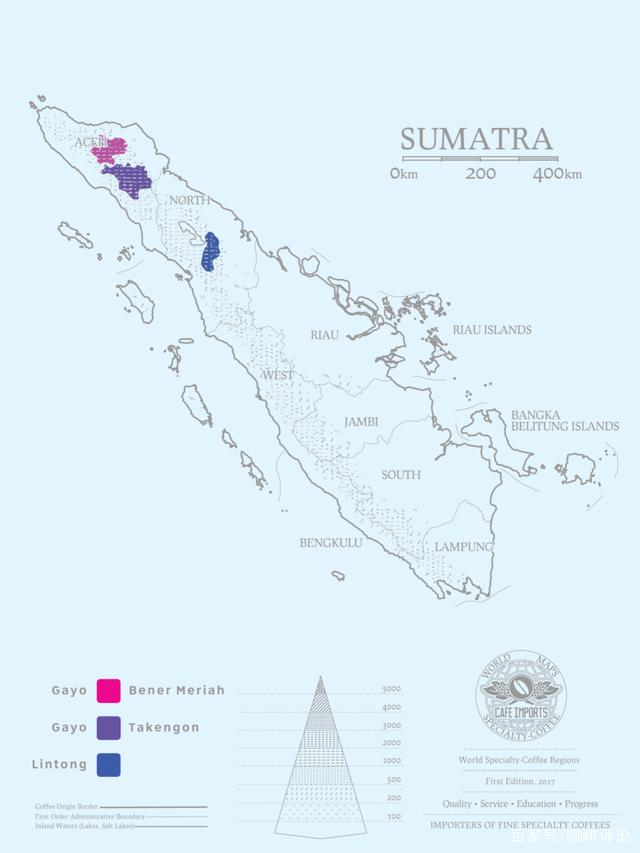
When it comes to Mandheling, the saying "two lakes, two Mandhelings" is usually unavoidable: Sumatra The Lake Toba region in the north (Lake Toba, Lintong) planted coffee earlier and is called "Old Mandheling"; the Lake Tawar region in Aceh Province (Lake Tawar, Gayo Mountain) planted coffee later and is called "Little Mandheling."
Sumatra coffee Development Indonesia is located in Southeast Asia, and its coffee history can be traced back to 1696. At that time, Dutch coffee farm owners, seeking broader planting grounds, conducted extensive surveys and ultimately settled on Java Island in Indonesia. Over thirty years, Indonesia established a solid foundation in the coffee market. However, today, the representative of Indonesian coffee is Mandheling, which is actually quite reasonable—a large portion of the Java coffee sold to Europe in the early days originated from the Sumatra region, and Mandheling comes from Sumatra. Therefore, Sumatra can be considered an important coffee-producing region in Indonesia.
Mandheling Coffee Bean Story The Name Mandheling
Mandheling was originally the name of an Indonesian tribe. After the Japanese colonial period ended, Japanese soldiers returned to Japan, unable to forget the delicious local coffee. Through trade partner relationships, they asked locals to help collect high-quality coffee beans, including this Mandheling. The Japanese were particularly fond of this coffee bean. Since the commercial source was inconvenient to disclose, the locals casually said the word "Mandheling," and thus Mandheling unexpectedly became the name of a coffee bean. This local was none other than the owner of Indonesia's PWN Company (Pwani Coffee Company), which will be mentioned later. This company was the first enterprise to export Golden Mandheling coffee beans to Japan. Front Street Coffee (FrontStreet Coffee) has consistently chosen Front Street PWN Golden Mandheling for years. PWN's packaging also changed from the original 60kg per bag to 30kg per bag, and the production area was adjusted from Lintong to GAYO Mountain.
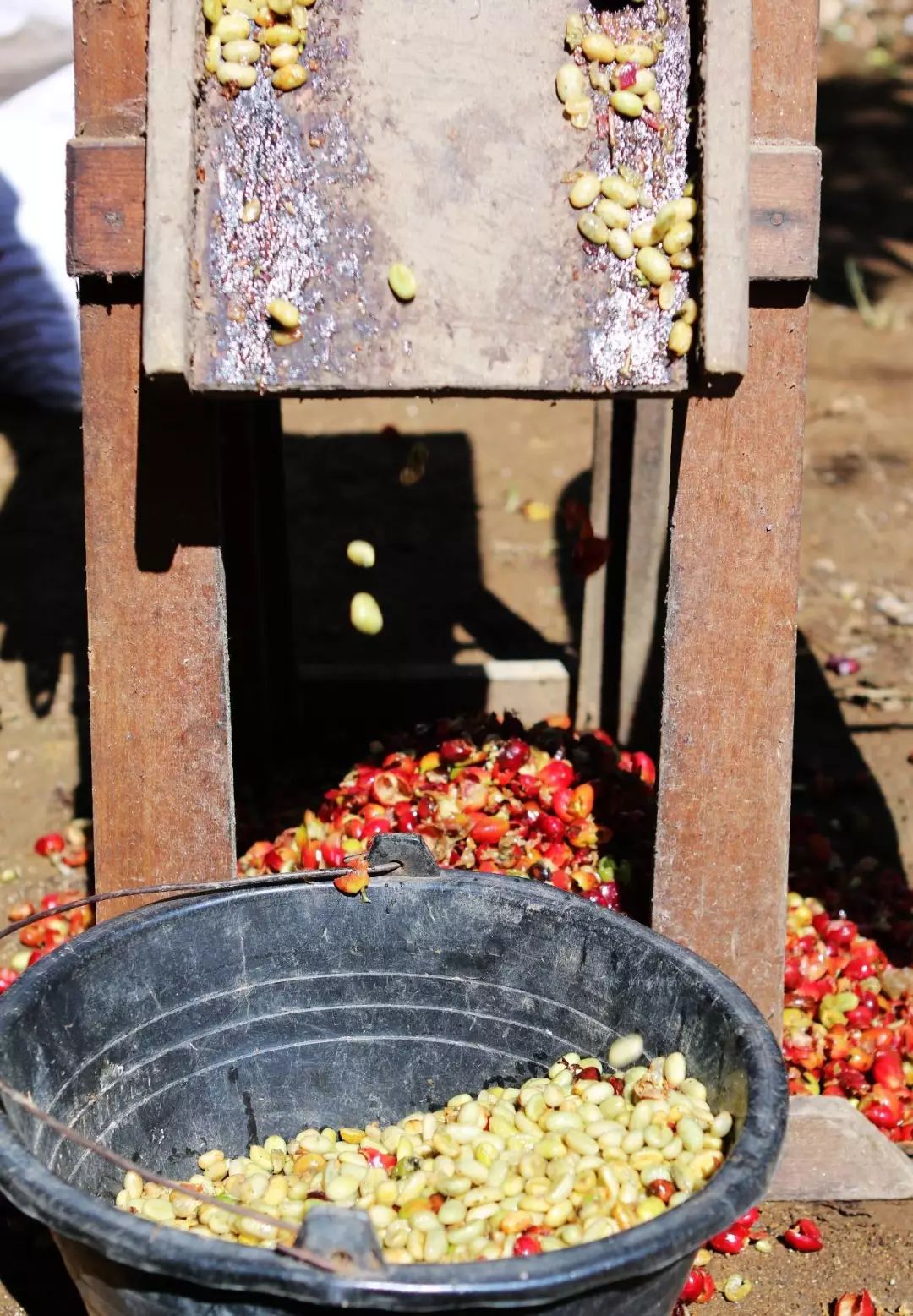
Sumatra coffee Special Processing Method: Wet-Hulling Most Mandheling uses Sumatra's unique processing method—wet-hulling. The local weather is rainy with frequent typhoons, making it difficult to meet the sunny conditions required for sun-drying; combined with limited economic conditions, they cannot afford the higher cost of the washed method, so the highly regional wet-hulling method was developed. Today, Indonesia's coffee industry is no longer as impoverished as it once was, and many estates and companies can afford to use the washed method, but why have they still not abandoned wet-hulling? Front Street Coffee (FrontStreet Coffee) believes that wet-hulling is precisely the key factor that pushed Mandheling onto the world stage. When mentioning Mandheling, one thinks of wet-hulling, and the two have long formed a mutually complementary relationship. The specific steps of wet-hulling can be divided into two stages: In the first stage, a wooden de-pulper is used to remove the skin and pulp, followed by fermentation for 3 hours and then drying, reducing the moisture content to a semi-dry, semi-wet 30% to 50%. In the second stage, the mucilage and parchment layer are removed, and drying continues. The drying process takes 2 to 4 days, reducing the moisture content to 12% to 13%.
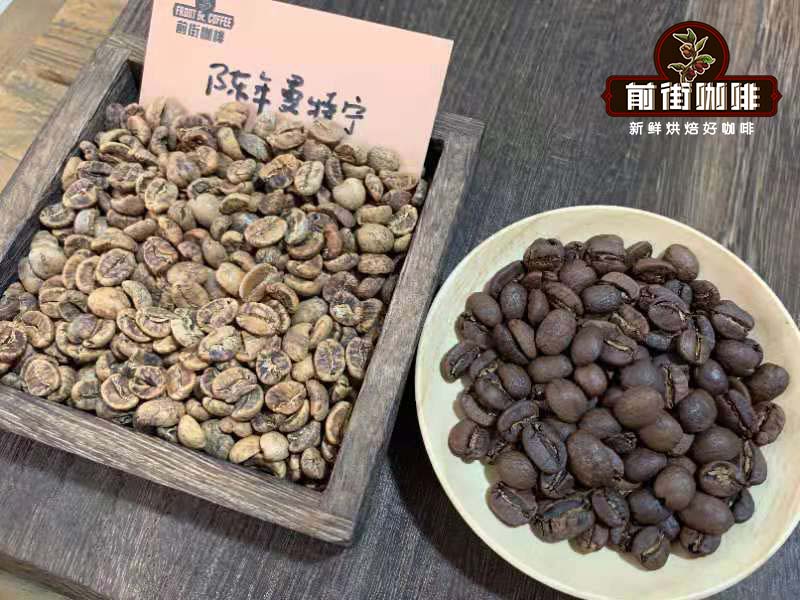
Besides the regular wet-hulling method, there is also an aged wet-hulling method. The coffee beans are first processed using the regular wet-hulling method, then sealed and stored for 2 to 3 years. The warehouse must be cool and well-ventilated, and the beans must be turned regularly to prevent mold and spoilage. During this period, the acidity of the coffee beans gradually diminishes and converts into sugars, and the color becomes darker, mostly appearing yellowish-brown or dark brown. The Mandheling on Front Street Coffee's (FrontStreet Coffee) bean list that uses this processing method is named Aged Mandheling Coffee Beans, also known as Aged Sumatra Coffee Beans.
Wet-hulling has shaped Mandheling's special flavor, and it can be said that Mandheling and wet-hulling are bound together. But today's coffee market no longer settles for monotony. Even though wet-hulling is Mandheling's signature, there will also be exploration of other processing methods. For example, the Wahana Estate Mandheling coffee beans introduced by Front Street Coffee (FrontStreet Coffee) last month use the sun-dried processing method.
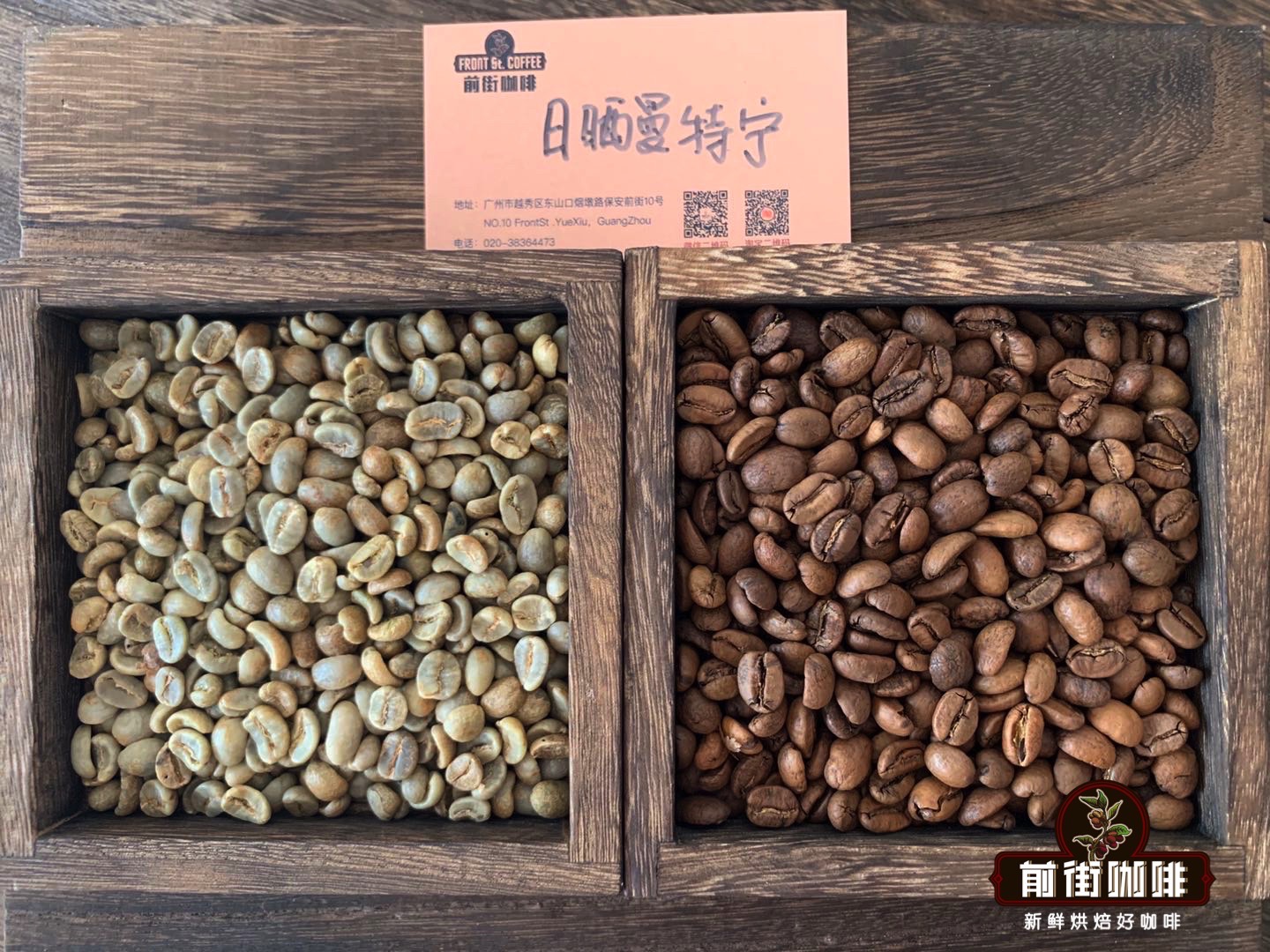
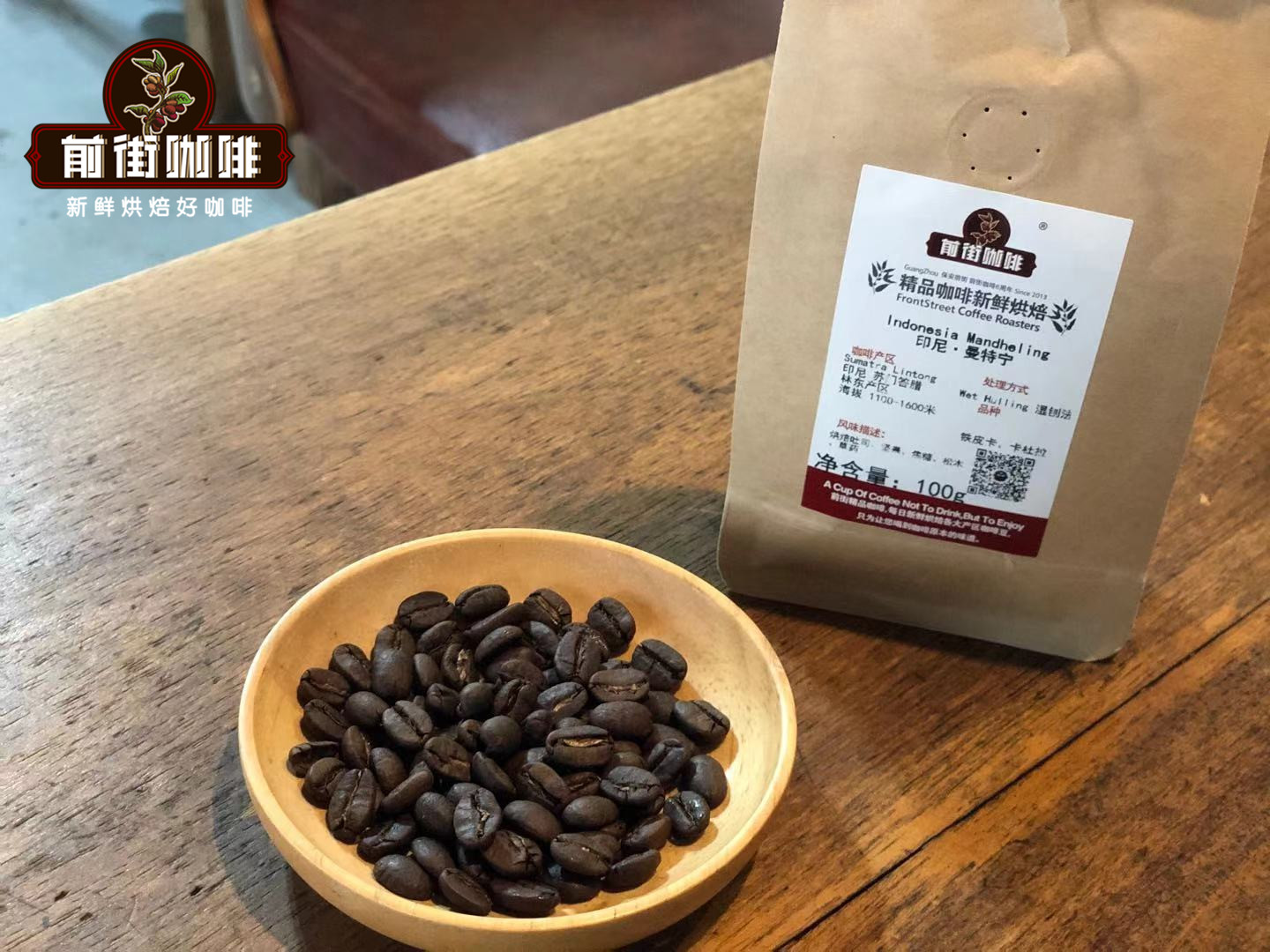
Mandheling VarietiesCurrently, the most common and widely accepted Mandheling varieties on the market are Lintong Mandheling and Golden Mandheling. Lintong Mandheling Lintong Mandheling comes from the Lintong mountain area in north-central Sumatra, adjacent to Lake Toba. Lintong Mandheling is the regular version of Mandheling, also using the conventional wet-hulling method, which creates its low acidity and high body characteristics. But wet-hulling also brings a problem: the semi-hard, semi-soft moist green beans are easily crushed when removing the mucilage and parchment layer, causing the bean body to crack and split, resembling a goat's hoof, commonly known as "goat hoof beans." Front Street Coffee (FrontStreet Coffee) considers this a very distinctive feature of Mandheling, not a defective bean.
Lintong Mandheling does not put deliberate effort into the screening process. Front Street Coffee (FrontStreet Coffee) has found that goat hoof beans appear among the green beans, but this does not diminish the world's love for its rich flavor in the slightest.
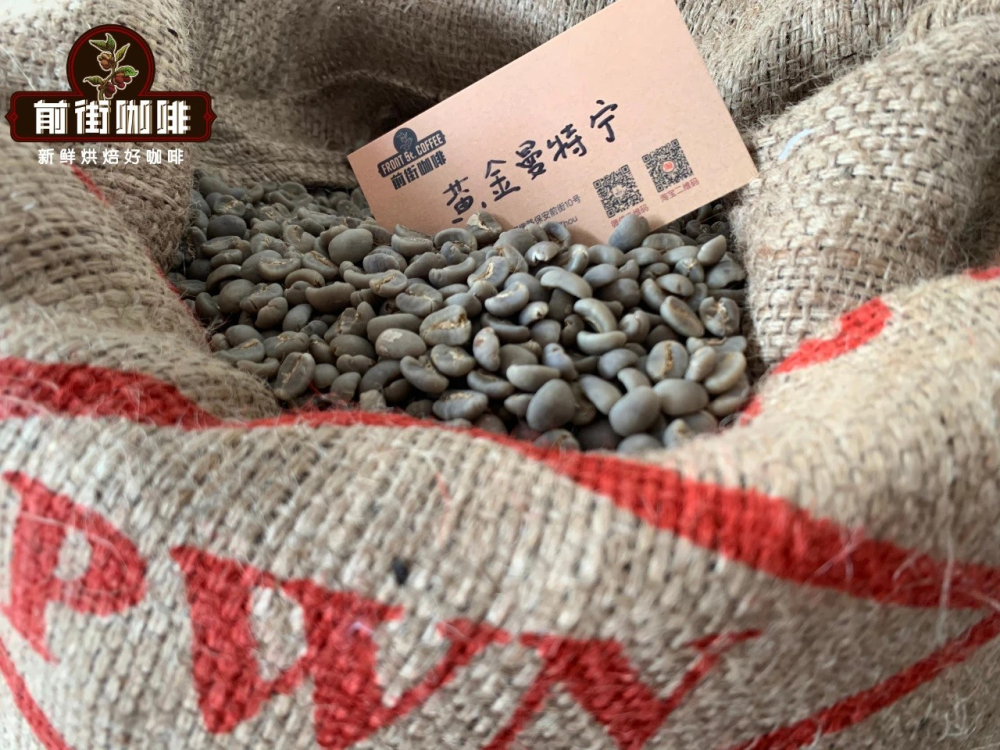
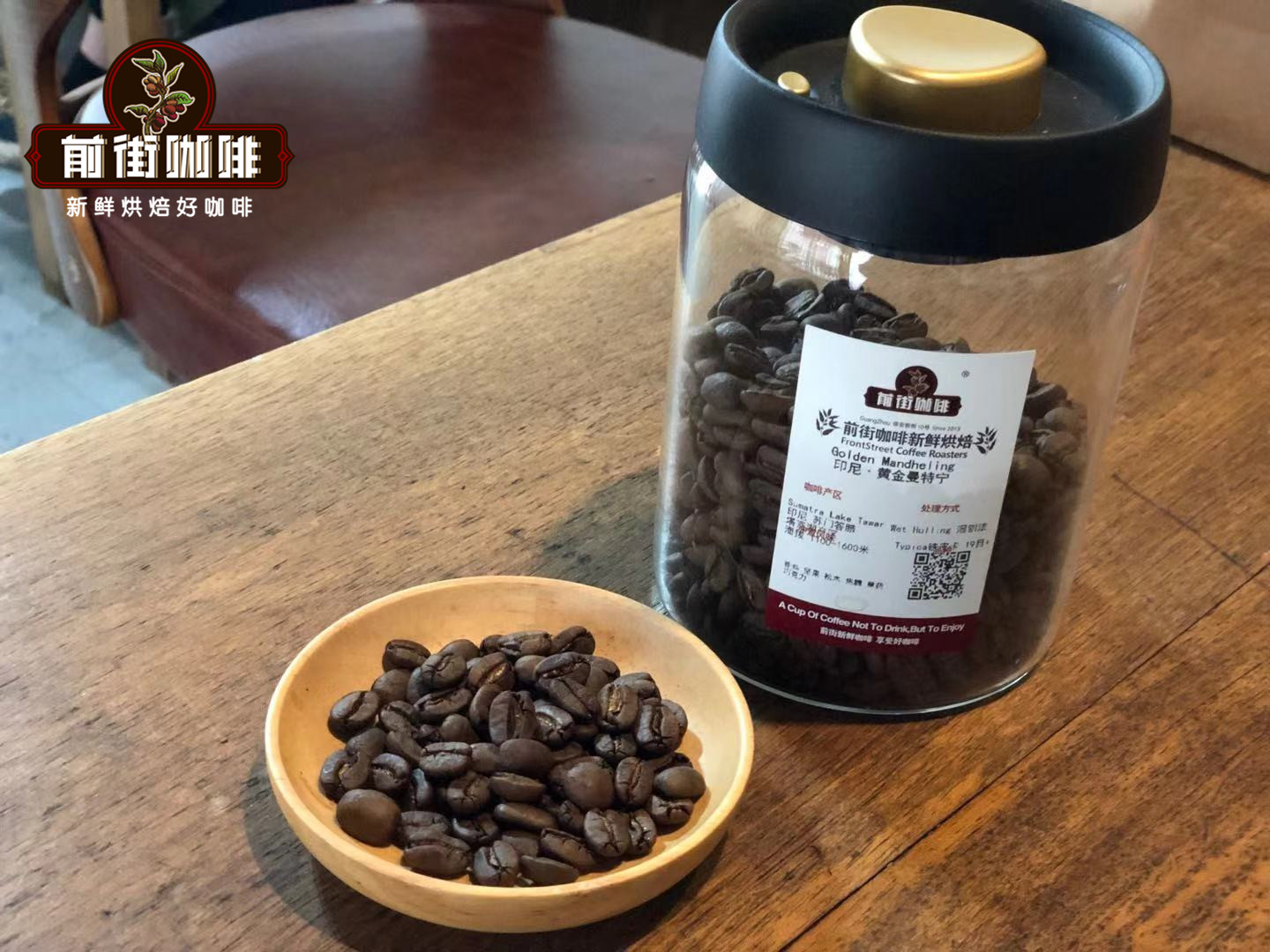
Golden Mandheling Golden Mandheling comes from Lake Tawar in the Gayo Mountain of northwestern Sumatra. Lake Tawar Golden Mandheling green beans exhibit a special blue color. Front Street Coffee (FrontStreet Coffee) believes this is due to the unique semi-washed processing method used by many smallholder producers and the lack of iron in the soil, thus presenting a different blue color at the fresh green bean stage.
Golden Mandheling's specifications are 18 screen or above, with fewer than 3 defective beans (per 300g green bean sample), belonging to the highest grade G1, with a darker green color and a neat, flat bean shape. After strict screening, Front Street Coffee (FrontStreet Coffee) has found that Golden Mandheling not only lacks the earthy off-flavors characteristic of regular Mandheling, but also tastes cleaner and more transparent, with a stronger sweetness.
However, it was not a Japanese company that registered Golden Mandheling as a trademark, but rather the local Indonesian enterprise that cooperated with Japanese companies in exporting Mandheling coffee beans in the early days—PWN Company (Pwani Coffee Company). The Japanese company registered "Gold Top Mandheling." Front Street Coffee (FrontStreet Coffee) believes that the flavor differences between the two are not significant, but due to different brands and different merchant marketing strategies, it is possible that public opinion may differ. Therefore, which of the two Golden Mandhelings is better can only be said to be a matter of opinion. Tiger Mandheling
The Tiger Mandheling selected by Front Street Coffee (FrontStreet Coffee) is produced in Indonesia Sumatra Tiger Mandheling is produced at Tiger Estate, hence also called "Mandheling Tiger" or "Sumatran Tiger Mandheling." The northern part of Sumatra Island has relatively high altitude, with Aceh Province, where Lake Tawar is located, and North Sumatra, where Lake Toba is situated, being the main Arabica coffee-producing regions. The requirement for Mandheling Tiger is a taste with herbal Chinese medicine-like aroma, and only Mandheling with 17 screen or above and a defect rate below 4% can be called Tiger.
Aged Mandheling Aged coffee beans do not simply mean leaving green coffee beans sitting for a long time—this is not feasible, because green coffee beans will also spoil if left too long, turning from fresh green to white, then to yellow, becoming bland and tasteless, or even developing insects. Like aged wine, green beans must undergo proper processing and long-term storage before they can be called true [Aged Coffee].
Sumatra Wahana Estate Sun-Dried Mandheling The processing method for this bean is not Indonesia's unique wet-hulling, but rather the more challenging sun-dried processing. Due to the local rainy weather and constant typhoons, it is difficult to achieve the good weather required for sun-drying, making the sun-dried processing method an extremely difficult challenge for Indonesia.
[Mandheling Coffee Beans]
Roasting Recommendations When roasting Mandheling coffee, Front Street Coffee (FrontStreet Coffee) chooses a medium-dark roast level, aiming to eliminate Mandheling's excess acidity and enhance its body and balance.
Machine: Yangjia 800N, green bean charge 550g
Front Street Coffee (FrontStreet Coffee) Golden Mandheling Roasting Record
Front Street Coffee (FrontStreet Coffee) Lintong Mandheling Roasting Record
Front Street Coffee (FrontStreet Coffee) Tiger Mandheling Roasting Curve
Front Street Coffee (FrontStreet Coffee) Aged Mandheling Roasting Curve
Front Street Coffee (FrontStreet Coffee) Sun-Dried Mandheling Roasting Curve
Brewing Recommendations Front Street Coffee (FrontStreet Coffee) recommends the following brewing parameters: Kono dripper, 86°C water temperature, 15g coffee dose, 1:15 coffee-to-water ratio, grind size BG#6K (70-75% passing through Chinese standard No. 20 sieve)
Brewing Technique Front Street Coffee (FrontStreet Coffee) uses a staged extraction: bloom with 30g of water for 30 seconds, then pour in a slow circular motion to 125g for the first stage, then continue pouring when the water level is about to expose the coffee bed to 225g and stop, then remove the dripper when the water level is about to expose the coffee bed again. (Timing starts from the beginning of blooming) Total extraction time is 2'10".
Flavor Description
[Lintong Mandheling] Herbal, chocolate, caramel, overall relatively balanced;
[Golden Mandheling] Nuts, spices, herbs, licorice, chocolate, caramel, clean and soft flavor;
[Tiger Mandheling] Nuts, cream, dark chocolate, caramel, herbal Chinese medicine, noticeable sweetness, relatively clean and clear flavor;
[Aged Mandheling] Ripe pu-erh, caramel, herbs, chocolate, lower acidity.
[Sun-Dried Mandheling] Tropical fruits, fermented notes, moderate acidity, smooth mouthfeel, noticeable sweetness
The above content is compiled by CoffeeHunters, a coffee news website.


