







Guatemala is a highly representative coffee origin in Latin America, and its beans are known for rich fruity notes, a full body, and a unique smoky finish. The Guatemalan coffee in the Front Street Coffee staple bean series is a representative example of the typical flavors of this origin. Starting from Front Street Coffee’s perspective on bean selection, this article systematically reviews Guatemala’s geography and climate, historical context, altitude grading system, and the respective characteristics of two star origins—Huehuetenango and Antigua—and combines the cupping performance and brewing parameters of two beans, Front Street Guatemala Huehuetenango and Front Street Guatemala Antigua La Flor del Café, to help coffee enthusiasts build a complete understanding of Guatemalan coffee.
For more specialty coffee knowledge, please follow the WeChat official account: Front Street Coffee (FrontStreet Coffee)
Many friends who visit Front Street for the first time to buy coffee beans are surprised by Front Street Coffee’s affordable pricing. Regulars familiar with Front Street know that the most cost-effective choice under the Front Street brand is the Front Street staple bean series. These beans are repeatedly selected by Front Street from major origins around the world, striving to showcase the most iconic flavor of each origin. Front Street hopes that coffee enthusiasts who are just starting out can also taste those legendary flavors, so the selected beans all have clear distinctiveness. So which origins does the Front Street staple bean series actually cover?
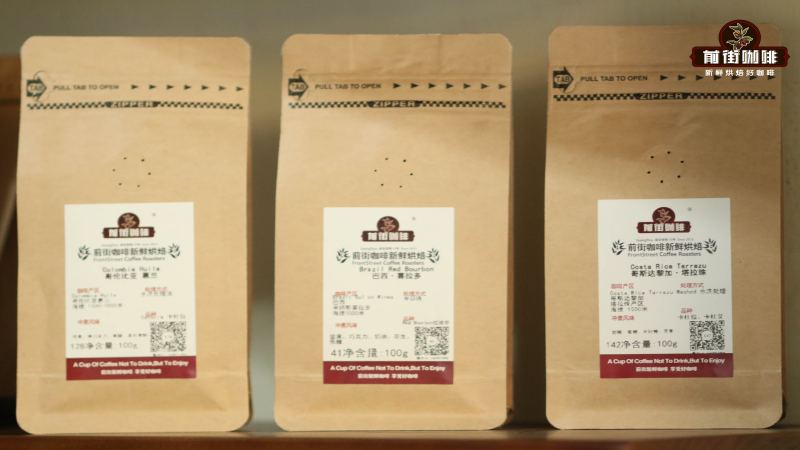
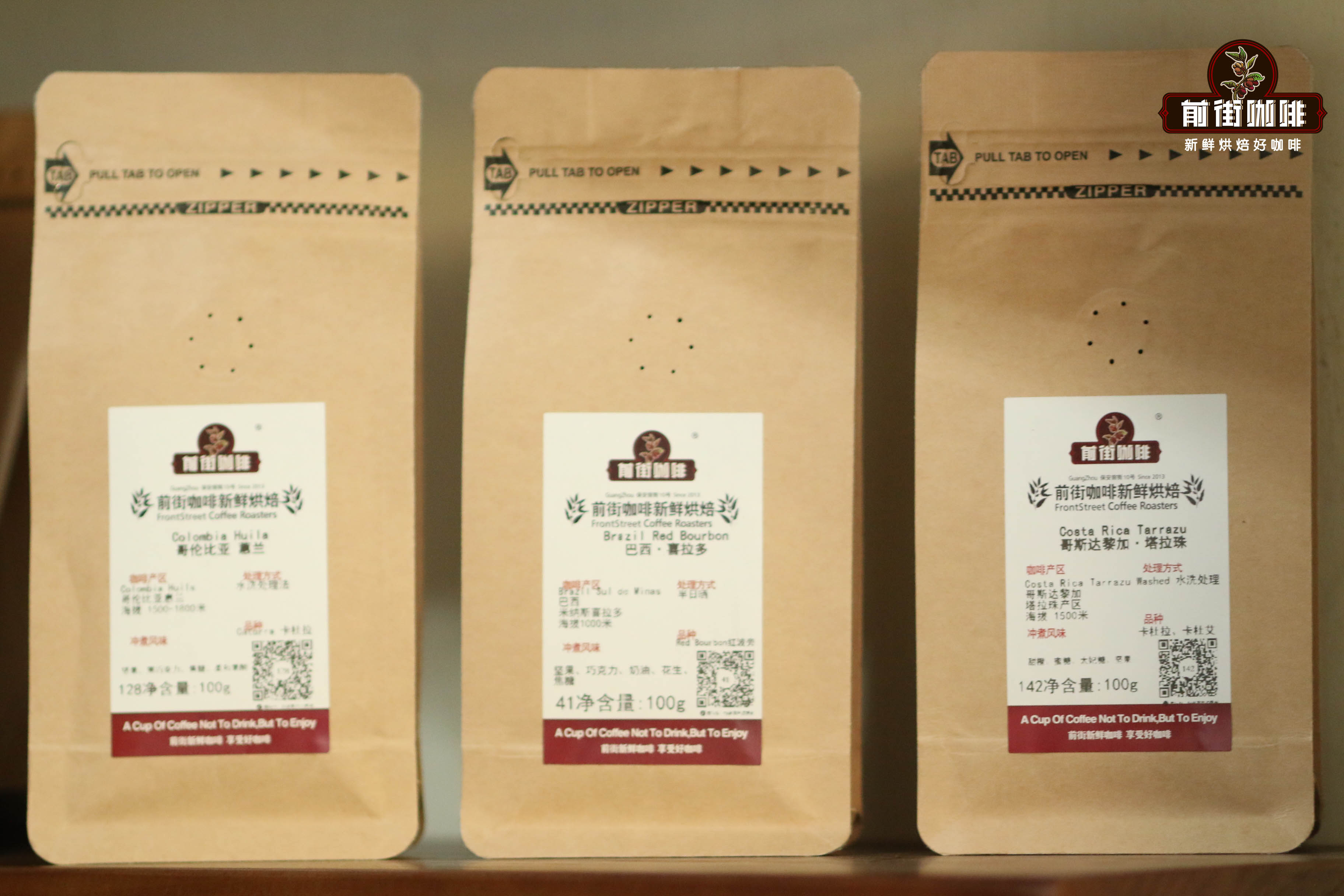
Front Street provides a brief overview here. At present, Front Street staple beans mainly come from Africa, Asia, and Central and South America. In addition to the most classic Front Street washed Yirgacheffe and the Front Street Indonesian Mandheling favored by lovers of bold flavors, what Front Street wants to focus on today is this Front Street Guatemala Huehuetenango. As one of the world’s three major coffee-producing regions, Latin America has produced a large number of coffees with classic flavors and unique character, among which Guatemalan coffee is a well-known representative of the Central and South American origins. Front Street Coffee (FrontStreet Coffee) has included a Front Street Guatemalan coffee in the Front Street staple bean series, and it presents the most typical flavor characteristics of this origin—rich fruity notes without losing fullness, with a distinctive touch of smokiness in the finish.
Where exactly does this unique flavor come from? Front Street has always liked to trace things back to their roots. The flavor of a cup of coffee involves many variables, including human operation, processing methods, and the growing environment of the coffee trees. Since Front Street Coffee (FrontStreet Coffee) already has established standards for offline production, we will temporarily not discuss the impact of the barista’s brewing process on flavor, and instead focus on the growing environment of Guatemalan coffee.
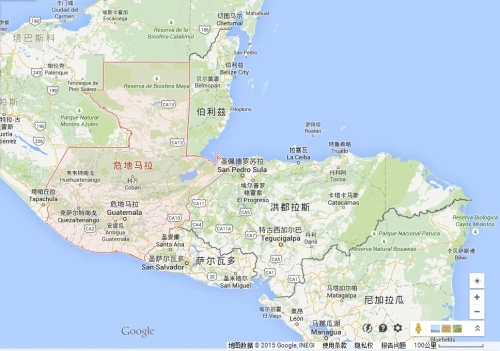
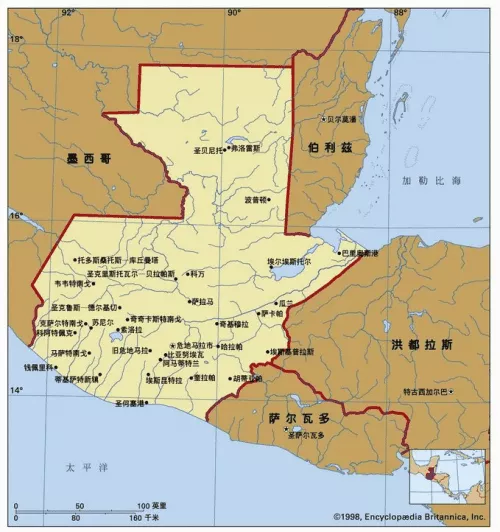
The map of Guatemala above clearly shows that Guatemala borders Mexico to the north, Honduras and El Salvador to the south, the Caribbean Sea to the east, and the Pacific Ocean to the west. Guatemala is located in the tropics. The northern and eastern coastal plains have a tropical rainforest climate, while the southern highlands have a subtropical climate. The year is divided into dry and wet seasons: May to October is the wet season, and November to April of the following year is the dry season. The narrow and fertile plain along the Pacific coast has a tropical climate. The central highlands are also the cultural core of Guatemala. At elevations of 1,300 to 1,800 meters, temperatures are mild year-round, with daytime temperatures between 18 and 28°C, while higher areas are often colder in January and February. Annual precipitation is 2,000 to 3,000 mm in the northeast and 500 to 1,000 mm in the south. Guatemala’s overall average elevation is relatively high, and the coffee-growing belt is distributed above 1,500 meters between 14 and 16 degrees north latitude. These conditions are most likely to produce Strictly Hard Beans, and all are washed processed. Among them, 45% reach specialty grade, a considerable proportion, and there is also a small amount of Robusta.
When Front Street consulted a topographic map of Guatemala, it was indeed surprised: two-thirds of the entire country is mountains and plateaus. In the west are the Cuchumatanes Mountains, and in the south are the Sierra Madre mountains. The west and south belong to a volcanic belt, with more than 30 volcanoes distributed there. Among them, Volcán Tajumulco, at 4,211 meters above sea level, is the highest peak in Central America. Seismic activity is frequent. In the north are the Petén lowlands. There is a narrow coastal plain along the Pacific coast. Major cities are mostly concentrated in the southern intermontane basins. The northern lowland plain of Petén is covered with tropical rainforest, and volcanoes in the central highlands can reach 4,200 meters above sea level. Guatemala’s national emblem is circular, with an open scroll in the center of a blue circular field.
Front Street believes that the above conditions can be called natural advantages for coffee cultivation: mountains and sea, a tropical climate, and volcanic geology. Friends who often read educational articles from Front Street Coffee (FrontStreet Coffee) certainly understand that high altitude is crucial for the development of high-quality coffee beans, and that a large altitude range also means rich and varied microclimates.
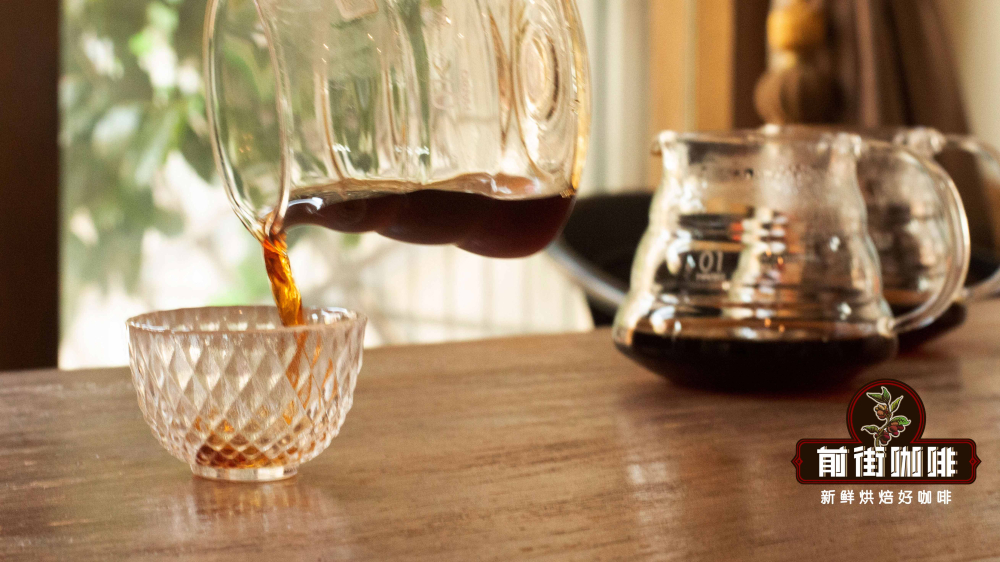
When Front Street cupped multiple coffees from Guatemala, everyone was quite surprised by their smoky aroma. If the same smokiness appeared in beans from other origins, Front Street would most likely classify it as a defective flavor, because smokiness can cause an uncomfortable throat-clogging sensation when swallowing. But the smoky taste found in Guatemalan coffees is a strong, rugged, yet still pleasant experience. If you find Front Street’s description a bit mysterious, you might as well go to Front Street Coffee (FrontStreet Coffee)’s online Taobao store, find this Front Street Guatemalan coffee, and try it yourself to see.
According to Front Street’s research, Guatemala had already mastered coffee cultivation and drinking methods as early as 1747, and in 1750 Jesuit priests introduced coffee trees to Guatemala. In 1845, with the establishment of the Guatemalan Coffee Planting and Promotion Committee, coffee became an important economic crop in the country. Under the government’s strong promotion, by 1880 coffee accounted for 90% of Guatemala’s total exports.
But how could things go so smoothly? In order to obtain greater coffee yields, those in power turned their eyes to indigenous lands, forcing indigenous people to sell their land and move to more barren areas. The second exploitation came from large corporations. During the global economic depression in 1930, the ruler Jorge Ubico, in order to stimulate export markets, focused on lowering costs while ceding more power and land to the large American United Fruit Company (UFC). After Jorge Ubico stepped down, the succeeding president Arbenz tried to take back part of UFC’s land and redistribute it to farmers, but in 1954 he was overthrown by a coup launched by the U.S. Central Intelligence Agency, the CIA. Factors such as poverty, unequal land distribution, famine, and discrimination against indigenous peoples led to the civil war (1960–1966), and these problems still exist today, thus having a certain impact on the development of Guatemalan coffee.
Guatemala is divided into several coffee-producing regions, which everyone can briefly understand through the image below. Next, using the two Guatemalan coffee beans currently available in the store as examples, Front Street will introduce Guatemala’s two famous coffee-producing regions, Antigua and Huehuetenango.
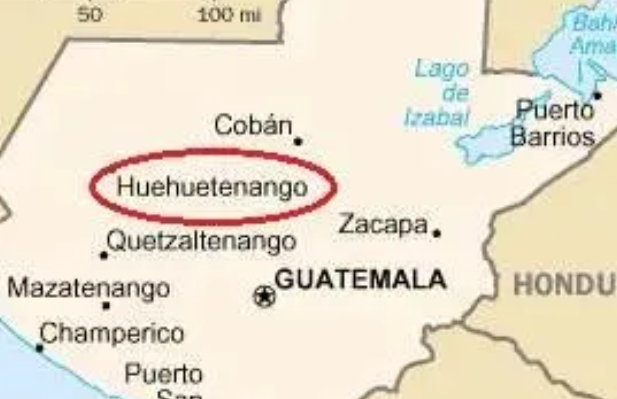
Among Front Street staple beans, there is a Guatemalan coffee from the Huehuetenango producing region. This region is located in the northwestern highlands of Guatemala, with cultivation elevations as high as 1,800 to 2,100 meters. It is the highest-altitude coffee-producing region in the country and is famous for producing high-quality coffee beans. Because Guatemala has many rivers and lakes, the Huehuetenango area is rich in mountains, rivers, and water resources. The climate is dry but water is abundant, and the region also has well-developed water infrastructure, so the coffee is mostly washed processed. The harvest period is from January to April.
Front Street Guatemala Huehuetenango coffee beans Country: Guatemala Region: Huehuetenango Altitude: 1,500–2,000 meters Varieties: Bourbon, Caturra, Catuai Processing method: Washed Brewing flavor: citrus and berry acidity, lemon peel, nutty aroma in the middle, tea-like finish.
Huehuetenango is one of Guatemala’s important coffee-producing regions, and the pronunciation of the region’s name is also quite interesting. It comes from Nahuatl and means “place of the ancients (or ancestors).” The Huehuetenango producing region is located in the northwestern highlands of Guatemala, with cultivation elevations reaching 1,800 to 2,100 meters. It is the highest-altitude coffee-producing region in the country and is known for producing high-quality coffee beans. Because Guatemala is densely covered with rivers and lakes, the Huehuetenango area is abundant in mountains, rivers, and water resources. The climate is dry but water is plentiful, and the region also has complete water infrastructure, so the coffee is mostly washed processed. When Front Street cupped coffee beans from this region, it sensed aromatic, bright fruity notes and a refreshing flavor. Thanks to the high altitude, the coffee beans are of excellent quality, with rich flavor and full, plump beans.
The Antigua region is located in the entire area mainly composed of the Madre Plateau within the opographically mountains that run through Guatemala. With advantages in natural conditions, Antigua has become the most prestigious of Guatemala’s eight major producing regions. High altitude, unique volcanic soil, and shade cultivation give the coffee beans a unique regional flavor.
Front Street Guatemala Antigua La Flor del Café
Origin: Antigua Trader: La Minita Altitude: 1,200–1,600 meters Varieties: Bourbon, Caturra Processing method: Washed
Brewing flavor: At high temperatures, the entry presents bright lemon-like acidity. As the temperature drops, a juice-like mouthfeel is interspersed with faint white floral notes. Then cocoa and a light smokiness add layers to this Front Street Guatemala La Flor del Café coffee, and finally a caramel-like finish brings the cup to a perfect close.
Antigua has relatively little summer rainfall, and in winter it sometimes even frosts because it is too cold, so it is actually not very suitable for coffee tree growth. But fortunately, this place is located in an active volcanic belt. After volcanic eruptions, pumice falls into the soil and cools. Because this pumice has many tiny pores, it is very helpful for retaining moisture. In addition, many shade trees are planted on the estates, so the coffee trees do not suffer cold damage in winter. These factors that overcome unfavorable conditions, together with the large temperature difference between day and night, create Antigua’s unique microclimate, giving the coffee beans here a light smoky flavor and strong fruity aroma.
Here Front Street needs to remind friends who are just beginning to explore specialty coffee that coffee processing methods can affect coffee flavor to a certain extent. Front Street is well aware of this, so whether it is Front Street staple beans or other online coffee beans, most have gone through washed processing. Of course, beans known for special processing methods are another matter. Front Street’s purpose is to allow coffee beginners to establish the most basic sensory understanding of coffees from major producing regions around the world.
Coffee bean grading also often confuses people. Different producing countries have different grading standards. Like Central American producing countries such as Costa Rica, El Salvador, Mexico, and Honduras, Guatemala’s grading is also based on altitude. Coffee produced at high altitudes is usually of better quality than that produced at low altitudes, because as altitude increases, temperature decreases. In high-altitude environments, coffee grows more slowly, which is conducive to the accumulation of desirable compounds. That is why altitude is used as a method of quality grading.
HB (Strictly Hard Bean): grown at 1,500–1,700 meters above sea level;
HB (Hard Bean): grown at 1,350–1,500 meters above sea level;
SH (Slightly Hard Bean): grown at 1,200–1,350 meters above sea level;
Extra Prime (Extra Prime Washed Bean): grown at 1,000–1,200 meters above sea level;
Prime (Prime Washed Bean): grown at 850–1,000 meters above sea level;
Good Washed (Good Washed Bean): grown at 700–850 meters above sea level.
At the beginning of the article, Front Street mentioned that the coffee production at Front Street’s offline stores has certain standards. So what exactly is this standard? Here are some coffee brewing parameters for reference:
Dripper: Hario V60
Water temperature: 90–91°C
Grind size: medium-fine grind / 80% passing a No. 20 sieve
Coffee-to-water ratio: 1:15
Coffee dose: 15 grams
Front Street three-stage brewing method: First, preheat the dripper and carafe. Add 15 grams of coffee grounds and tap gently to level the surface of the coffee grounds. Begin the first pour, pouring 30 grams of water in a circle from the center outward, and bloom for 30 seconds. The ideal state is for the coffee grounds to be evenly saturated and to puff up into a small “coffee hamburger.” After 30 seconds, begin the second pour. In this stage, the water stream height is 3–5 cm, and pour 95 grams of water in concentric circles from the center outward. At this point, the total amount of water poured is 125 grams. Observe that the coffee liquid surface should be entirely golden coffee foam. When the liquid level is about to expose the coffee bed, begin the final pour. In this stage, pour 100 grams of water, slowly drawing circles in concentric circles, keeping the flow consistent. After all the coffee liquid in the dripper has flowed into the carafe, remove the dripper and end extraction. Total time is 2 minutes 08 seconds.
The above content is compiled by CoffeeHunters, a coffee news website.


