







How Does the Ethiopian Coffee Grading System Work?
Ethiopia's ECX grades coffee through several layers. The older method counted defects, while the current system combines physical characteristics and cupping flavor into nine tiers, on top of which sit the Q1 and Q2 specialty grades. Washed Yirgacheffe Worka is sold as G1, an heirloom variety grown from 1,650 to 1,800 meters and processed by the washed method.
Yirgacheffe is a small town inside Sidamo Province, not a separate country or region, and it later separated from Sidamo to form its own identity. Cupping Worka G1 shows clear floral notes and rich citrus. Brewing temperature shifts that profile, so pour-over tests at 86, 90, and 94 degrees Celsius show how heat affects the bright fruit acidity and tea-like quality.
Yirgacheffe is the specialty entry point for many coffee lovers, and the washed lot from the Worka cooperative is one of its most representative examples. This article starts from Front Street Coffee's cupping of Worka G1, tracing the origins of the Yirgacheffe and Sidamo growing regions, the background of the Worka cooperative, the washed processing method, and the characteristics of Ethiopian heirloom varieties. It also systematically explains the coffee grading system of the Ethiopia Commodity Exchange (ECX), including the old defect-count-based grading, the nine-tier classification combining physical characteristics and cupping flavor, and the Q1 and Q2 specialty grades. At the end, it includes Front Street roasters' light-roast recommendations, as well as a comparative pour-over test at three water temperatures—86°C, 90°C, and 94°C—to help readers find the brewing temperature that best brings out Worka's bright fruit acidity and refreshing tea-like quality.
For more specialty coffee knowledge, please follow our WeChat official account: Front Street Coffee (FrontStreet Coffee)
In the specialty coffee world, Yirgacheffe enjoys considerable fame, and many people first encountered single-origin coffee through it. When Yirgacheffe is mentioned, Sidamo often comes up as well, but many are unclear about the exact relationship between the two. Both belong to Ethiopia, and it can be understood this way: Sidamo is a province, while Yirgacheffe is a small town within Sidamo Province, a sub-region under Sidamo's jurisdiction and one of the highest-altitude coffee-growing regions in Ethiopia. Because of its distinctive flavor, Yirgacheffe later became independent from Sidamo, establishing its own identity and becoming Africa's most renowned growing region.
When Front Street Coffee (FrontStreet Coffee) cupped the washed Yirgacheffe, it noted that its most prominent flavor markers are clear floral notes and a rich citrus character. However, coffee flavor can also change with brewing water temperature, roast level, and other factors. Today, Front Street Coffee (FrontStreet Coffee) will use this Worka bean for an experiment.
Bean Information
Front Street Coffee (FrontStreet Coffee): Ethiopia Yirgacheffe Worka Grade: G1 Variety: Heirloom Growing altitude: 1,650m–1,800m Processing method: Washed
Growing Region Overview
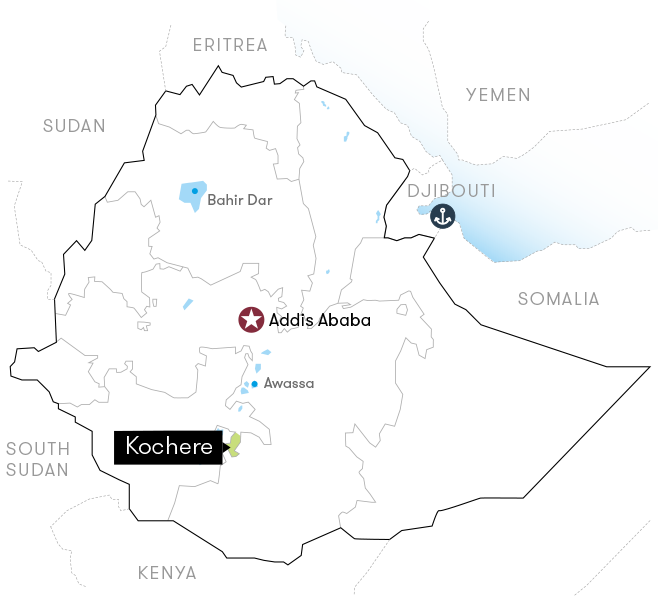
Yirgacheffe is located in the Gedeo region of southern Ethiopia. Well-known growing areas under this region include Yirgacheffe and Kochere, with altitudes ranging from 1,700 to 2,100 meters, making it one of the highest coffee-growing regions in the world and a byword for Ethiopian specialty coffee.
In the Rift Valley area represented by the Misty Valley, mist lingers year-round, the seasons are mild like spring, and gentle breezes blow—cool and humid—allowing thousands of coffee trees to flourish here, creating Yirgacheffe's unique terroir with interwoven floral and fruity notes, complex layers, and an elusive character.
Worka Cooperative This coffee bean from Front Street is produced in Ethiopia and processed by the Worka cooperative. Alemayehu Alako Farm is one of the members of the Worka cooperative. Worka is located in the Yirgacheffe growing region, at an altitude of 1,800–2,000 meters. The Worka cooperative was founded in 2005 and joined the famous Yirgacheffe Coffee Farmers Cooperative Union (YCFCU) the same year, gaining renown for producing high-quality natural Yirgacheffe. The Worka cooperative has approximately 300 coffee farmers under it.
Processing Method
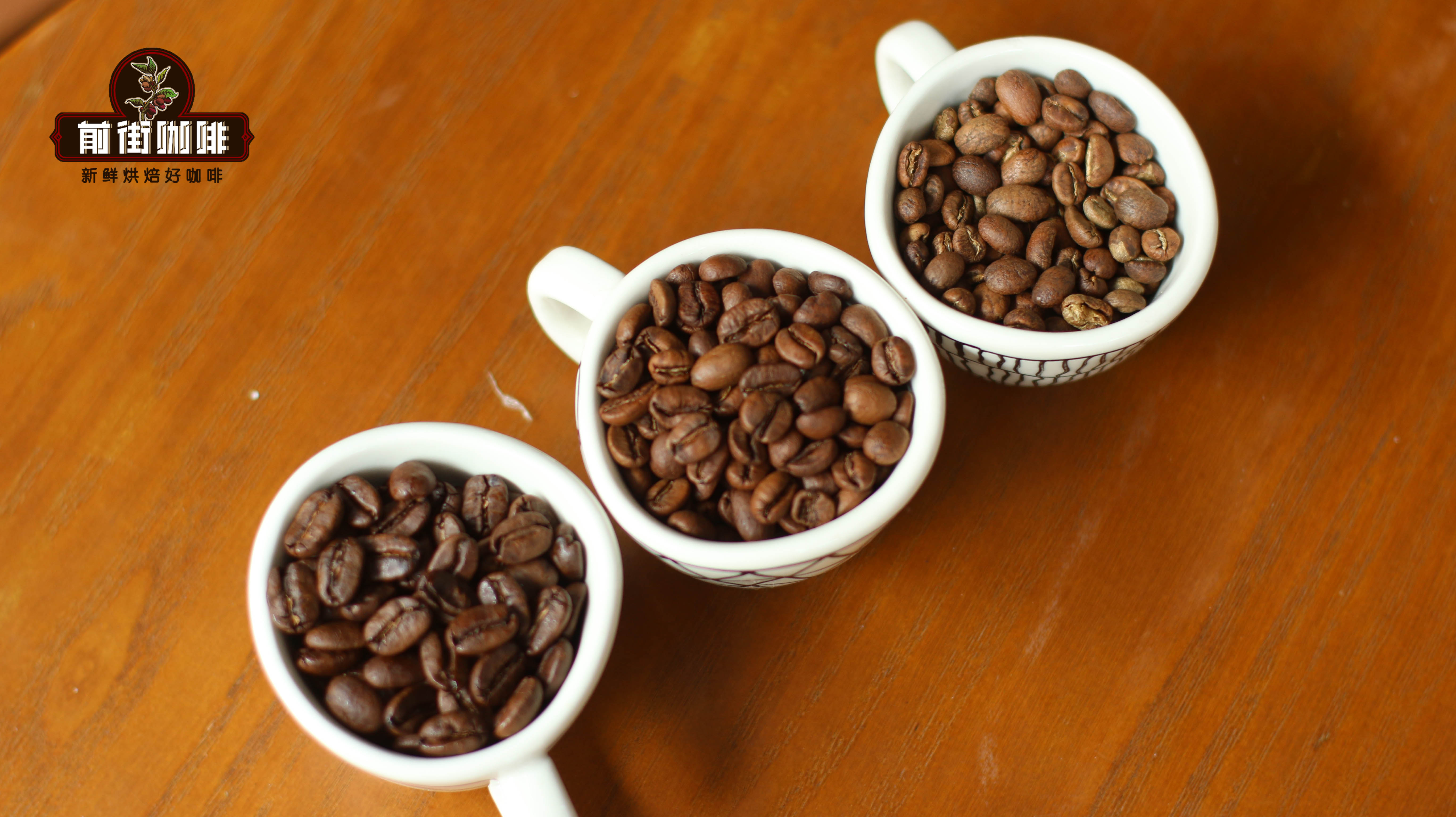
This Yirgacheffe Worka coffee bean from Front Street Coffee (FrontStreet Coffee) uses the washed processing method.
First, the sorted coffee cherries are sent into a depulper to initially remove the skin and pulp. Then the green coffee beans still attached to the mucilage are submerged in water to ferment for about 24 hours. After fermentation is complete, the parchment-covered green coffee beans are placed in a flowing water channel to be washed, removing residual pulp and mucilage. After washing, the coffee beans are dried in the sun or with a dryer to reduce moisture content to around 12%, and finally the parchment is removed from the green coffee beans.
Heirloom This Worka coffee bean from Front Street also belongs to the heirloom variety. Typically, coffee farmers may grow multiple varieties at the same time, or they may select the better-performing varieties to sell separately. Ethiopia's situation is rather special: most coffee here grows wild or semi-wild in fields, backyards, or under forest canopy. When farmers harvest, what they actually get is a grand mixture of many different natural variants combined together.
Wild coffee trees especially like to grow under forest canopy. Tree species that provide shade for coffee are called "Shade Trees"; this cultivation method is called "Shade-grown Coffee." Its advantage lies in reducing ecological impact, while diverse organisms also help suppress pests and diseases. In some areas, local food crops such as bananas are also used to shade coffee, achieving two benefits at once.
Ethiopia has nearly 2,000 recorded coffee varieties, of which 1,927 are native varieties and 128 are introduced foreign varieties. So judging by appearance alone, Ethiopian coffee varieties are like a "grand garden," with long, short, thin, and plump ones—everything you could imagine.
Ethiopia (Grading by Defect Bean Ratio)
Before the emergence of the Ethiopia Commodity Exchange (ECX), Ethiopia's coffee export grades were set by the CLU department (Cupping and Liquoring Unit) under the Ministry of Agriculture, mainly grading green coffee beans by the number of defects in 300g. The grading standards are shown in the table below.
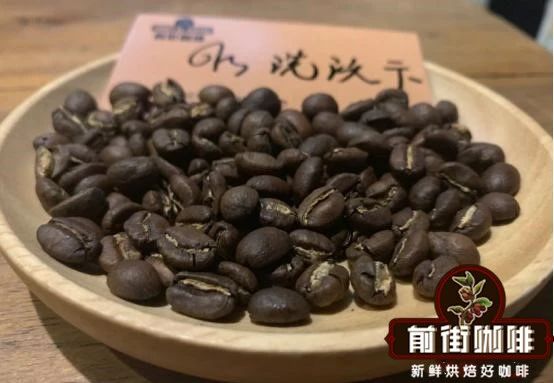
Generally speaking, washed beans are classified as G1–G2; because natural processing techniques were limited at the time, natural green beans had a relatively high number of defects and were usually G3–G5. With advances in natural processing techniques, today's natural beans can also reach G1–G2 grades.
After the ECX (Ethiopia Commodity Exchange) was established in 2008, it began using a scoring method that combines the physical attribute characteristics of green coffee beans with cupping flavor characteristics for grading.
The ECX divides all coffee into two types by processing method—non-washed and washed—and defines three categories:
a. Specialty: few defects, high cupping flavor quality
b. Commercial: does not reach specialty grade, but is higher than the local/domestic consumption grade;
c. Local/Domestic: coffee with a high number of defective beans (unripe beans), and relatively poor flavor caused by being out of season or poorly stored. Among these, specialty and commercial are oriented toward the export international market. The ECX divides green coffee beans into nine grades based on the total score of physical attribute characteristics and cupping flavor characteristics, with physical characteristics accounting for 40% and cupping quality accounting for 60%.
Physical characteristics (40%):
Washed processing: defect count (20%), appearance size (10%), color (5%), odor (5%)
Non-washed processing: defect count (30%), odor (10%)
Cupping quality (60%)
Subsequently, G1–G3 are cupped again according to SCAA standards to evaluate their flavor attributes in more detail: G1 and G2 scoring no less than 85 points are rated Q1; G1, G2, and G3 scoring between 80 and 85 points are rated Q2; all G1, G2, and G3 scoring below 80 points are rated G3;
Q1 and Q2 are classified as specialty grade for export. G4–G9 remain unchanged in their original grading and, together with G3, are classified as commercial grade for export.
Roasting Recommendations
Yirgacheffe's acidity is its signature characteristic. To highlight this trait, Front Street Coffee's (FrontStreet Coffee) roaster recommends using a light roast.
The temperature rise is relatively gentle, with a roasting time of just over 10 minutes, giving sufficient time and temperature for dehydration and allowing chlorogenic acid to degrade; if degradation is insufficient, the cup will have sharp acidity that feels uncomfortable on the tongue and a slight roughness; at the same time, continuing to apply heat after first crack will continue the caramelization reaction, producing caramel and other sweetness, with a solid, weighty sweetness, while the bright fruity acidity will lose a little.
Front Street Coffee (FrontStreet Coffee) tested the different flavors presented by brewing Yirgacheffe Worka G1 (light roast) at different water temperatures, keeping other parameters consistent.
Three water temperature values were selected: 86°C, 90°C, and 94°C. Other parameters besides this were kept as consistent as possible, using a Hario V60 dripper, a water-to-coffee ratio of 1:15, 15g of coffee grounds, and a grind size of EK43s setting 10 (80% passing through a Chinese standard No. 20 sieve).
The brewing technique was also kept consistent, using a staged extraction method: 30g of water for blooming for 30s, then pouring in a small stream in a circular motion up to 125g before pausing, and when the water level drops and is about to expose the coffee bed, continuing to pour until 225g and stopping, (timing starts from the beginning of blooming) with an extraction time of 2min.
[87°C Pour-over Flavor]
Lemon and tea notes on entry, obvious acidity, rounded mouthfeel, with the overall layers on the thin side.
[90°C Pour-over Flavor]
Lemon, plum, and Tieguanyin on entry; as the temperature changes, caramel notes become obvious, acidity is bright, and the sweet aftertaste is pronounced.
[94°C Pour-over Flavor]
Lemon and berry on entry, obvious acidity, enhanced body, and rich tea notes
From the above, it can be seen that 90°C best expresses the bright fruit acidity and refreshing tea-like quality of Yirgacheffe Worka coffee beans; 87°C has weak layering and insufficient flavor prominence, while 94°C, although enhancing the body, lacks some brightness in acidity.
The above content is compiled by CoffeeHunters, a coffee news website.


