







What Are the Properties of Coffee Beans in Honey Processing?
Honey processing does not use honey. It keeps the mucilage on the seed for fermentation and drying, placing it between washed and natural methods. A coffee fruit holds skin, pulp, mucilage, parchment, silver skin, and seed, and honey processing retains part of that mucilage, with grades set by how much stays and how often the beans are turned.
Black, red, orange, yellow, and white honey differ in mucilage retention, drying duration, turning frequency, and cup flavor. The method began in Brazil as pulped natural, called Cereja Descascada, which cut drying days and reduced fermented off-flavors in the dry climate. It was later refined in Central and South America, most notably Costa Rica.
Honey processing is not about processing coffee with honey, but rather a method of green bean processing that retains the mucilage for fermentation and drying. It originated from Brazil's pulped natural method and was later improved in Central and South America, classified by mucilage retention and turning frequency into types such as black honey, red honey, orange honey, yellow honey, and white honey. Different honey colors correspond to different drying durations, turning frequencies, and cup flavors. This article will break down everything from the structure of the coffee fruit and the properties of mucilage to each honey processing grade, and include Front Street Coffee's Guatemala New Oriental Geisha recommendation and pour-over suggestions to help coffee enthusiasts understand the source of sweetness in honey processing and key brewing points.
When first encountering the term "honey processing," many people mistakenly think it means using honey to process green coffee beans, with the goal of making the final product taste as sweet as honey. In reality, this understanding is incorrect.
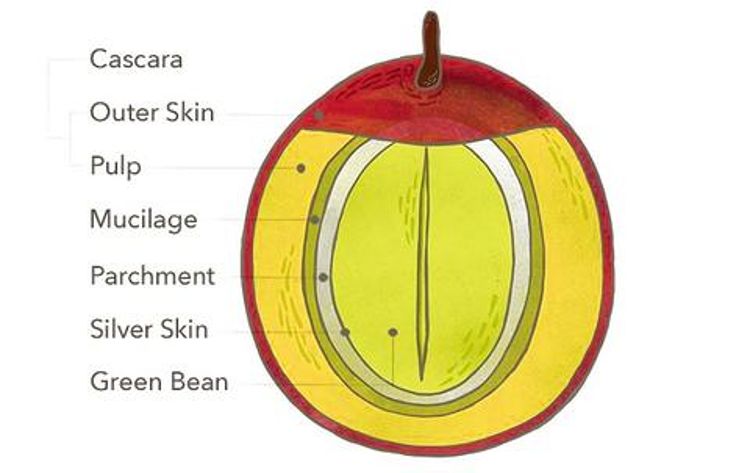
A coffee fruit consists, from outer to inner layers, of the skin, pulp, mucilage, parchment, silver skin, and seed, and the coffee we drink daily is precisely the core seed part. To extract the seed, traditionally two main methods are relied upon: washed and natural.
Washed processing involves first sending fresh coffee cherries into a depulper to remove the skin and pulp, then rinsing with plenty of water, followed by drying until the moisture density stabilizes, ultimately obtaining green coffee beans; natural processing does not depulp but directly dries the whole cherry to the target moisture density, and finally hulls it. Honey processing falls right between the two, widely applied in Central and South America, with Costa Rica being the most renowned.
Around the mid-1990s, to shorten the drying time for large batches of green coffee beans, Brazilian merchants invented the pulped natural method, locally called "Cereja Descascada." This approach removes the skin first and then sun-dries, fitting well with Brazil's dry climate: on one hand, it shortens the drying days, and on the other, it avoids the fermented off-flavors that Brazilian natural beans tend to develop on the drying patio, significantly enhancing the flavor and quality of the coffee beans.
After this new post-processing technique emerged, some estate owners in Central and South America also began to emulate it, combining local climate conditions to improve Brazil's pulped natural process. By controlling the degree of mucilage removal, they allowed the residual sugar in the dried green beans to vary, gradually differentiating into processing schemes such as white honey, yellow honey, red honey, and black honey.
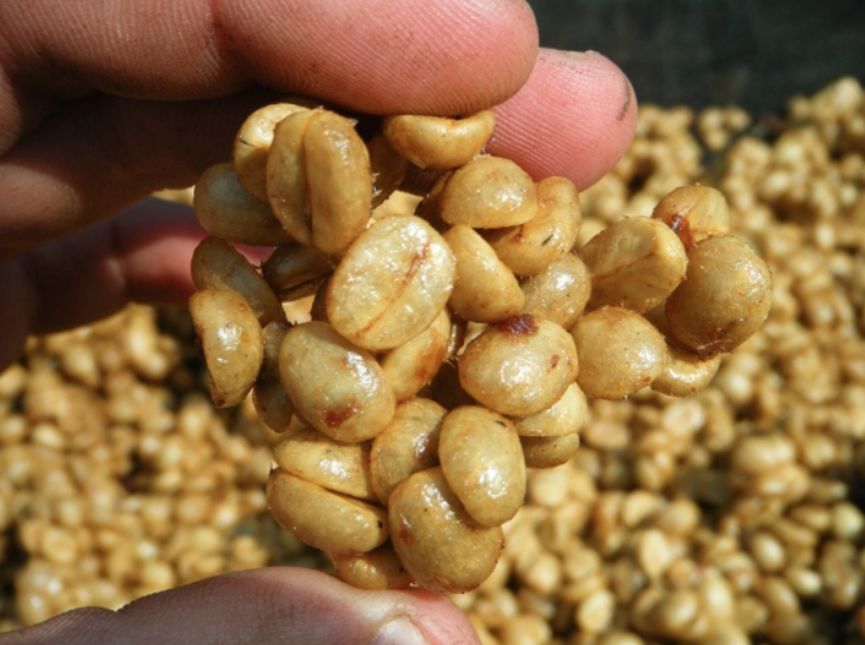
When using honey processing, coffee farmers first pour the fresh cherries into a water tank for flotation, eliminating underripe defective fruits and debris like stones, then use specialized equipment to peel off the outermost skin. At this point, some pulp still adheres to the bean surface, and after a period of "dry fermentation," it enters the drying stage. The so-called "honey" refers to the sugary substances in the mucilage that become viscous after fermentation, reminiscent of honey, hence the name "honey processing."
Compared to the washed method, honey processing can reduce freshwater consumption by about 40%, while also avoiding the negative defect flavors introduced by prolonged exposure to direct sunlight. Coffee processed with honey typically exhibits in cupping a full yet delicate fruity sweet-tartness, as well as refined and complex floral aromas, with an overall fresh and clean mouthfeel. Water-saving, environmentally friendly, and outstanding in flavor—these advantages have made honey processing increasingly popular in Central and South America, and its coffee flavors are widely favored in the specialty market. The Guatemala New Oriental Geisha coffee on Front Street's bean list is produced using honey processing, presenting flavors of sweet orange, white orchid, bergamot, and toffee after brewing, with an impressive round sweetness.
Front Street Coffee: Guatemala New Oriental Geisha Coffee Beans
Region: Guatemala New Oriental Region
Altitude: 1500-2050 meters
Processing Method: Honey Processing
Variety: Geisha
Flavor: Sweet Orange, Toffee, Bergamot
Coffee mucilage is located beneath the skin and pulp, above the parchment, and consists of water, proteins, reducing sugars, and pectin. Strictly speaking, mucilage is also part of the pulp. When the coffee fruit ripens, pectinase is produced internally, which breaks down the pectin bonds, softening the originally hard pulp fibers into a sugar- and pectin-rich hydrogel mucus. When the machine removes the skin and most of the hard pulp, the mucus layer remaining on the outside of the parchment is what we call "mucilage."
In coffee processing, mucilage is a very sweet substance, with high water content and high sugar content, and it does not easily separate from the coffee seed. Therefore, whether honey processing can create refined fruity flavors depends on the amount of mucilage retained and the degree of sugar fermentation. Farmers can use specialized quantitative demucilagers or adjust the number of daily manual turnings to obtain green coffee beans of different honey colors.
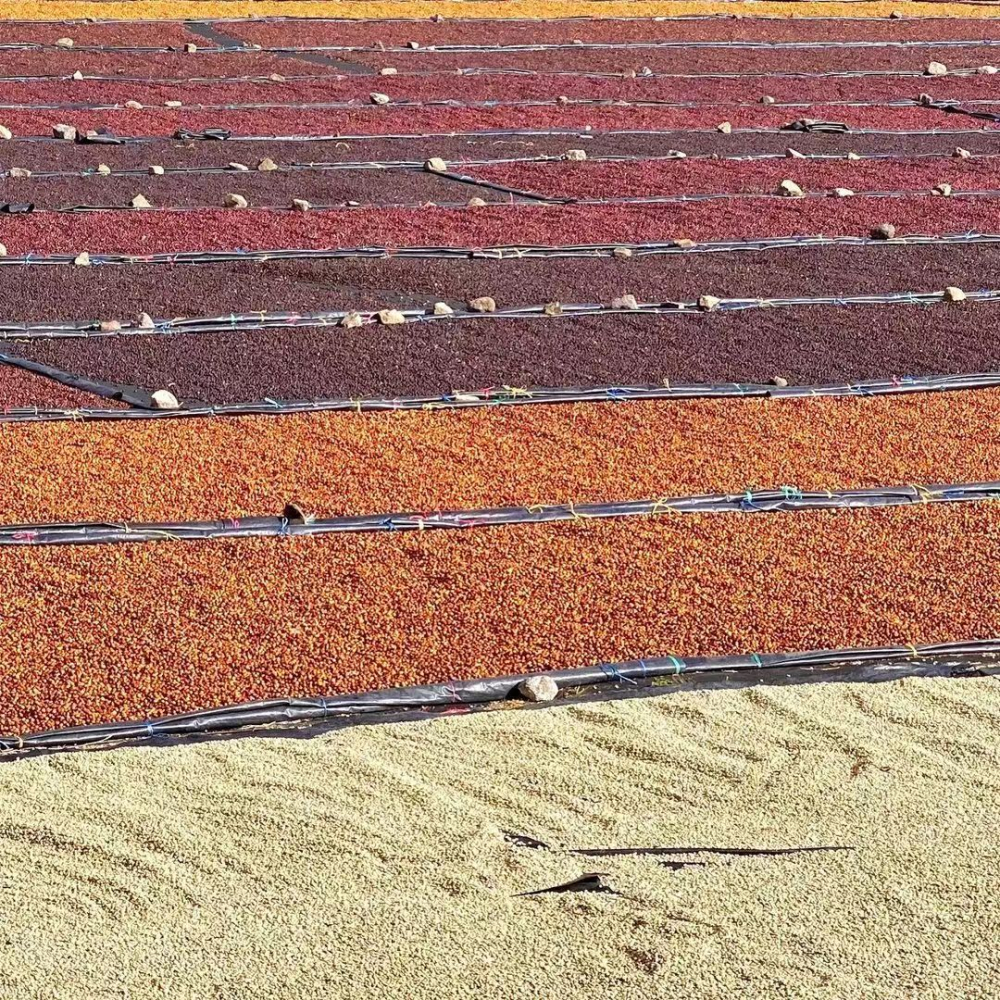
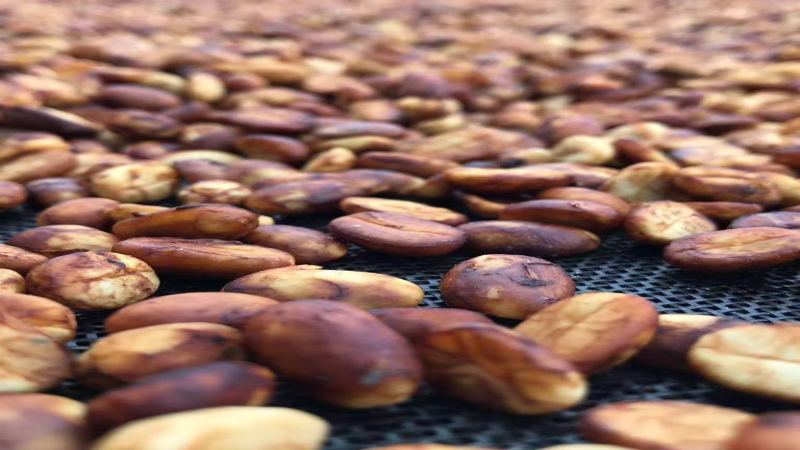
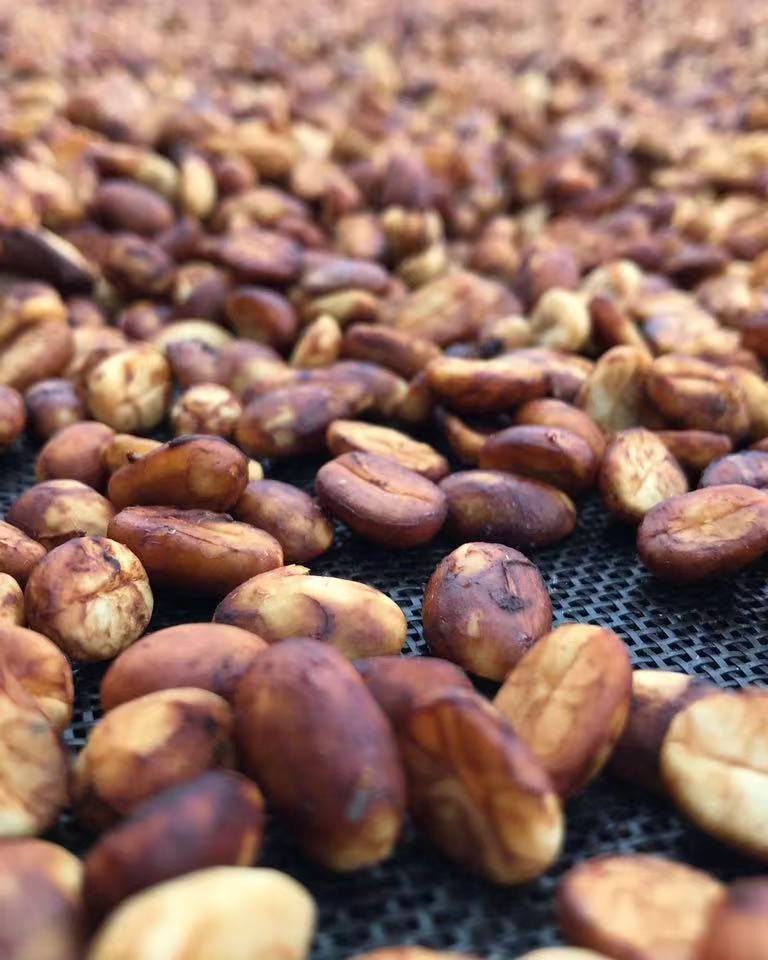
Black Honey retains the highest amount of mucilage, with almost no removal of pectin, so drying takes the longest, typically lasting more than 14 days. During the process, to avoid drying too quickly, covers are used to block excessive sunlight, allowing for more complete sugar transformation. In some regions, shade drying is also used when making black honey to ensure sugars are timely transformed into the coffee beans, though the drying time is correspondingly extended. Front Street's observation of black honey processed green beans found that due to higher mucilage retention, their color is noticeably uneven and they smell of rich fermentation aromas.
Red Honey retains about 50-80% of the mucilage, right between washed and natural, and is also the most common honey color type on the market. The darker the bean color, the fewer manual turnings required: black honey is typically turned only once a day, red honey needs several turnings a day, while yellow honey requires turning every hour, and the coffee cherries take about 12 days to fully dry. Front Street observed from red honey processed green beans that their color is lighter than black honey, with a faint fermented fruity smell.
Yellow Honey generally retains 15-50% of the mucilage, requires the most direct sunlight for heat absorption, and takes about 8 days to reach a stable moisture content. Due to the small amount of retained mucilage, yellow honey processed beans appear to the naked eye as a relatively uniform yellow-green, smelling of grassy notes with a hint of genmai (brown rice) aroma.
White Honey retains only about 10%-15% of the mucilage, usually sun-dried in the open air, requiring frequent turning to maintain the upper limit of enzyme and bacterial activity, and when spread on the drying bed it forms a thinner layer, so drying takes less time. Compared to other degrees of honey processing, white honey green beans have the lightest color, smelling of elegant herbal plant aromas.
What brewing method is suitable for honey processed coffee beans?
As mentioned above by Front Street, compared to natural and washed processing methods, honey processed coffee presents diverse fruity flavors with higher sweetness, making it more acceptable even for those who don't often drink black coffee. If you want to taste the flavor of honey processed coffee itself, Front Street believes pour-over black coffee is most suitable.
Pour-over suggestions:
Dripper: V60
Water temperature: 90°C
Grind size: 80% passing through a No. 20 standard sieve
Coffee-to-water ratio: 1:15
Coffee dose: 15 grams
Staged extraction:
First, use 30g of water to evenly wet the coffee grounds and bloom for 30 seconds, then in the second stage, pour 95g of water in a steady circular motion from inside to outside, until the water level drops to 2/3 of the coffee bed in the dripper, then begin pouring the third stage of 100g, paying attention to a small stream throughout; after about 2 minutes and 10 seconds when dripping is complete, remove the dripper.
The above content is compiled by CoffeeHunters, a coffee news website.


