







Where Did the Name Mandheling Coffee Come From?
Mandheling takes its name from a wartime mix-up. During World War II, a Japanese soldier in Indonesia asked a shop owner about the coffee he had just drunk, and the owner, thinking he was asked where he was from, answered Mandailing. The Japanese pronunciation came out close to Mandheling, and the soldier later had a friend search Indonesia for that coffee.
The middleman who handled that search was the company now known as PWN, which registered Golden Mandheling as a trademark years ago and applies strict screening standards to it. Indonesia's wet-hulling process and the formation of goat's foot beans shape the mellow, low-acid profile that makes this classic coffee a common choice for drinkers who avoid acidity.
Mandheling coffee, with its mellow, low-acid profile, has become the top choice for many consumers who dislike acidic coffee. But where did the name Mandheling come from? What is the difference between Golden Mandheling and regular Mandheling? This article will start with a historical anecdote from World War II, trace the origin of the Mandheling name and its connection to Indonesia's PWN company, delve into Indonesia's unique wet-hulling process and the formation principle of goat's foot beans, and explain in detail PWN's strict screening standards for Golden Mandheling. At the same time, Front Street Coffee will share its medium-dark roasting approach for Golden Mandheling and KONO dripper pour-over parameters, helping readers fully understand the flavor code of this classic coffee.
Many people's childhood impression of coffee probably comes down to that phrase: "burnt and bitter, like dishwater." It is precisely with this preconception that when they first walk into a specialty coffee shop and order a真正的手冲咖啡, they are often surprised—coffee is actually sour! As a result, when consumers who cannot accept acidity visit the café again, their first question is often: "Do you have any coffee that isn't sour?" Faced with such a request, the first thing that comes to the mind of Front Street Coffee's baristas is Golden Mandheling.
Before formally introducing Golden Mandheling coffee beans, Front Street feels it is necessary to first discuss the origin of the name Mandheling. According to legend, during World War II, a Japanese soldier drank a cup of extremely mellow coffee in Indonesia and wanted to confirm the name of the coffee with the shop owner. The owner mistakenly thought the other party was asking where he was from, so he replied "Mandailing." The pronunciation of "Mandailing" in Japanese is very close to "Mandheling," so the soldier only remembered the word "Mandheling." After the war ended, he returned to Japan but could never forget that cup of mellow coffee, so he entrusted a friend in business to go to Indonesia and, through a local middleman, search for the "Mandheling coffee" he had been longing for. Thereafter, Mandheling quickly became popular in Japan thanks to its rich body.
That Indonesian local middleman back then was none other than the now-famous PWN company. Interestingly, PWN registered "Golden Mandheling" as a trademark many years ago, while the Japanese merchant registered "Ding Shang Golden Mandheling." As for which brand's Mandheling has the better flavor and which grade is higher, since the two companies have different positioning and brand strategies, forcibly comparing them is not appropriate. Moreover, flavor itself is highly subjective, and only by tasting it yourself can you reach your own conclusion.
The Golden Mandheling coffee beans produced by PWN are renowned far and wide, with extremely strict production standards and naturally outstanding quality.
The vast majority of coffee beans in Indonesia use the wet-hulling process, and the formation of this method is inseparable from the local climate conditions and economic situation. In order to shorten the drying cycle of green coffee beans, farmers use the wet process to first remove the skin, pulp, and part of the mucilage with higher moisture content. At this point the coffee beans are still in a semi-wet, semi-dry state and are sold to a green bean processing plant. After receiving the parchment beans, the processing plant hulls off the protective parchment layer, thereby further speeding up the drying of the green beans. This can also be felt when drying fruit: when moisture content is high, the fruit is softer; otherwise it is harder. The same principle applies to coffee beans, so when the parchment beans are not yet fully dry and the parchment layer is hulled off, the green beans are easily compressed and the bean body cracks, with a shape resembling a goat's hoof, hence the name "goat's foot bean."
Goat's foot beans are a notable characteristic of Indonesian Mandheling coffee beans and are not considered defective beans. However, in PWN's view, the appearance of goat's foot beans is not regular or aesthetically pleasing enough, so they need to be screened out to present a neater visual effect.
When selecting Golden Mandheling coffee beans, PWN requires the bean size to reach 18 mesh or above, and the defect standard is no more than 3 defective beans per 300 grams of green beans. Merely removing goat's foot beans is already quite strict, but PWN's requirements for Golden Mandheling are even more extreme—after three rounds of hand sorting, the selected coffee beans are also sent to a machine for density and color sorting, ultimately presenting Mandheling coffee beans with uniform color and consistent bean shape.
Such strict production standards mean that PWN's Golden Mandheling output is not high. However, "Golden Mandheling" can be seen everywhere on the market. In order to raise prices, many Golden Mandheling green bean merchants will select the portion above 18 mesh from Mandheling coffee beans that also belong to the G1 grade and sell it; some even screen three times, striving to make the appearance as close as possible to PWN's Golden Mandheling. Even so, the taste ultimately cannot lie. Front Street once purchased several coffee beans also named "Golden Mandheling" for blind testing, and all the baristas participating in the cupping could accurately identify Front Street's PWN Golden Mandheling; its cleanliness is unmatched by other so-called "Golden Mandheling."
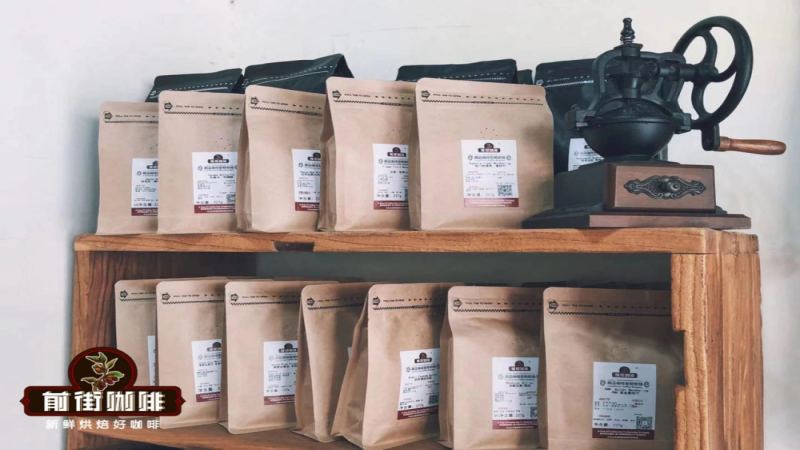
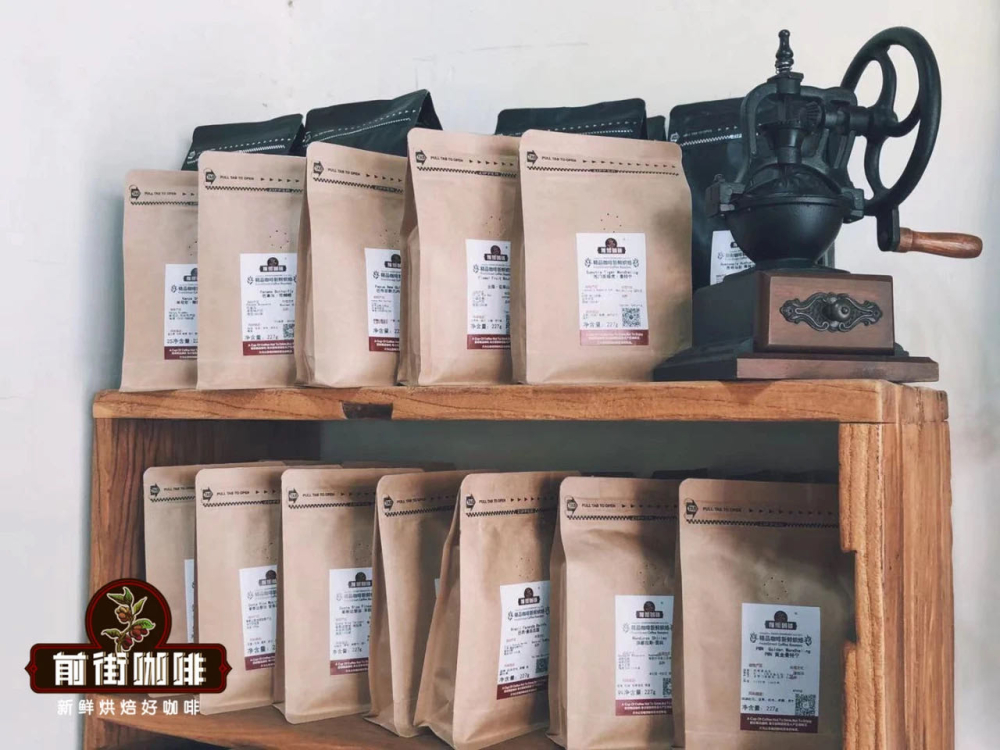
For coffee enthusiasts who are just starting out, the variety of coffees they have tasted is not yet enough, making it difficult to judge solely from taste whether it comes from PWN's Golden Mandheling. Front Street also offers a tip: Golden Mandheling coffee beans produced by PWN usually come with a factory certificate and are packaged in Golden Mandheling green bean burlap sacks printed with "PWN." Therefore, if you are not sure whether what you bought is authentic Front Street PWN Golden Mandheling coffee beans, you might ask the seller to provide the certificate and burlap sack to prove the origin of the green beans. The Front Street PWN Golden Mandheling burlap sacks and certificates sold by Front Street are hung in Front Street's store, and interested friends can also go and see them in person.
After receiving this batch of neatly appearing, high-quality Front Street PWN Golden Mandheling coffee beans, Front Street Coffee's roaster specifically chose a medium-dark roast in order to highlight the mellow mouthfeel and spicy aroma of Mandheling coffee.
When brewing Front Street's Front Street PWN Golden Mandheling, in order to showcase its mellow, clean, and rich characteristics, Front Street recommends using a KONO dripper, a water temperature of 88 degrees Celsius, and a medium-coarse grind.
Dripper: KONO dripper
Water temperature: 88 degrees Celsius
Coffee dose: 15 grams
Coffee-to-water ratio: 1:15
Grind level: 70% passing rate on China standard No. 20 sieve
First wet the filter paper with water so that it fits the dripper completely, then pour in 15 grams of coffee powder and level it. Starting from the center point, pour water in a "の" shape, adding 30 grams of hot water to fully wet the coffee powder, and let it bloom for 30 seconds. After the bloom, pour slowly in circles from the center point with a small stream to 125 grams for staged extraction. When the water level in the dripper drops to the point where the coffee bed is about to be exposed, continue pouring in circles to 225 grams; the total extraction time is about 2 minutes.
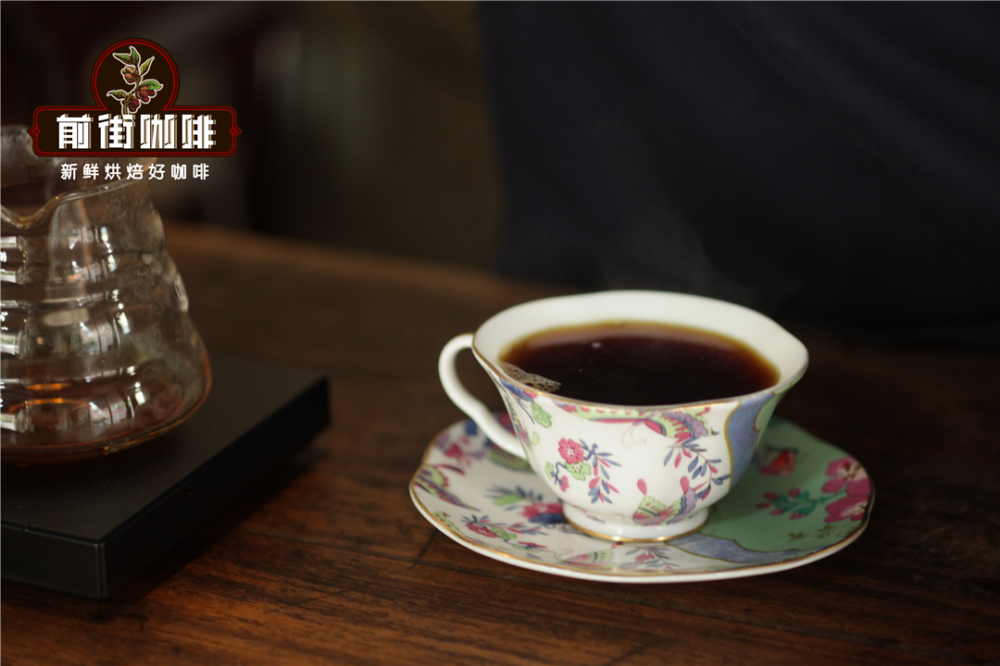
Brewed this way, Front Street's Front Street PWN Golden Mandheling has a faint herbal and cinnamon-like spice aroma on the palate, a mellow and clean mouthfeel, and a prominent sweetness. As the temperature drops slightly, a soft fruity acidity gradually emerges, and the aroma carries notes of melon, with the sweetness becoming even richer.
For more coffee bean information, please follow Coffee Workshop (WeChat public account cafe_style)
For professional coffee knowledge exchange, please add WeChat ID kaixinguoguo0925
The above content is compiled by CoffeeHunters, a coffee news website.


