







For more specialty coffee knowledge, please follow: Front Street Coffee (Frontsteet Coffee)
"How do you drink espresso?"
-You have to down it in one gulp!
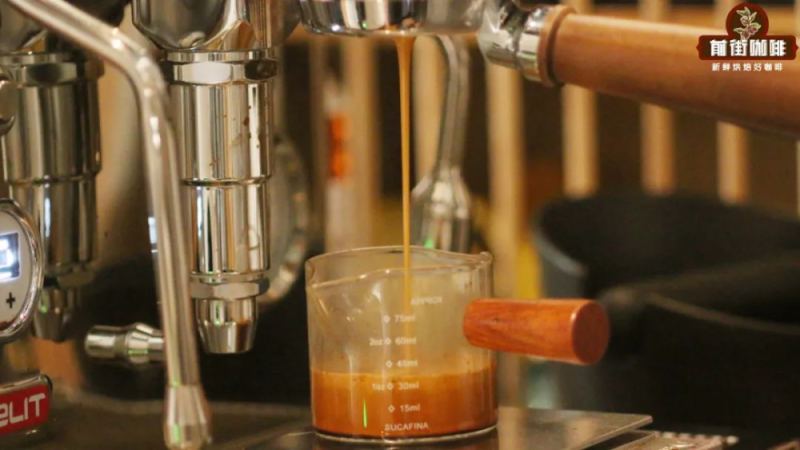
Don't think this is a joke—espresso really is meant to be downed in one gulp! Many friends might find espresso very bitter the first time they try it, but gradually, you'll begin to sense the rich aroma and full body in espresso's original flavor—something no other coffee can offer.
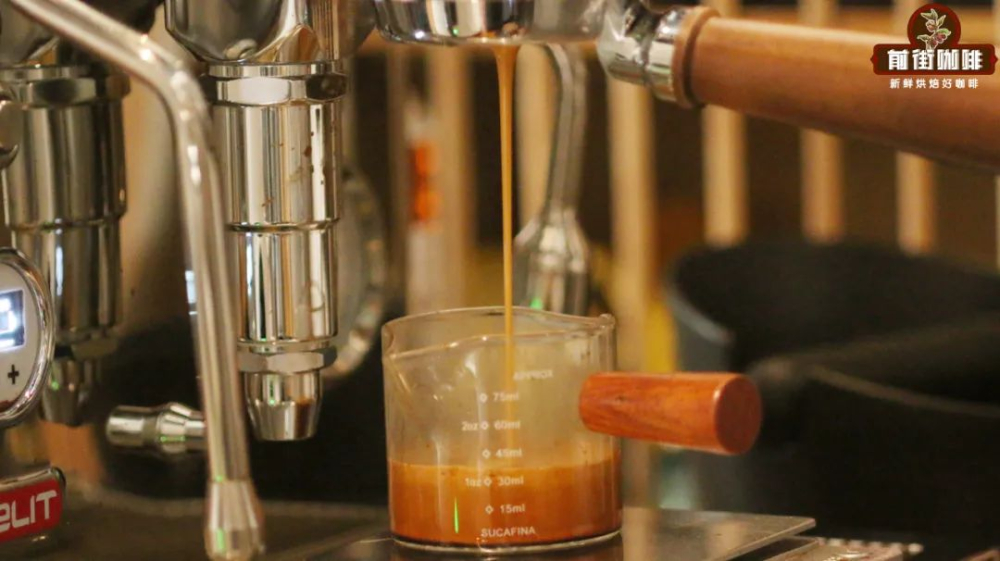
Quite a few friends also say that espresso is truly addictive the more you drink it! Every time you're sleepy and have a cup, its extremely high concentration and intense flavor profile really wakes you up instantly, and for the next half hour, even when drinking water, you feel like you're still drinking coffee—this experience is truly fascinating.
What isespresso?
Espresso's original name is Espresso. The name comes from the past participle of the Italian word esprimere, which derives from the Latin exprimō, meaning "to press out." However, some linguists believe its meaning is similar to the English word express, carrying the sense of "fast, personal, and exclusive." Although the two interpretations of its etymology differ, they precisely reflect espresso's two major characteristics.
The making of espresso is inseparable from extraction by a pressurized coffee machine—what we now call an espresso machine. The earliest espresso machine was born in the Industrial Age of 1884. In order to quickly extract the essence of coffee, allowing workers to quickly drink a cup and then continue working full of energy, an Italian registered a patent for a steam-powered machine used to make coffee, making coffee production much faster.
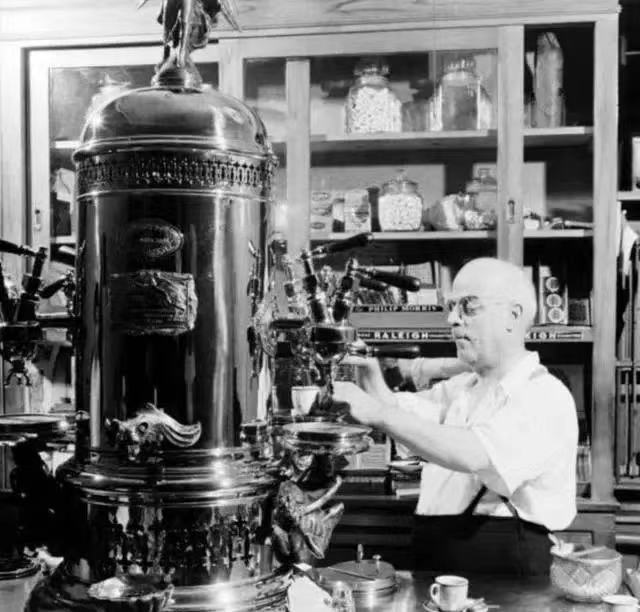
At first, the coffee machine used the pressure generated by a steam engine to let hot water quickly pass through coffee grounds and extract a rich coffee liquid. But at that time, people didn't have many demands for coffee taste, coffee bean quality was not as good as today, and espresso's portion was small, usually only a few dozen milliliters, so the taste really was bitter and intense—but truly very refreshing.
However, this speed of coffee making and its taste fascinated Italians, so espresso quickly became one of the most representative cultures of the region. Later, people had more pursuits regarding espresso's taste, so in 1901, an Italian designer acquired the patent for the steam-powered coffee machine.

On the original steam boiler coffee machine, a handle and a portafilter basket were newly added, and the grind size of coffee beans was studied and adjusted so that coffee particles could be pressed with external force, allowing the density of the puck to withstand the rapid passage of high-pressure water, better distributing the high-pressure water flow, letting water evenly pass through the entire puck and then "press out" a cup of coffee liquid with balanced flavor and a cleaner, smoother mouthfeel.
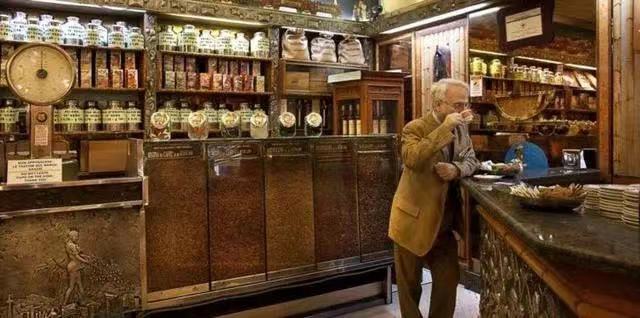
Although the taste and mouthfeel improved, the concentration was still very high, so when people drink espresso, they still retain the tradition of drinking it standing up in one gulp, then leaving right after, not lingering in the café for too long.
EspressoHow do you drink it?
Of course, what was mentioned above is how Italians drink espresso; in daily life, we don't need to drink it so "hurriedly." Today, the quality of coffee beans used to make espresso has improved greatly. Espresso's flavor also has more expressions, no longer only burnt bitterness.
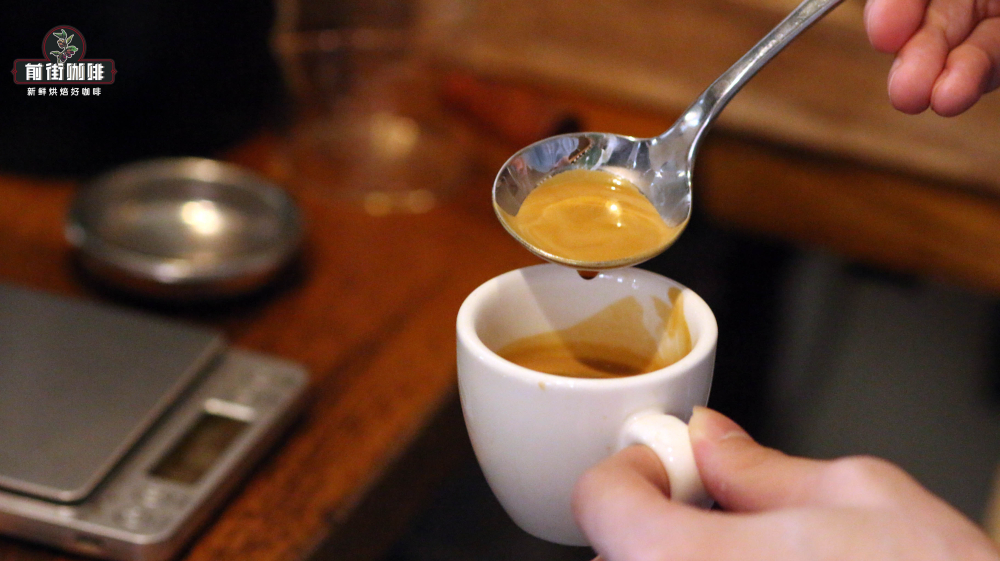
Before tasting espresso, you can first take a sip of water to constrict the taste-perceiving cells on the tongue, while also cleaning the mouth and removing aftertastes. Then after receiving the espresso, you can use a spoon to stir the espresso together with the golden crema on the surface, making the whole thing more balanced.

Next, don't be shy about taking small sips—take a big slurp/in one gulp, let it cover your entire tongue, and feel the full-bodied flavor and strong sweet aftertaste in the espresso,
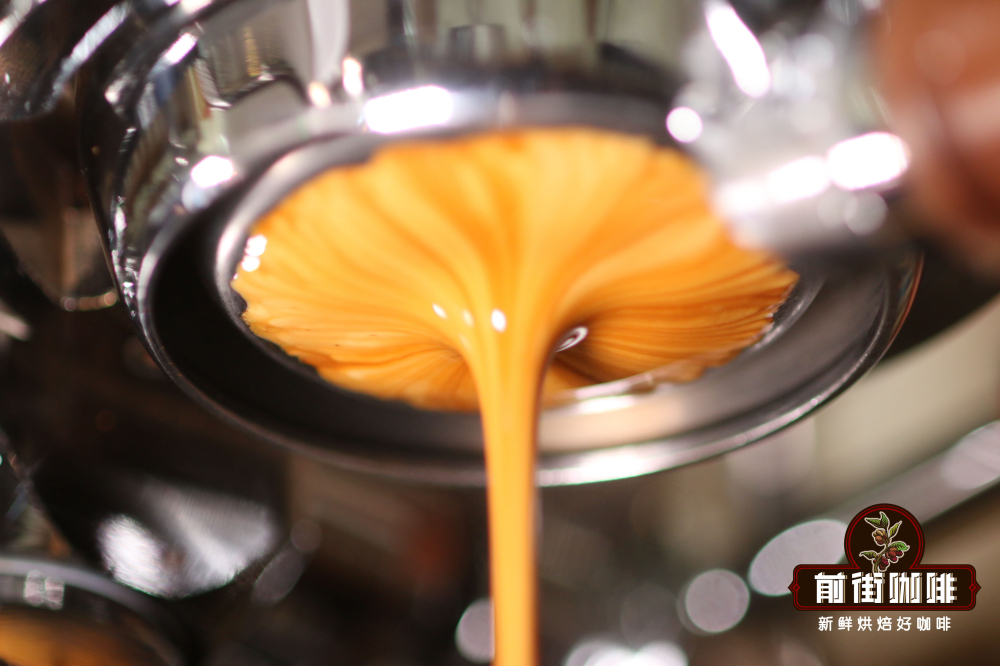
Technically, espresso requires 94°C water to pass through finely ground coffee at 9 bars of pressure, extracting a cup of thick, intense espresso liquid. When concentration increases, coffee flavor also becomes more concentrated, so not all coffees are suitable for making espresso.
Front Street Coffee's daily espresso/espresso-based products are made usingFront Street espresso blend coffee beans. The advantages of blended coffee beans lie in stabilizing the flavor quality of coffee products, balancing the shortcomings of single-origin coffee beans by complementing each other's strengths, and lowering product costs.
Currently, Front Street Coffee sells four types of coffee beans specially blended for espresso, namely:
"Front Street Warm Sun Blend Coffee Beans": Front Street Ethiopia Natural Red Cherry coffee beans (30%) + Front Street Honduras Sherry Barrel coffee beans (70%), with rich wine aroma, vanilla cream, berry sweet-and-sour, and roasted nut flavor notes;
"Front Street Specialty Blend Coffee Beans": Colombia Washed coffee beans (30%) + Brazil Semi-Washed coffee beans (70%), with nut, dark chocolate, and caramel flavor notes, suitable for cafés' daily output.
"Front Street Commercial Blend Coffee Beans": Robusta Washed coffee beans (10%) + Colombia Washed coffee beans (30%) + Brazil Semi-Washed coffee (60%), with nut, cocoa, and caramel flavor notes, meeting the daily needs of running a shop.
"Front Street Dark Cocoa Blend Coffee Beans": Yunnan Washed Small-Bean coffee beans (30%) + Brazil Semi-Washed coffee beans (70%), with soft fruit acidity, caramel, and nut flavor notes, suitable for shops and home users who prioritize cost and have average flavor requirements.
Of course, single-origin coffee beans can also be used to make espresso. If you really want to makesingle-origin espresso, Front Street Coffee recommends using coffee beans roasted at a medium level or darker. Lightly roasted coffee beans themselves retain more acidity, and if extracted as espresso, they easily show sharp acidity, with a relatively thin mouthfeel.
The above content is compiled by CoffeeHunters, a coffee news website.


