








How does Ethiopia G1 vs G2 grading work for Yirgacheffe?
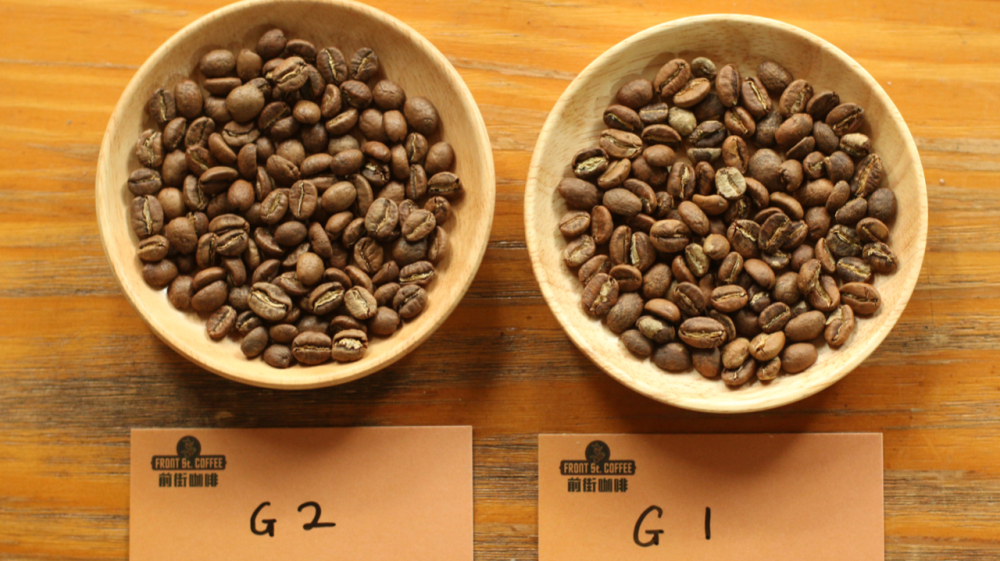
The ethiopia g1 vs g2 question comes down to defect rates. Yirgacheffe beans are graded by the number of defects, and washed and natural processing each map to different grade ranges. G1 is the tighter, cleaner tier, while G2 allows more defects, which is why bags of the same origin can look uneven in size.
Coffee classification and grading in Ethiopia goes further through ECX and SCAA cupping, which split G1 through G3 into Q1 and Q2 specialty grades or commercial grades. Ethiopia holds roughly 10,000 to 15,000 heirloom varieties, most without formal genetic identification, so sizing varies naturally. Origin, cooperatives, and micro-region altitude in Yirgacheffe also shape the final cup.
Yirgacheffe coffee beans are often labeled with G1, G2, and similar designations—what exactly do these grades mean? From the perspective of Front Street Coffee, this article first introduces the origins of Ethiopia's "local heirloom varieties"—the country is home to over ten thousand heirloom varieties that have not been fully identified—then provides a detailed explanation of the Yirgacheffe grading system: grades are determined by defect rate, with washed and natural processing each corresponding to different grade ranges, and explains how ECX and SCAA cupping further subdivide G1 through G3 into Q1, Q2 specialty grades and commercial grades. The article also outlines the altitude, cooperatives, and micro-region characteristics of the Yirgacheffe production area, and includes product information for Front Street Natural Red Cherry, Washed Gutingting, and Washed Yirgacheffe Daily Beans, helping readers gain a comprehensive understanding of the Yirgacheffe grading system and flavor diversity.
Friends who frequently shop for Ethiopian Yirgacheffe coffee beans at Front Street Coffee will notice that the beans are not uniform in size. The reason is that Ethiopia is the birthplace of coffee, and an enormous number of coffee varieties grow within its borders, which locals collectively refer to as "local heirloom varieties." It is precisely because of this abundance of varieties that coffee beans need to be graded. Below, Front Street Coffee explains the grading system for Yirgacheffe coffee beans.
What Are Local Heirloom Varieties?
Coffee enthusiasts know that Ethiopia is the birthplace of coffee. To date, nearly 2,000 varieties have been recorded in the country, of which 1,927 are native varieties and 128 are introduced foreign varieties. However, the Ethiopian coffee beans commonly found on the market are usually labeled as Heirloom native varieties—what Front Street referred to above as local heirloom varieties.
After consulting the Oxford English Dictionary, Front Street Coffee learned that "Heirloom" means "a valuable object passed down through a family for generations," which is why some also translate this variety as "heirloom."
According to information available to Front Street Coffee, Ethiopia currently has approximately 10,000 to 15,000 heirloom varieties, most of which have not undergone formal genetic identification. Such a vast number of varieties makes identification and classification very difficult on the one hand, and on the other hand, the Ethiopian government, for preservation purposes, is unwilling to disclose information about these varieties, so they are ultimately collectively referred to as "heirloom varieties."
Yirgacheffe Coffee Bean Grading Standards
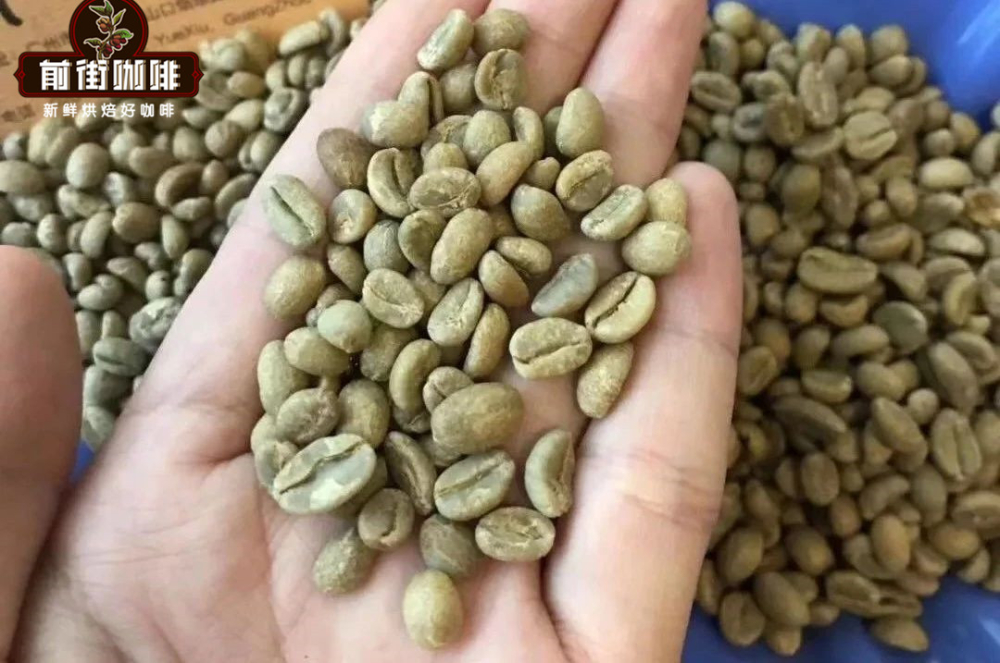
Because there are too many coffee varieties, local coffee is uniformly referred to as heirloom varieties, so the Yirgacheffe coffee beans received naturally vary in size. Ethiopia therefore grades coffee beans based on their defect rate.
Before the establishment of the Ethiopia Commodity Exchange (ECX), coffee export grades were set by the CLU department under the Ministry of Agriculture, primarily based on the number of defective beans contained in 300 grams of green coffee, with specific standards shown in the table below. Typically, washed beans were G1 to G2; due to the limitations of sun-drying techniques at the time, natural green beans had more defects and were generally G3 to G5. As natural processing techniques have continued to improve, today's natural beans can also reach G1 to G2 grades.
Among these, specialty and commercial refer to export to the international market. ECX classifies green coffee into nine grades based on the total score of physical attribute characteristics and cup profile characteristics, with physical characteristics accounting for 40 points and cupping quality accounting for 60 points. Physical Characteristics (40%): Washed processing: number of defects (20%), appearance and size (10%), color (5%), odor (5%) Unwashed processing: number of defects (30%), odor (10%)
Subsequently, G1 through G3 are cupped again according to SCAA standards to more precisely evaluate flavor attributes: G1 and G2 scoring no less than 85 points are rated Q1; G1, G2, and G3 scoring between 80 and 85 points are rated Q2; all G1, G2, and G3 scoring below 80 points are rated G3. Q1 and Q2 are exported as specialty grade, while G4 through G9 retain their original grades and are exported as commercial grade together with G3.
Therefore, all Ethiopian coffees currently available at Front Street Coffee are G1 grade, and Yirgacheffe coffee beans are certainly no exception. Next, Front Street shares the characteristics, stories, and processing methods of Yirgacheffe coffee beans.
Yirgacheffe Coffee Bean Production Area
Yirgacheffe has long been one of Ethiopia's most important coffee production areas. It was once part of the Sidama production area and later became independent due to its unique flavor. So in the specialty coffee market, Yirgacheffe is not just the name of a production area—it also represents coffee with a citrus-lemon acidity flavor.
Grade | Number of Defective Beans (per 300g) |
Grade1 | Less than or equal to 3 |
Grade2 | 4-12 |
Grade3 | 13-25 |
Grade4 | 26-45 |
Grade5 | 46-90 |
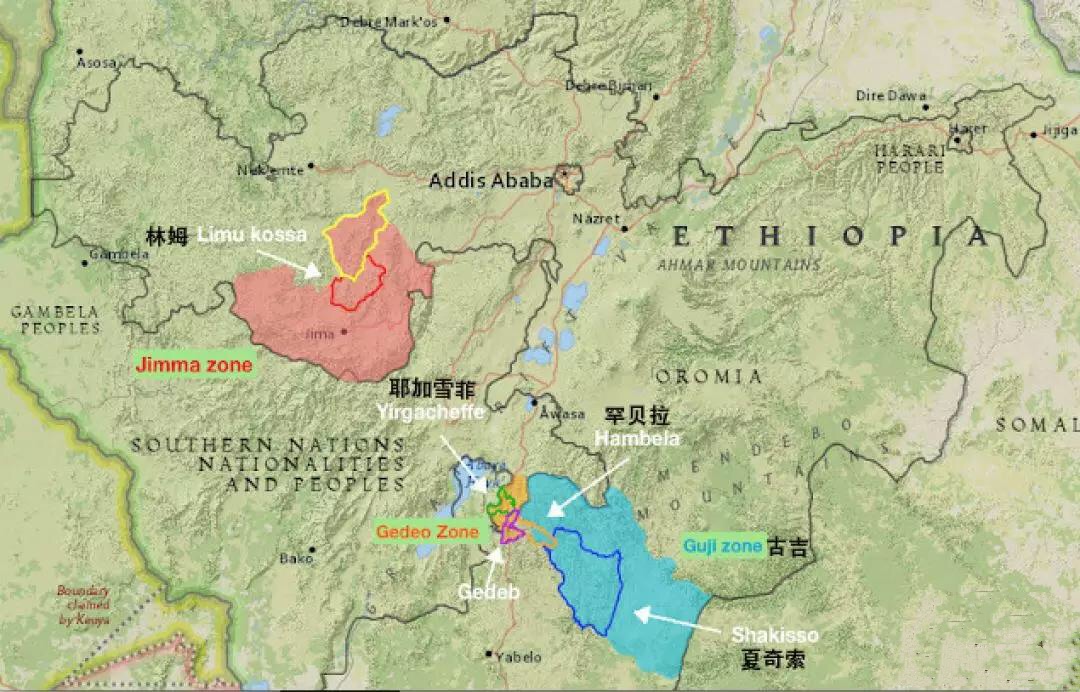
Yirgacheffe is Ethiopia's highest-altitude coffee production area, at approximately 2,000 meters. Currently, this production area has more than 40 cooperatives, mainly managing coffee cultivation through family-run operations. Within the production area, there are also many well-known micro-regions, such as Kochere, Misty Valley, Gedeb, and others. These micro-regions all have excellent cooperatives, and the Yirgacheffe coffee beans they produce each have distinctive flavors.
When selecting Yirgacheffe coffee beans, Front Street values not only their unique flavor and excellent quality but also their distinctiveness. Front Street Coffee believes that every Yirgacheffe has its own exclusive flavor: Front Street Gutingting stands out with its prominent tea aroma, Front Street Natural Red Cherry is dominated by berry notes, and Front Street Washed Yirgacheffe carries the classic floral and fruity fragrance.
Front Street Natural Red Cherry Coffee Beans
Country: Ethiopia Production Area: Yirgacheffe Altitude: 2300m Variety: Local Heirloom Processing Method: Natural Flavor: Berry, Lemon, Strawberry, Fermented Wine Aroma
Grade | Washed/Unwashed Score |
Grade1 | 91-100 |
Grade2 | 81-90 |
Grade3 | 71-80 |
Grade4 | 63-70 |
Grade5 | 58-62 |
Grade6 | 50-70 |
Grade7 | 40-49 |
Grade8 | 31-39 |
Grade9 | 20-30 |
Front Street Washed Gutingting Cooperative Coffee Beans
Country: Ethiopia Production Area: Yirgacheffe Altitude: 1900-2300m Variety: Local Heirloom Processing Method: Washed Flavor: Tropical Fruit, Cream, Honey, Berry, Citrus
Front Street Washed Yirgacheffe Daily Beans
Country: Ethiopia Production Area: Yirgacheffe Altitude: 1600-2500m Variety: Local Heirloom Processing Method: Washed Flavor: Jasmine, Orange, Berry, Lemon, Caramel
For this very reason, every coffee bean Front Street Coffee offers—even those from the same production area—will present subtle flavor differences as long as the microclimate, management techniques, and cultivation and processing methods differ. This is also one of the intentions behind Front Street's coffee selection.
The above content is compiled by CoffeeHunters, a coffee news website.


